집

>

사례 연구

>

프랑스 의류 관리 기기 브랜드의 지속 가능한 포장

프랑스 의류 관리 기기 브랜드의 지속 가능한 포장

Large garment steamer with multiple accessories created a packaging problem that could not be solved by simply adding more cushioning. PackCCP redesigned the internal protection around movement, contact points, and vulnerable surfaces, using paper-based structures that ultimately passed the client’s own machine factory test.

프로젝트 스냅샷

고객:
Garment Care Appliance Brand
시장:
France
산업:
Garment Care & Home Appliances
제품:
Large Garment Steamer with Accessories
포장 유형:
Protective Transport Packaging System
사용자 정의:
Machine Restraint, Accessory Zoning, Pressure-Point Control
재료 & 마치다:
Engineered Paper-Based Protective Components
리드타임:
Timely Delivery
컨설턴트:
아이린
<span class ="tr_" id="tr_18" data-source="" data-srclang="zh-cn" data-orig="Table of Contents Sidebar">Table of Contents Sidebar</span>

00 프로젝트 개요

The brief was not to make a stronger outer box. The real task was to stop a large machine and several accessories from becoming moving objects inside the package during transport. PackCCP therefore treated the project as a protective packaging engineering problem, mapping vulnerable surfaces, safe load-bearing areas, accessory contact risks, and unpacking requirements before developing the paper-based internal structure

01 도전과제

The Machine Could Move Without Looking Loose

Large appliance may appear secure while standing still, yet vibration, tilting, and repeated handling can gradually shift the product inside the pack. Even small movement could create rubbing, pressure marks, or concentrated impact on finished surfaces.

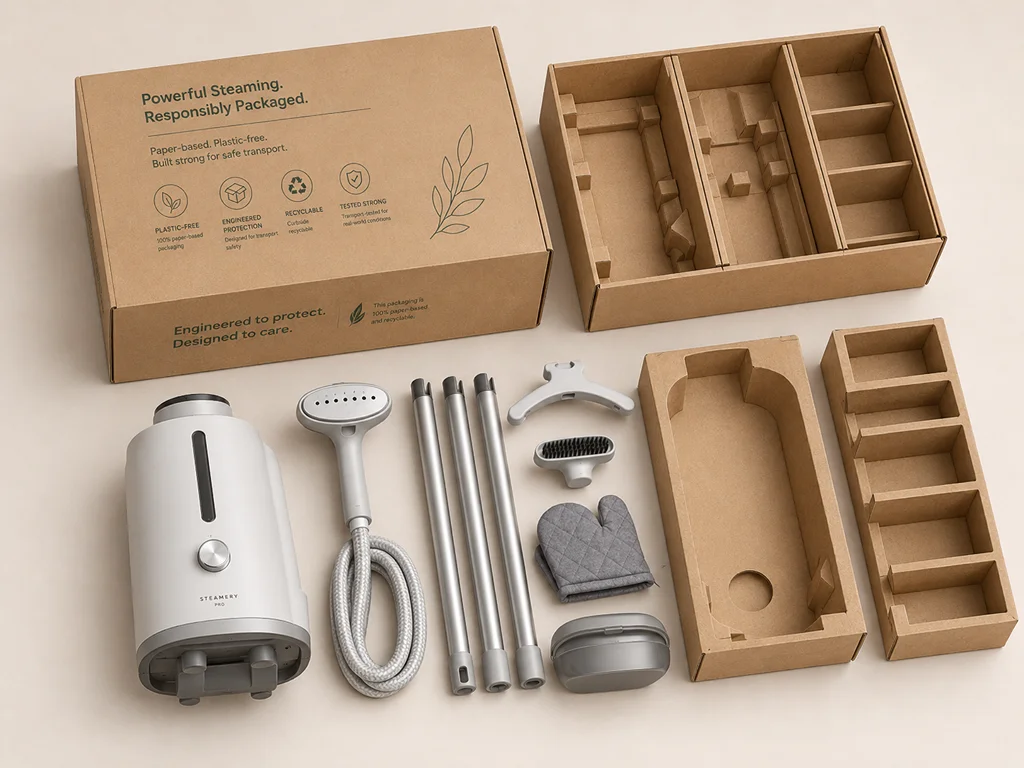
Accessories Could Become the Real Damage Source

The main machine was not the only concern. Hard or heavy accessories could shift independently, strike the appliance body, rub against cosmetic surfaces, or damage one another if they were not individually controlled.

Paper Had to Perform Structural Work

The sustainability requirement ruled out simply filling the package with conventional plastic cushioning. Paper-based components had to do more than occupy space—they needed to carry load, restrict movement, separate components, and remain practical to assemble and unpack.

02 우리의 솔루션

Instead of filling empty space, we designed the pack around where movement had to stop and where contact had to be avoided.

Positioning the Machine Before Designing the Rest

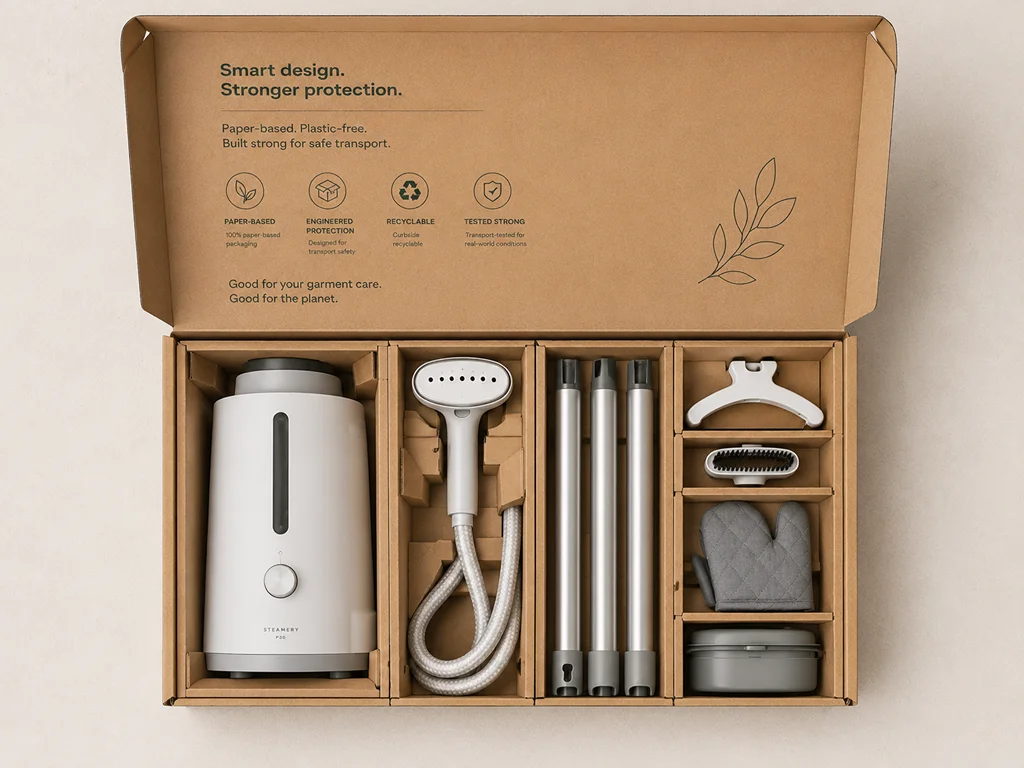
The engineering team first determined how the garment steamer should sit inside the package and which areas could safely carry pressure. Supports were then positioned around those zones, while visible or sensitive surfaces were deliberately kept away from unnecessary contact. Only after the machine position was stable did we begin arranging the accessories around it.

Turning Accessories Into Fixed Zones

Each accessory was evaluated according to weight, 모양, and its potential to move during transport. Components that could safely share space were grouped; others received dedicated paper-based sections to prevent rubbing or impact. The goal was not visual neatness, but to ensure that no loose part could gain momentum inside the pack.

Comparing Structural Logic, Not Just Sample Appearance

Several internal layouts were developed because no single concept was assumed to be correct from the beginning. One restrained the product better but used more material; another assembled more easily but allowed excess movement. Repeated packing, repositioning, clearance checks, and unpacking trials helped refine the final structure before it was sent for customer-side testing.

03 우리가 프로젝트를 실행한 방법

단계

우리가 한 일

그것이 중요한 이유

Map the Risk

무엇

Examined the complete machine and every accessory, identifying vulnerable surfaces, protruding parts, safe pressure areas, possible contact points, and unpacking requirements.

왜

Turned the project from a dimension-based box design into a movement-and-contact analysis.

Build from the Machine Outward

무엇

Fixed the machine position first, then developed supports, clearances, and accessory zones around it using paper-based structural components.

왜

Prevented accessory layout or empty space from dictating an unsuitable machine position.

Challenge the Structure

무엇

Repeatedly packed, tilted, repositioned, and unpacked the system, revising supports and compartments wherever movement or difficult removal remained.

왜

Exposed weaknesses internally before the client committed time to its own factory test.

Release for Factory Validation

무엇

Submitted the refined packaging configuration to the client’s machine factory after internal simulation and remote review through photos and videos.

왜

The final configuration passed the client’s own factory test and moved forward to order.

04 결과 & 클라이언트 가치

Engineered to Pass the Client’s Own Test

The decisive result was not that the sample looked correct—it was that the complete packaging system performed successfully under the client’s own machine factory test conditions.
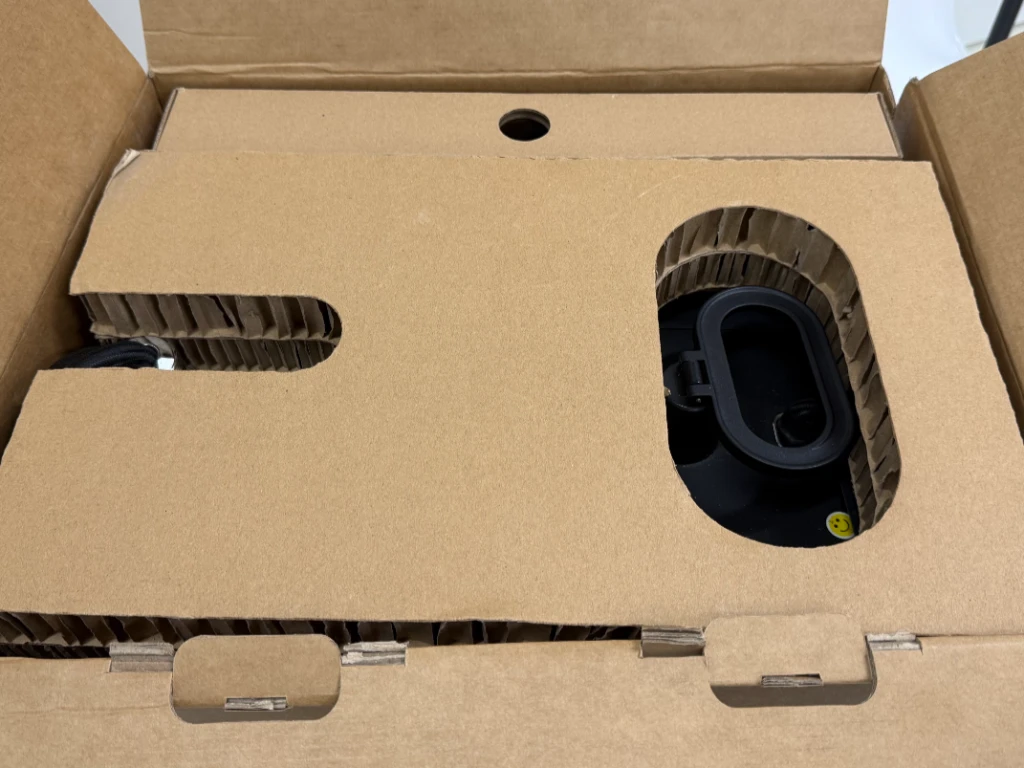
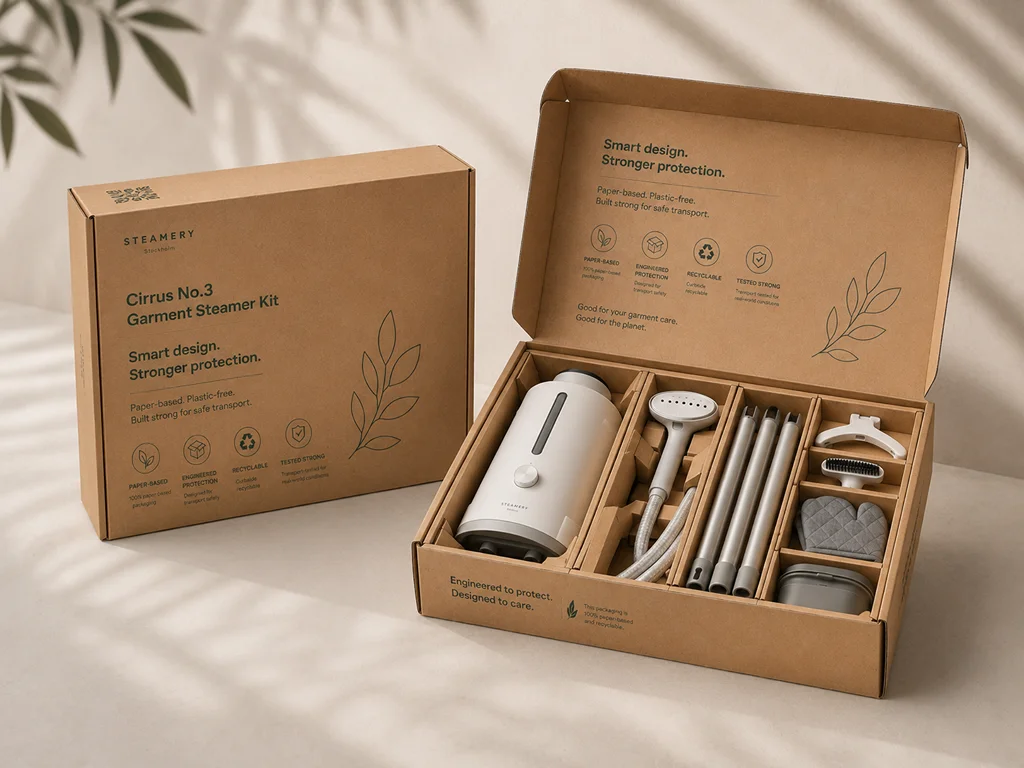
Paper-based protective packaging structure for a large home appliance

05 기술 요약

맞춤형 개발

실제 제품 요구 사항을 중심으로 구축됨

샘플 검증

전체 생산 전에 확인됨

생산 관리

전체에서 추적되는 주요 세부정보

품질검사

이전에 확인됨
선적

배송지원

배송을 위해 포장 및 조정됨

06 관련 사례 연구

고객 성공 사례

우리 팀의 최신 사례 연구 및 발전 사항에 대한 최신 정보를 받아보세요.

빡빡한 일정에 맞춰 포장 출시 계획하기?

우리는 업계나 일정에 관계없이 브랜드가 위험을 줄이고 확실성을 높여 컨셉에서 생산까지 이동할 수 있도록 지원합니다..

지금 주문하십시오

*모든 정보가 존중됩니다 & PackCCP에서 보호됩니다.