Cosmetic packaging inserts help brands protect fragile products during transportation while reducing damage-related costs, product replacements, and customer complaints. Poorly designed interior layouts can cause glass bottles and liquid containers to shift during shipping, increasing the risk of breakage and leakage.
This guide compares common insert materials based on protection, costo, and suitability for different cosmetic products, helping brands choose a packaging solution that balances safety, presentation, e bilancio.
Why Cosmetic Packaging Inserts Matter for Product Protection
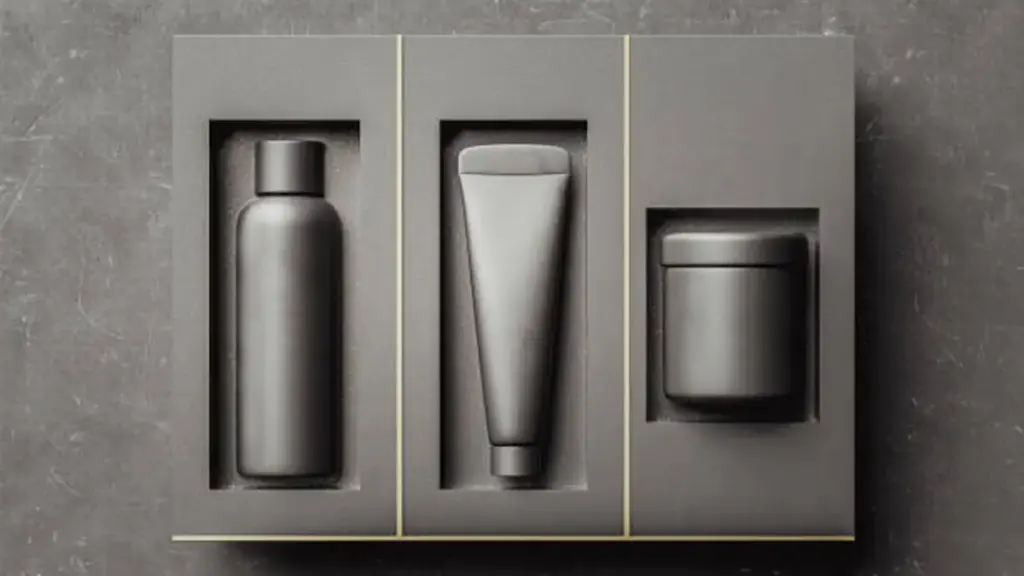
Cosmetic packaging inserts safeguard fragile formulations while elevating brand presentation, reducing costly shipping damage, and supporting sustainability goals through smart material choices.
Protecting Fragile Cosmetic Formulations and Containers
Cosmetic products often face multiple impacts during shipping, including vibration, drops, and compression. Without internal stabilization, high-value formulations and delicate glass components risk total failure before they reach the consumer.
- Vibration Dampening: Securing glass serum bottles, contagocce, and jars against constant transport vibrations to eliminate structural friction.
- Leak and Scuff Prevention: Stopping delicate makeup palettes and precision pumps from shifting, which prevents internal leaks and surface scuffs.
- Return Mitigation: Minimizing retail returns and costly inventory replacements by locking fragile components safely in place.
- Multi-Item Isolation: Stabilizing multiple-item gift sets and complex skincare kits to prevent pieces from colliding with each other.
Securing these fragile items directly addresses the bottom line. Better internal support helps reduce the risk of damaged products, replacement shipments, and customer dissatisfaction.
Improving Brand Presentation and Customer Unboxing Experiences
The unboxing experience is the first physical touchpoint a customer has with a beauty brand. Unstructured interior layouts suggest cheap manufacturing, even for premium formulations.
- Premium Geometry: Creating neat, structured layouts that reinforce upscale brand positioning and make an intentional visual impact upon opening.
- Eco-Alignment: Matching modern environmental expectations by utilizing easily recyclable paper and custom molded fiber instead of plastic trays.
- Space Optimization: Customizing the internal layout of the box to reduce excess packaging volume and lower dimensional shipping weights.
- Added Brand Value: Adding substantial perceived value to retail and e-commerce packaging with minimal upfront tooling and manufacturing costs.
Optimizing the box interior does more than protect product integrity. It turns basic transit packaging into a functional marketing tool that drives customer retention and social sharing. For more ideas on creating effective beauty packaging structures, explore our guide on custom cosmetic packaging for beauty brands.
Types of Cosmetic Inserts
The right cosmetic insert prevents transit damage while defining your brand’s unboxing experience, scaling from low-cost paperboard to high-protection foam.
Paper-Based and Sustainable Inserts
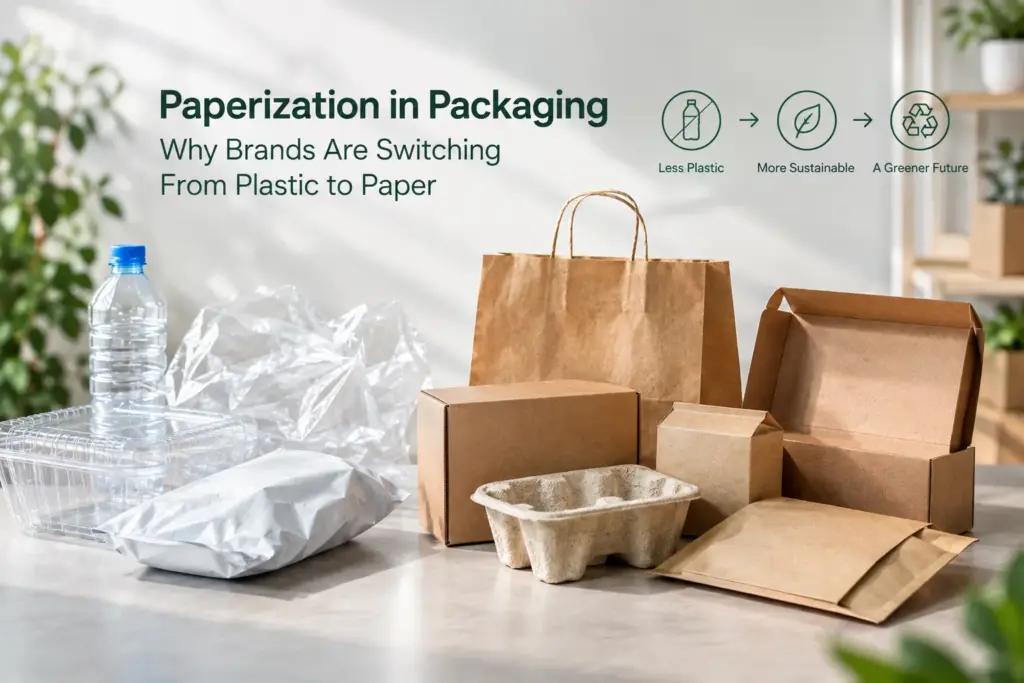
Brands aiming to reduce plastic usage and shipping weight rely heavily on fiber-based materials. Sustainable materials for cosmetic packaging can help brands balance protection, riciclabilità, and environmental goals. These structures easily handle retail display and lightweight direct-to-consumer shipments while keeping parcel costs low.
- Die-cut paperboard: Provides a lightweight, cost-effective option for lip products, cosmetics palettes, and sample kits.
- Polpa modellata: Made from recycled fiber to offer reliable shock absorption and secure positioning for glass serum bottles and skincare jars.
- Corrugated cardboard: Delivers structural separation and heavy-load support for bundled products and retail gift sets.
Using these paper-based options simplifies your recycling story. Consumers can typically recycle the entire package in a single curbside bin without separating the components.
Synthetic and Premium Cushioned Inserts
Fragile glass, heavy containers, and luxury collections require high shock absorption and a precise interior presentation. Synthetic materials help keep products securely positioned during transportation.
- Foam inserts: Made from EVA, PE, or PU to cushion premium perfumes and delicate glass containers against shipping impacts.
- Thermoformed plastic trays: Deliver high-clarity product presentation and consistent cavity shapes for high-volume retail displays.
- Fabric-lined and velvet-finish inserts: Add a soft-touch texture that elevates high-end luxury cosmetics and special edition launches.
While foam and plastic offer superior physical security for glass and liquids, they require careful assembly planning and clear disposal instructions to manage their environmental impact.
Custom Cosmetic Packaging Inserts for Better Protection
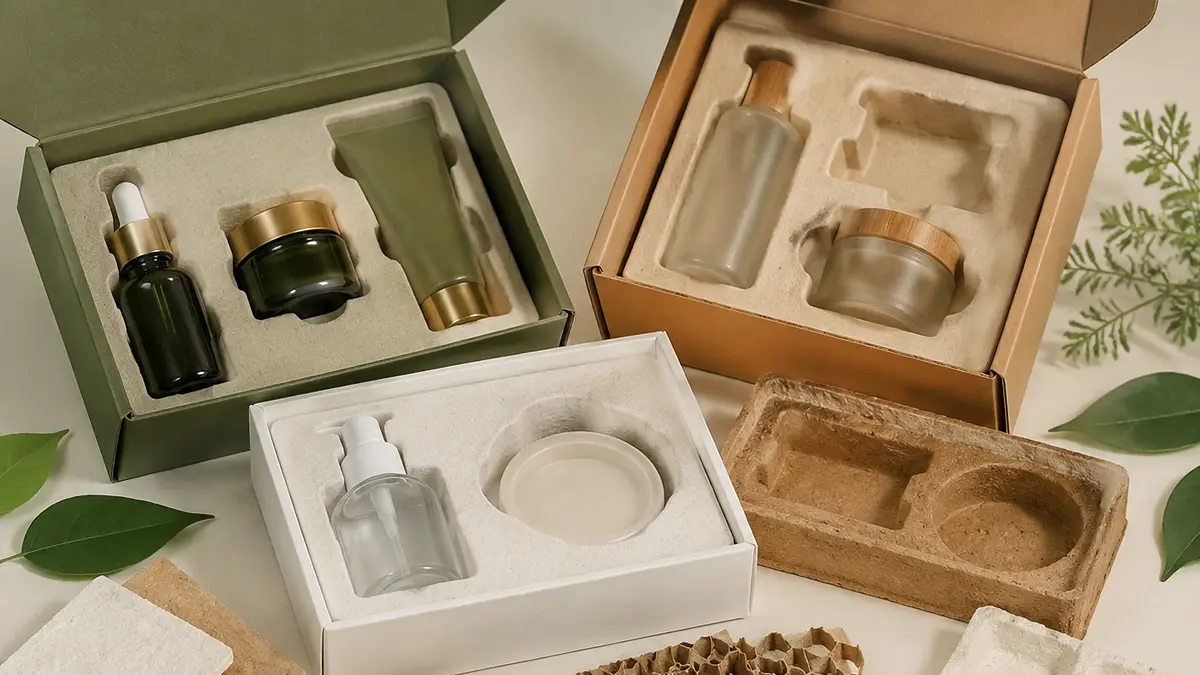
How to Choose Cosmetic Packaging Inserts by Product Type
Matching your packaging insert directly to your cosmetic product format minimizes transit damage, preserves brand aesthetics, and guarantees strict regulatory compliance.
Cosmetic containers vary significantly in weight, geometry, and fragility. A single generic packaging structure cannot protect diverse product formats during parcel transit.
Insert Selection Rules by Cosmetic Product Format
Manufacturers can engineer inserts to match the unique structural vulnerabilities of different cosmetic formats during handling and shipping.
- Liquids and Serums: Secure dropper bottles and facial oils in an upright position to prevent cap pressure, minimizing closure stress and leakage.
- Heavy Jars: Anchor thick glass creams and balms with dense foam or custom-molded pulp bases to prevent heavy items from crushing the outer box walls.
- Lipsticks and Slim Cosmetics: Use tight, narrow die-cut cavities to lock cylindrical products in place, stopping scuffing and cap detachment.
- Palettes and Pressed Powders: Protect brittle powder formulations and mirrored compact hinges with highly shock-absorbing paperboard or foam backings.
- Fragrances: Isolate high-value glass perfume bottles in individual, dedicated cavities to eliminate catastrophic bottle-to-bottle contact during sorting.
Selecting the right material for each format directly impacts your bottom line by reducing transit replacement costs and returns.
Operational Requirements and Compliance Standards
Beyond physical protection, structural inserts must align with complex supply chain workflows and strict global labeling regulations.
- Regulatory Visibility: Position structural walls to ensure that mandatory batch codes, elenchi degli ingredienti, and warning labels remain fully visible to consumers.
- Surface Integrity: Size all cavities with precise tolerances to eliminate micro-movements, which cause severe label scuffing and cosmetic container abrasion.
- Eco-Compliance: Prioritize biodegradable molded pulp or FSC-certified paperboard to satisfy corporate sustainability milestones and reduce extended producer responsibility fees.
- Unobstructed Information: Design custom layouts so the insert does not cover critical warning symbols or manufacturer contact details printed on the primary container.
Balancing Protection and Presentation With Cosmetic Packaging Inserts
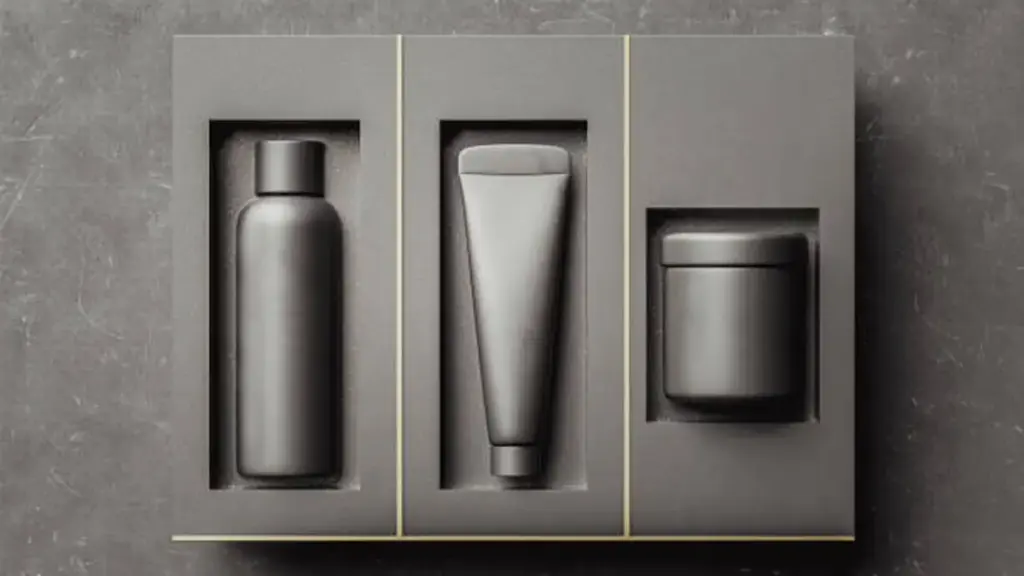
Cosmetic inserts must balance physical shield mechanics with visual layout logic to secure fragile components and drive unboxing engagement.
Structural Protection and Damage Mitigation
Cosmetic packaging inserts need careful structural design to protect products throughout the shipping process. Movement inside the shipper drives most transit scuffing, component leakage, and catastrophic glass breakage.
- Snug custom-fit cavities: Absorb drops, high-frequency vibrations, and corner impacts during sorting.
- Secure retention dividers: Prevent glass bottles from colliding and stop friction-based scuffing on delicate outer palettes.
- Material density mapping: Match heavy jars with rigid corrugated board or high-density foam to prevent the product from breaking through walls.
- Tight wall tolerances: Eliminate internal shifting by maintaining near-zero clearance between the insert and outer carton walls.
Matching material properties to specific component weights prevents heavy containers from bottoming out during drop events.
Unboxing Presentation and Brand Alignment
The unboxing experience directly dictates premium brand perception in beauty retail and direct-to-consumer channels. A messy, unorganized interior devalues high-ticket formulations before the customer even dispenses them.
- Logical layout display: Organize multi-step regimens in a clean sequence that guides the customer through use.
- Deliberate reveal order: Stage secondary products or tools underneath primary items to create a controlled narrative.
- Premium surface finishes: Utilize velvet linings, flocked surfaces, or color-matched trays to reflect brand aesthetics.
- User-centric ergonomics: Balance tight holding power with intuitive finger-pull cutouts for clean, effortless product extraction.
High-retention designs must never make product removal a struggle, meaning ergonomic cutouts are a functional necessity.
Comparing Cosmetic Packaging Insert Materials and Costs
Paperboard offers the lowest entry cost for lightweight items, while molded pulp and EVA foam justify their premium price points through superior transit protection for fragile glass containers.
| Materiale | Wholesale Cost (Unit) | Livello di protezione | Best Cosmetic Use |
|---|---|---|---|
| Cartone | $0.05 – $0.45 | Moderare | Lip products, tavolozze, sample kits |
| Carta Kraft | $0.06 – $0.50 | Moderare | Eco-focused lightweight skincare |
| Cartone ondulato | $0.10 – $1.00 | Alto (Rigido) | Subscription boxes, transit mailers |
| Polpa modellata | $0.80 – $4.00 | Alto (Cushioned) | Glass skincare bottles, vasetti di crema |
| EVA Foam | $5.00+ | Massimo | Luxury perfumes, heavy glass jars |
| Thermoformed Plastic | $1.50 – $4.00 | Moderate-High | Retail display kits, multi-SKU sets |
Cost-Performance Profiles of Common Cosmetic Inserts
Wholesale buyers choose packaging inserts to solve distinct transit and branding challenges. Balancing unit costs against protection determines the bottom-line return.
- Inserti in cartone: $0.05 A $0.45 per unità. Best for lightweight items like lipsticks and palettes.
- Carta Kraft: $0.06 A $0.50 per unità. Provides a natural, simple presentation.
- Inserti ondulati: $0.10 A $1.00 per unità. Best for heavier e-commerce or subscription shipping.
- Polpa modellata: $0.80 A $4.00 per unità. High shock absorption for glass bottles and jars.
Custom tooling represents a significant upfront hurdle. Thermoformed plastic trays require dedicated tooling, which can increase upfront costs. Tuttavia, these costs are usually spread across larger production volumes, making them more economical for high-volume orders. Molded pulp molds demand a higher initial investment. At a 50,000 minimum order quantity (MOQ), molded pulp may require higher initial tooling investment, but it can support brands looking for plastic-free packaging solutions. Brands pay this premium specifically to align with plastic-free, sustainable positioning.
EVA foam provides excellent cushioning and precise product positioning for premium and fragile products. Its dense, closed-cell structure grips heavy glass perfume bottles securely and survives multi-drop parcel shipping. PU sponge foam offers a softer, plush touch at a lower price point, but it lacks the premium look and structural rigidity of EVA. Paper-based inserts provide clean branding space and easy recycling, but they fail to cushion high-impact drops for fragile, heavy glass containers.
Strategic Material Selection by Brand Tier and Distribution Channel
Brand tier directly dictates the packaging budget. Mass-market brands rely on die-cut paperboard or thermoformed plastic trays to keep unit costs low. Eco-conscious skincare brands choose molded pulp or kraft paper to match their plastic-free branding. Prestige beauty lines select EVA foam, often lined with velvet or fabric, to justify a premium retail price point above $75.
Distribution channels require different packaging properties:
- E-Commerce Mailers: Require high-strength corrugated dividers or molded pulp to absorb the shock of direct-to-consumer parcel sorting networks.
- Retail Displays: Benefit from high-clarity thermoformed plastic trays that keep products locked in a uniform, face-up position on the shelf.
- Luxury Gift Sets: Use custom-fit EVA foam to create a highly structured, premium unboxing reveal.
To control costs without sacrificing safety, brands can simplify the cavity geometry. Designing single cavities that accommodate multiple product shapes reduces tooling costs. Increasing order volumes also lowers unit costs. Suppliers amortize tooling and setup fees across a larger volume of units.
Sustainable Cosmetic Packaging Inserts: Materials and Design Considerations
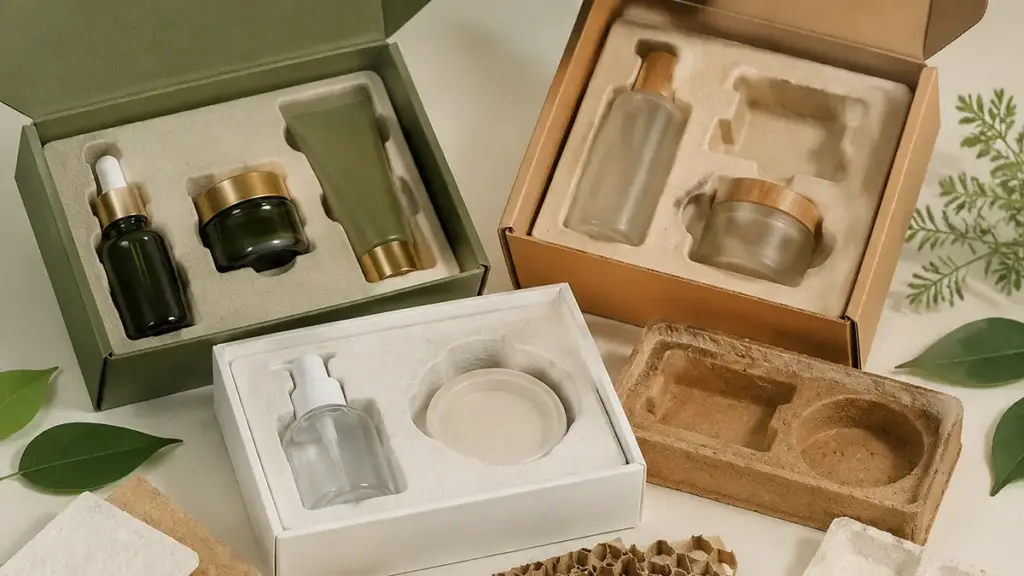
Sustainable insert design must secure the product using minimal material, prioritizing mono-materials and verified paper fiber to eliminate plastic while preventing transit breakage.
Material Selection and Structural Efficiency
Selecting the right insert material affects both packaging performance and recyclability.
- Fiber-based alternatives: We prioritize molded pulp, cartone, and corrugated inserts to reduce plastic reliance and improve municipal recycling outcomes.
- Precision right-sizing: Designers must scale the insert to the exact outer dimensions of the container—including caps, pump heads, and labels—to strip out excess material and shipping volume.
- Mono-material geometry: Relying on single-substrate paper structures avoids sorting and recovery failures associated with mixed-material composites, metallization, or heavy plastic coatings.
Performance Trade-offs and Compliance Standards
Transitioning to eco-friendly materials only works when the system reliably gets the product to the consumer intact.
- Protection balance: Brands must weigh weight reduction against physical protection, as failed inserts cause product breakage that completely negates initial raw material savings.
- Claim substantiation: We support sustainable packaging solutions using recyclable paper materials and FSC-certified options where required.
- Operational footprint: Packaging engineers must analyze manual assembly times and transit configurations to ensure the chosen insert remains operationally viable on the packing line.
Cosmetic Packaging Inserts for Shipping and E-commerce Protection
E-commerce shipping exposes cosmetic products to more handling risks than traditional retail distribution. During parcel delivery, bottiglie, barattoli, and cosmetic sets may experience vibration, drops, compressione, and repeated movement. Properly designed packaging inserts help secure products, reduce internal shifting, and improve protection throughout the delivery process.
Transit Protection and Material Selection
The right insert material helps brands balance product protection, packaging cost, e requisiti di spedizione.
- Product Immobilization: Custom-fit paperboard, polpa modellata, ondulato, or foam inserts keep bottles, barattoli, and cosmetic sets securely positioned during transportation.
- Impact Protection: Properly designed cavities and dividers reduce product movement and help absorb shocks caused by drops and vibration.
- Leakage Prevention: Accurate cavity sizing helps prevent excessive movement that may loosen caps, pompe, or closures on liquid cosmetic products.
- Carton Optimization: A well-designed insert reduces unnecessary empty space, helping brands improve packaging efficiency and control shipping costs. For products shipped directly to customers, choosing suitable custom corrugated mailer boxes can provide additional protection during transit.
Before mass production, brands should test insert designs with actual products to confirm fit, protezione, and overall packaging performance.
Packaging Requirements for Global Shipping
Cosmetic brands selling through e-commerce and international markets need packaging that supports both product safety and operational requirements.
- Sustainability Considerations: Paper-based inserts, polpa modellata, and FSC-certified materials can help brands reduce plastic usage and meet sustainability goals.
- Fulfillment Compatibility: Insert structures should allow efficient packing, barcode scanning, and warehouse handling without slowing down operations.
- Material Transparency: Brands should understand the composition and recyclability of insert materials to support regional packaging requirements.
Custom Cosmetic Packaging Inserts From PackCCP
Choosing the right insert requires more than selecting a material. PacchettoCCP works with brands to develop customized packaging structures based on product size, protection requirements, e obiettivi di presentazione del marchio. Con oltre 20 years of engineering experience, our team supports custom paper packaging solutions from structure design and sampling to mass production.
We provide flexible insert options using recyclable paper materials, molded solutions, and customized components to fit different cosmetic products. With strict quality control, FSC-certified material options, and a 98%+ product qualification rate, PackCCP helps brands create reliable packaging with consistent quality and efficient production timelines.
Common Cosmetic Packaging Insert Selection Mistakes
Designing cosmetic inserts from digital specs instead of physical samples causes transit damage and unboxing failures. Protect your product first.
Many packaging issues come from decisions made too early in the development process without sufficient testing. Brands routinely compromise product safety by separating insert engineering from the physical product itself.
Process and Design Pitfalls in Insert Development
- Relying on nominal CAD drawings: Designing from digital specs instead of physical, finished product samples results in loose fits, leading to scratched surfaces and broken components during transit.
- Prioritizing low unit costs: Choosing the cheapest insert option often drives up transit damage and customer return rates, erasing any initial material savings.
- Skipping transit simulation: Approving designs based on visual mockups while skipping drop, vibrazione, and transit testing leads to catastrophic field failures.
- Neglecting the unboxing experience: Treating the insert purely as a hidden utility part ignores its role in shaping customer perception when they first open the box.
Material-Specific Selection Errors
Every packaging material has distinct physical limits. Selecting a substrate based on aesthetics or generic sustainability targets without testing physical performance invites structural failure.
- Under-specified paperboard: Using paperboard that is too thin for fragile glass or heavy cosmetic jars fails to cushion impacts, causing container breakage.
- Misaligned EVA foam specs: Choosing EVA foam solely for its premium look without matching the cavity depth and compression profile to the container geometry leads to shifting.
- Unverified molded pulp: Opting for molded fiber to hit green targets without checking if the rough surface texture will abrade sensitive product finishes during transport.
- Untested thermoformed plastic: Specifying plastic trays without checking component shifting inside the outer shipper allows products to rattle and dislodge.
Cosmetic Packaging Insert Selection Checklist for Brands
Custom packaging inserts help protect product integrity, improve shipping reliability, and support consistent quality standards.
Material Selection and Fit Calibration
We select insert materials based on specific product vulnerabilities, such as fragile glass, pressed powders, or multi-item kit configurations. Each material handles physical stress differently, so we match the substrate to the exact protection and presentation needs of the SKU.
- Die-cut paperboard: Best for lightweight products, offering a clean, printable surface but limited cushioning.
- Polpa modellata: Provides strong structural support and cushioning for glass jars, aligning perfectly with plastic-free goals.
- E-flute corrugated board: Adds superior partition strength and compression resistance for direct-to-consumer shipping mailers.
- Foam inserts (EVA/PE): Delivers maximum shock absorption and precise cavity retention for high-value perfumes.
To prevent loose rattling or scratched surfaces, we measure the full physical profile of the product. This includes pump heads, contagocce, overcaps, and label thicknesses to calculate exact clearance tolerances. We align these structural choices with brand sustainability targets and local packaging recyclability rules to avoid mixed-material waste that hinders disposal pathways.
Compliance Verification and Transit Testing
Brands should review applicable cosmetic packaging requirements, including ISO-related standards where required by their markets. For small primary containers that cannot fit mandatory ingredient lists or warnings, we utilize custom leaflets or printed inserts to carry this required information legally. We also review material safety to eliminate migration risks, ensuring that adhesives, rivestimenti, or synthetic fibers do not cause cosmetic contamination or off-gassing odor transfer.
Before signing off on production, we validate physical performance by putting the complete pack-out through ISTA-based transit testing. These protocols simulate the exact drop, vibrazione, and compression stresses of the parcel fulfillment network.
- Declarations of conformity: Collect certified statements proving the insert meets regional safety standards.
- Material specifications: Confirm exact board caliper, density, and chemical compositions of inks or barriers.
- Die-cut tooling requirements: Establish the exact manufacturing parameters for consistent cavity tolerances during volume runs.
Domande frequenti
What is a packaging insert in cosmetic packaging?
A packaging insert is an internal component that secures, protegge, organizes, and presents cosmetic products inside a box or carton. It stops movement and reduces damage from impact, vibrazione, and compression during shipping, gestione, and display. Inserts can be structural, like custom trays and dividers, or promotional, like printed thank-you cards and instruction leaflets. They help maintain a premium brand image and improve the customer unboxing experience.
Which packaging insert material works best for cosmetics?
The best insert material depends on product fragility, peso, presentation goals, sustainability targets, e bilancio. Recycled paperboard serves as a cost-effective, printable, and recyclable option for lightweight retail products. Custom-cut EVA foam is a popular choice for protecting premium glass bottles because it provides strong cushioning and precise product positioning. Molded pulp offers excellent cushioning and strong sustainability credentials for eco-oriented brands. Corrugated inserts work best for heavy shipping support and e-commerce protection.
Do all cosmetic products require packaging inserts?
NO, packaging inserts are optional. Brands typically use them when a product’s size, fragilità, forma, or shipping method makes internal support useful. Glass serum bottles, eyeshadow palettes, and liquid-filled jars benefit from inserts because they break or leak easily. Leggero, stable, or low-fragility items, like basic lip balms, often fit securely in a plain box without any internal support.
Which insert protects glass cosmetic bottles best?
Custom-cut EVA foam protects glass bottles best because it immobilizes the product, absorbs shock, and performs exceptionally well in drop tests. For shipping multiple bottles, corrugated cardboard dividers prevent glass-on-glass contact, which causes most transit breakages. To ensure maximum safety, combine a custom-cut foam insert with a sturdy outer box and void-fill materials.
Are EVA foam inserts recyclable?
Curbside recycling programs generally do not accept EVA foam inserts. Pulito, standalone EVA can be mechanically recycled in specialized industrial streams, but post-consumer cosmetic inserts usually end up in the trash. When you glue an EVA insert into a paperboard box, it creates a mixed-material package that lowers overall recyclability. To improve sustainability, use un-glued, easily removable inserts or choose fiber-based alternatives like molded pulp.
How durable are paper-based cosmetic packaging inserts?
Cartone, polpa modellata, and corrugated inserts provide excellent durability when engineered correctly. Corrugated die-cut inserts resist crushing and support heavier e-commerce packages. Molded pulp holds irregular product shapes securely. Paperboard inserts perform well for lightweight retail items like lipsticks and compacts. Uncoated paper inserts can lose structural strength in highly humid environments, so wet environments require moisture-resistant coatings or denser molded fiber.
Which insert style is ideal for cosmetic gift sets?
Thermoformed trays are the most common choice for mixed product sizes because they hold multiple shapes securely and keep costs manageable. For premium or luxury gift sets, EVA foam inserts offer the best protection and a high-end feel. Molded pulp provides a clean, eco-friendly option for sustainable gift kits. Paperboard inserts work well for lightweight, budget-friendly beauty bundles.
How do I prevent cosmetic products from moving inside the shipping box?
To prevent movement, use custom-cut cavities or molded trays that match the precise dimensions of your bottles, barattoli, or compacts. Minimize the clearance space between the product and the insert to ensure a snug fit. Use cardboard dividers or partitions to isolate individual items in multi-product kits. Ensure that the insert design prevents caps, pompe, and fragile finishes from rubbing against the outer box walls.
What is the most cost-effective packaging insert option?
Recycled corrugated die-cut inserts and simple paperboard inserts are the most economical options. Corrugated die-cuts are highly cost-effective at scale for shipping-heavy programs. Simple paperboard flat-sheet inserts provide a low-cost, premium-looking option for lightweight items like lipsticks and creams. These materials keep tooling, impostare, and manufacturing costs low compared to custom molded pulp or EVA foam.
How do I choose the right insert for an eCommerce beauty brand?
Choose your insert by analyzing product dimensions, peso, fragilità, and the shipping journey. Use custom paperboard or corrugated inserts for lightweight direct-to-consumer shipments, as they provide great printability and structural support. For highly fragile glass items or premium perfumes, select EVA foam. For eco-conscious branding, use molded pulp. Always test a physical sample with your actual products, conducting drop and shake tests before starting mass production.
Can cosmetic packaging inserts be customized?
SÌ, manufacturers customize cosmetic inserts to match specific packaging requirements. You can customize the cavity layout, depth, and structural geometry to fit round, piazza, or irregular containers. Brands can also print custom logos, colori del marchio, and usage instructions directly onto paperboard and corrugated inserts to enhance the unboxing experience.
Considerazioni finali
Anche se economico, off-the-shelf packaging inserts might lower your initial tooling costs, they expose your high-value formulations to catastrophic transit damage and brand-devaluing leaks. Custom-engineered inserts protect fragile glass, eliminate retail returns, and secure your brand’s reputation during harsh shipping. Investing in structurally verified materials turns basic shipping boxes into secure, functional assets that protect your bottom line.
Do not risk your next product launch on digital specifications or unverified CAD files. We recommend ordering custom physical samples to test our material density and cavity tolerances with your actual bottles, barattoli, and palettes. Contact our packaging engineers today to request a physical sample kit or discuss your specific OEM requirements.