Decisions on secondary packaging vs primary packaging for cosmetics packaging impact your cost of goods, supply chain integrity, and regulatory standing. An incorrect balance between the container and the carton leads to damaged products, higher shipping weights, and non-compliance fines, all of which erode profit margins with every unit shipped.
This analysis benchmarks the functional requirements of each layer, from the primary container’s need for formula protection to the secondary box’s role in branding and logistics. We evaluate material selection for product integrity, structural design for physical protection, and panel space allocation for regulatory compliance to build a decision framework for your beauty brand.
What Is Primary Packaging
Primary packaging is the container directly holding the cosmetic, responsible for protecting the formula and displaying safety information. It’s the main sales unit customers interact with daily.
The Container in Direct Contact with the Product
Primary packaging is simply the container that’s in direct contact with the cosmetic formula. This includes the bottle for a serum, the jar for a cream, or the tube for a lotion. It is the first layer of material touching the product and the part the customer handles every day.
In retail, this is what we consider the main sales unit. The product and its primary container are sold together as a single item.
Essential Functions for Product Integrity and Use
Beyond just holding the product, primary packaging has three core jobs that are non-negotiable.
- Product Protection: It serves as a barrier, shielding the formula from external factors like air, luz, and moisture that could cause it to degrade.
- Functionality and Use: The design dictates how the product is used. It must enable controlled dispensing, easy application, and secure resealing after each use.
- Compliance and Safety: This container must legally display critical information to ensure consumer safety and compliance, including the ingredient list, product volume, and batch number.
What Is Secondary Packaging
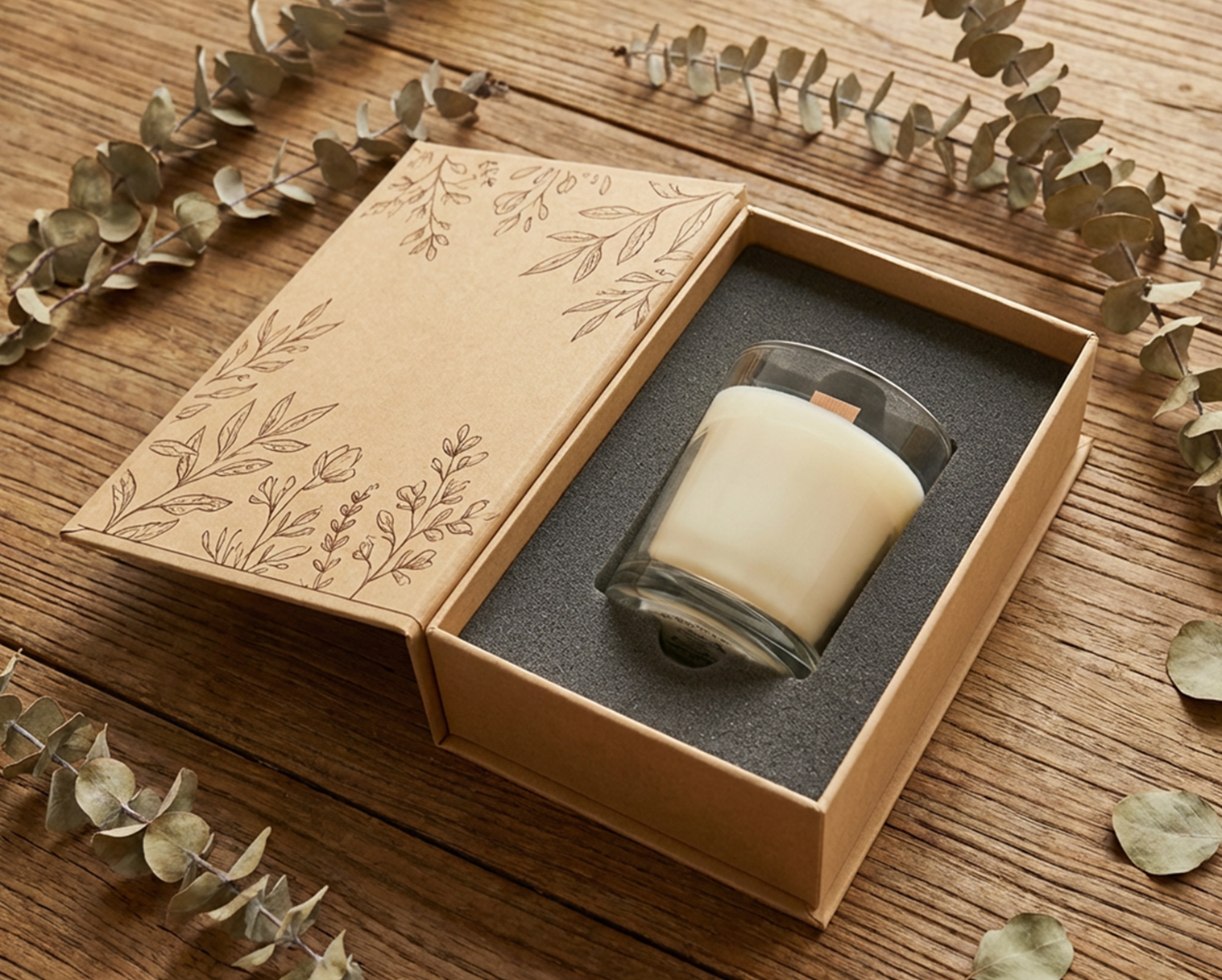
Secondary packaging is the outer box or sleeve surrounding the cosmetic container. It protects the primary pack, carries the brand story, and provides space for required information.
In the cosmetics world, packaging is a system with distinct layers. Secondary packaging is the layer that sits between the product container and the shipping box. It’s the outer carton, manga, or wrap that you see on the retail shelf, but it never touches the cosmetic formula itself.
Secondary vs. Primary and Tertiary Packaging
The packaging hierarchy is straightforward once you know the roles. Each layer has a specific job.
Primary packaging is the container that directly holds the product—the bottle, jar, tubo, or pump. Its main job is to preserve the formula and allow the customer to use it. It’s the only layer that has direct contact with the cosmetic.
Secondary packaging is the outer box that encloses the primary container. It’s designed to protect the primary pack, communicate the brand’s message, and hold regulatory information. Think of the box a perfume bottle comes in or the carton around a jar of face cream.
Tertiary packaging is the final layer used for logistics. This is the corrugated shipping box (or master carton) that groups multiple products together for bulk transport and storage. Its only purpose is to get products from the warehouse to the retailer safely.
Core Functions of Secondary Packaging
Secondary packaging does more than just look good. It serves several critical functions for cosmetic products.
- Proteção: It adds a crucial layer of defense, shielding the primary container from bumps, scuffs, and breakage during shipping and handling. This is especially important for fragile items like glass bottles or compacts.
- Brand Presentation and Marketing: On a crowded shelf, the secondary package is often the first thing a customer sees. It’s the main canvas for branding, storytelling, and premium finishes like foil stamping or embossing that create a strong first impression and justify a price point.
- Information and Compliance: Cosmetic products require a lot of information—ingredient lists, instruções de uso, avisos, and multi-language text. Secondary packaging provides the necessary space for this information when the primary container is too small.
- Organization and Logistics: It groups individual items into a single stock-keeping unit (SKU), making inventory management, empilhamento, and distribution much easier. It can also organize kits or multi-product sets into a single, cohesive package.
Unbox Excellence with Custom Rigid Packaging
Key Differences Between Primary and Secondary Packaging
Primary packaging touches the formula to ensure safety and function. Secondary packaging is the outer box, focused on protecting the container and creating shelf appeal.
Primary Packaging: Product Integrity and Application
This is the bottle, jar, or tube that directly holds the cosmetic. Its main job is to protect the formula and make the product usable. It has three core responsibilities:
- Directly holds the cosmetic formula, protecting its stability and safety from contamination, ar, and light.
- Enables consumer use through functional designs like pumps, conta-gotas, sprays, and tubes.
- Must carry all essential regulatory and safety information if the product is sold without a box.
Secondary Packaging: Shelf Appeal and Physical Protection
This is the outer box or sleeve that surrounds the main container. It has no contact with the product inside. Its purpose is to protect the primary pack and market the product.
- The outer box or wrapper that safeguards the primary container from damage during shipping and handling.
- Acts as the main canvas for branding, marketing, storytelling, and the unboxing experience.
- Provides structural support for storage and retail display, often grouping items into a single unit for sale.
Functions of Each Packaging Type
Primary packaging protects the formula inside. Secondary packaging protects the primary container on the outside and communicates the brand’s story on the shelf.
Primary Packaging: Product Containment and Preservation
The primary package is the container that directly touches the cosmetic formula—it’s the bottle, jar, or tube itself. Its first job is to hold the product safely and ensure it’s compatible with the formula. O material, whether it’s glass, plastic, or aluminum, cannot react with the ingredients or leach unwanted substances into the cream or serum.
Its second, and equally critical, job is preservation. This container acts as a barrier, shielding the formula from air, luz, umidade, and bacteria. A good primary package maintains the product’s stability, textura, and effectiveness from the factory to the last use. For sensitive ingredients like Vitamin C or retinol, brands use airless pumps or opaque materials to prevent degradation and keep the product working as intended.
Secondary Packaging: Brand Communication and Protection
Secondary packaging is the outer box or sleeve that surrounds the primary container. It never touches the product itself. Its main purpose is twofold: protect the primary pack and sell the product. It acts as a bodyguard during shipping and handling, absorbing impacts and preventing the bottle or jar from getting scratched, scuffed, or broken. This is especially important for fragile materials like glass.
Beyond protection, the secondary package is the brand’s billboard on the retail shelf. It’s the first thing a customer sees, so it does the heavy lifting for marketing. It uses graphics, cor, textura, and finishes like foil or embossing to tell the brand’s story, communicate value, and stand out from competitors. It also provides the extra space needed for ingredient lists, instructions, and other regulatory information that might not fit on the primary container.
Considerações Regulatórias
Cosmetic packaging rules cover the entire system, from material safety and on-container labeling to new mandates on waste reduction and recyclability for outer cartons.
Segurança, Labeling, and Material Compliance
Your primary packaging—the container that touches the product—faces the strictest rules. Materials must be chemically safe and non-reactive with your formula. International standards like ISO 22715 demand proof that no harmful substances migrate from the plastic or glass into the cosmetic. Brands must run compatibility and migration tests to verify this, ensuring the packaging doesn’t alter the product’s safety or efficacy. Your suppliers should be able to provide a Declaration of Conformity to prove they meet these standards.
Secondary packaging, like a carton or box, has a different safety job: physical protection. It must shield the primary container from damage during shipping and handling. Quality assurance protocols for secondary packs include drop tests and rub tests to confirm they can take a hit and that the printed information remains legible. For certain products, like flammable aerosols, the outer packaging also carries critical warnings to prevent accidental misuse.
Labeling rules are clear about the division of labor. Any information essential for safe use must be on the primary container. This includes the product name, distributor, batch number for recalls, and critical warnings. The secondary packaging acts as support, providing space for the full ingredient list (especially for small containers), the distributor’s address, and multi-language text for global markets. If the secondary packaging gets thrown away, the primary container must still provide all the information a consumer needs to use the product safely.
Sustentabilidade and Waste Reduction Mandates
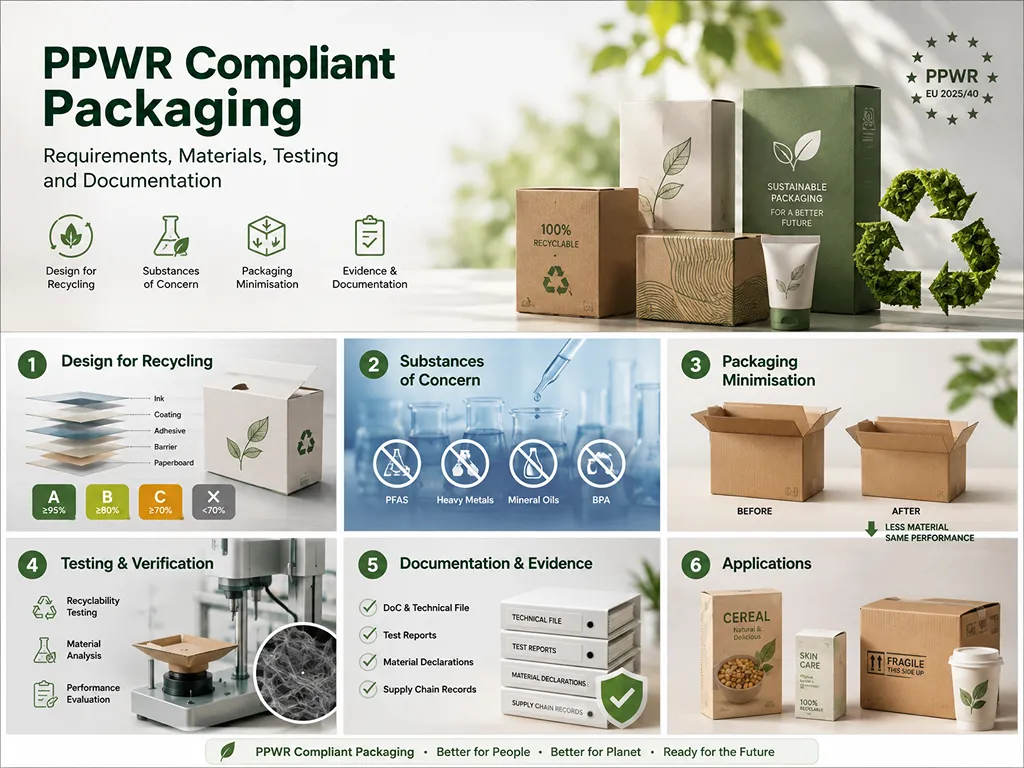
The regulatory landscape is shifting dramatically, with a heavy focus on sustainability. New rules, like the EU’s Packaging and Packaging Waste Regulation (PP), are forcing brands to justify every layer of packaging. These mandates apply to the entire system, from the bottle to the shipping case, and look at the whole lifecycle.
A core principle is reducing packaging to the “minimum necessary.” This directly targets oversized or purely decorative secondary cartons and excessive empty space. If a box doesn’t serve a clear function—like protecting a fragile item, carrying legally required information, or bundling a set—regulations will push brands to remove it. This forces a move away from using boxes for “aesthetic inertia” alone.
Por 2030, all packaging in the EU must be recyclable. This has huge implications for material choices. Complex secondary cartons with plastic laminates, mixed-material windows, or heavy metallic foils are becoming liabilities. The market is shifting to mono-materials, like simple paperboard, and using more post-consumer recycled (PCR) content. Any environmental claims or eco-labels on the packaging must be substantiated to avoid greenwashing penalties.
Extended Producer Responsibility (RPE) schemes are another key driver. These policies make cosmetic companies financially responsible for managing their packaging at the end of its life. This creates a powerful incentive to use less material, design for easy recycling, and avoid components that complicate waste sorting. The cost of dealing with non-recyclable packaging now lands directly on the brand’s balance sheet.
Sustainability Considerations
Primary packaging sustainability is constrained by formula protection, making secondary packaging the main opportunity for material reduction, simplification, and visible eco-design.
Primary Packaging: Balancing Protection and Circularity
For the primary container, sustainability always comes second to product protection. Since this layer directly touches the formula, its main job is to preserve the product and ensure safety. A failed container leads to wasted product, which carries a far higher environmental cost than the packaging itself. This non-negotiable requirement limits material choices, as any option must meet strict barrier, compatibility, and regulatory standards.
The focus here isn’t on elimination but on smarter selection. The goal is to find materials that protect the formula while enabling a circular path. This involves a trade-off between performance and end-of-life.
- Glass & Aluminum: These are highly and endlessly recyclable. Glass is inert and feels premium but is heavy, which increases transport emissions. Aluminum is lightweight and offers an excellent barrier, making it a strong choice for tubes and jars.
- PCR Plastics: Using post-consumer recycled (PCR) plastics like PET or HDPE reduces demand for virgin resin and cuts GHG emissions. The challenge is ensuring the PCR grade is clean and compatible with the cosmetic formula.
- Refillable Systems: This is a key strategy. Brands design a durable, premium outer shell (often glass or metal) that the consumer keeps, and sell lightweight refill pods or cartridges. This drastically cuts down on single-use material over the product’s lifetime.
- Mono-Material Design: Designing pumps, caps, and containers from a single type of plastic makes recycling far easier for consumers and sorting facilities. The complex, mixed-material pumps are a huge recycling headache.
Secondary Packaging: Prioritizing Reduction and Recyclability
Secondary packaging is where your beauty brand have the most freedom to make a real sustainability impact. Since it doesn’t touch the product, the material constraints are much lower. Outer boxes and sleeves are often non-essential for product performance, making them the first and easiest target for material reduction or complete elimination.
The guiding principle for secondary packaging is “less and simpler.” Every component should have a clear functional purpose—like protecting a fragile glass bottle or providing legally required information—not just adding bulk for shelf presence.
- Elimination: The most effective move is to get rid of the box entirely if the primary container is robust enough. Many brands are shifting to “naked” embalagem, especially for products in sturdy plastic tubes or bottles.
- Material Reduction: If a box is necessary, it should be right-sized to the product. This means minimizing empty space and using the lightest possible paperboard that still provides adequate structural protection.
- Recycled & Certified Fiber: Using paperboard with high post-consumer recycled (PCR) content is standard practice. Sourcing FSC-certified board ensures the virgin fiber comes from responsibly managed forests.
- Designing for Recyclability: This is critical. Brands are moving away from finishes that kill recyclability. This includes avoiding plastic laminations, minimizing metallic foils, and ditching plastic windows in cartons. The goal is a mono-material paperboard box that can go straight into the recycling bin.
Examples for Different Cosmetic Products
Packaging choices are dictated by the product. The formula’s needs determine the primary container, while branding, proteção, and retail strategy define the secondary box.
Facial Skincare
For facial skincare, primary packaging is all about protecting the formula and controlling the dose. You’ll see creams and balms in glass or plastic jars. Serums and sensitive anti-aging formulas come in airless pump bottles to shield them from air and light. Lotions and cleansers use standard pumps, while gels and spot treatments are often in tubes. Single-use sachets are for samples.
Secondary packaging is standard in prestige skincare. A folding carton houses the jar or bottle, adding a layer of protection for glass and providing real estate for branding and claims. For high-end lines, you see rigid set-up boxes, especially for multi-product regimen kits.
Body Care
Body care primary packaging is typically larger and more robust for bathroom use. Lotions and body washes come in large bottles with pumps or flip-top caps. Body butters and scrubs are housed in wide-mouth jars and tubs. For body oils, you’ll find glass or PET bottles with droppers or simple pour spouts.
Secondary packaging is less common for mass-market body care. It’s mainly used for premium body oils and luxury creams to enhance shelf appeal. Gift sets combining a wash, lotion, and scrub are a major driver for secondary boxes, often with internal trays to hold the products in place.
Hair Care
Primary packaging for hair care is built for wet environments. Shampoos and conditioners use large HDPE or PET bottles with user-friendly closures like pumps or disc-tops. Masks and deep conditioners come in jars or tubes. Styling products use spray bottles for mists and heat protectants.
Most shampoos and conditioners are sold without individual boxes. Secondary packaging shows up for premium hair oils and ampoule-based treatments. It’s also essential for kits, like at-home hair color or straightening systems, where the box organizes multiple components and provides critical step-by-step instructions.
Color Cosmetics (Makeup)
In makeup, primary packaging is as much about user experience as it is about protection. Liquid foundations are in glass or plastic bottles with pumps. Pressed powders, blushes, and bronzers use compacts, often with integrated mirrors. Lipsticks have their iconic bullet casings, and mascaras use specialized tubes with wiper systems to manage product on the wand.
Secondary packaging is very common, especially in prestige brands. An individual folding carton protects a lipstick case or foundation bottle from scratches. It also adds a lot of retail presence and makes small, high-value items harder to steal. For collections and holiday releases, rigid set-up boxes are used for lip kits or full-face palettes.
Fragrances
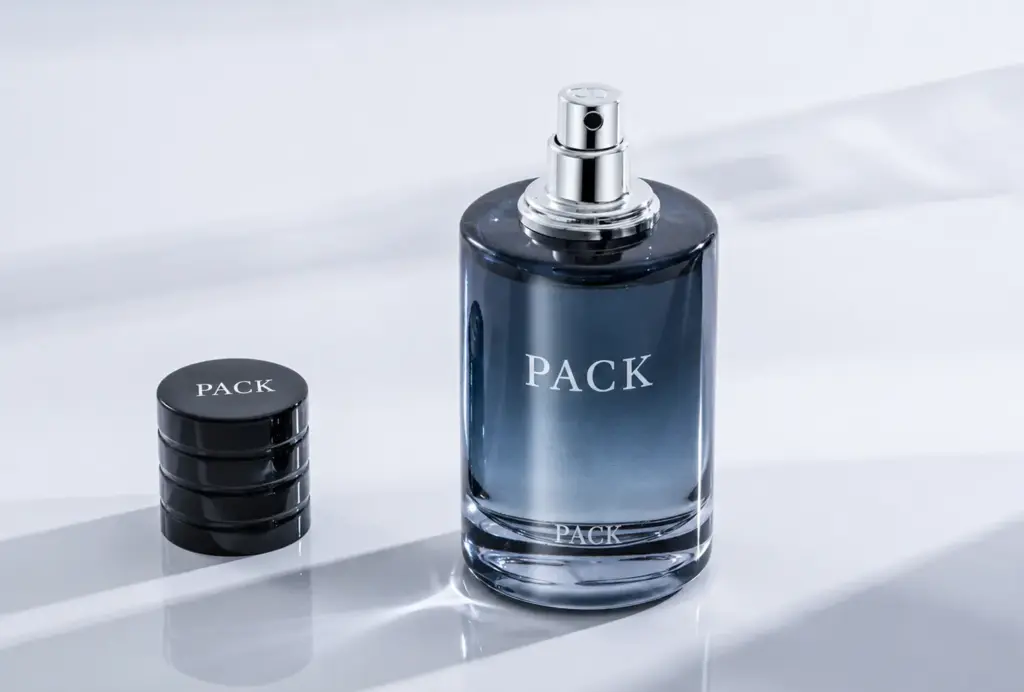
The primary packaging for perfume is almost always a glass bottle. O vidro é quimicamente inerte, so it won’t react with the high-alcohol formula. The bottle is paired with a crimped or screw-on spray pump and a decorative cap, which are central to the brand’s aesthetic. Sample sizes come in small glass vials.
Secondary packaging is practically a requirement for fragrances. A sturdy folding carton or a rigid set-up box is essential to protect the fragile glass bottle during shipping and handling. These boxes almost always contain an internal fitment or platform to hold the bottle securely in place. The box itself is a key part of the brand storytelling and luxury perception.
Men’s Grooming
Primary packaging for men’s grooming prioritizes function and durability. You’ll see aerosol cans for shaving foams, stick containers for deodorants, dropper bottles for beard oils, and tubes for shaving creams. The packs need to be straightforward and hold up in a bathroom environment. Clear warning labels are critical for products like flammable aerosols.
Secondary packaging is used to elevate a product into a more premium category, like a boxed deodorant stick or beard oil. It’s also fundamental for creating kits, such as a shaving set with a razor, blades, and aftershave, or a bundled gift set with multiple grooming products.
Travel Sizes and Samples
For this category, primary packaging is all about miniaturization. Products come in small tubes, garrafas, and jars that meet travel regulations. Single-use creams, masks, and cleansers are often in foil or plastic sachets. Fragrance samples are packaged in tiny glass vials with a simple cap or a small spray.
Secondary packaging is used to group these small items. Samples are often held in blister cards or small cardboard carriers for promotional campaigns. Travel kits containing a range of mini products (shampoo, lotion, etc.) are sold in small cartons or pouches. This outer layer provides the necessary space for branding and instructions that can’t fit on the mini containers.
Professional and Salon Products
Primary packaging for the professional market is built for function and bulk use, not retail shelves. Think large-capacity bottles and jerrycans for back-bar shampoos, large tubes for coloring agents, and single-dose glass ampoules for intensive treatments. Labeling is technical, including mixing ratios and safety warnings for trained professionals.
Secondary packaging in this space is about organization and logistics. You’ll see multi-unit cartons holding a course of treatment ampoules, or kit boxes that organize the components of a professional coloring system. For bulk items, the outer corrugated shipper often acts as the secondary packaging, bundling multiple large bottles for transport to the salon.
How to Choose the Right Packaging Combination
Start with the formula’s technical needs to pick the container. Então, engineer the outer carton to protect that container, fit your sales channel, and meet your budget.
| Define Primary Packaging Needs First | Engineer Secondary Packaging to Complement It |
|---|---|
| Analyze formulation sensitivity to light, ar, and moisture to select material and barrier properties. | Design the carton structure to fit the primary container’s exact dimensions, preventing movement and breakage. |
| Choose a dispensing mechanism (pump, dropper, tubo) that matches product viscosity and usability. | Align the substrate, acabamentos, and graphics with your brand’s market position and sales channel. |
| Verify chemical compatibility between the formula and container to prevent leaching or degradation. | Allocate panel space for all required information, like the full ingredient list and instructions. |
| Confirm supplier MOQs, prazos de entrega, and compatibility with your contract manufacturer’s filling lines. | Balance material costs, print complexity, and sustainability goals to meet your target cost-of-goods. |
Define Primary Packaging Needs First
Your product’s formula dictates the primary packaging. There’s no way around it. If you have light-sensitive ingredients like retinol or Vitamin C, you need an opaque or amber glass container. If your formula is sensitive to oxygen, you’re looking at an airless pump system. This isn’t about aesthetics yet; it’s about protecting the product’s stability and efficacy. The viscosity of your formula determines the dispensing mechanism. A thin serum works with a dropper, but a thick cream needs a pump or a jar.
You absolutely must run compatibility testing. This ensures the plastic or liner you choose doesn’t leach into the formula or cause it to degrade over time. Once you’ve shortlisted a few options, get on the phone with suppliers. You need to know their Minimum Order Quantities (Quantidade mínima), prazos de entrega, and price breaks. Send samples to your contract manufacturer to confirm the components work on their filling lines. A container is useless if your co-packer can’t fill it efficiently.
Engineer Secondary Packaging to Complement It
Once the primary container is locked in, you design the secondary packaging—the carton—around it. The first job of the carton is protection. It must be engineered to the exact dimensions of your bottle or jar to prevent it from moving, which is the main cause of breakage and scuffing during transit. Inserts or custom fitments are standard for fragile items like glass droppers.
The carton is also your billboard. Its design depends entirely on where you sell. For prestige retail, you’ll likely use a heavy, 18-24pt SBS paperboard with finishes like soft-touch lamination and foil stamping to signal quality. For an e-commerce brand, you might prioritize structural integrity and a memorable unboxing experience over complex finishes. You also need to reserve enough panel space for the full ingredient list, instructions, and other regulatory text without making it look cluttered. It’s a balancing act between the material cost, print complexity, and your target cost-of-goods. A fancy box that kills your margin is a failure.
Perguntas frequentes
What is the difference between primary, secundário, and tertiary packaging?
Primary packaging is the container that directly touches the cosmetic product, like a bottle, jar, or tube. Secondary packaging is the outer box or sleeve that surrounds the primary container. Tertiary packaging is the shipping box or master case used to protect multiple products during bulk transport and storage.
Is secondary packaging legally required for cosmetics?
A physical box is not always legally required. It becomes necessary when the primary container is too small to display all mandatory information, such as the full ingredient list, avisos, and distributor details. Nestes casos, an outer package is needed to ensure compliance.
Which types of cosmetics usually need secondary packaging?
Cosmetics that are fragile (like glass perfume bottles), part of a multi-product set, require extensive labeling (like active skincare), or are positioned as premium gifts typically need an outer box for protection, marca, and to carry required information.
Can a cosmetic product be sold without an outer box?
Sim, cosmetics can be sold without a box. This is possible as long as the primary container is robust enough for protection and has enough space to display all legally required information either directly on it or on an attached tag or leaflet.
What information must always be on the primary container?
The primary container must always show the information essential for safe use and identification. This includes the product name, net content, batch number for traceability, an expiration date or Period After Opening (PAO) symbol, and any critical safety warnings.
How does secondary packaging affect sustainability?
Secondary packaging directly impacts sustainability by adding material, peso, and waste. Its impact can be negative if it uses non-recyclable materials or is unnecessary. It can be positive if it protects the product from damage (reducing product waste) or is designed as part of a reusable or refillable system.
Pensamentos finais
Treating primary and secondary packaging as separate line items is a false economy. An uncoordinated approach risks formula degradation, danos no transporte, and a disjointed brand message. A unified packaging strategy is the only way to protect your product, marca, and bottom line.
Don’t guess which combination works for your specific product line. We recommend a technical review to align your formula’s needs with the right primary and secondary packaging system. Entre em contato com nossa equipe to define your specs and request targeted samples.