This complete buyer’s guide to custom cosmetic packaging addresses the core challenge for new brands: balancing premium differentiation against the risks of high MOQs, long lead times, and thin margins. A misstep in material choice or supplier vetting can drain your launch budget before a single unit sells.
Neste artigo, we break down material choices like glass versus PET, decoration techniques such as soft-touch lamination, and the supply chain realities of a 3-6 month production timeline. Use these data to select a packaging manufacturer that aligns with your brand vision and budget.
What Is Custom Cosmetic Packaging
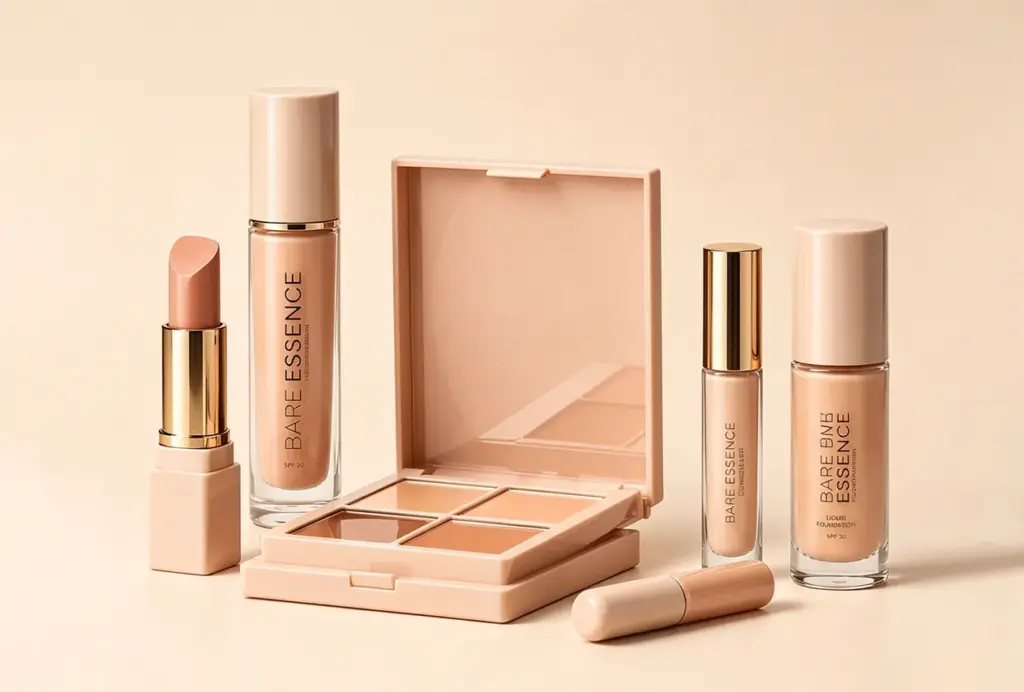
Embalagens cosméticas personalizadas isn’t just a box. It’s a complete system engineered for a specific brand and product, integrating identity, função, and protection from the ground up.
A System Designed for a Specific Brand and Product
Think of custom cosmetic packaging as a bespoke solution, not an off-the-shelf component. It’s packaging designed, engineered, and manufactured specifically for one cosmetic product and brand, rather than using generic stock formats. The customization is physical: dimensões, estrutura, Materiais, cores, and finishes are all tailored to the product’s needs and the brand’s identity.
This approach covers the entire packaging ecosystem. It starts with the primary packaging that directly holds the formula, like jars, garrafas, and tubes. It includes the secondary packaging, such as the retail box that protects and presents the container. It even extends to the tertiary packaging, which are the shipping boxes used for bulk transport. It’s a holistic, brand-tailored system built around a specific product line.
Key Characteristics That Define Customization
Custom packaging is defined by a few core traits that separate it from generic options. Every decision is intentional, from material selection to how the box fits on a pallet.
- Product-Specific Engineering: The package structure is built to the exact physical specs of the cosmetic product—its volume, viscosity, fragilidade, and how it’s dispensed. Nothing is left to chance.
- Brand Identity Integration: The packaging becomes a physical extension of the brand. Its color palette, tipografia, forma, and graphic style are all designed to reflect the brand’s personality, whether that’s minimalist, luxo, or clinical.
- Functional Protection and Usability: The design protects the formula from light, ar, and damage during shipping. It also ensures the customer can use the product easily and safely, with good ergonomics and controlled dispensing.
- Communication and Compliance: It’s a communication tool. A custom layout ensures there is enough space for all required information—like ingredient lists, números de lote, and usage instructions—in a way that is legible, compatível, and visually clean.
- Operational and Supply Chain Fit: This isn’t just about looks. Custom packaging is engineered to work with specific filling lines, stack efficiently on pallets, and withstand the rigors of the supply chain.
Why Beauty Brands Choose Custom Packaging
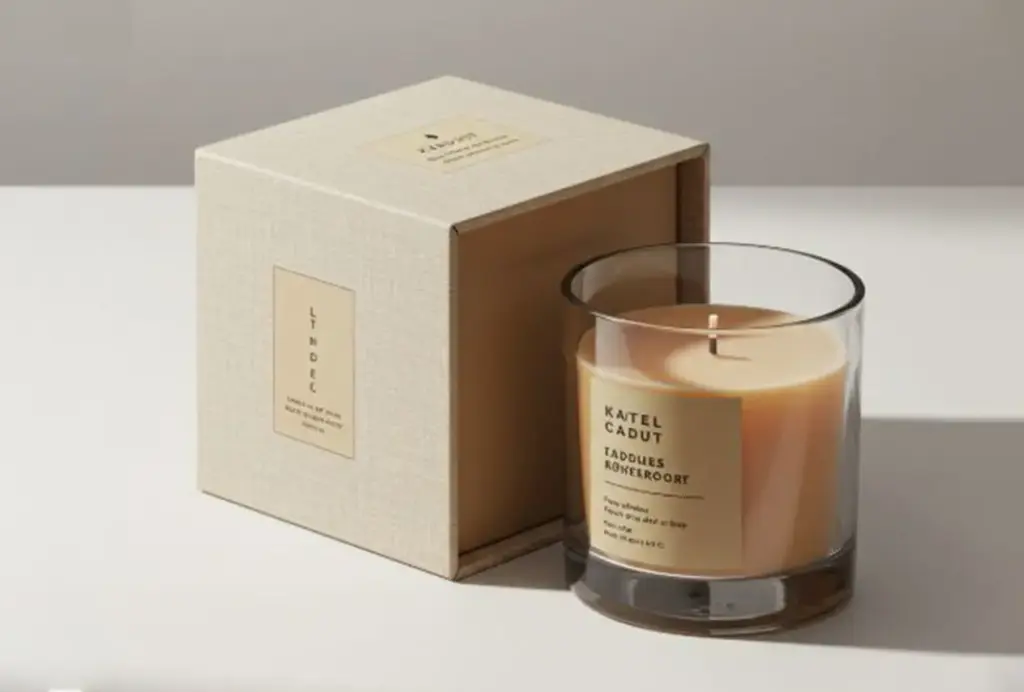
Beauty brands choose custom packaging to stand out, build a memorable identity, and justify premium prices. It’s a strategic tool for brand differentiation and customer loyalty.
Building Brand Identity and Justifying Premium Value
Em um mercado lotado, packaging is often the only thing that separates one brand from another on a shelf or in an online store. Stock containers look generic and forgettable. Custom packaging allows a brand to create a unique visual signature through specific shapes, cores, Materiais, e acabamentos. This is how brands build a distinct identity, whether it’s minimalist and clean, or opulent and luxurious.
This unique identity directly supports a higher price point. Customers instinctively judge a product’s quality by its packaging. Heavier glass, finely crafted closures with a satisfying ‘click’, and flawless printing all signal that the product inside is also high-quality. This perceived value makes customers more willing to pay a premium, as the physical experience of the packaging aligns with the brand’s promises of performance and luxury.
Improving Product Functionality and the Customer Experience
Beyond looks, custom packaging is engineered to protect the product and improve how it’s used. A sensitive formula with vitamin C needs an airless pump to prevent oxidation. A facial oil requires a dropper for controlled dosing. Standard packaging can’t offer this level of tailored protection or functionality, which can compromise the product’s effectiveness and shelf life.
This focus on function creates a better customer experience. The unboxing process itself becomes a marketing tool, with custom inserts and magnetic closures creating a memorable reveal. The daily interaction with the product—the feel of a soft-touch coating or the ease of a one-handed pump—reinforces positive feelings about the brand. This consistent, satisfying experience is what turns a one-time buyer into a loyal customer.
Elevate Your Brand with Premium Rigid Boxes
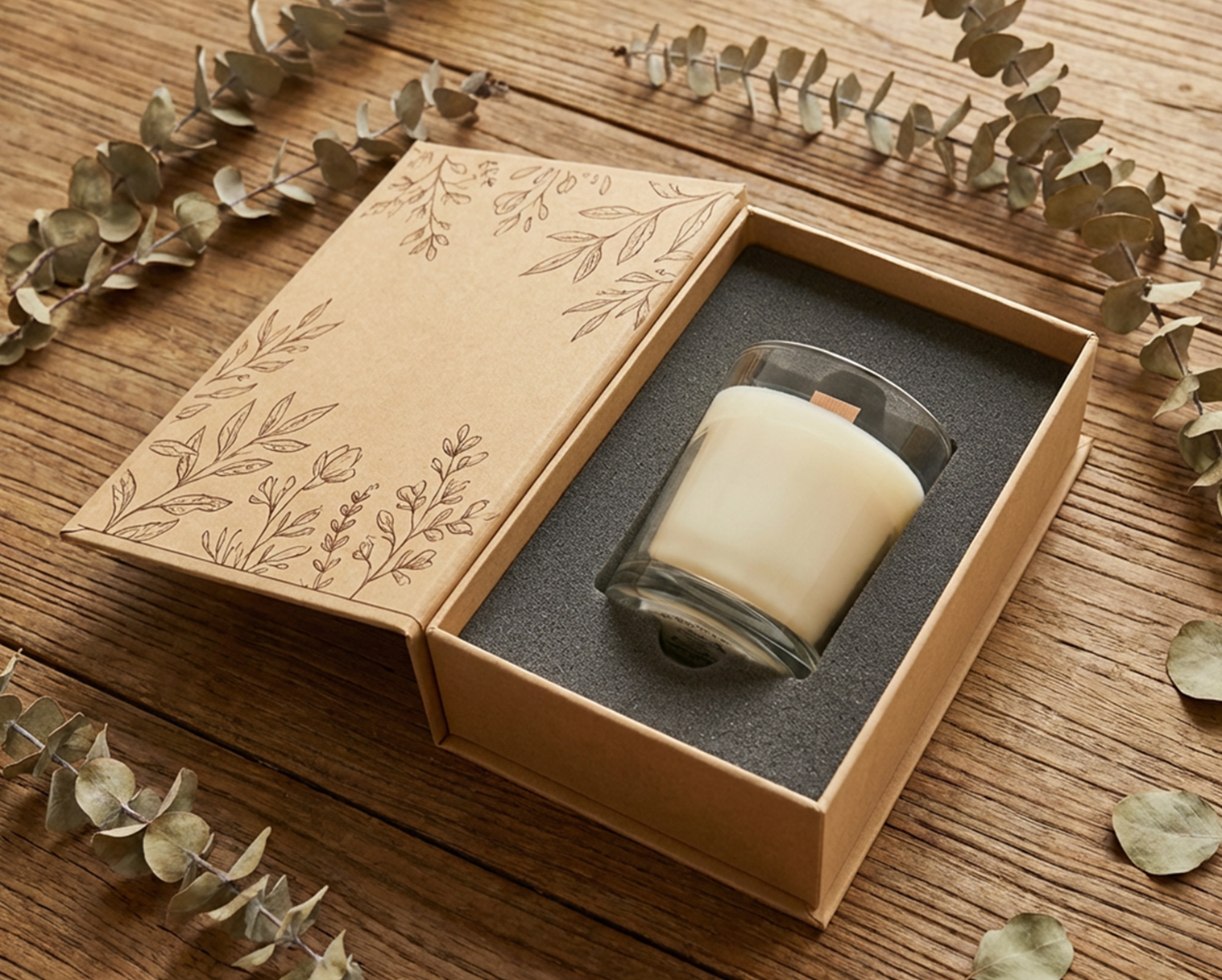
Types of Cosmetic Packaging (Caixas, Bottles, Tubes, Jars)
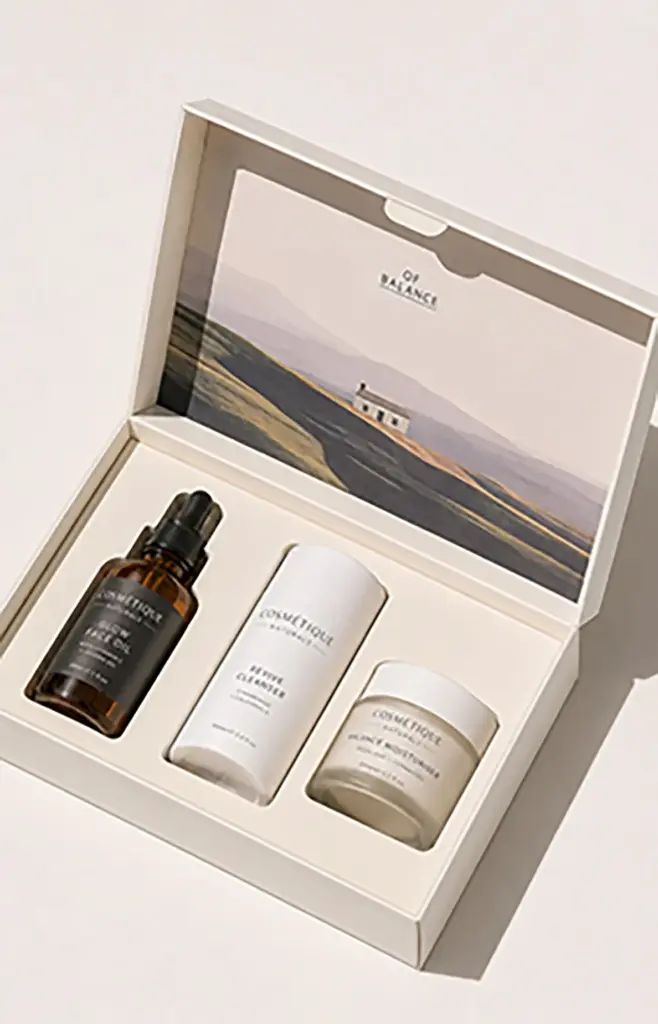
The cosmetic world runs on four main containers: garrafas, tubos, and jars for the product itself, and boxes to protect and present them. Your formula dictates the container.
Primary Containers: Bottles, Tubes, and Jars
Primary packaging is what directly holds your cosmetic formula. The choice here is all about protecting the product, making it easy to use, and matching your brand’s feel.
Bottles are the go-to for liquids and fluids. They have to keep the formula stable and dispense it cleanly. Os tipos comuns incluem:
- Standard Bottles: For lotions, shampoos, and toners with simple screw or flip-top caps.
- Pump Bottles: Offer metered doses for creams and serums, reducing contamination.
- Dropper Bottles: Used for potent serums and facial oils that require precise, small-dose application. They are almost always glass.
- Airless Pump Bottles: A must for sensitive formulas with active ingredients like Vitamin C. The vacuum system prevents air from getting in and degrading the product.
Tubes are perfect for semi-solid products like creams, gels, and sunscreens. They are lightweight, portable, and hygienic since you squeeze the product out instead of dipping your fingers in. Plastic squeeze tubes are the most common, but you’ll also see aluminum tubes for premium hand creams and paper-based tubes for eco-conscious brands.
Jars are made for thick, scoopable products like face creams, body butters, and masks. Their wide-mouth access is great for tactile application, but it also increases the risk of finger contamination and air exposure. That’s why you often see inner lids or spatulas included. Glass jars give a premium feel, while plastic jars are more lightweight and durable. For a high-end look, some brands use double-wall jars, which have an inner cup inside an outer shell to create a sense of substance and luxury.
Secondary and Outer Packaging: Caixas
Boxes are the secondary packaging that protects the primary container. But their job isn’t just protection—they are a critical branding surface for your story, ingredientes, and regulatory info.
Different products and brand positions call for different box structures:
- Caixas dobráveis: The workhorse of the industry. These standard paperboard boxes are cost-effective and used for almost everything, from a serum bottle to a lipstick tube.
- Caixas Rígidas: Made from thick, non-collapsible board, these are for luxury items. Think gift sets, heavy glass jars, or premium fragrances where you want a sturdy, high-end unboxing feel.
- Gaveta (Deslizar) Caixas: A tray slides out from a sleeve. It’s a great format for skincare kits and sample sets where you want to reveal the products inside.
- Caixas de fechamento magnético: A type of rigid box with a hinged lid and hidden magnets. It’s purely for the premium experience and is common for high-end collections.
- Ondulado Caixas de correio: These are for e-commerce. Made with fluted board, their main job is to survive shipping and protect the products inside, but they can also be printed for a branded unboxing experience.
Choosing the right box comes down to a few key things. Heavy glass jars need rigid boxes with inserts to keep them from breaking. Lightweight tubes can get by with a simple folding carton. If you’re selling online, a durable corrugated mailer is non-negotiable. And the entire experience, from the box structure to the inserts, has to match the price point and promise of your brand.
Choosing Packaging Materials
The right material choice balances chemical safety for the formula with the structural needs of your supply chain. It’s a game of protection meets brand perception.
Primary Materials: What Touches the Product
The materials in direct contact with your formula—the primary packaging—are picked based on chemical compatibility, product protection, and the brand feel you’re aiming for. It’s a technical decision that directly impacts product stability and customer safety.
- Glass is inert, meaning it won’t react with your formula. It offers a premium perception, making it ideal for sensitive products like serums, oils, and fragrances.
- Plastics like PET and PP are lightweight, resistente a estilhaços, and cost-effective. This makes them a practical choice for high-volume products like lotions and cleansers.
- Aluminum provides a strong barrier against light and air, which is critical for preserving certain formulas. It’s a solid fit for balms, solid perfumes, and deodorant sticks.
Secondary Materials: The Box and Brand Experience
Outer packaging like paperboard cartons and mailers serves two functions: it protects the primary container during shipping and handling, and it’s your first real chance to communicate brand identity on a physical shelf or in an unboxing moment.
- Paperboards like SBS are the industry standard for retail boxes. They provide a smooth surface that’s perfect for high-quality printing and premium finishes.
- Quadro de cinza rígido creates sturdy, high-end boxes for luxury items and gift sets. It gives you maximum protection and a weighty, premium feel that justifies a higher price point.
- Corrugated board is essential for e-commerce. It combines the strength needed for the rough-and-tumble world of shipping with a printable surface for branding.
Impressão & Surface Finishes
Printing and surface finishes make a brand’s identity tangible. These techniques dictate luxury perception, durabilidade, and the critical unboxing experience that connects with customers.
Core Printing Methods for Cosmetic Packaging
The printing method you choose depends on the material, volume de pedidos, and the look you’re going for. Each has its place in the cosmetic world.
- Impressão offset: This is the industry workhorse for paperboard packaging like folding cartons and rigid box wraps. It delivers high-resolution, photo-quality images and is cost-effective for large production runs. It’s not a good fit for short runs or for printing directly onto curved containers.
- Impressão da tela (Silk Screen): This is the go-to for decorating directly on bottles, potes, and tubes made of glass, plastic, or metal. The ink lays down thick and opaque, creating vibrant graphics on dark or curved surfaces. It’s durable and often the most budget-friendly choice for new brands.
- Impressão digital: A game-changer for short runs, seasonal editions, and prototyping. Since there are no printing plates, you can change designs quickly and even personalize packaging with variable data. The unit cost is higher than offset for large volumes, but the flexibility is unmatched for small batches.
- Carimbo quente (Carimbo de papel alumínio): Not a printing method in the traditional sense, but a crucial decoration technique. It uses heat and pressure to transfer metallic or pigmented foil onto a surface. This creates crisp, reflective metallic logos and accents that ink can’t replicate, signaling a premium or luxury positioning.
- Pad Printing: This is a problem-solver for printing on irregular or curved surfaces like caps, pumps, e compactos. A flexible silicone pad picks up ink and wraps it around complex shapes with precision.
- Impressão flexográfica: Primarily used for labels, mangas retráteis, and other flexible packaging. It’s a high-speed process that’s efficient for large volumes, making it common for mass-market products.
- Laser Engraving: This method etches a design directly into metal, vidro, or some plastic surfaces. It creates a permanent, tamper-resistant mark without any ink. The result is a minimal, high-end look that aligns with luxury and clean beauty aesthetics.
Major Surface Finishes and Decoration Techniques
Finishes are what create the tactile and visual experience. They protect the print and communicate brand value, from mass-market durability to high-end luxury.
- Revestimentos (Matte, Lustro, ultravioleta): A liquid coating is applied over the print. A gloss finish is bright and reflective, great for youthful brands. A matte finish is soft and sophisticated, common in high-end skincare. Spot UV applies a high-gloss effect to specific areas (like a logo) to create a striking contrast against a matte background.
- Laminação (Soft-Touch): A thin plastic film is bonded to the paperboard. Besides adding durability, it can create a unique feel. Laminação de toque suave, em particular, produces a velvety, rubbery texture that is strongly associated with luxury. It’s a sensory cue that elevates the unboxing experience, but you need to test its durability against scuffs.
- Gravação & Gravação: These techniques use a die to physically alter the paperboard. Embossing raises the surface to create a 3D effect, while debossing presses it down. It adds physical dimension to logos and patterns, making the packaging more interactive and premium. It’s often combined with foil stamping.
- Frosting & Etching: These finishes transform a clear glass or plastic container into a semi-transparent, matte surface. The frosted look reinforces a minimalist, clean, or premium brand image and is popular in the skincare world.
- Metallization & Electroplating: This process applies a thin metallic layer to components, usually plastic caps or collars, to give them a mirror-like chrome or gold finish. It’s a high-cost, high-impact technique reserved for prestige and luxury products. While durable, it complicates recycling.
- Holographic & 3D Effects: Techniques like Cast & Cure create multi-dimensional holographic patterns that shift in the light. Paired with raised UV effects, these finishes produce bold, dynamic packaging perfect for fashion-forward or youth-oriented makeup lines.
Packaging Design Process
The packaging design process is a structured path from brand strategy and creative development to the technical execution of physical prototypes and final production-ready files.
Strategy and Creative Development
The process kicks off by establishing a clear strategic foundation. You must define the brand’s positioning—is it luxury, clinical, or eco-conscious? This informs the product’s story and the core business requirements like target cost, volumes de pedidos, and launch deadlines. Without this clarity, the design has no direction.
Próximo, you analyze what competitors are doing. This isn’t about copying them. It’s about identifying visual opportunities and understanding the expected forms and materials for the category. This analysis helps find gaps in the market, allowing the brand to stand out while still feeling appropriate for the product type.
With strategy set, the creative work begins. The visual direction is developed using mood boards that capture the brand’s intended feel through imagery, textures, and competitive examples. From there, specific typography and color palettes are chosen to reflect the brand’s identity and ensure consistency across all packaging.
The final strategic step is designing the artwork layout. This involves integrating all the brand elements, like logos and key visuals, with the mandatory regulatory and informational content. Every panel—front, back, and sides—is planned to balance brand messaging with compliance requirements like ingredient lists and net weight.
Technical Execution and Production
Once the creative direction is approved, the focus shifts to technical realities. The first step is selecting the functional primary packaging—the bottle, jar, or tube that directly holds the product. The choice depends on the formula; for instance, oxidation-prone serums need airless pumps. Então, the structural format for any outer boxes is designed to fit these primary containers perfectly.
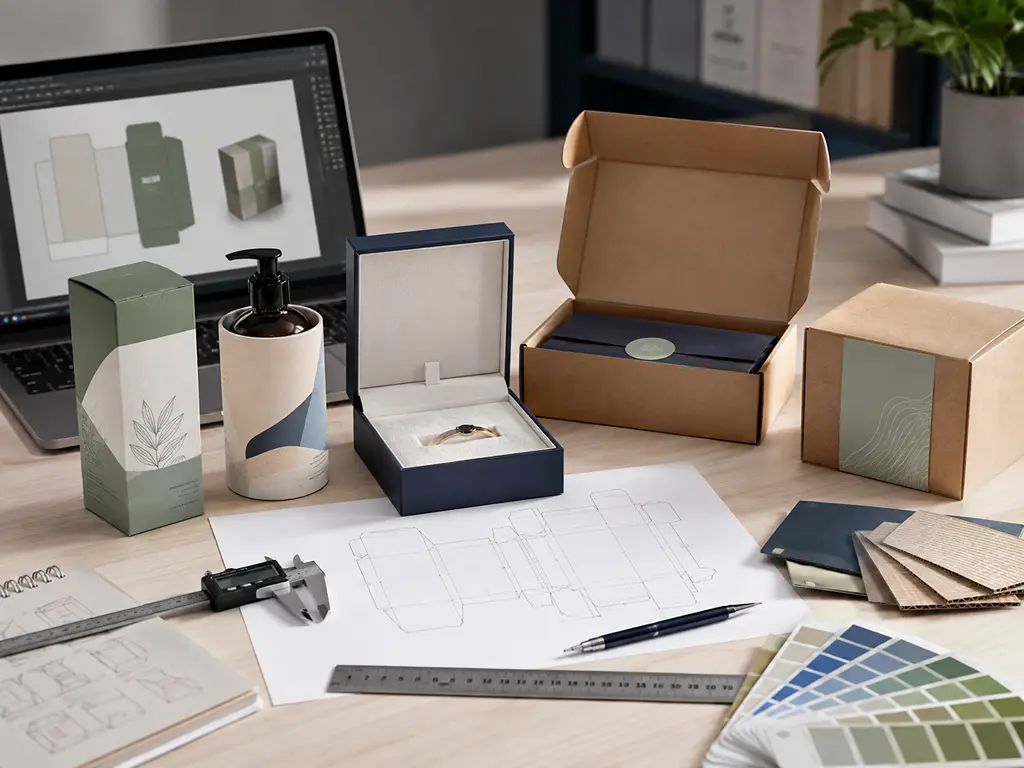
With the structure defined, you create precise dielines. These are the technical blueprints for the manufacturer, showing all the cut paths, fold lines, and glue areas. The dieline must also include a bleed area, typically 3mm, to prevent white edges during cutting. Working with a manufacturer’s specific dieline template is the best way to avoid structural errors.
Before committing to a full production run, you build and test physical prototypes. These mockups verify the structural fit, functional performance, and visual accuracy of the design. You check if the product fits correctly, if the box closes properly, and if the colors and finishes look right on the actual material. This is a critical step to catch problems early.
The last phase is preparing the final, press-ready files for the manufacturer. These files have separate layers for CMYK artwork, spot colors, and special finishes like foil or embossing. From there, you manage supplier communication and oversee the entire production timeline, from approving the final printed proofs to coordinating the final delivery.
MOQ, Amostragem & Production Timeline
Plan for a 3-6 month project window. Minimum order quantities (Quantidade mínima) determine your unit cost, so balance your first order volume with your budget.
Defining Your Order: MOQ and Cost Structure
Minimum order quantity, or MOQ, is the biggest lever affecting your per-unit cost. Manufacturers have to cover setup, ferramentas, and material costs, and those fixed fees get spread across your order. A bigger order means a lower price per piece.
Here’s a realistic look at where MOQs land for different types of cosmetic packaging:
- Standard Packaging: For something like a printed folding carton, expect MOQs between 1,000 e 5,000 unidades. This is a common entry point for many brands.
- Fully Custom Molds: If you’re creating a brand-new bottle or jar shape, the commitment is higher. You’re looking at 5,000 para 10,000 unidades, sometimes more, to justify the cost of the new mold.
- Strategy for New Brands: You don’t have to start with a 10,000-unit order. The smart play is to customize in-stock packaging. Order 250 para 1,000 units of a standard bottle or jar and make it your own with a custom label or a simple screen print. This keeps your upfront investment low while you test the market.
Mapping the Project Timeline from Sampling to Delivery
Getting from an approved design to having products in your warehouse takes time. Rushing the process leads to expensive mistakes. For any 2026 launch planning, you need to build a realistic timeline that accounts for every stage.
Here’s how the timeline usually breaks down:
- Sampling and Validation (3–6 weeks): This isn’t just about getting a pretty sample. You need to perform formula compatibility tests to make sure your product doesn’t react with the packaging. This phase is critical and shouldn’t be skipped.
- Production Lead Time (4–16 weeks): The actual manufacturing time varies widely. Decorating in-stock items might take 4 para 8 weeks. A project involving brand new molds can easily stretch to 10 para 16 weeks before anything ships.
- Envio (1–6 weeks): Air freight is fast but expensive, typically taking 1 para 2 weeks door-to-door. Sea freight is more economical but much slower, requiring 4 para 6 weeks. This doesn’t even account for potential customs delays, so build in a buffer.
When you add it all up, a realistic project window from placing your order to having products ready to sell is about 3 para 6 months. Plan accordingly.
Conformidade & Labeling Requirements
Your custom packaging is a legal document. Labeling rules differ by market, so you must design for all mandatory information—ingredients, avisos, and quantity—from the very beginning.
Core Labeling Elements Across Markets
No matter where you sell, certain information is non-negotiable. Your custom packaging design must reserve enough clean, legible space for these core legal requirements. Failing to do so isn’t a design flaw; it’s a business risk.
- Product Identity: A clear statement of what the product is, como “moisturizer,” “serum,” ou “shampoo.”
- Net Quantity: The net contents of the product, stated accurately by weight, measure, or count. Format and units are dictated by market rules.
- Ingredient Declaration: An ingredient list, almost always in descending order of predominance. Using INCI nomenclature is the global standard.
- Responsible Business Information: The name and business address of the manufacturer, packer, or distributor.
- Warnings & Directions for Use: Required cautionary language and instructions for any products with potential hazards or specific use limitations.
- Country of Origin: Mandatory for imported cosmetics in many jurisdictions, including the U.S.
- Batch/Lot Code: A non-negotiable for traceability, recalls, e controle de qualidade. Every serious brand needs this.
Navigating Key Regional Regulations
Don’t get caught assuming one label works everywhere. The rules for major markets like the U.S., Canadá, and the EU have critical differences. A single design often needs local adaptation to avoid getting your product stopped at the border.
In the United States: The FDA’s regulations under the FD&C Act and the Fair Packaging and Labeling Act are what matter. Key points for your packaging design include:
- Outer vs. Inner Container: The ingredient list must appear on the outer container (the box) for retail products. If the inner bottle or jar is ever sold on its own, it needs its own compliant label.
- Principal Display Panel (PDP): The front-facing panel has strict placement and type-size rules for the product identity and net quantity, tied directly to the container’s size.
- MoCRA Contact Info: The Modernization of Cosmetics Regulation Act (MoCRA) now requires a domestic phone number, address, or electronic contact for consumers to report adverse events.
In Canada: Health Canada’s Cosmetic Regulations add a few more layers you must account for in your design:
- Bilingual Labeling: Core information, like the product identity, must be in both English and French.
- Metric Units: Net quantity has to be declared in metric units, also in both languages.
- Dealer Identity: The label must clearly identify the dealer and their principal place of business.
In the European Union: The EU Cosmetics Regulation is the law of the land. It’s complex, but at a minimum, your packaging must clearly display responsible person information, a full ingredient list, and any warnings needed to ensure product safety and stability. A design that works perfectly in the U.S. will almost certainly need changes for the EU market.
How to Choose a Cosmetic Packaging Manufacturer
You’re vetting their real-world technical skills and quality systems against their commercial terms to find a reliable long-term partner.
Picking a manufacturer is one of the most critical decisions you’ll make. A bad partner can sink a launch with delays, quality issues, or compliance failures. A good one becomes an extension of your team. The goal is to balance what they can actually make with how they operate as a business. You need to dig into both their technical chops and their partnership potential.
| Evaluating Technical Capabilities & Quality Systems | Assessing Commercial Terms & Partnership Fit |
|---|---|
|
Manufacturing Model: Do they have in-house mold making, produção, and decoration? A one-stop shop reduces lead times and improves quality control. Outsourcing key steps adds risk. |
MOQs and Scalability: Confirm their Minimum Order Quantities for stock vs. custom parts. Do their price breaks align with your volume forecasts? Can they handle a sudden spike in demand? |
|
Product Specialization: Vet their portfolio. Do they specialize in cosmetics, or is it a sideline? A true cosmetic specialist understands the nuances of glass, airless pumps, and luxury finishes. |
Pricing and Total Cost: Look beyond the unit price. Get detailed quotes that include tooling, setup fees, and decoration. The cheapest quote is rarely the best value if it leads to defects or delays. |
|
Quality Certifications: Ask for their ISO 9001 certificate. For primary packaging, ISO 15378 or a specific GMP certification is a strong indicator of hygiene and control. Vague claims aren’t enough—get the documents. |
Lead Times: Get timelines for both initial orders (with sampling and tooling) and repeat orders. A reliable partner will give you realistic schedules, not just what you want to hear. |
|
Testing and Compliance: How do they ensure material compatibility with your formula? They should have clear protocols for functional tests (vazamento, drop, cap torque) and regulatory compliance for your target markets (UE, FDA). |
Communication and Service: How quickly and clearly do they respond? A dedicated project manager is a good sign. Assess their willingness to solve problems versus just taking orders. |
|
Sustentabilidade & Inovação: Can they provide sustainable options like PCR plastics, mono-material designs, or refillable systems? Check for FSC certification for paper goods. A forward-thinking supplier invests in these areas. |
Trial Orders and Audits: Before committing to a large run, do a small trial order to test their real-world performance. If possible, conduct a factory audit (or hire a third party) to verify their capabilities and quality systems on the ground. |
Perguntas frequentes
What is custom cosmetic packaging?
Custom cosmetic packaging is packaging that is specifically designed, engineered, and decorated for a particular brand and product, instead of using standard, off-the-shelf containers or boxes.
Why do beauty brands use custom packaging?
Beauty brands use custom cosmetic packaging as a strategic tool to drive sales, differentiate in a crowded market, signal quality, and deepen customer trust and loyalty. It transforms a generic product into a recognizable, premium-feeling brand experience.
What materials are best for cosmetic boxes?
The best materials for cosmetic boxes depend on product type, posicionamento da marca, protection needs, e metas de sustentabilidade. The core materials are paperboard, papelão ondulado, plastics, metals, vidro, wood, bamboo, and bio-based materials, each serving specific roles.
What is the MOQ for custom cosmetic packaging?
The minimum order quantity (MOQ) for custom cosmetic packaging typically ranges from 3,000 para 10,000 unidades. Lower-MOQ stock packaging can start around 100–500 units, while highly specialized packaging often requires 12,000 units or more.
How much does custom cosmetic packaging cost?
Custom cosmetic packaging typically costs between $0.50 e $5.00 per unit for most brands, though the full range is about $0.30–$15.00. A startup’s first production run of 500–1,000 units often costs around $1,500–$3,000 for the boxes alone.
How long does production take?
Most custom cosmetic packaging production takes 15–30 days for manufacturing alone. The total project timeline, from brief to delivery, commonly ranges from 3 para 12 weeks, depending on customization, mold development, e envio.
Can cosmetic packaging be made from recycled materials?
Sim, cosmetic packaging is commonly made from recycled materials. Brands increasingly use post-consumer recycled (PCR) plastics, recycled glass, and recycled aluminum to reduce virgin material use and support a circular economy.
What printing methods are used for cosmetic packaging?
Common printing methods for cosmetic packaging include screen printing, offset printing, flexographic printing, impressão digital, pad printing, and hot stamping. Each is chosen based on the material, forma, volume de pedidos, and desired finish.
How do I choose the right cosmetic packaging supplier?
Choosing the right cosmetic packaging supplier requires a structured evaluation of their technical fit, reliability, custo, conformidade, and ability to scale. Focus on suppliers specializing in cosmetics who can meet your specific material, decoration, and quality requirements.
What certifications should a packaging manufacturer have?
A cosmetic packaging manufacturer should hold certifications for quality (ISO 9001), higiene (BPF, ISO 22716), environmental standards (Fsc, ISO 14001), and social compliance (UMA PERTURBAÇÃO, BSCI). These verify safety, sustentabilidade, and ethical production.
Pensamentos finais
Generic stock packaging may lower your initial costs, but it’s a strategic dead end that leaves your brand looking forgettable and cheap. Custom packaging is your primary defense against market irrelevance. It is the physical proof of your brand’s promise and the reason a customer will choose you over a competitor.
The difference between standard paperboard and a soft-touch rigid box is something you have to feel. Stop theorizing and start verifying your brand’s physical presence. Entre em contato com nossa equipe to review your specifications and get physical samples into your hands.