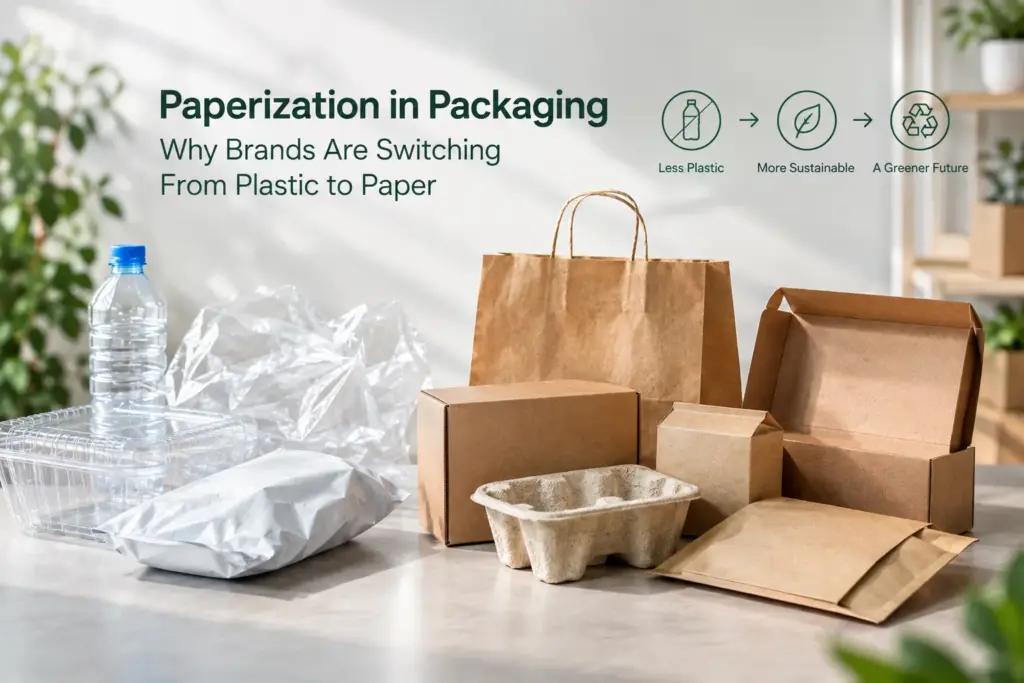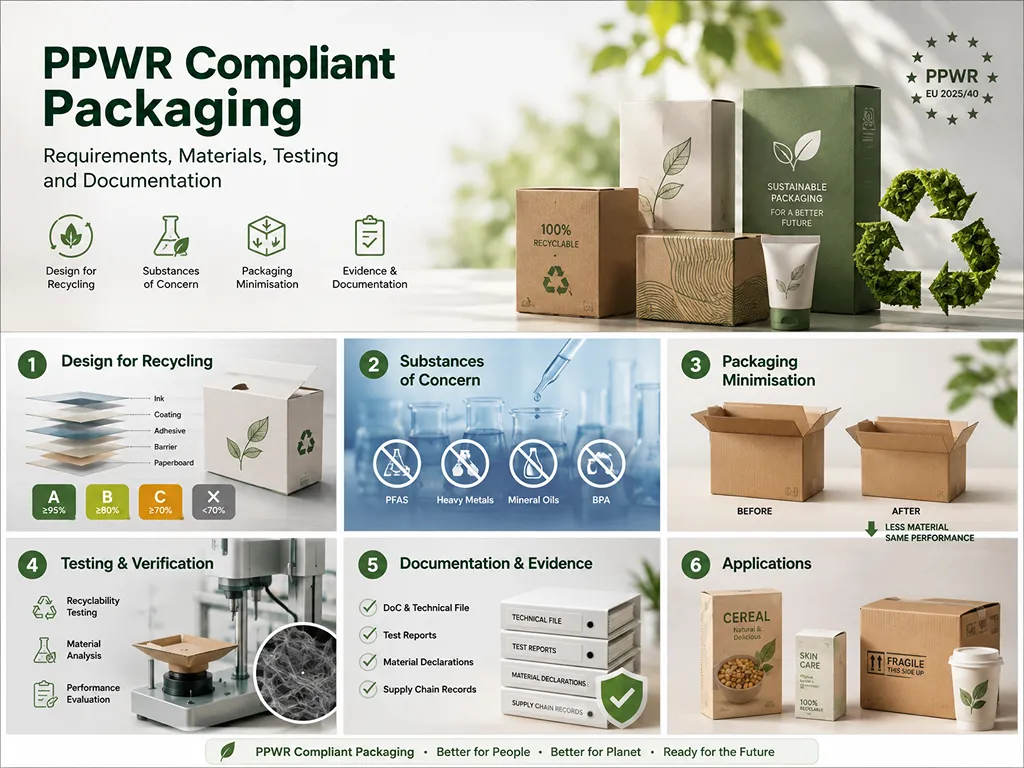
Selecting the correct types of cardboard boxes directly impacts your product margins, shipping overhead, and transit damage rates. Sourcing standard packaging might seem cost-effective, but over-specifying wall thickness inflates parcel shipping costs, while under-specifying structural strength leads to collapsed pallets and expensive product returns during distribution.
This analysis benchmarks structural designs using the FEFCO standard, detailing structural variants from 0201 slotted containers to 07xx auto-lock mailers. Valutiamo single-wall and double-wall boards da 23 A 82 ECT to help you optimize packaging strength and minimize cost-per-unit.
9 Common Types of Cardboard Boxes
Quick Comparison Overview
| Box Style | Category | Ideal Applications | Verdict |
|---|---|---|---|
Contenitore con fessura regolare (RSC) — FEFCO 0201 |
Slotted Boxes | General Shipping, Magazzinaggio, and E-commerce Master Cartons | The highly efficient, industry-standard shipping box ideal for cost-effective general-purpose cargo. |
Full Overlap Container (FOL) — FEFCO 0203 |
Slotted Boxes | Heavy Machinery Parts, Dense Hardware, and Fragile Glassware Shipping | Extra-thick overlapping flaps provide outstanding compression strength for heavy, dense, or fragile items. |
Half-Slotted Container (HSC) — FEFCO 0204 |
Slotted Boxes | Canned Goods, Bottled Beverages, and Stability-Sensitive Products | Features flush, gap-free inner flaps to ensure a level base that prevents tipping. |
One-Piece Folder (OPF) — FEFCO 0427 |
Folders and Trays | Mailer per l'e-commerce, Elettronica di consumo, and Subscription Boxes | Durevole, self-locking mailer with triple-thickness side walls offering superior crushing protection. |
Two-Piece Telescope Box — FEFCO 0301 |
Telescope Boxes | Retail Gift Sets, Book Shipping, and Industrial Ceramic Tiles | Two-piece adjustable-height design providing exceptional edge defense and vertical stacking strength. |
Mailer Box (Auto-Lock Bottom) — FEFCO 07xx |
Ready-Glued Cases | High-Volume E-commerce Fulfillment, Abbigliamento, and Cosmetics Mailers | High-speed assembly box that automatically locks into shape, reducing manual packaging labor. |
Tray-Type Box — FEFCO 06xx |
Scatole rigide | Beverage Cans, Food Multipacks, and Industrial Machinery Components | Extremely rigid, pre-assembled container built for heavy-duty palletized loads and long-haul transit. |
Die-Cut Custom Box |
Custom Packaging | Branded Retail Packs, Irregularly Shaped Items, and Point-of-Sale Displays | Precision-engineered packaging custom-tailored to minimize void space and elevate brand presentation. |
Five-Panel Folder (FPF) — FEFCO 0420 |
Folders and Trays | Curtain Rods, Metal Profiles, Piping, and Sporting Extrusions | Specialized wrap-around folder offering multi-layer reinforced end protection for long, narrow products. |
Contenitore con fessura regolare (RSC) — FEFCO 0201
The industry standard for cost-efficient shipping, combining raw material efficiency with seamless compatibility for high-volume automated packaging lines.
The default, most widely used shipping box style globally, representing the highest production volume in the industry. It is cut from a single piece of corrugated board with equal-depth flaps that meet exactly at the center seam, minimizing board waste and safely holding general loads up to ~20–25 kg when paired with standard 32 ECT single-wall C-flute.
- 🏷️ Category: Slotted Boxes
- 🎯 Core Outcome / Metric: General Shipping, Magazzinaggio, and E-commerce Master Cartons
Analysis:
| ✅ Advantages | ⚠️ Considerations |
|---|---|
|
|
Full Overlap Container (FOL) — FEFCO 0203
The overlapping outer flaps create a double-thickness top and bottom panel that dramatically increases stacking strength and puncture resistance.
A heavy-duty slotted box style where the outer flaps fully overlap to create a double-thickness top and bottom panel. ASTM D642 tests show that this design provides 25% A 30% higher compression strength than a standard RSC, making it capable of handling dense loads up to 30 kg when paired with BC double-wall board.
- 🏷️ Category: Slotted Boxes
- 🎯 Core Outcome / Metric: Heavy Machinery Parts, Dense Hardware, and Fragile Glassware Shipping
Analysis:
| ✅ Advantages | ⚠️ Considerations |
|---|---|
|
|
Half-Slotted Container (HSC) — FEFCO 0204
This design forms an exceptionally stable, gap-free base that keeps heavy or fragile goods perfectly upright.
Formally classified as a Center Special Slotted Container (CSSC), this style features inner and outer flaps cut to special lengths so they both meet exactly in the center. This design provides continuous double-layer thickness on the top and bottom planes, ensuring a flush and completely level support surface.
The layout relies on exact proportional measurements: length panel flaps match exactly half the box width, while width panel flaps equal half the box length, guiding all four flaps to meet precisely at the center. This geometry creates a flush, double-covered surface that maximizes physical defense while keeping the outer profile completely level and minimizing manufacturing waste.
Heavy and fragile products like glass jars, canned goods, and machine parts rest securely on the flat, gap-free base that prevents shifting or tipping. Logistics managers select this style for multi-layer palletized loads, as the uniform surfaces distribute weight evenly and the standard slotted layout integrates seamlessly with automatic case erectors and industrial sealing machinery.
- 🏷️ Category: Slotted Boxes
- 🎯 Core Outcome / Metric: Canned Goods, Bottled Beverages, and Stability-Sensitive Products
Analysis:
| ✅ Advantages | ⚠️ Considerations |
|---|---|
|
|
One-Piece Folder (OPF) — FEFCO 0427
This self-locking mailer uses triple-thickness side walls to maximize transit protection and eliminate the need for adhesive tape.
A highly versatile die-cut folder, often referred to as a roll-end tuck-top (RETT) mailer. It features roll-end side walls that fold over to create triple-thickness vertical board layers, offering exceptional side-impact protection and downward compression strength without requiring a manufacturer’s glued joint.
- 🏷️ Category: Folders and Trays
- 🎯 Core Outcome / Metric: Mailer per l'e-commerce, Elettronica di consumo, and Subscription Boxes
Analysis:
| ✅ Advantages | ⚠️ Considerations |
|---|---|
|
|
Two-Piece Telescope Box — FEFCO 0301
This packaging setup provides outstanding vertical support and adjustable volume, making it highly reliable for heavy or variable-height items.
A two-piece box style comprising a separate base tray and matching cover lid that telescope over one another to form a rigid pack. The overlapping lid creates a double-wall vertical perimeter that significantly boosts vertical columns, providing adjustable internal volume and excellent edge protection for shallow or heavy goods.
- 🏷️ Category: Telescope Boxes
- 🎯 Core Outcome / Metric: Retail Gift Sets, Book Shipping, and Industrial Ceramic Tiles
Analysis:
| ✅ Advantages | ⚠️ Considerations |
|---|---|
|
|
Mailer Box (Auto-Lock Bottom) — FEFCO 07xx
An auto-locking design that cuts assembly time by up to 40% and simplifies high-volume e-commerce fulfillment.
Ready-glued shipping cases delivered flat that square up and lock automatically with a single manual push. Designed primarily in 3 mm B-flute corrugated board, this self-locking base mechanism reduces manual packing line assembly time by up to 40% compared to traditional tuck-end boxes.
The FEFCO 07xx series includes variants like 0701 E 0703 that ship flat and pop open instantly with manual pressure. An interlocking die-cut bottom flap slides into place, forming a secure base without packing tape or hot-melt glue. Top closure options range from regular slotted flaps to full-overlap designs that create double-layer protection across the opening for fragile shipments.
Questi custom corrugated mailer boxes are typically constructed from 100% recycled FSC-certified kraft paperboard in 3 mm B-flute, ensuring crisp print quality and eco-friendly brand presentation alongside reliable compression and crush resistance.
- 🏷️ Category: Ready-Glued Cases
- 🎯 Core Outcome / Metric: High-Volume E-commerce Fulfillment, Abbigliamento, and Cosmetics Mailers
Analysis:
| ✅ Advantages | ⚠️ Considerations |
|---|---|
|
|
Tray-Type Box — FEFCO 06xx
These multi-piece rigid trays deliver exceptional vertical stacking strength to protect heavy palletized freight during transport.
A highly rigid, multi-piece container made from a main body shell panel and two separate end panels stitched, stapled, or hot-melt glued together. Classified as Bliss-style boxes, these rigid trays offer superior column strength and vertical load capacity, specifically engineered to support heavy palletized transport.
The three-part design comprises one central body panel and two reinforced end panels secured with steel staples, wire stitching, or hot-melt adhesives. This stable, non-collapsible structure delivers exceptional vertical compression strength, allowing loaded pallets to be stacked high without risking bottom-box deformation, while higher wall profiles hold heavy or bulky items firmly in place.
Components ship completely flat and assemble on-site using automated bliss-forming machinery. Specific styles within this family—such as FEFCO 0601, 0602, and 0615—offer customized corner reinforcement tailored to align with automated machinery setups, reducing overall product damage and shipping claims.
- 🏷️ Category: Scatole rigide
- 🎯 Core Outcome / Metric: Beverage Cans, Food Multipacks, and Industrial Machinery Components
Analysis:
| ✅ Advantages | ⚠️ Considerations |
|---|---|
|
|
Die-Cut Custom Box
Precision-engineered packaging matches exact product shapes to eliminate wasted shipping volume and elevate brand presentation.
This specialty packaging style uses flatbed or rotary steel-rule dies to match unique product shapes. The production process cuts custom fold lines, handles, product windows, and inner compartments directly from a single flat sheet, maximizing structural efficiency while minimizing transit volume.
- 🏷️ Category: Custom Packaging
- 🎯 Core Outcome / Metric: Branded Retail Packs, Irregularly Shaped Items, and Point-of-Sale Displays
Analysis:
| ✅ Advantages | ⚠️ Considerations |
|---|---|
|
|
Five-Panel Folder (FPF) — FEFCO 0420
A single-piece wrapping structure designed to provide reinforced end-impact protection for long, narrow shipments.
A specialized folder consisting of a single scored piece of corrugated board that wraps tightly around long, narrow products. The fifth panel overlaps a full side wall to act as a reinforced longitudinal seam, while the folded ends create multiple board layers that prevent tip damage during transport.
The fifth panel fully overlaps a major face of the box, creating a double board thickness that provides extra structural strength. Multiple board layers reinforce the ends against impacts, and common closure methods include applying tape along the longitudinal joint, using heavy-duty staples, or running glue lines along the overlapping panels.
These folders are available in single-wall or double-wall corrugated board depending on product weight, with typical custom production runs starting at a minimum of 1,000 unità.
- 🏷️ Category: Folders and Trays
- 🎯 Core Outcome / Metric: Curtain Rods, Metal Profiles, Piping, and Sporting Extrusions
Analysis:
| ✅ Advantages | ⚠️ Considerations |
|---|---|
|
|
Cardboard vs. Corrugated vs. Cartone: What’s the Difference?
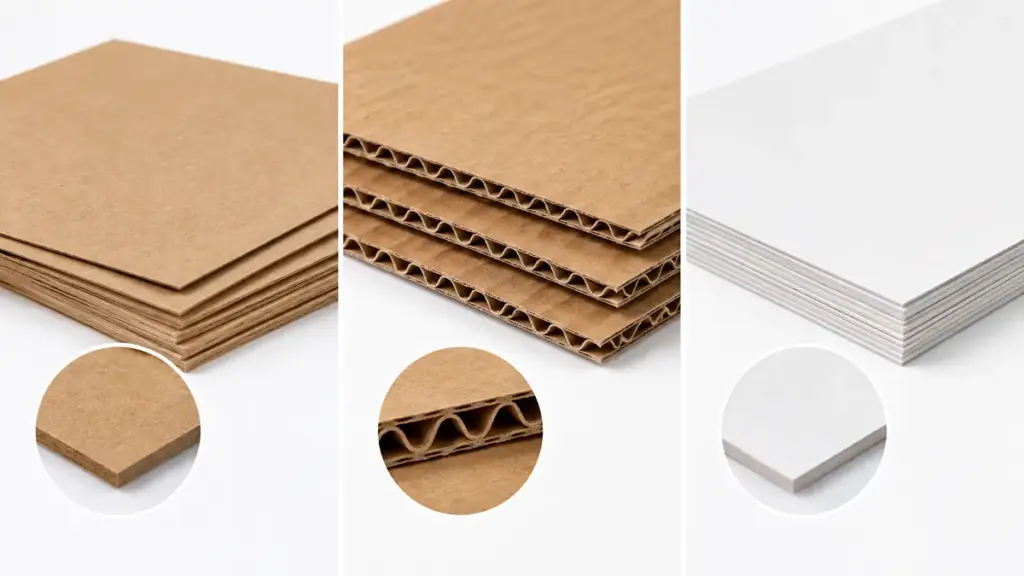
While “cartone” is a casual term for any heavy paper packaging, the packaging industry distinguishes between corrugated fiberboard—a multi-layered, fluted structure engineered for strength and shipping protection—and paperboard, a dense, single-layer sheet optimized for high-quality retail printing and clean folding.
Structural Differences and Material Composition
To specify the right packaging for our logistics workflows, we must look beyond everyday terms and understand the raw material construction.
- Cartone: This functions as an informal, everyday umbrella term for heavy paper packaging rather than representing a precise technical classification.
- Corrugated Fiberboard: This utilizes a fluted inner medium sandwiched between flat linerboards to create an air-filled, protective sandwich structure.
- Cartone: This consists of a single, solid sheet of compressed paper fibers without any fluted layers, offering a thin and highly dense profile.
Performance Comparison and Packaging Applications
When we evaluate performance, corrugated fiberboard stands out for transit. Its columns of flutes absorb impacts and provide high stacking strength, which keeps products secure during shipping operations.
For front-facing shelf appeal, paperboard is our preferred choice. It offers an exceptionally smooth surface that handles high-definition retail graphics, goffratura, and precise folding carton designs beautifully.
We balance these options based on product weight, fragilità, and the complexity of your distribution environment to ensure your goods arrive intact and present perfectly.
Premium Custom Rigid Boxes Made Easy

How Cardboard Boxes Are Classified: The FEFCO Standard
We use the internationally recognized FEFCO-ESBO coding standard to classify corrugated and solid board packaging. This language-free four-digit system translates complex structural box designs into universal numbers, streamlining communication across global manufacturing and supply chains.
The Structure and Purpose of FEFCO Codes
The FEFCO-ESBO system serves as our global blueprint framework, standardizing cardboard packaging structures across international borders. By translating complex technical designs into simple numerical codes, we eliminate language barriers between designers, manufacturers, and clients.
Each FEFCO code consists of four digits. The first two digits identify the broad packaging group, such as slotted containers or telescopic boxes. The final two digits specify the precise structural design variant, dictating how joints, tagli, and flaps assemble.
Because these codes focus entirely on the architectural blueprint rather than specific dimensions, we can apply the exact same structural designation to any size box. This separation of shape from size simplifies procurement, quality testing, and machine setup.
Main FEFCO Construction Groups and Their Applications
The FEFCO framework categorizes our designs into nine functional construction families. These range from raw boards to sophisticated, self-locking geometries tailored for specific supply chain challenges:
- Group 01xx (Rolls and Sheets): Continuous corrugated rolls or flat blanks used as raw material for further conversion.
- Group 02xx (Slotted Boxes): One-piece shipping cartons like the Regular Slotted Container (RSC 0201), which serves as the standard e-commerce shipper globally.
- Group 03xx (Telescope Boxes): Two-piece designs with separate lids and bases, providing high vertical stacking strength for heavy or fragile items.
- Group 04xx (Folder-Type Boxes): Single-sheet die-cut boxes and trays that wrap around products, often locking securely without tape or glue.
- Group 05xx (Slide-Type Boxes): Sleeve-and-drawer configurations that offer smooth sliding openings, common in electronics packaging.
- Group 06xx (Scatole rigide): Multi-piece, high-strength industrial containers joined with staples or stitching for heavy-duty freight.
- Group 07xx (Ready-Glued Cases): One-piece self-erecting boxes delivered flat that pop open in one movement to accelerate packing line speeds.
- Group 09xx (Interior Fitments): Custom dividers, inserti, and padding designed to secure fragile items and prevent internal movement.
Single Wall, Double Wall & Flute Types Explained
Understanding how single wall and double wall corrugated structures interact with different flute profiles allows us to optimize packaging strength, control material costs, and prevent product damage during transit.
Single Wall vs. Double Wall Corrugated Board Structures
Selecting the right board structure ensures your shipments survive the challenges of distribution while keeping material costs optimized. We design our boxes to align with specific load capacities and storage setups.
- Single Wall Construction: Uses three layers, consisting of one fluted medium between two flat linerboards, with a thickness of 1/16 A 1/4 pollice.
- Double Wall Construction: Uses five layers, incorporating two fluted mediums and three flat linerboards, measuring 1/4 A 3/8 inch in thickness.
- Single Wall Performance: Ranges from 23 A 55 ECT and supports 20 A 50 pounds, making it the standard choice for e-commerce and lightweight shipping.
- Double Wall Performance: Ranges from 42 A 82 ECT, rated for 30 A 65 pounds or more, providing superior puncture and crush resistance.
- Economic Trade-off: Double wall increases material costs by approximately 40% but delivers roughly twice the stacking strength, proving highly economical for vertical warehousing and export logistics.
- Target Applications: Single wall works best for mailers and lightweight items, while heavy machinery, industrial parts, and sensitive electronics require the robust support of double wall configurations.
Corrugated Flute Profiles and Performance Characteristics
The wavy corrugations of the inner medium define the physical properties of a box. By choosing and combining different flute types, we customize packaging to prioritize either structural cushioning or premium print quality.
- UN, B, and C Flutes: C flute dominates standard transport cartons with its balanced strength and cushioning. B flute offers high crush resistance for die-cut packaging, and A flute provides maximum shock absorption for fragile items.
- E and F Microflutes: E flute (1.0 A 1.8 mm di spessore) saves space and provides an exceptional surface for retail boxes, while F flute (0.6 A 1.0 mm di spessore) provides an ultra-smooth, premium finish for high-end cosmetic packaging.
- BC Flute Combination: Questo 6 A 7 mm thick double-wall standard serves as the benchmark for export logistics, providing exceptional cushioning and high-capacity vertical stacking.
- Hybrid Flute Pairing: Combining a structural flute (B or C) with an E flute creates a stable container that maintains a smooth, highly printable outer surface to highlight your retail branding.
How to Choose the Right Cardboard Box Type
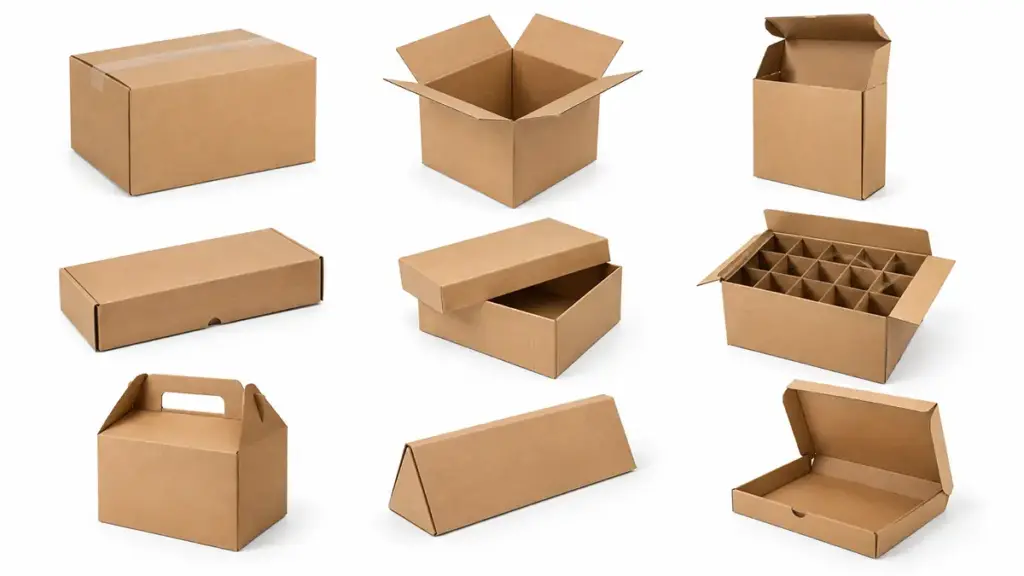
Selecting the correct shipping container requires matching product weight, fragilità, and transit hazards with the appropriate board grade and structural style, ensuring optimal protection and cost efficiency throughout our supply chain.
Essential Technical Factors for Box Selection
We begin by assessing product weight and fragility. Matching these characteristics to the right board grade—such as single-wall for light items and double-wall for heavier, delicate cargo—reduces shipping damages and claims.
We calculate vertical stacking loads and warehouse compression demands. Applying a standard safety factor of four in ambient warehousing protects the bottom tiers from collapsing under prolonged storage stress.
We evaluate transit conditions and handling frequency. High-touch parcel routes require reinforced board, and moisture-prone shipping lanes need specialized water-resistant coatings to maintain structural integrity.
A Step-by-Step Practical Selection Workflow
Primo, we audit the product to document weight, dimensioni, fragilità, and expected pallet heights. This data forms the baseline for all subsequent structural packaging decisions.
Prossimo, we select the corrugated construction. We match the wall count and flute profile to the product weight and vertical load requirements, ensuring we don’t overpay for excess material.
Then, we choose the box style. We default to standard Regular Slotted Cartons for general shipping efficiency, or step up to Full Overlap Cartons when heavy loads require double-thickness bases.
We specify quantitative performance metrics. Defining clear Edge Crush Test and Box Compression Test values ensures our manufacturing partners deliver consistent structural strength.
Finalmente, we develop physical prototypes and run ISTA or ASTM D4169 test protocols. Testing the design under simulated transit hazards verifies performance before we commit to full-scale production.
Standard Cardboard Box Sizes & When to Go Custom
We help you balance the immediate cost savings of standard cardboard box sizes with the long-term logistical efficiency of custom-engineered packaging. By selecting the right dimensional bands or transitioning to custom specifications when void space increases damage risks, you can protect your margins, reduce carrier surcharges, and improve pallet density.
Standard Cardboard Box Sizes and Dimensional Bands
Standard corrugated packaging follows structured dimensional bands to simplify inventory management and keep your initial tooling costs at zero. Manufacturers measure these boxes internally by length, larghezza, and height to ensure your products fit the usable space perfectly.
- Tiny Containers (Under 4 Inches): These tiny boxes protect small retail items, gioielli, and samples without wasting shelf space.
- Small Shippers (6x6x6 to 8x6x4 Inches): Built primarily with single-wall 32 ECT corrugated board, these offer lightweight protection for apparel and accessories.
- Medium Cartons (12x9x6 to 12x12x12 Inches): These serve as the workhorses of e-commerce, offering versatile storage for multi-item orders and subscription kits.
- Large & Extra-Large Boxes (Up to 24x24x24 Inches): Constructed with double-wall 44 A 48 ECT board, these heavy-duty shippers prevent bursting during bulk warehousing and transport.
When to Transition from Standard to Custom Box Sizes
While stock sizes offer immediate convenience, scaling your operations often requires a shift to bespoke packaging. Custom dimensions protect your bottom line by optimizing structural support and freight efficiency.
- Eliminate Product Damage: Custom boxes reduce excess void space, minimizing internal movement and reducing damage claims.
- Minimize Carrier Surcharges: Designing a box that matches your product footprint avoids dimensional weight penalties and lowers shipping costs.
- Support Irregular Geometries: Fragile, long, or flat items benefit from tailored configurations that accommodate engineered protective inserts and partitions.
- Optimize Pallet Nesting: Tailoring your outer shipper dimensions improves pallet load density, increasing the units shipped per container.
- Elevate Brand Unboxing: Custom packages deliver a premium retail presentation and a structured direct-to-consumer unboxing experience.
Considerazioni finali
Optimizing your packaging specification directly protects your bottom line by eliminating transit damage and avoiding carrier dimensional weight surcharges. While stock, low-grade boxes might look cheaper on a purchase order, under-engineered packaging risks crushing failures that destroy client trust and erode retail margins. Selecting the precise FEFCO design and calculated ECT rating remains the only reliable way to safeguard your cargo and streamline automated packing lines.
We recommend requesting a sample kit or initiating a small trial run to test our structural integrity and board calibration firsthand. Our packaging engineers are ready to audit your product footprint, optimize your pallet nesting, and build a custom structural blueprint tailored to your supply chain. Contact our engineering team today to secure consistent, high-performance packaging for your next production run.
Domande frequenti
What is the most common type of cardboard box?
The Regular Slotted Container (RSC), or FEFCO 0201, is the industry standard. Its outer flaps meet precisely at the center when folded, making it highly efficient to manufacture, store flat, and assemble. We supply these standard corrugated boxes to provide a reliable, cost-effective option for general shipping, magazzinaggio, and retail distribution.
What is the difference between single wall and double wall cardboard boxes?
Single wall boxes feature one fluted medium between two flat liners, offering a lightweight and cost-effective choice for everyday parcel shipping. Double wall boxes utilize two fluted mediums and three liners, which practically doubles the vertical stacking strength. We construct double wall configurations to protect heavy or fragile goods throughout complex multi-node distribution networks.
Which cardboard box type is best for e-commerce shipping?
For standard utility shipments, a single-wall RSC (FEFCO 0201) is the most cost-efficient option. For premium brand presentations and subscription services, we recommend the FEFCO 0427 mailer box. Its self-locking, single-piece design creates triple-thickness side walls for robust crush resistance and provides a clean, tape-free unboxing experience.
What does ECT mean on a cardboard box?
ECT stands for Edge Crush Test, which measures the vertical compression strength of corrugated board. It indicates how much pressure a box wall can withstand on its edge before buckling. We use this metric to precisely match board strength to your pallet stacking heights and distribution requirements, ensuring your products remain safe from crushing.
Can I order custom-sized cardboard boxes in small quantities?
SÌ. We support custom-sized production runs with low minimum order quantities, including single prototypes. Our digital cutting technology manufactures bespoke sizes directly from digital dielines, avoiding the expensive setup costs of physical dies and making tailored packaging highly accessible for small businesses and test launches.
What is a FEFCO code?
A FEFCO code is an internationally recognized four-digit numerical system that classifies structural designs for corrugated and solid board packaging. Developed to bypass language barriers, it allows manufacturers and buyers to specify exact structural styles, tagli, and joints without relying on complex written descriptions.
Are corrugated boxes recyclable?
SÌ, corrugated boxes are fully recyclable, biodegradabile, and represent one of the most successfully recovered packaging materials. The organic paper fibers can be re-pulped and manufactured into new containerboard multiple times. We utilize responsibly sourced materials to help maintain an efficient, low-waste circular packaging economy.