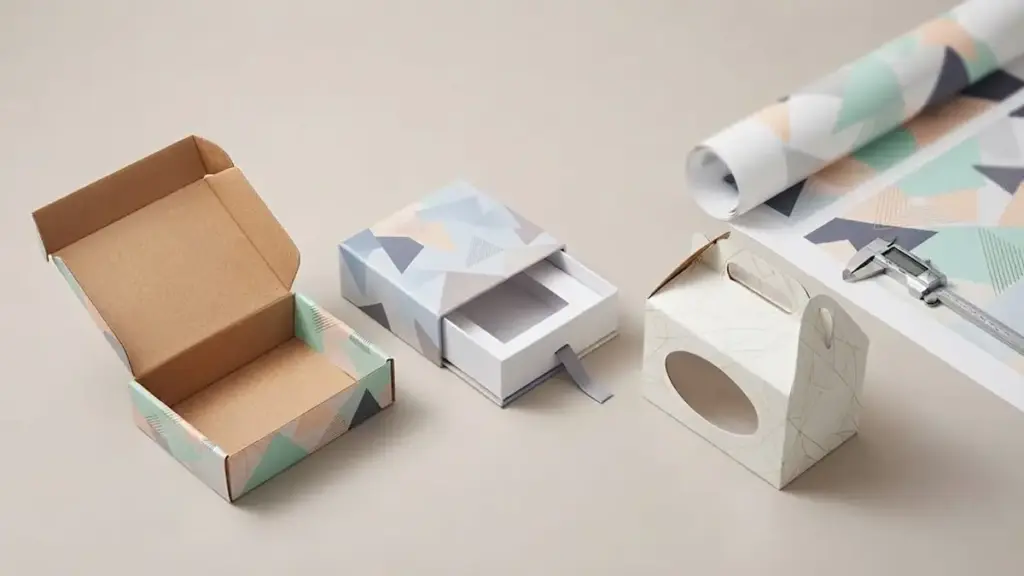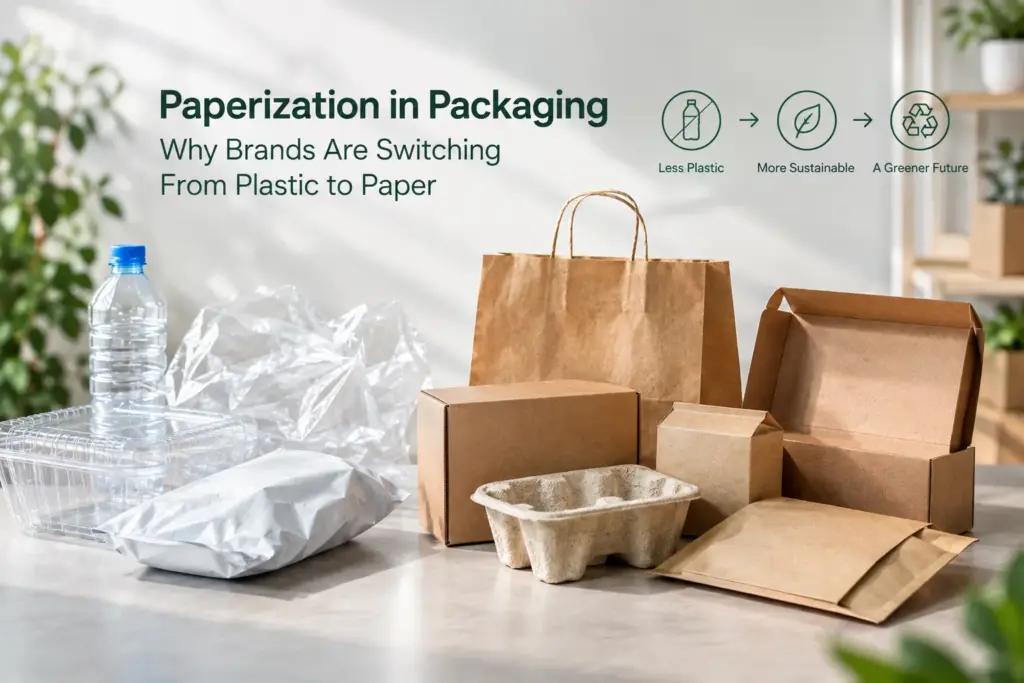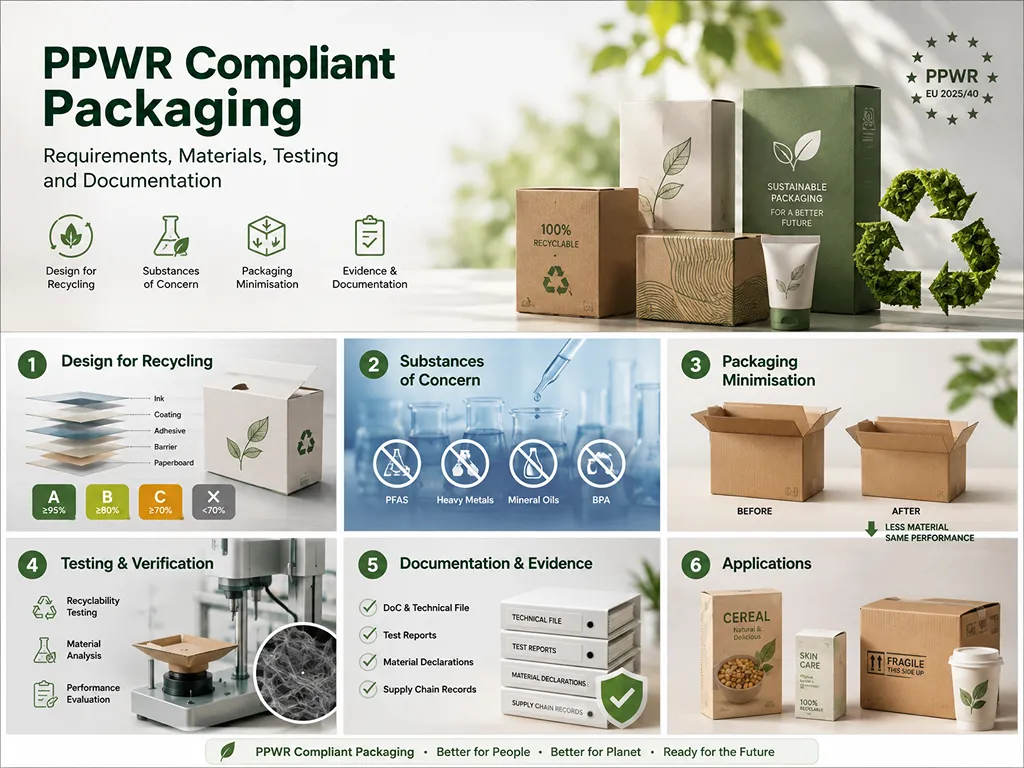
Moving toward sustainable lip balm packaging involves more than switching from plastic to paper. Material selection, barrier performance, and structural durability all influence whether the packaging can protect the formula and maintain its shelf appeal. Poorly designed paper structures may cause oil staining, reduced rigidity, or poor shelf presentation, which can affect customer perception and product performance.
This guide compares paper tubes and cartoni pieghevoli to help brands choose a structure that matches their product requirements. We evaluate greaseproof barrier coatings, manual dispensing mechanics, and production costs to help you secure a scalable, retail-ready packaging system.
Why Sustainable Lip Balm Packaging Is Becoming Popular
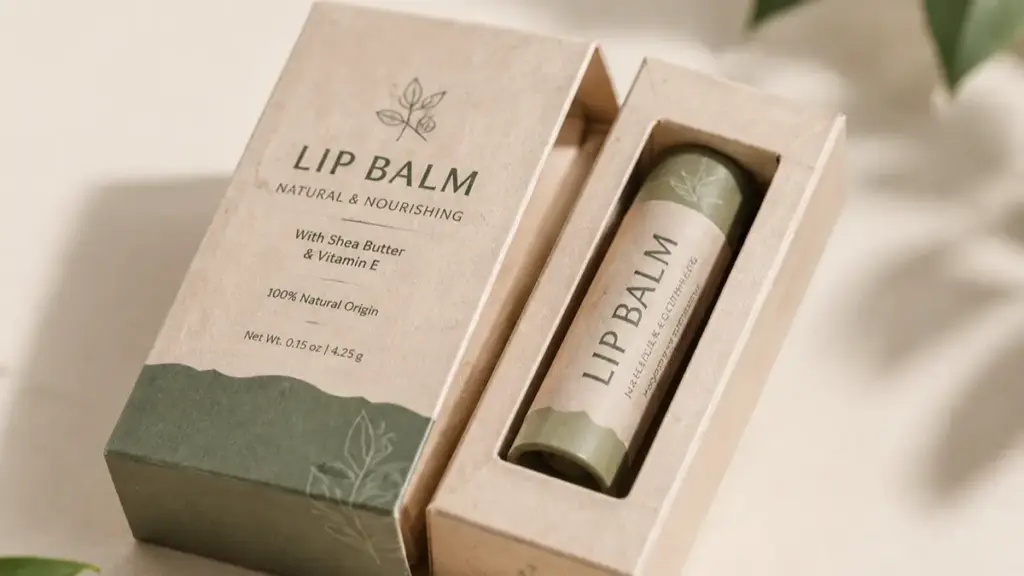
Tighter plastic regulations and a sharp rise in consumer eco-preference drive the cosmetic industry toward barrier-coated paper tubes that protect formulas and elevate shelf appeal.
Regulatory Shifts and Evolving Consumer Expectations
Brands face immediate pressure from both lawmakers and shoppers to phase out plastic. This transition has moved from a niche marketing angle to a regulatory and commercial necessity.
- Pressione regolamentare: Increasing regulations on single-use plastics and growing retailer sustainability requirements are encouraging beauty brands to explore fiber-based packaging alternatives.
- Consumer Preference: Many beauty consumers now consider packaging sustainability when choosing cosmetic products, making eco-friendly packaging an important brand differentiator.
- Premium Margins: Sustainable packaging can also help brands strengthen premium positioning, especially in clean beauty and natural cosmetic markets.
This shift directly aligns regulatory compliance with increased profitability, allowing clean beauty brands to defend higher price points while reducing their environmental footprint.
Technical Advancements and Brand Differentiation
Early paper tubes suffered from oily staining and structural collapse. Modern paper tube designs have improved oil resistance and structural stability through barrier coatings, fodere, and improved manufacturing processes.
- Leak Resistance: Advanced barrier coatings and greaseproof liners prevent oil migration and formula degradation, maintaining cosmetic stability over a long shelf life.
- Tactile Differentiation: The natural, textured feel of push-up paper tubes helps clean, vegan, and organic lip care lines stand out in crowded retail spaces.
- Logistical Efficiency: Lightweight fiber materials lower total packaging weight, which reduces distribution costs and shipping emissions.
By solving historical stability issues, modern paper tubes allow cosmetic brands to transition away from plastic without risking product integrity in transit or on retail shelves.
Paper Cartons vs Paper Tubes
Paper tubes act as the primary, direct-contact stick container for solid lip balms, while paper cartons serve as secondary outer packaging for retail display and protection. Understanding the difference between primary and secondary packaging helps brands select the right structure for each stage of the customer experience.
Functional Roles and Packaging Hierarchy
Understanding where each packaging format sits in the retail hierarchy prevents structural errors and helps align your launch with consumer expectations.
- Primary Container: Paper tubes directly hold and dispense the solid lip balm stick using a push-up mechanism.
- Imballaggio secondario: Paper cartons act as outer boxes to protect the primary tube, display legally required ingredient copy, and command retail shelf space.
- Hybrid Format: Combining both paper tubes and outer cartons offers maximum physical protection and clean branding real estate for premium retail stores.
- Minimalist Format: Using paper tubes alone provides a low-waste, plastic-free solution that immediately signals environmental responsibility to green shoppers.
Material Barriers and Manufacturing Requirements
Transitioning to fiber-based materials introduces distinct engineering hurdles. Unlike inert plastic, raw paper absorbs lipids and reacts to filling temperatures.
- Barrier Liners: Paper tubes require internal greaseproof liners or coatings—such as plant-based wax or PLA—to stop formulation oils from migrating and staining the outer paperboard.
- Manufacturing Conversion: Carton manufacturing relies on flat paperboard folding. Al contrario, tube production requires specialized spiral-wound cylindrical winding, which increases structural complexity.
- Filling Controls: Filling temperature and cooling conditions should be carefully controlled to ensure proper product setting and prevent separation or deformation.
- Environmental Finish: The actual sustainability profile of both formats depends on specifying biodegradable inks, aqueous coatings, and non-plastic laminations that do not ruin fiber recyclability.
Create Custom Packaging That Builds Your Brand
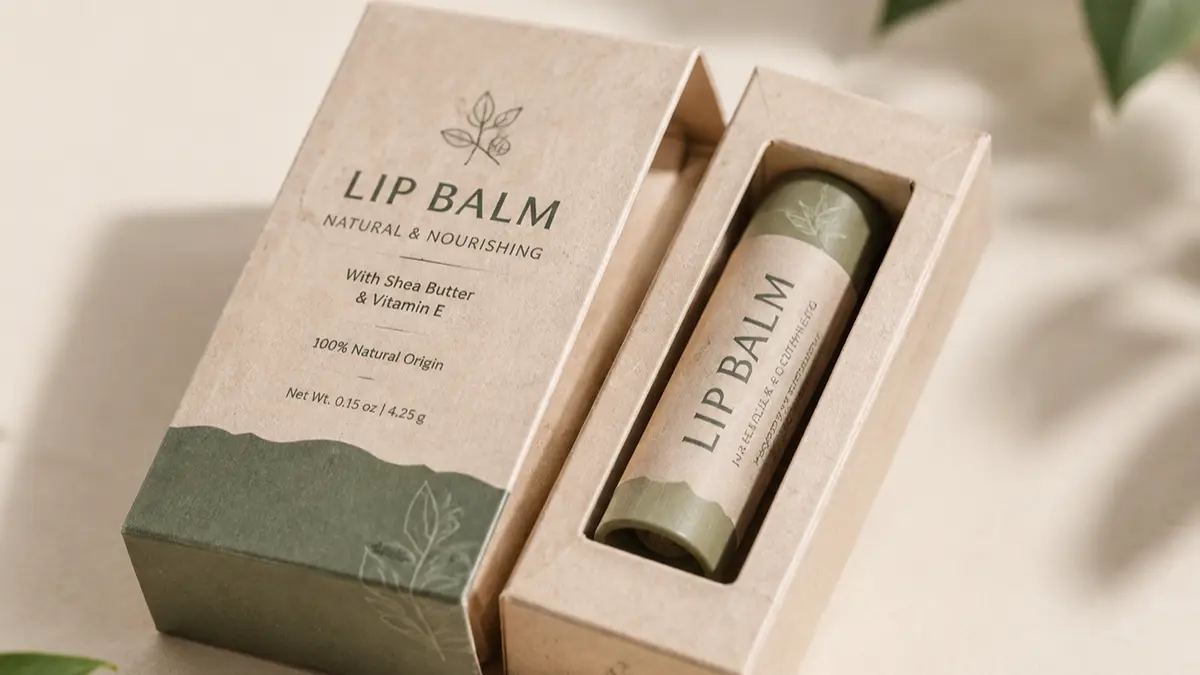
Push-Up vs Twist-Up Paper Tubes
Push-up tubes deliver a plastic-free, highly compostable design, whereas twist-up alternatives prioritize user familiarity and precise dispensing at the cost of including plastic mechanical components.
| Caratteristica | Push-Up Paper Tubes | Twist-Up Paper Tubes |
|---|---|---|
| Dispensing Mechanism | Bottom disc pushed manually by finger pressure. | Internal screw/spiral mechanism rotated at base. |
| Material Makeup | Spesso 100% cartone; plastic-free potential. | Paper exterior with a plastic inner core and mechanism. |
| Riciclabilità & End-of-Life | Naturally biodegradable or recyclable in standard paper streams. | Requires manual separation of plastic and paper elements. |
| Product Control | One-way manual advance; non-retractable. | Preciso, stable, and retractable dispensing. |
Functional Mechanics and Consumer Experience
Brands transitioning to paper-based packaging must weigh mechanical functionality against consumer expectations. While both formats eliminate the bulk of traditional plastic, their dispensing mechanics alter the daily user experience.
- Dispensing Control: Push-up tubes utilize a sliding disc at the bottom of the column. Users must apply manual upward finger pressure to advance the balm. Twist-up tubes feature an internal screw mechanism, allowing precise, incremental, and fully retractable dispensing.
- Consumer Familiarity: Twist-up formats mimic the exact motion of conventional plastic lipstick and lip balm packaging. This design offers an intuitive, friction-free transition for shoppers. Push-up cylinders require a minor learning curve and rely on manual pushback if over-extended.
- Structural Stability: The push-up format benefits from a minimalist build with no moving parts, which minimizes mechanical failure. Tuttavia, it lacks the stable, guided application provided by a twist-up system, sometimes causing uneven wear or stick slippage during use.
Material Composition and Sustainability Profile
The core distinction in sustainability lies in the internal components. True zero-plastic goals require a raw, uncomplicated material path, but formula chemistry and shelf life often complicate this choice.
- Plastic-Free Potential: Push-up tubes can be designed with high paper content and reduced plastic components, depending on the structure and barrier requirements. Twist-up designs, conversely, almost always require an inner plastic core and spiral mechanism to support the rotating action, which compromises a purely plastic-free claim.
- Recycling and Composting: Unlined or plant-wax-lined paper push-up tubes biodegrade naturally and easily enter standard paper recycling streams. Mixed-material twist-up packages require consumers to manually pull apart the outer paper shell from the inner plastic core before disposal.
- Formulation Compatibility: Both configurations require specialized inner linings to prevent oils and waxes from migrating into the raw paperboard. Tuttavia, the sealed, closed base of a twist-up plastic mechanism offers superior containment, reducing the risk of leakage for softer, temperature-sensitive formulas.
Sustainable Materials for Eco-Friendly Lip Balm Packaging
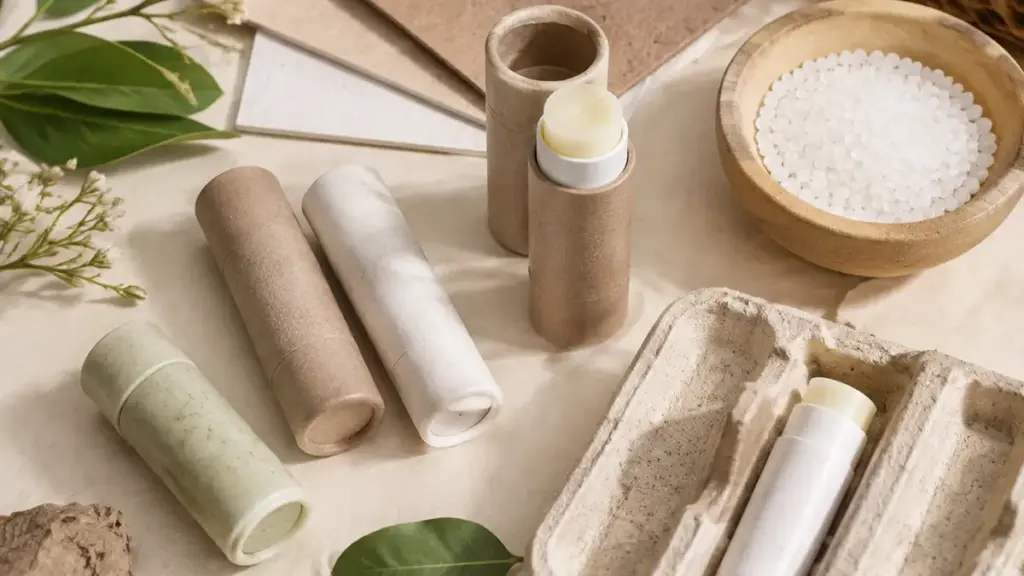
Transitioning to sustainable lip balm packaging requires balancing material origin with strict barrier properties and food-contact compliance to prevent oil migration and rancidity.
Primary Eco-Friendly Material Pathways and Functional Integration
Switching to sustainable lip balm packaging is no longer just a marketing choice. Tighter single-use plastic regulations and changing retail requirements force brands to rethink their primary containers and explore sustainable cosmetic packaging solutions that balance environmental goals with product protection. Tuttavia, alternative substrates must protect the product from environmental exposure just as effectively as virgin plastics.
- FSC-Certified Kraft Paperboard: Responsibly sourced paper materials commonly used for tubes and cartons. Additional barrier liners or coatings can be applied when products require oil resistance. These block oil migration and tolerate hot-fill temperatures between 60°C and 70°C.
- Bio-PE and PCR Resins: Sugarcane-based Bio-PE and post-consumer recycled (PCR) PP or HDPE resins. These maintain the familiar twist-up functionality while utilizing circular or renewable feedstocks.
- Aluminum and Glass Jars: Highly recyclable options for potted balms. Aluminum provides infinite recyclability and lightweight transport, while glass offers chemical inertness for premium lines.
Packaging performance should be evaluated through compatibility testing, including oil resistance, temperature stability, and protection against external moisture and contamination. Inoltre, the structural design must withstand hot-pour operations up to 80°C without warping or seam failure.
Global Regulatory Standards, Contact Safety, and Eco-Certifications
Because consumers directly apply lip balm and swallow trace amounts, packaging materials face food-grade level safety scrutiny. Vague eco-friendly claims will not pass retail audits; brands must secure verified certifications to prove both safety and circularity.
- Material Safety Documentation: Suppliers should provide material specifications, safety documentation, and compatibility testing to confirm packaging suitability for cosmetic formulas.
- Fiber Sourcing: Forest Stewardship Council (FSC) chain-of-custody certification. This verifies that all paperboard elements come from responsibly managed forests.
- Compostability Standards: Verification under EN 13432 (Europa) and ASTM D6400 (US), alongside TÜV OK Compost HOME or INDUSTRIAL certification for plant-based linings.
- Biobased Verification: ASTM D6866 carbon-14 analysis to quantify the exact percentage of renewable carbon in bioplastics, aligning with COSMOS packaging guidelines.
- Facility Quality Audits: Iso 14001 environmental management, Iso 9001 quality standards, and BRCGS Packaging certifications to ensure batch-to-batch consistency.
Printing and Finishing Options for Custom Lip Balm Packaging
High-impact print methods and protective coatings transform small-format cartons into tactile retail assets while shielding paperboard from oils and transit scuffs.
Core Printing Technologies and Color Accuracy
Small packaging demands flawless execution. Color drift or blurry text on a tiny lip balm box instantly undermines retail appeal. Choosing the appropriate print setup ensures sharp legibility and maintains strict brand consistency across every production run.
- Stampa offset: This system serves as the best choice for high-volume production, ensuring sharp details and superb color fidelity.
- Stampa digitale: This method works best for seasonal flavors, low-volume test runs, and rapid turnaround requirements.
- Serigrafia: Ideal for simple artwork and clean layouts on small, artisanal batches.
- Flessografia: Delivers exceptionally cost-efficient results for massive production runs featuring solid color blocks.
- CMYK Process: Captures complex, multi-toned illustrations and vivid graphics with high precision.
- Pantone PMS Matching: Integrates exact spot colors to keep brand logos perfectly consistent across separate print runs.
- Double-Sided Printing: Utilizes both the interior and exterior of the carton, expanding the canvas for brand storytelling or ingredient listings.
Specialty Finishes and Protective Coatings
Aesthetic upgrades do double duty by protecting paperboard from physical wear. Because lip balms contain oils and waxes, unprotected cartons risk staining and scuffing. Combining decorative lamination with protective barriers preserves carton integrity on store shelves.
- Lamination Options: Soft-touch lamination adds a velvety, premium texture that elevates cosmetics. Matte lamination offers a modern look, while gloss lamination increases color contrast and vibrancy.
- Spot UV: Draws immediate focus to logos and brand names by layering high gloss over an understated matte background.
- Stamping in lamina & Goffratura: Add reflective and raised tactile elements that pop under retail store lighting.
- Protective Coatings: Aqueous and moisture-resistant coatings shield small cartons from oil transfer and scuffing in transit, while UV coatings extend display shelf life.
- Material Interplay: These finishes pair naturally with robust 16pt or 18pt SBS cardstock to balance stiffness and premium feel.
- Production Budgeting: Premium finishes such as soft-touch coating, stampa a foglio, and embossing help create a higher-end appearance, while production costs vary based on material choices, customization requirements, and order volume.
Custom Lip Balm Packaging Support From PackCCP
Creating successful lip balm packaging requires more than selecting a sustainable material. Brands also need a manufacturing partner who can support structure development, precisione di stampa, and consistent production quality. PacchettoCCP provides fully customized paper packaging solutions, helping cosmetic brands develop packaging from concept to final production. With experienced engineering support, advanced printing capabilities, and strict quality control throughout the manufacturing process, PackCCP helps ensure that packaging meets both visual and functional requirements.
From FSC-certified paper options and custom carton structures to premium finishes such as UV printing and specialty coatings, brands can create packaging that matches their positioning while maintaining reliable production standards. With a 98% product pass rate and efficient production management, PackCCP supports brands looking for scalable packaging solutions for retail, e-commerce, and promotional applications.
Lip Balm Packaging Ideas for Retail and Gift Collections
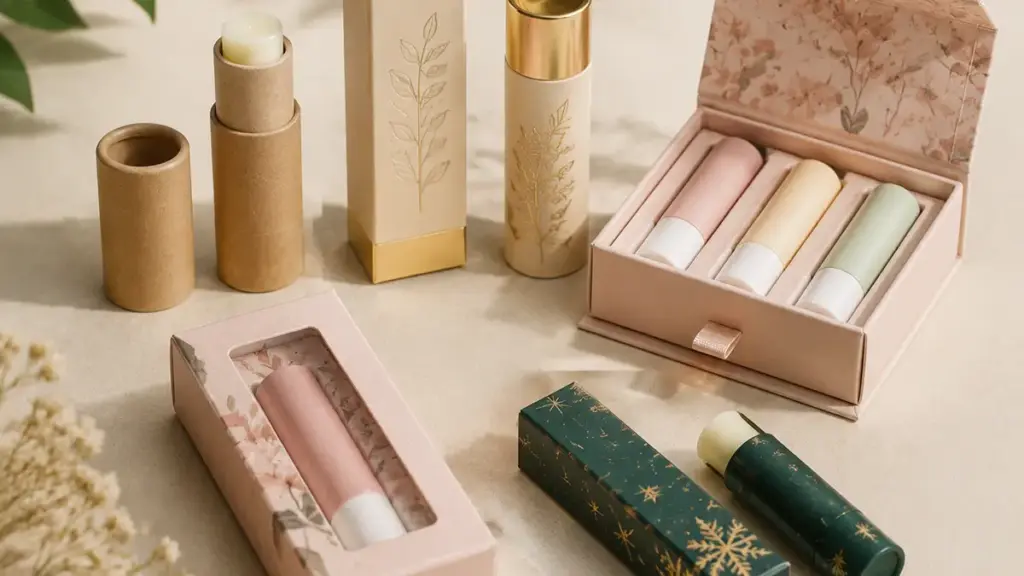
Smart retail and gift packaging drives impulse buys and elevates lip balm from a basic necessity into a premium, high-margin cosmetic item.
Popular Lip Balm Packaging Ideas for Different Brand Styles
Different lip balm brands require different packaging approaches depending on their positioning, target customers, and sales channels. From eco-conscious startups to premium beauty labels, selecting the right structure and finish can help products stand out while maintaining practical protection.
- Minimalist Kraft Paper Tubes: Natural kraft paper tubes create a clean, eco-friendly appearance that fits organic, vegan, and sustainable beauty brands. Combined with simple printing and subtle finishes, this format communicates environmental responsibility while keeping the packaging lightweight.
- Luxury Foil-Stamped Cartons: Premium folding cartons with foil stamping, goffratura, or specialty coatings help elevate lip balm from an everyday product into a high-end beauty item. These finishes create a stronger shelf presence and support luxury brand positioning.
- Multi-Pack Gift Boxes: Gift sets containing multiple lip balm flavors or seasonal collections encourage customers to purchase more than one product. Custom inserts and printed outer boxes can improve presentation while protecting each individual item.
- Windowed Retail Boxes: Adding a clear window allows shoppers to see the product design, colore, or tube style before purchase. This packaging approach works especially well for retail environments where visual appeal influences buying decisions.
- Seasonal Promotional Packaging: Limited-edition designs for holidays, events, or collaborations help brands create urgency and attract repeat purchases. Grafica personalizzata, themed colors, and special finishes can turn regular lip balm products into collectible promotional items.
Choosing the right lip balm packaging idea depends on your brand story, product positioning, e le aspettative dei clienti. Combining functional structures with customized printing and finishing options allows brands to create packaging that is both visually appealing and retail-ready.
Retail Packaging Formats and Shelf Presentation
Retail environments demand packaging that works hard in the first few seconds of a shopper’s glance. Secondary packaging acts as your primary billboard on crowded shelves, establishing visual order and protecting small-format sticks from handling damage.
- Custom-printed folding cartons: These secure the primary tube, offer ample space for regulatory ingredient lists, and establish immediate brand recognition. Brands can also explore different folding carton styles to match their retail positioning and product presentation goals.
- Clear window cutouts: This structural feature lets shoppers verify the actual balm color and texture, eliminating buying hesitation before they reach the register.
- Tamper-evident seals: Shrink bands and cap-to-tube label seals protect the product from in-store sampling and build consumer trust.
- Substrate selection: Kraft paperboard communicates rustic, natural product values, while white SBS board allows you to scale high-volume production cost-effectively.
Balancing material selection with functional security keeps your product safe while optimizing cost. Choosing the right carton format ensures your brand identity remains intact from the packing line to the retail shelf.
Gift and Promotional Packaging Strategies
Promotional and gift formats allow brands to step outside daily replenishment cycles and target premium, high-margin buying events. Transforming a small commodity into a giftable item relies heavily on structural upgrades and curated assortments.
- Multi-pack assortment boxes: Combining multiple flavors or tints into curated collections increases average order value and simplifies gift choices.
- Rigid gift boxes: High-end upgrades like metallic foil stamping, custom-colored ribbons, and textured board turn simple lip care into a luxury beauty gift.
- Themed seasonal graphics: Celebratory or winter-focused visual elements let you tap directly into key retail holiday and gifting seasons.
- Reusable fabric pouches: Cotton muslin or organza bags provide lightweight, eco-friendly options perfect for weddings and corporate event favors.
Deploying these gift strategies allows you to capture secondary purchase streams without reformulating the core product. High-end finishes and multi-unit setups generate better margins and wider brand reach in social and festive settings.
Choosing Lip Balm Packaging by Sales Channel
Lip balm packaging must align with specific channel dynamics, balancing low unit costs in mass retail against shipping durability in e-commerce and premium finishes in specialty beauty.
Mass-market retail and clinical environments require highly functional packaging strategies because consumer behavior changes completely between the grocery aisle and the pharmacy counter.
Mass Market and Pharmacy Distribution Formats
High-volume retailers require physical containers that optimize logistics and grab immediate attention. In these high-traffic lanes, packaging operates as a silent salesperson under tight margin constraints.
- Market Share: High-traffic retail channels command the largest segment, securing approximately 37% of global lip balm market volume.
- Supermarket Optimization: These outlets demand low unit costs, intense shelf visibility, and hang-tab compatibility to capture impulse buys at checkout.
- Convenience Store Formats: C-stores require slim, single-unit stick tubes designed for rapid, low-consideration purchase decisions.
- Pharmacy Positioning: Drugstores and pharmacies favor functional, clinical designs that highlight ingredient transparency, active treatment claims, and skin-repair benefits.
- Trust Elements: Therapeutic retail spaces rely on tamper-evident seals, protective outer folding cartons, and clear regulatory labeling to establish immediate buyer trust.
A clinical formulation packed in a cheap, unsealed container will struggle on pharmacy shelves, whereas a mass-market stick without hang-tab compatibility loses prime placement near the register.
Specialty Beauty and E-commerce Packaging Strategies
Specialty boutiques and online channels call for experiential packaging designed to survive either the retail tester counter or the rigors of the postal system.
- Specialty Retail Share: Specialty channels account for 15% A 20% of lip balm sales, offering a strong launchpad for tinted formulas and luxury overnight treatments.
- Boutique Aesthetics: Specialty retailers support premium finishes, unique structural shapes, and rich brand storytelling to drive high-end, discovery-based purchases.
- E-commerce Penetration: E-commerce brands require packaging that balances visual appeal, shipping protection, and cost efficiency.
- Transit Engineering: Digital shipping demands physical durability, leak prevention, and compact dimensions to minimize transit costs and damage rates.
- Mobile-First Branding: Digital-first brands utilize high-contrast labeling easily readable in small screen thumbnails alongside photogenic designs optimized for the unboxing experience.
Balancing beautiful unboxing aesthetics with real-world shipping durability prevents costly transit damages while sustaining the premium branding that specialty consumers expect.
Common Lip Balm Packaging Design Mistakes
Flawed structural choices and sloppy regulatory labeling ruin the user experience and expose lip balm brands to immediate retail and compliance failures.
Brands often rush to market with unverified packaging structures, only to watch their products fail on retail shelves or leak in pockets. Physical durability and direct mechanical performance dictate brand survival. If a container cracks during transport or makes application messy, consumers will switch brands immediately.
Structural Failures and Usability Flaws
Mechanical integrity directly impacts repeat purchase rates. When a package fails to perform its basic dispensing function, the product inside becomes useless.
- Magro, Low-Tolerance Materials: Selecting flimsy plastics or thin paperboards causes containers to crack, flex, or feel cheap under normal handling.
- Inadequate Compatibility Testing: Neglecting formula-to-packaging tests leads to oil migration, melting, and severe packaging degradation over time.
- Poor Cap Calibration: Loose caps detach easily inside pockets and bags, while overly tight closures require frustrating, excessive force to open.
- Missing Tube Stop-Mechanisms: Omitting internal stop-rings in push-up tubes causes the balm stick to slide out entirely during application.
- Defenseless Transit Design: Failing to protect the product against heat and transit vibration results in melted, deformed, or damaged shipments.
Procurement teams can eliminate these physical defects by setting strict minimum specs for tube wall thickness, running heat-chamber stability tests, and simulating transit vibration before placing bulk production orders.
Visual Communication and Regulatory Compliance Errors
Aesthetic choices can render a product unsellable if they obscure legal requirements or confuse the consumer. Regulators and retail buyers both demand extreme clarity on the retail shelf.
- Unreadable Product Copy: Cramming tiny, low-contrast text onto small tube surfaces makes ingredient lists and directions completely unreadable.
- Poor Variant Differentiation: Applying identical color palettes to different product variants causes customers to purchase the wrong flavor or function.
- Omitted Legal Details: Missing mandatory details, such as net weight in dual units, manufacturer address, or Drug Facts for SPF formulas, triggers immediate non-compliance.
- Label Clutter: Crowding front labels with excessive badges and icons buries the core product identity and key benefits.
- Weak Sustainability Claims: Publishing unverified eco-friendly claims or using complex multi-material packages prevents real recycling and damages credibility.
Design teams must map the printable surface area early, build robust regulatory templates, and separate cosmetic copy from legal requirements. Using QR codes to host supplementary brand stories keeps the primary label clean and legally compliant.
Domande frequenti
Is paper packaging suitable for oily lip balm formulas?
SÌ, paper tubes work well for solid, anhydrous lip balms when engineered with oil-resistant barriers like greaseproof liners or plant-based wax coatings. These linings prevent oils and waxes from migrating into the paperboard, which avoids leakage and structural softening. To ensure success, manufacturers keep filling temperatures between 65°C and 75°C and avoid formulas with high water content.
Are paper lip balm tubes recyclable or compostable?
Recyclability depends on construction and local waste rules. Standard paperboard tubes made from plain kraft paper are recyclable and compostable if they are empty and clean. But very small tubes can be difficult for municipal facilities to sort. Tubes with mixed-material components, plastic linings, or heavy lamination usually do not qualify for curbside recycling and require specialty collection or commercial composting instead.
What is the difference between push-up and twist-up paper tubes?
Push-up tubes feature an all-paperboard construction with a movable base disc, making them fully plastic-free, compostabile, and highly sustainable. Twist-up paper tubes provide a familiar consumer experience and precise dispensing, but they rely on an internal plastic mechanism, which compromises their plastic-free branding.
Are paper tubes for cosmetics FDA compliant?
Paper packaging can comply with FDA regulations, but the raw material is not automatically compliant. Safe cosmetic packaging requires compliance with FDA food-contact standards, ad esempio 21 CFR Part 176.170 for paperboard and related codes for internal liners, adesivi, or inks. Suppliers must provide a Declaration of Conformity and migration testing reports to verify safety.
How much does custom paper lip balm packaging cost?
At moderate to high wholesale volumes, custom paper tubes typically cost between $0.10 E $0.45 per unità. Simple kraft tubes in large bulk runs can drop to $0.05, while highly customized retail-ready packaging with premium varnishes, stampa a foglio, or special linings ranges from $0.25 oltre $0.85 per unità. Order volume and material thickness are the strongest cost drivers.
What paper materials and finishes work best for branding?
FSC-certified kraft paperboard is the industry standard for an organic, estetica ecologica, pairing best with matte or gloss varnishes. For vibrant, detailed printing, white coated paper works better because it accommodates matte, lucentezza, or soft-touch laminations. Brands often add premium tactile features like spot UV, stampa a foglio, and embossing to raise shelf appeal.
Considerazioni finali
While generic packaging options offer lower upfront costs, sourcing well-designed paper tubes with appropriate barrier protection is one effective way to maintain product stability while supporting sustainability goals. Shifting away from plastic must not mean sacrificing formula stability or retail shelf appeal. Investing in high-performance greaseproof liners protects your margins, secures regulatory compliance, and validates your brand’s sustainability promises.
Do not guess on material compatibility or mechanical performance—verify it. We recommend requesting a physical sample kit to test your hot-pour temperatures and structural fit firsthand. Contact our packaging specialists today to discuss your custom dimensions, print finishes, and production volume requirements.