Custom paper packaging is no longer just about placing a product into a box. बढ़ते ब्रांडों के लिए, it has become part of product strategy, customer experience, logistics planning, sustainability communication, and long-term brand building.
Whether a brand is selling skincare in Australia, apparel in Europe, or specialty food products in North America, packaging often creates the first physical impression before the product is used. A box, bag, tube, आस्तीन, or insert can quietly tell customers whether the product feels premium, reliable, responsible, or generic.
Over the past few years, packaging conversations have changed. Buyers are no longer only asking, “What box can fit this product?” More often, they ask, “What packaging structure can protect the product, match our brand, support our sales channels, and meet market expectations?”
Sustainable packaging remains an important consumer concern across global markets, while purchasing behavior still differs by region, income level, and product category.
For brands selling across North America, यूरोप, और ऑस्ट्रेलिया, custom paper packaging is no longer a small purchasing detail. It can influence product protection, retail presentation, ग्राहक का भरोसा, sustainability claims, and repeat purchasing.
What Does Custom Paper Packaging Mean for Global Brands?
One question many growing brands ask is simple:
“Do we really need custom packaging, or is stock packaging enough?”
The answer depends on how the product will be sold, shipped, displayed, and experienced.
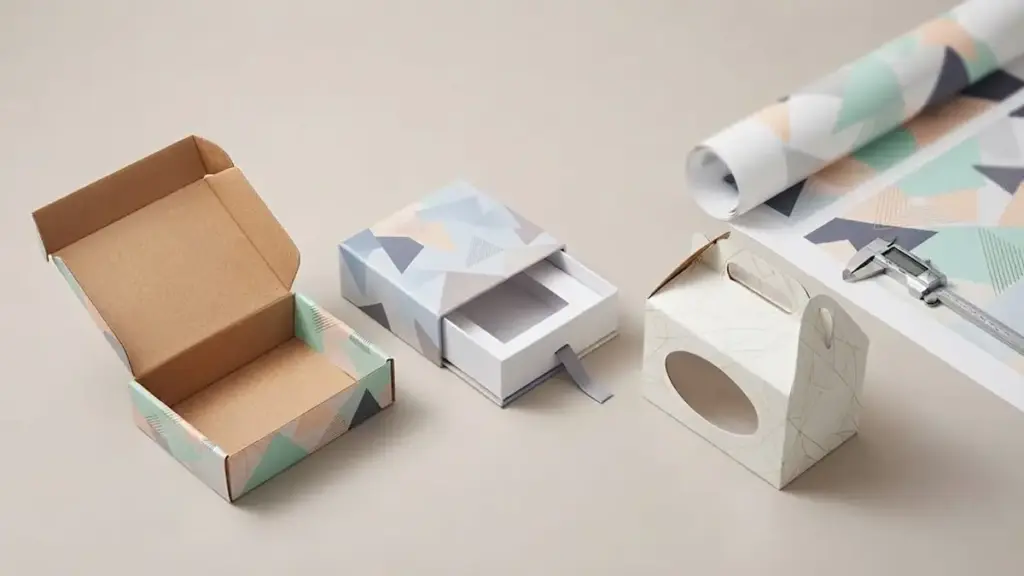
Custom paper packaging means the package is designed around the product instead of forcing the product into a standard box. It can include the structure, DIMENSIONS, कागज सामग्री, मुद्रण विधि, आवेषण, सतह परिष्करण, opening experience, and export packing method.
उदाहरण के लिए, a skincare gift set may need a rigid magnetic box with paper-based inserts to hold bottles securely. An apparel brand selling through Shopify may need a corrugated mailer box that works as both shipping packaging and branded presentation. A chocolate company may need folding cartons with accurate inserts to reduce product movement during transport. A jewelry brand may prefer a drawer-style rigid box to create a stronger unboxing experience for small, high-value items.
Typical custom paper packaging includes:
- Custom paper boxes
- कठोर उपहार बक्से
- तह डिब्बों
- नालीदार मेलर बक्से
- Paper shopping bags
- Paper tubes
- Sleeves and belly bands
- Paper inserts
- Retail display packaging
- Printed cards and packaging accessories
The biggest advantage is not only appearance. It is consistency.
A customer opening your product in New York, Toronto, Berlin, Sydney, or Melbourne should feel the same brand quality. That consistency becomes especially important for beauty, परिधान, जेवर, कल्याण, खाना, and ecommerce brands selling through multiple channels, including Amazon, Shopify, बुटीक, department stores, distributors, and direct-to-consumer websites.
Custom paper packaging can also improve logistics efficiency. When a box is designed around the product, it can reduce empty space, lower the need for extra fillers, improve carton loading, and support safer shipping. For ecommerce brands, this can mean fewer damaged products and a cleaner customer experience.
Before production begins, structural accuracy matters. A dieline determines how the packaging will be cut, तह, printed, और इकट्ठे हुए. If the dieline is wrong, even good artwork and materials cannot solve the final production problem. For a deeper explanation, read PackCCP’s guide: पैकेजिंग में डाइलाइन क्या है??
Why North American Brands Use Custom Paper Packaging
North American brands often approach packaging from a practical angle first.
In the United States and Canada, many brands sell through several channels at the same time: वीरांगना, Shopify, wholesale distributors, retail chains, बुटीक, सदस्यता बक्से, and direct-to-consumer websites. One packaging design may need to support ecommerce shipping, retail presentation, ब्रांड कहानी सुनाना, and repeat orders without increasing costs too much.
This is why corrugated mailer boxes, तह डिब्बों, and rigid paper gift boxes are common choices for North American packaging projects.
Protection is usually the first priority.
A damaged skincare bottle, crushed apparel package, or broken candle does not only create replacement costs. It can affect customer reviews, return rates, and brand reputation. Proper paperboard selection, corrugated flute choice, locking structure, and paper inserts can reduce movement and protect products during delivery.
Shelf presentation is also important.
Many customers compare products within seconds. Color consistency, clean structure, clear printing, and premium finishing can make a product feel more trustworthy before the customer even opens it. For beauty, कल्याण, पहनावा, and specialty food brands, packaging often works as a silent salesperson on the shelf.
North American buyers are also paying more attention to sustainability claims, but the wording needs to be careful. The हम. Federal Trade Commission Green Guides are designed to help marketers avoid misleading environmental claims, including claims related to recyclability, compostability, पुनर्चक्रित सामग्री, and general environmental benefits.
Canada is also moving toward clearer packaging expectations around recycled content, recyclability labeling, and plastic reduction. The Government of Canada has introduced work related to recycled content and labelling rules for plastics, which makes accurate packaging communication more important for brands selling into the market.
In one apparel packaging project for a California-based ecommerce brand, the customer had been using stock corrugated cartons from different suppliers. The boxes were functional, but the brand presentation was inconsistent and some packages arrived damaged during cross-country delivery.
The solution was not simply to make the box thicker. The packaging was redesigned using a custom E-flute corrugated mailer structure with stronger locking areas and paper inserts sized around the products. The new structure improved presentation, reduced internal empty space, and helped the brand maintain a more consistent customer experience.
For North American brands, successful custom paper packaging usually balances three things:
- Reliable product protection
- Strong brand presentation
- Operational efficiency
The best result rarely comes from focusing on only one of them.
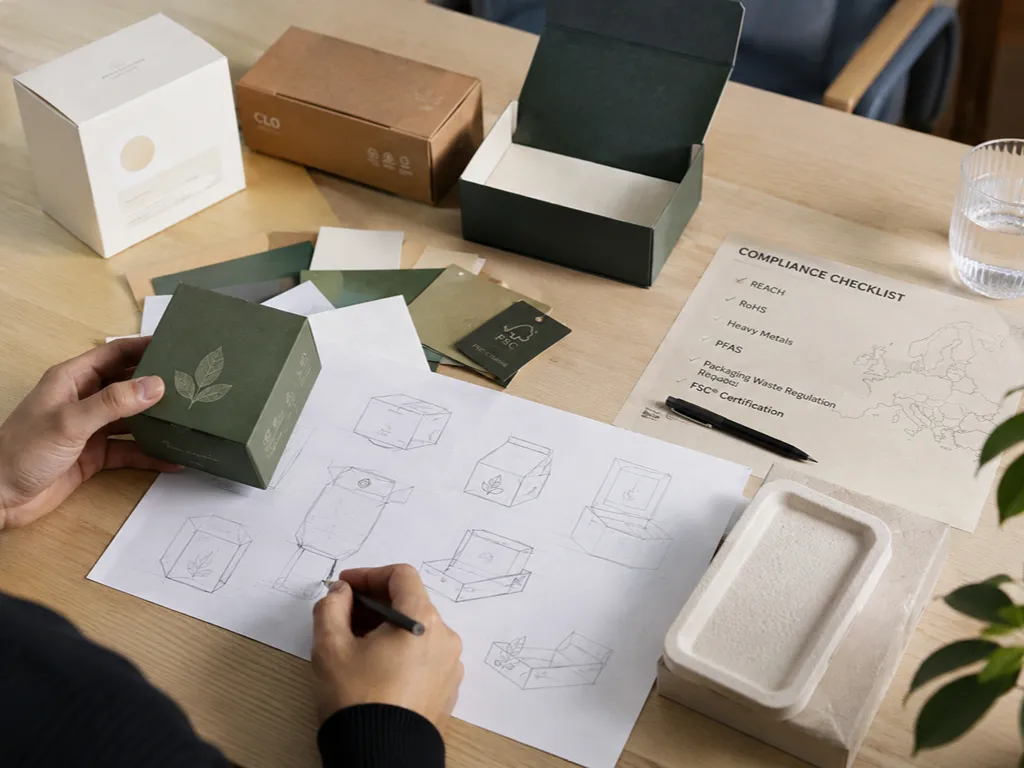
Custom Paper Packaging for European Brands and Compliance Needs
European buyers usually evaluate packaging through a wider lens than appearance alone.
Before discussing foil stamping, उभार, or luxury finishing, many European customers first ask about recyclability, material composition, responsible sourcing, and documentation. This is especially common for cosmetics, परिधान, जेवर, premium food, and retail packaging projects.
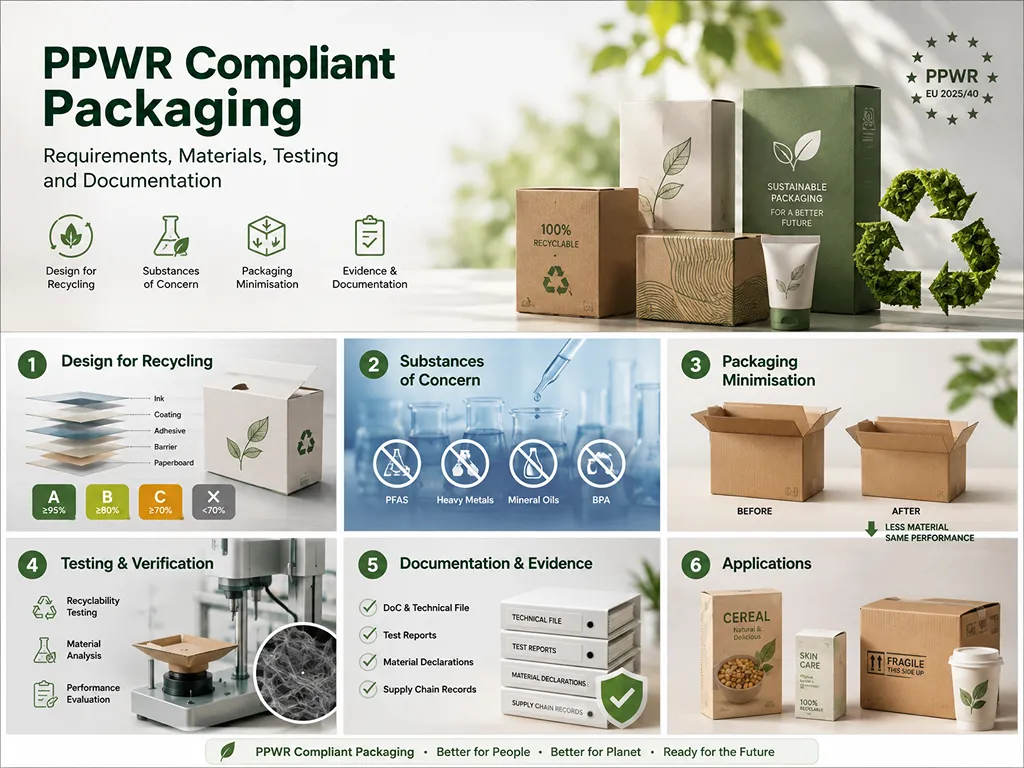
The ईयू पैकेजिंग और पैकेजिंग अपशिष्ट विनियमन, विनियमन (यूरोपीय संघ) 2025/40, entered into force in February 2025 and sets a stronger framework for packaging waste reduction, पुनरावृत्ति, and packaging requirements across the EU market.
Because of this direction, European buyers often ask questions such as:
- Can this packaging structure be recycled easily?
- Does the paper come from certified sources?
- Are plastic components necessary?
- Can FSC documentation be supplied?
- Are coatings and finishes suitable for the intended recycling route?
- Can material specifications be provided for internal review?
- Can the design reduce packaging weight without weakening protection?
These are no longer rare questions. They are becoming normal purchasing questions for brands selling into European retail channels.
Another growing topic is material traceability. The EU Deforestation Regulation has pushed many buyers to look more carefully at paper sourcing and supplier documentation, especially when packaging supply chains involve forest-based materials.
For packaging buyers, this does not mean every paper box automatically creates a compliance problem. It means brands increasingly prefer suppliers who can discuss responsible paper sourcing, FSC paper options, सामग्री का पता लगाने की क्षमता, and documentation in a clear way.
In one European skincare packaging project, the customer wanted to keep a premium look while reducing questions from distributors about mixed materials. The previous structure used plastic inserts and several decorative components that made recycling communication harder.
Instead of changing the brand identity, the structure was simplified. Plastic inserts were replaced with molded paper alternatives, FSC paperboard was selected, and the box construction was adjusted to keep the premium appearance while making the material story easier to explain.
This is where many European packaging projects are moving: not plain packaging, but cleaner packaging. The goal is to keep brand value while making the material structure more responsible and easier to document.
Material choice also plays an important role in this process. Different paper surfaces influence printing quality, टिकाऊपन, and perceived luxury in different ways. If you are comparing coated paper, क्राफ्ट पेपर, textured stocks, or specialty wrapping papers, PackCCP’s article खूबसूरत बक्सों को पैकेज करने के लिए किस प्रकार का कागज़? explains how material selection affects both branding and performance.
Why Australian Brands Prefer Sustainable Paper Packaging
Australian brands often place sustainability near the beginning of the packaging discussion, not at the end.
For beauty, candle, परिधान, कल्याण, and food brands in Australia, packaging needs to look professional, survive long-distance shipping, and support clear environmental communication. Because many products are shipped across long distances, the structure must also be strong enough for export packing, courier handling, and retail delivery.
Australia’s National Packaging Targets include goals for packaging to be reusable, पुनर्चक्रण, or compostable, along with targets for recycled content and the phase-out of problematic single-use plastic packaging.
This market direction explains why many Australian brands prefer paper-based packaging over mixed-material alternatives. Paper packaging is easier to understand, easier to communicate, and often easier to align with customer expectations.
Australian buyers commonly ask for:
- Recyclable paper materials
- FSC paper options
- Kraft paper styles
- Plastic-reduced inserts
- Lightweight shipping structures
- Clean printing and natural colors
- Strong export packing
- Simple sustainability wording
In one Melbourne candle packaging project, the customer was facing higher shipping costs because the original stock packaging created too much empty space. The product looked premium, but the carton size was not efficient for ecommerce fulfillment.
The packaging was redesigned using a fold-flat rigid structure with a paper-based insert. This reduced shipping volume while keeping the gift-style presentation the brand needed for retailers. The result was not just a more efficient box. It also matched the brand’s sustainability positioning more naturally.
For Australian brands, sustainable packaging is judged by practical execution. Customers and retailers want packaging that looks good, protects the product, and avoids unnecessary waste.
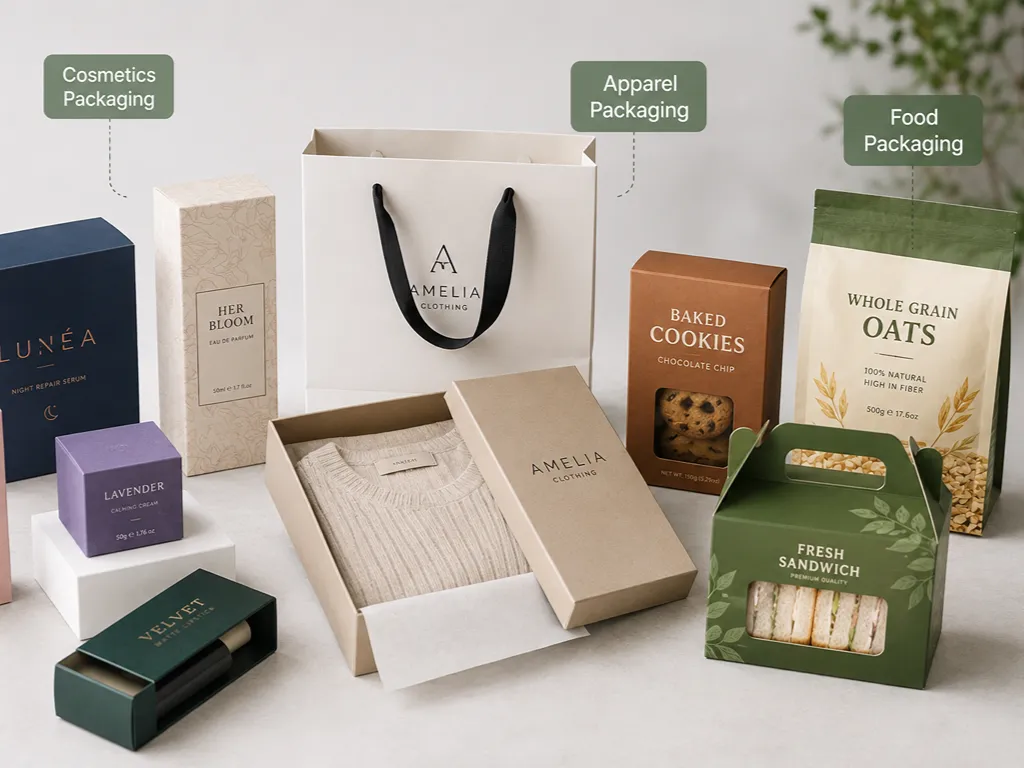
सौंदर्य प्रसाधनों के लिए पेपर पैकेजिंग समाधान, परिधान और खाद्य ब्रांड
Different industries rarely succeed with the same packaging structure.
The right custom paper packaging depends on how the product is displayed, transported, opened, stored, and remembered.
Cosmetics Packaging
Cosmetic packaging needs to balance protection, shelf appeal, और ब्रांड वैल्यू.
Skincare bottles, makeup palettes, इत्र सेट, beauty tools, and gift sets often need rigid boxes, तह डिब्बों, कागज ट्यूब, दराज बक्से, or molded paper inserts. The packaging should protect the product while creating a clean and premium first impression.
Common cosmetic packaging options include:
- कठोर उपहार बक्से
- Magnetic closure boxes
- Two piece boxes
- तह डिब्बों
- Drawer boxes
- Paper tubes
- Paper inserts
- Printed sleeves
For premium cosmetic packaging, finishing details matter. Matte lamination, कोमल स्पर्श लेमिनेशन, पन्नी मुद्रांकन, उभार, डीबॉसिंग, and spot UV can all help create a stronger brand impression. तथापि, the best packaging does not use every finish at once. It uses the right finish for the brand position.
For brands developing more sustainable beauty packaging, PackCCP’s guide स्थायी कॉस्मेटिक पैकेजिंग समाधान जो विलासिता और जिम्मेदारी को परिभाषित करते हैं gives more examples of how material choice, संरचना, and presentation can work together.
परिधान पैकेजिंग
Apparel packaging often focuses on brand consistency, बनावट, और शिपिंग दक्षता.
Clothing, अंडरवियर, सामान, मोज़े, स्कार्फ, and boutique fashion products can use corrugated mailer boxes, कठोर उपहार बक्से, तह डिब्बों, कागज शॉपिंग बैग, or tissue paper with printed cards.
For ecommerce apparel brands, corrugated mailer boxes are practical because they can protect the product and create a branded delivery experience at the same time. For retail apparel brands, paper shopping bags and rigid gift boxes help support premium presentation in stores.
Material texture is important in fashion packaging. क्राफ्ट पेपर, बनावट वाला कागज, soft-touch surfaces, and embossed logos can create a more tactile experience without making the design feel too heavy.
खाद्य पैकेजिंग
Food packaging requires a different level of care.
चॉकलेट, कुकीज़, कैंडी, चाय, कॉफी, हलवाई की दुकान, and gourmet gift products need packaging that supports product safety, structure stability, display appeal, and transport protection. उत्पाद पर निर्भर करता है, brands may choose folding cartons, कठोर उपहार बक्से, आस्तीन, कागज के बैग, or paper inserts.
Food-related packaging should be discussed carefully because direct food contact, inner wrapping, कोटिंग्स, स्याही, and regional requirements can vary by product type and market.
For premium food gift packaging, paper inserts are often useful. They can separate products, reduce movement, प्रस्तुति में सुधार करें, and help replace some plastic tray solutions when the product and supply chain allow it.
For chocolate and gifting brands, PackCCP’s article सचेत रूप से उपहार देने के लिए सर्वश्रेष्ठ पर्यावरण-अनुकूल चॉकलेट उपहार बॉक्स explains how paper-based gift boxes can combine sustainability with premium presentation.
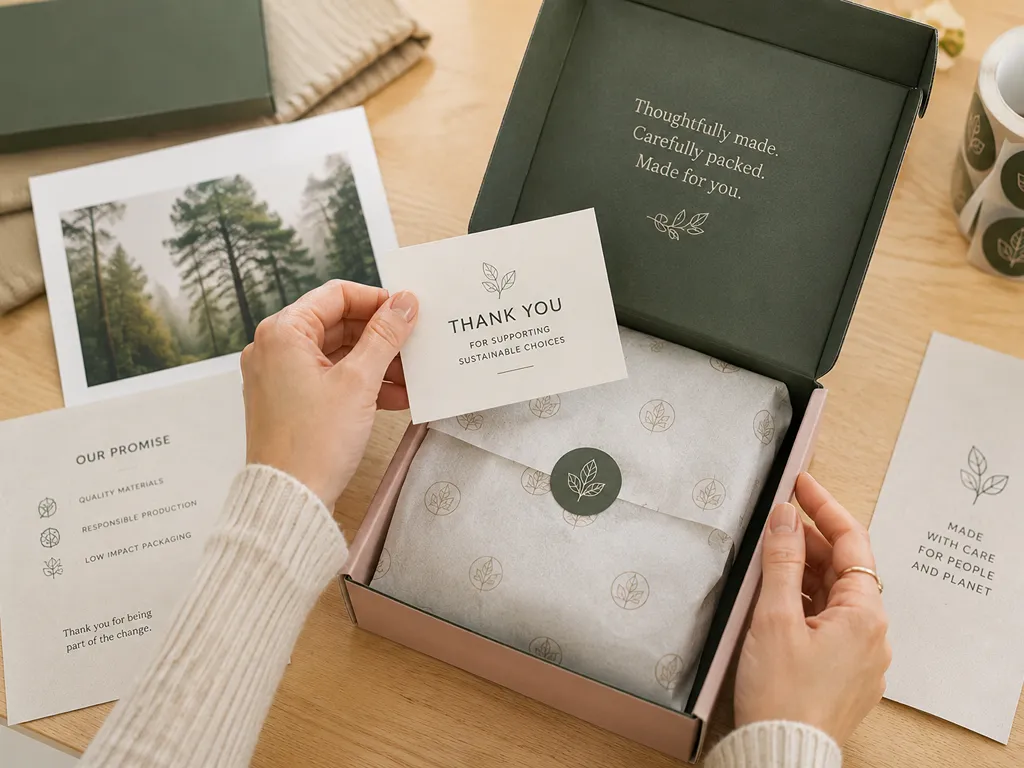
How Custom Packaging Supports Brand Trust and Customer Experience
Brand trust does not begin after the customer uses the product.
It starts when the package arrives.
A clean, strong, well-printed box makes the product feel more reliable. A weak, damaged, or poorly printed box can make customers question the product before they even open it.
Custom paper packaging supports brand trust in several ways.
पहला, it protects the product. Good structure reduces crushing, movement, स्क्रैच, and edge damage. This is important for glass skincare bottles, मोमबत्तियाँ, food gift sets, जेवर, electronics accessories, and fragile retail products.
दूसरा, it improves communication. Packaging can show the product name, ingredients, usage instructions, recycling information, क्यूआर कोड, प्रमाणपत्र, and brand story. Clear packaging helps customers understand the product faster.
तीसरा, it improves the unboxing experience. A magnetic box, दराज बॉक्स, two piece rigid box, or custom mailer can make the product feel more valuable. This matters for brands that depend on customer reviews, influencer content, social sharing, and repeat purchases.
Fourth, it builds consistency. When the outer box, डालना, पेपर बैग, आस्तीन, and printed card all follow the same brand system, the brand looks more professional across online and offline channels.
B2B खरीदारों के लिए, trust also comes from supplier stability. A good packaging supplier should not only print boxes. It should support structural design, डाइलाइन विकास, नमूना, रंग प्रमाणन, production inspection, and export packing.
Customers may not remember every material specification, but they will remember whether the packaging felt consistent, reliable, and aligned with the product price.
Recyclable and FSC Paper Options for Responsible Packaging
Responsible packaging starts with material selection.
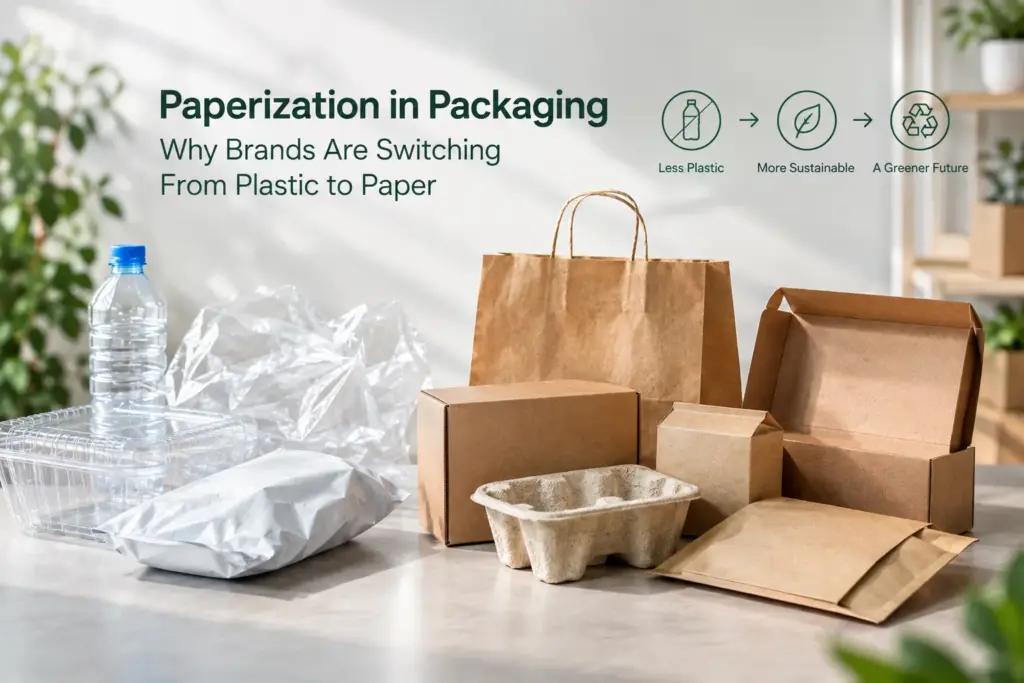
Many international brands now ask about FSC-certified paper, recycled paperboard, पुनर्चक्रण योग्य संरचनाएँ, plastic-reduced inserts, and clearer environmental claims before they confirm production.
FSC explains that chain-of-custody certification verifies that companies have processes in place to produce and trade FSC-certified products, helping customers and supply chains understand that forest-based materials are being managed through a certified system.
Common responsible paper packaging options include:
- एफएससी-प्रमाणित कागज
- पुनर्नवीनीकरण पेपरबोर्ड
- क्राफ्ट पेपर
- Recyclable corrugated board
- Plastic-free paper inserts
- Molded paper inserts
- कागज़ की आस्तीन
- Soy-based ink options where suitable
- Water-based coating options where suitable
- Mono-material paper structures where possible
Material selection should always balance sustainability with performance.
उदाहरण के लिए, luxury skincare packaging may still need a rigid structure for product value and protection. Ecommerce packaging may benefit from lightweight corrugated board to reduce shipping volume. Food gift packaging may require specific inner wrapping or barriers depending on the product.
The goal is not to use one material for every project. The goal is to choose materials that match the product, the market, the sales channel, and the brand’s sustainability message.
Recyclability should be considered before the artwork is finalized. A box with many mixed materials may look premium, but it can be harder to recycle or explain. Magnets, प्लास्टिक की खिड़कियाँ, फोम आवेषण, heavy lamination, and unnecessary decorative layers should be reviewed carefully when the brand’s goal is recyclable or plastic-reduced packaging.
Responsible packaging is not about using environmental words on a website. It is about making the material structure easier to support with real specifications.
Custom Printing and Finishing Options for Premium Packaging
Printing turns a packaging structure into a brand experience.
The same box can look natural, विलासिता, minimalist, bold, or retail-focused depending on paper choice, रंग, खत्म करना, और संरचना.
Common custom printing and finishing options include:
- ऑफसेट प्रिंटिंग
- Digital proofing
- CMYK printing
- पैनटोन रंग मिलान
- Matte lamination
- Gloss lamination
- Soft-touch lamination
- गर्म पन्नी मुद्रांकन
- स्पॉट यूवी
- एम्बॉसिंग
- डिबॉसिंग
- Varnish
- Die cutting
- Interior printing
- कस्टम आवेषण
Premium packaging does not need to use every finishing process.
Luxury skincare brands often prefer soft-touch surfaces, फ़ॉइल लोगो, and subtle embossing. Apparel brands may choose textured paper, क्राफ्ट पेपर, and clean typography. Premium food brands often use warm colors, interior printing, and structured inserts to create a gift-ready feeling.
Color control is especially important for global brands. A brand color should not shift heavily from one production batch to the next. This is why artwork checking, proofing, अनुमोदित नमूने, printing inspection, and final quality control are important parts of the production process.
Finishing should also match the target market.
North American packaging can be more direct, bold, and retail-driven. European packaging often performs better when it is clean, refined, and easy to explain from a material perspective. Australian packaging often works well with natural textures, recyclable paper, kraft tones, and simple layouts.
For luxury rigid packaging, box structure can be just as important as finishing. PackCCP’s article लक्ज़री ब्रांड कस्टम टू पीस बॉक्स क्यों पसंद करते हैं? explains why two piece rigid boxes remain popular for premium cosmetics, जेवर, उपहार, and lifestyle products.
For magnetic rigid packaging, you can also read मैग्नेटिक क्लोजर वाले फ्लिप टॉप बॉक्स परफेक्ट लग्जरी पैकेजिंग क्यों हैं?, which explains how closure structure, बोर्ड की मोटाई, and unboxing experience affect perceived value.

What Buyers Should Check Before Ordering Custom Paper Packaging
Choosing a custom paper packaging supplier should involve more than comparing unit prices.
A low quotation may not include structural support, correct material thickness, proper inserts, रंग प्रमाणन, export packing, or documentation. These details can affect the final result more than the price difference between two suppliers.
Before placing an order, buyers should check:
1. Product size and weight
Accurate product dimensions help the supplier design the right structure and avoid loose or oversized packaging.
2. Sales channel
Retail display, ecommerce shipping, gift packaging, and wholesale distribution require different structures.
3. Material specification
Paperboard type, rigid board thickness, corrugated flute, surface paper, and insert material should match the product and market.
4. Printing method
Buyers should confirm CMYK, Pantone colors, artwork format, लोगो की स्थिति, and color proofing requirements.
5. Finishing process
पन्नी मुद्रांकन, उभार, स्पॉट यूवी, फाड़ना, and varnish should be confirmed before sampling.
6. Insert design
Paperboard inserts, नालीदार आवेषण, molded paper inserts, or other protective structures should fit the product accurately.
7. स्थिरता आवश्यकताएँ
If the brand needs FSC paper, recyclable materials, plastic reduction, or specific environmental wording, this should be discussed before production.
8. Compliance documents
For North America, यूरोप, और ऑस्ट्रेलिया, buyers may need material specifications, FSC documentation, test reports, or packaging details for internal review.
9. Sampling process
A sample helps confirm size, संरचना, छपाई, सामग्री, and finishing before mass production.
10. निर्यात पैकिंग
Outer carton strength, pallet method, moisture protection, shipping marks, and packing quantity should be suitable for international delivery.
The best time to solve packaging problems is before production begins. Once mass production starts, changes become more expensive and slower to fix.
How PackCCP Supports Custom Paper Packaging Projects
Every packaging project starts differently.
Some customers come with complete artwork and dielines. Others only have a product sample, a rough idea, or a packaging style they want to improve.
PackCCP supports brands across North America, यूरोप, and Australia with custom paper packaging development from structure to production. The focus is not only making boxes look good, but helping the packaging fit the product, बाज़ार, brand position, and delivery method.
PackCCP can support projects including:
- Custom cosmetic packaging
- Skincare and beauty gift boxes
- Apparel packaging and paper shopping bags
- Jewelry boxes and gift packaging
- Food gift packaging
- Chocolate and confectionery packaging
- नालीदार मेलर बक्से
- तह डिब्बों
- कठोर उपहार बक्से
- Magnetic closure boxes
- Two piece boxes
- Drawer boxes
- Paper tube packaging
- FSC paper packaging
- Recyclable paper packaging
- Paper inserts and packaging accessories
For North American brands, PackCCP helps develop packaging for ecommerce delivery, retail presentation, and premium customer experience.
For European brands, PackCCP supports recyclable structures, FSC paper options, material discussions, and documentation needs for packaging review.
For Australian brands, PackCCP provides kraft paper styles, recyclable paper options, plastic-reduced inserts, lightweight structures, and export packing support for long-distance delivery.
A typical project may include packaging consultation, structural design, डाइलाइन विकास, material recommendation, नमूना, छपाई, परिष्करण, गुणवत्ता निरीक्षण, पैकिंग, and global shipping support.
Custom paper packaging matters because it connects product quality, ब्रांड मूल्य, customer experience, sustainability expectations, and market requirements in one physical touchpoint.
The best packaging does not simply protect products.
It helps brands look ready for growth.
अक्सर पूछे जाने वाले प्रश्न
What is custom paper packaging?
Custom paper packaging is packaging designed around a specific product, brand, sales channel, and market requirement. It can include custom paper boxes, कठोर बक्से, तह डिब्बों, नालीदार मेलर बक्से, कागज के बैग, ट्यूबों, आस्तीन, और सम्मिलित करता है.
What is the minimum order quantity for custom paper packaging?
Most custom paper packaging projects start from 500 को 1,000 टुकड़े, depending on the box structure, सामग्री, मुद्रण विधि, finishing process, and production complexity.
Can custom paper packaging be recyclable?
हाँ. Many custom paper packaging structures can be designed with recyclable paperboard, corrugated board, क्राफ्ट पेपर, molded paper inserts, and plastic-reduced materials. The final recyclability depends on the full material structure, कलई करना, डालना, and decoration method.
Is FSC paper available for custom packaging?
हाँ. FSC-certified paper options are available for many custom paper packaging projects. Buyers should confirm the required FSC claim, material type, and documentation before production.
Which industries use custom paper packaging most often?
Custom paper packaging is commonly used by cosmetics, त्वचा की देखभाल, परिधान, जेवर, खाना, मोमबत्तियाँ, कल्याण, electronics accessories, ecommerce, and premium retail brands.
How long does custom paper packaging production take?
नमूना लेने में आमतौर पर लगभग समय लगता है 3 को 7 business days, depending on structure and finishing. Mass production commonly takes about 15 को 25 business days, depending on order quantity, सामग्री, छपाई, परिष्करण, and packing requirements.
What information should buyers provide before requesting a quote?
Buyers should provide product size, उत्पाद का वजन, packaging style, ऑर्डर मात्रा, artwork files if available, target market, material preference, finishing requirements, और शिपिंग गंतव्य.
Can PackCCP help if we do not have a dieline?
हाँ. PackCCP can help create custom dielines based on product dimensions, पैकेजिंग संरचना, and branding requirements before sampling and production.
Summary
Custom paper packaging helps brands improve product presentation, protect goods during shipping, support sustainability goals, and build stronger customer trust across North America, यूरोप, और ऑस्ट्रेलिया. बढ़ते ब्रांडों के लिए, the right packaging is not just a box. It is part of how the product is sold, delivered, remembered, and trusted.
Reference Sources
- मैकिन्से & कंपनी: Sustainability in Packaging 2025
- हम. Federal Trade Commission: Green Guides
- European Union: Packaging and Packaging Waste Regulation (यूरोपीय संघ) 2025/40
- यूरोपीय आयोग: EU Deforestation Regulation
- Australian Packaging Covenant Organisation: National Packaging Targets
- फंसी: Chain of Custody Certification
- Government of Canada: Recycled Content and Labelling Rules for Plastics