This luxury candle packaging guide provides the framework to prevent margin erosion caused by subpar material selection. When packaging fails to protect heavy glass vessels or communicate value, it leads directly to increased damage claims and a lower perceived worth, making it impossible to command a premium price.
This analysis benchmarks different packaging systems against key performance metrics. We evaluate the structural integrity of 2.0–2.5 mm greyboard rigid boxes, the shock absorption of EVA foam versus molded pulp inserts, and the perceived value added by finishes like soft-touch lamination to protect your product and your price point.
What Makes Luxury Candle Packaging
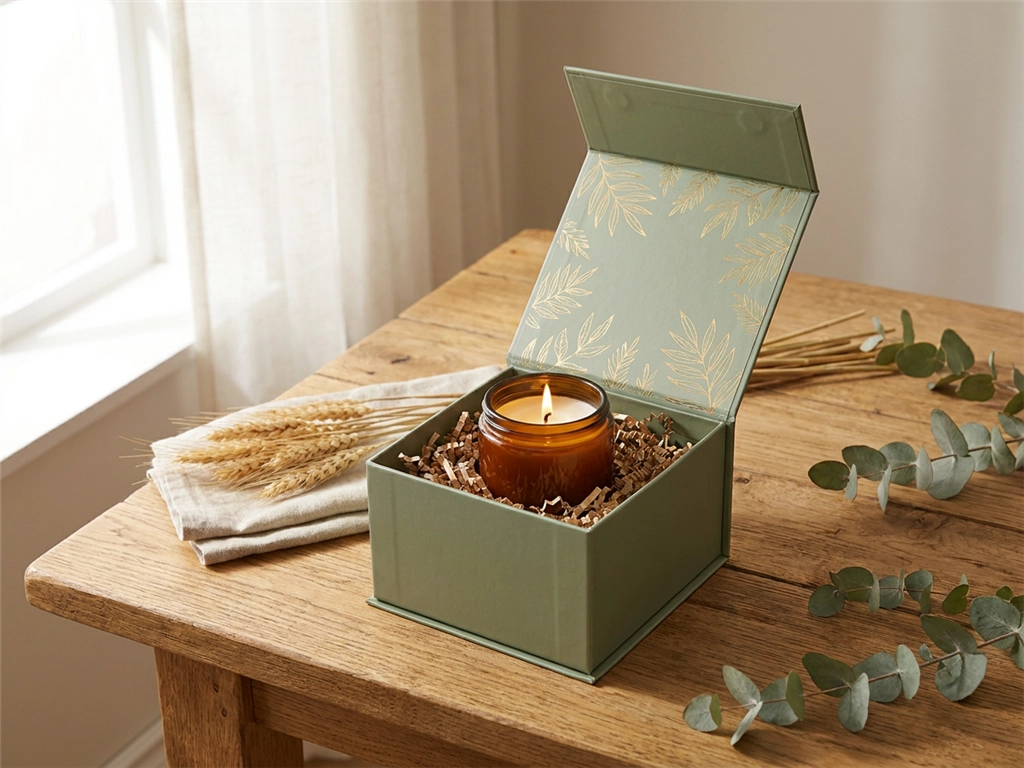
Luxury candle packaging combines premium materials, sturdy construction, and a refined unboxing experience to signal high value before the candle is ever smelled or lit.
Premium Materials and Sturdy Construction
Luxury candle packaging begins with physical substance. It’s not just about looks; it’s about a feeling of weight and durability in the hand. Brands in this space almost always choose rigid boxes over standard folding cartons. A rigid box doesn’t flex or bend, which immediately communicates quality and protects the heavy glass or ceramic vessel inside.
The materials are chosen for their tactile quality and strength. This isn’t your standard paperboard. The core structure is built from thick greyboard, and the wrap papers are heavy and often textured. This combination creates crisp, precise edges and a box that feels solid.
- Greyboard Thickness: Typically 2.0–2.5 mm to provide the necessary compression strength and a substantial feel.
- Wrap Paper Weight: Usually starts at 300 gsm, with high-end brands using 400 gsm or more for extra rigidity and a better surface for finishes.
- Vessel Quality: The candle itself is part of the package. Heavy glass or ceramic vessels with weighted lids (metal or thick wood) contribute to the overall premium impression.
अंदर, you won’t find loose packing peanuts. Luxury packaging uses engineered inserts made from die-cut paperboard or molded pulp. These inserts hold the candle vessel securely in the center, preventing any movement during shipping and presenting it perfectly when the box is opened.
Refined Aesthetics and the Unboxing Experience
The visual and tactile language of luxury packaging is all about restraint. The goal is sophistication, not noise. Brands stick to a “one hero finish” rule, combining a single standout element like a foil-stamped logo with a subtle texture like a soft-touch matte lamination. This velvety, rubberized feel encourages you to hold the box, while blind debossing (pressing a logo without ink) communicates craftsmanship through shadow and depth.
The design itself is usually minimalist. Ample white space, a muted color palette, and clean typography let the high-quality materials and finishes do the talking. This aesthetic aligns with modern luxury and helps the product feel like a piece of home decor.
This all leads to the unboxing, which is engineered as a deliberate sequence. It’s a ritual, not just access. The experience often includes:
- A controlled opening, often with a magnetic flap that closes with a satisfying click or a tight-fitting lid that slides off smoothly.
- A layer of branded tissue paper or a printed card that adds a moment of anticipation.
- The reveal of the candle, perfectly centered and held securely in its custom insert.
- The discovery of small extras, like a branded matchbook or a card detailing the fragrance notes and brand story.
This carefully structured experience turns a simple candle into a gift-worthy object, justifying its premium price and building a stronger connection with the customer.
Popular Candle Box Styles
Choosing a candle box isn’t just about looks. It’s a strategic choice balancing protection, brand identity, unboxing feel, और बजट. The right structure is a silent salesman.
Common Box Structures from Standard to Luxury
The box structure you choose sets the tone for your brand. It’s the first thing a customer interacts with, so it needs to align with your product’s quality and price point.
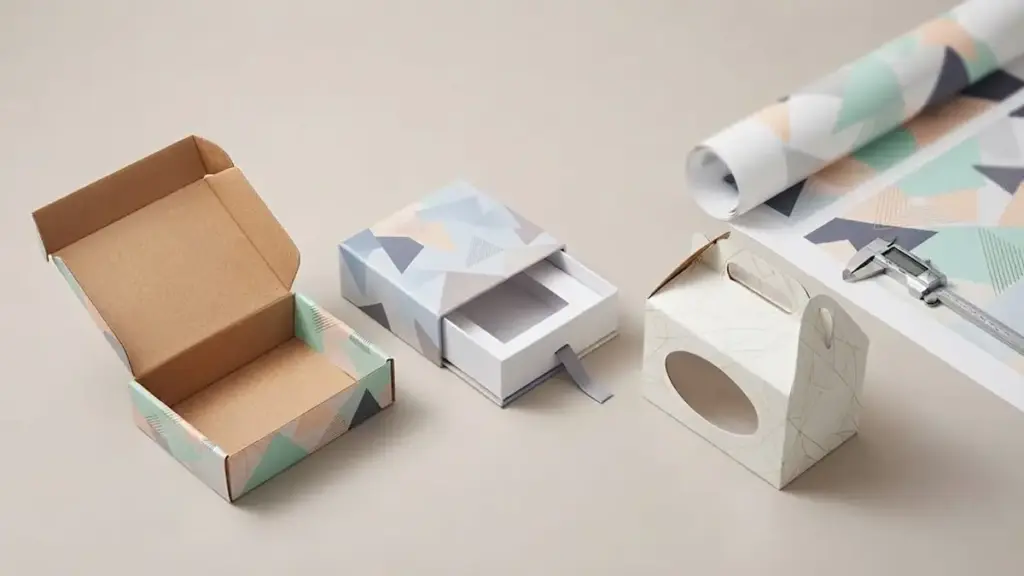
- फोल्डिंग डिब्बों: These are the industry workhorse for retail. They are efficient to produce, stackable for store shelves, and cost-effective, making them ideal for core product lines.
- Rigid Two-Piece Boxes: A classic signal of luxury. This style offers far better protection for heavy glass and instantly communicates a premium, gift-ready product before it’s even opened.
- चुंबकीय & Drawer Styles: These are all about the unboxing experience. A magnetic closure or a sliding drawer creates a deliberate, satisfying reveal that dramatically increases the perceived value, perfect for high-end collections.
- Tubes & Custom Shapes: These help brands break the mold on a crowded shelf. Cylindrical tubes are a natural fit for round jars, and custom shapes are often used for artisan lines or limited editions to create a strong visual identity.
Key Factors for Selecting a Box
Making the right choice involves a few practical trade-offs. Don’t just pick what looks good; pick what works for your product, brand, and operations.
- Product Protection: This is non-negotiable. Prioritize sturdy structures and snug-fitting inserts, especially for heavy glass jars. A broken candle is a lost sale and a bad customer experience.
- Brand Positioning: Your box must match your brand. If you’re selling an eco-luxe product, a simple kraft paper box with minimal print makes sense. For a high-end, gift-focused candle, a rigid box is expected.
- Unboxing Experience: Think about how the customer opens it. Drawer and magnetic closure boxes create a memorable reveal that’s perfect for products positioned as gifts or personal luxuries.
- Logistics and Budget: Balance the per-unit cost of the box with operational realities. Consider how efficiently the boxes can be stored flat, assembled by your team, and packed for shipping.
Elevate Your Brand with Custom Packaging
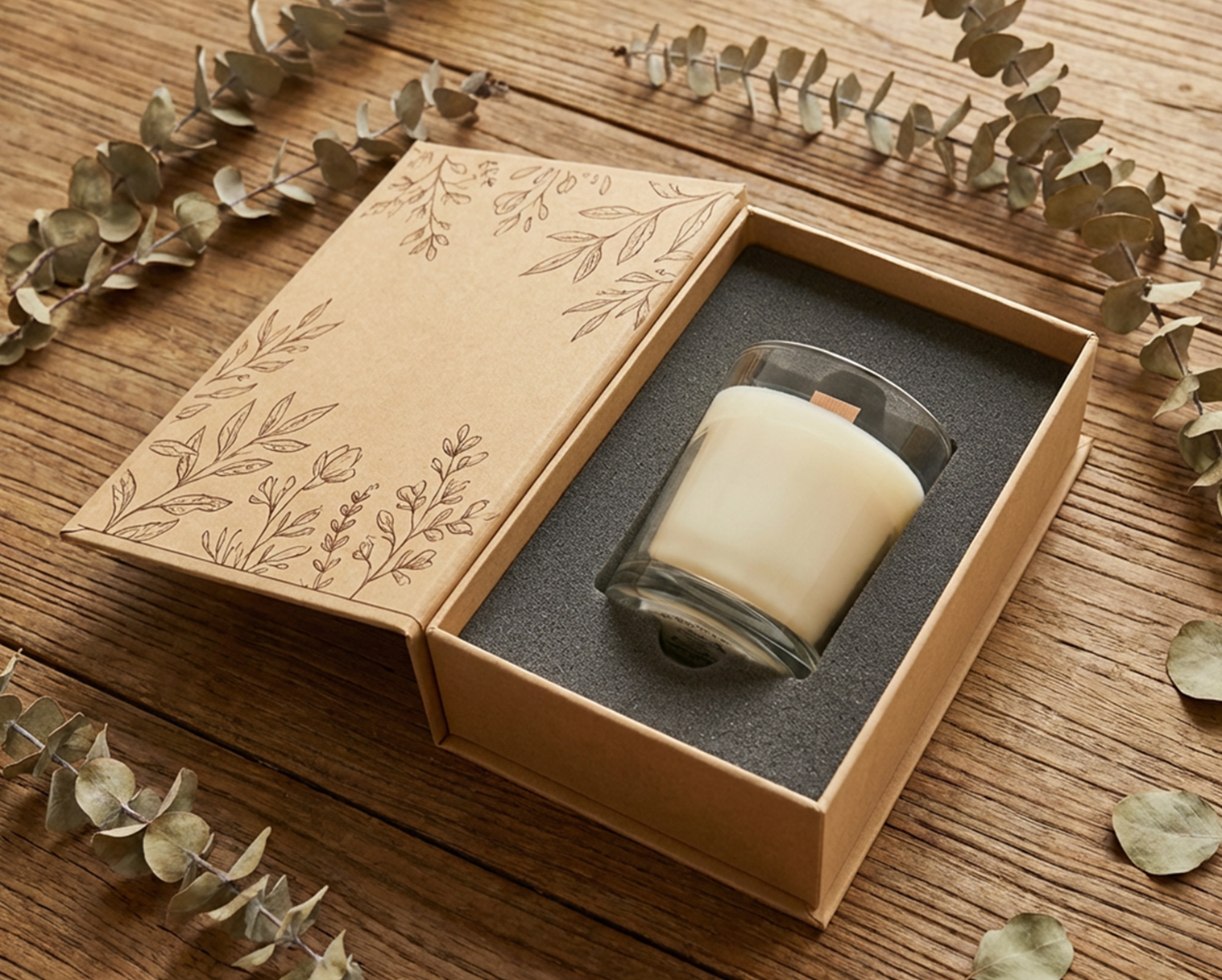
Materials for Luxury Candle Boxes
Material choice in luxury candle packaging defines perceived value, structural integrity, and brand position. It’s about the entire system, from the board’s weight to the insert’s protective fit.
Core Substrates and Protective Inserts
The foundation of any luxury candle box is its structural material, or substrate. This isn’t just about making a box; it’s about creating a feeling of substance and quality. The choice directly impacts how heavy the box feels, how well it protects a fragile glass vessel, and whether it justifies a premium price tag.
Luxury brands almost always choose rigid board over a standard folding carton. The typical setup uses a thick 2.0–2.5 mm greyboard as the structural core. This provides the non-flexing, solid feel that customers equate with high-end products and offers the necessary compression strength to protect heavy glass. Other substrates have their place, but are chosen for specific brand positions:
- पेपरबोर्ड (एसबीएस): A practical choice for retail-focused premium candles. It’s lighter than rigid board but still offers a great surface for high-quality printing and finishes like foil accents.
- क्राफ्ट पेपरबोर्ड: The go-to for eco-focused or “natural” luxury brands. The rustic look of unbleached kraft pairs well with minimalist designs and signals a commitment to sustainability.
- लहरदार बोर्ड: Almost never used as the primary retail box. Its role is essential for protection, either as the outer shipping mailer or as a sturdy internal insert for e-commerce.
Inside the box, protective inserts are non-negotiable. They hold the candle securely, absorb shock, and stage the product for a premium unboxing. Loose fill is not an option in this segment. बजाय, brands use engineered inserts:
- Paperboard Inserts: Die-cut to hold the candle snugly. They are recyclable and can be printed to match the box branding, making them a good balance of cost, सौंदर्यशास्र, और स्थिरता.
- ईवा फोम आवेषण: Offer superior shock absorption and a precise, clean fit. This is the top choice for ultra-luxury or very fragile vessels where preventing breakage is the highest priority.
- ढाला हुआ गूदा सम्मिलित करता है: A growing favorite for eco-luxury brands. Made from recycled fiber, they provide good cushioning and cradle the vessel securely, offering a sustainable alternative to foam.
Decorative Wraps and Surface Finishes
Once the structure is set, the outer surfaces deliver the sensory cues that scream “luxury.” This is done with specialty wrap papers and refined finishes. The wrap is typically a premium paper stock of 300 gsm or more, laminated onto the rigid greyboard core. Textured papers with a linen, canvas, or soft-grain feel provide immediate tactile interest and reinforce a sophisticated brand image.
The most important rule for luxury finishes is restraint. Brands typically select one “hero” finish and one supporting texture. Over-decorating with multiple foils and gloss effects can cheapen the look. The goal is a quiet, confident aesthetic.
These are the key finishes that define luxury in candle packaging:
- Soft-Touch Lamination: This creates a velvety, almost rubberized feel that encourages touch. It’s a powerful signal of a premium product and works exceptionally well with dark, muted color palettes.
- मैट लैमिनेशन: A smooth, low-sheen surface that reduces glare and gives a modern, sophisticated look. It’s a classic choice that serves as a perfect backdrop for a single foil accent.
- पन्नी मुद्रांकन: Used sparingly as a single accent. A gold, ताँबा, or muted metallic foil on the logo or brand name is one of the clearest signals of quality. It suggests value without appearing flashy.
- एम्बॉसिंग & डिबॉसिंग: Pressing a logo or pattern into the surface adds textural depth and a sense of craftsmanship. ए “blind” deboss, with no ink or foil, relies purely on shadow and is a hallmark of understated luxury.
अंदर, some brands add a matte or gloss lamination to the box interior. This isn’t just for looks; it prevents the paperboard from absorbing fragrance oils over time, which is critical for high-fragrance candles or long-term storage. It also keeps the inside looking clean if any wax residue makes contact with the walls.
Protective Inserts Explained
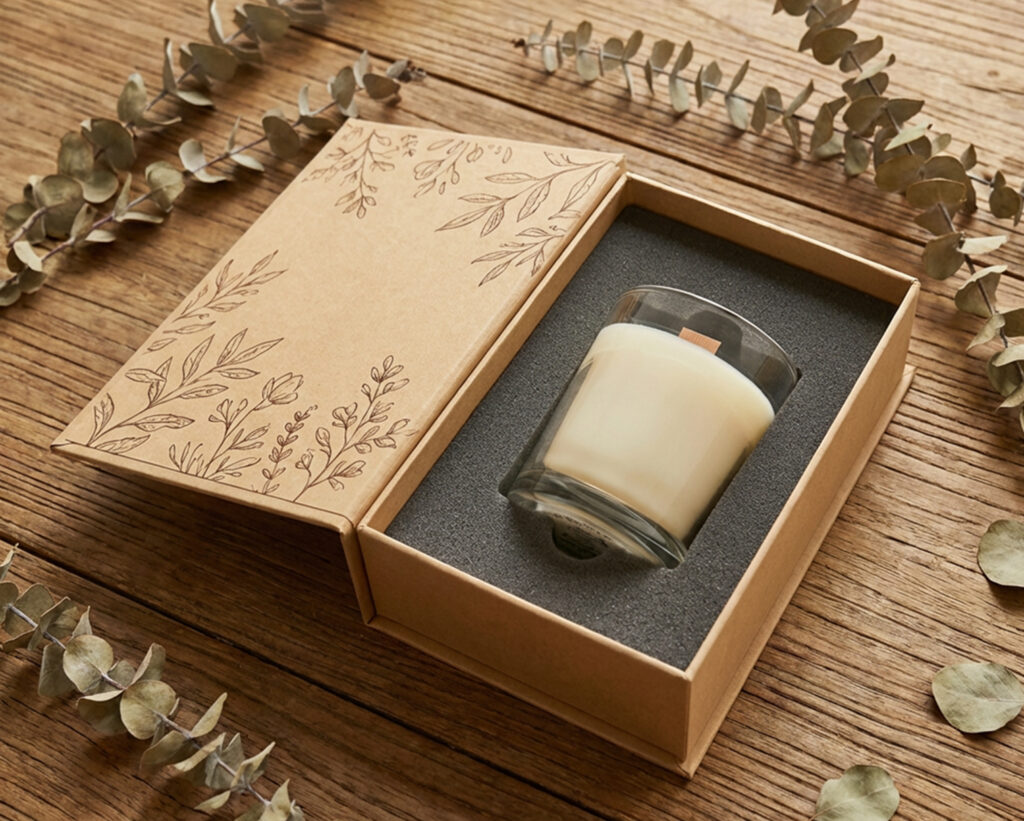
Protective inserts are engineered internal structures that hold a candle secure, absorb shock, and stage the product for a premium unboxing experience.
What Are Protective Inserts?
A protective insert is an internal component inside a candle box, specifically engineered to fit the candle’s exact dimensions. It’s not just loose filler. Think of it as a custom-built cradle made from materials like die-cut cardboard, ढला हुआ गूदा, or foam. Its job is to hold the vessel securely in place, controlling movement and presenting the candle perfectly when the customer opens the box.
Primary Functions of a Candle Insert
An insert does more than just hold the candle. It serves several critical functions that directly impact brand perception and profitability.
- Product Stabilization: An insert holds the vessel snugly to prevent it from rattling, tipping, or shifting during transit. This is the first line of defense against chipping and breakage.
- Shock Protection: The insert creates a buffer zone, separating the candle from the outer box walls. It absorbs compression and impact forces from drops or rough handling during shipping.
- Surface Protection: By stopping internal movement, inserts protect the candle’s label, vessel finishes, and any decorative coatings from scuffs and abrasion.
- Premium Presentation: A good insert keeps the candle perfectly centered and upright. When the box is opened, this creates an organized, intentional layout that signals high value and attention to detail.
- Damage and Return Reduction: Ultimately, effective inserts prevent damage. This directly reduces product returns, replacement costs, and customer complaints, which is critical for any brand selling fragile, high-margin products like luxury candles.
प्रीमियम प्रिंटिंग & Decorative Finishes
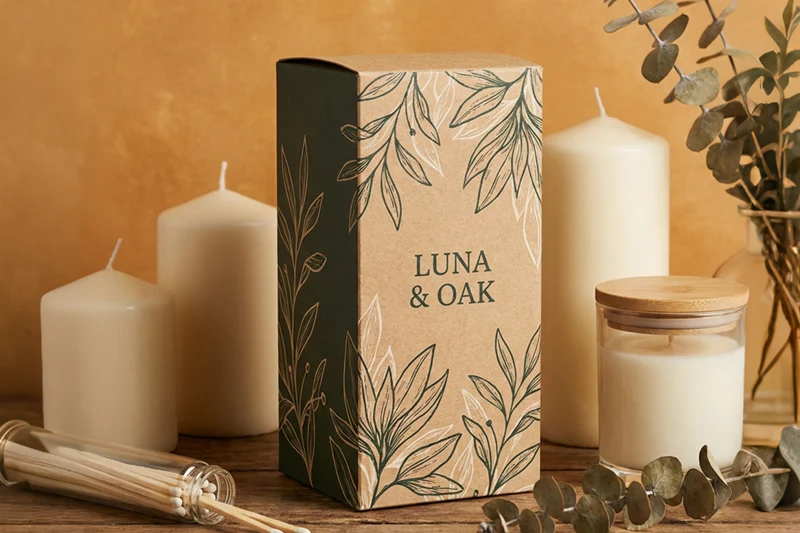
Premium candle printing uses offset or digital methods on quality substrates. A restrained approach, using one key finish like foil or a soft-touch coating, is what signals luxury.
| Core Printing Methods & सामग्री | Key Decorative Finishes |
|---|---|
|
|
Core Printing Methods & सामग्री
For luxury candle packaging, the choice of printing method comes down to volume and flexibility. ओफ़्सेट (पत्थर के छापे से छापने का) छपाई is the workhorse for high-volume runs of rigid box wraps and folding cartons. It excels at reproducing fine details in illustrations and hitting exact brand colors consistently. For smaller brands, सीमित संस्करण, or seasonal scents, डिजिटल प्रिंटिंग makes more sense. It’s cost-effective for short runs and lets you change artwork quickly without paying for new printing plates.
The material itself does a lot of the heavy lifting. The right substrate provides the tactile quality that customers associate with a premium product. Key choices include:
- Textured Paperboard: Stocks with linen, felt, or soft-grain finishes provide immediate tactile luxury. They work especially well with minimalist designs where the paper’s feel is a central feature.
- Colored Boards: Using paper that is dyed through (उदा।, deep navy, emerald, or charcoal) avoids white edges on folds and creates a rich, uniform base for metallic foils or inks. This look often supports vintage or royal-inspired brand aesthetics.
- Sustainable Substrates: Recyclable and biodegradable boards, often with foil-free properties, are becoming standard. These materials meet the demand from eco-conscious buyers without sacrificing a premium feel.
Color is also used strategically. Many brands create a visual system by color-coding packaging to match the candle’s scent—for example, using bright citrus tones for a lemon-scented candle. This system helps customers quickly associate the packaging with a specific aromatic experience on a crowded retail shelf.
Key Decorative Finishes
Luxury candle packaging is defined by restraint. Instead of layering on multiple effects, high-end brands typically choose one “hero” finish and maybe a supporting texture. This focused approach looks confident and avoids the cluttered feel of cheaper packaging.
The most effective finishes create both visual and tactile interest. They are meant to be felt as much as seen.
- पन्नी मुद्रांकन: Applying a small, metallic detail—like a gold, ताँबा, or silver logo—is one of the clearest signals of quality. It’s used sparingly to create a single focal point.
- एम्बॉसिंग & डिबॉसिंग: This technique adds physical dimension. A debossed (pressed-in) logo with no ink, known as a blind deboss, relies purely on shadow and feels sophisticated and understated.
- Soft-Touch & मैट लैमिनेशन: A soft-touch coating gives the box a velvety, rubberized texture that reduces glare. It’s a dominant finish in the home fragrance category because it feels quiet and substantial.
- स्पॉट यूवी: This is a selective high-gloss varnish applied over a matte or soft-touch surface. It’s used to create a subtle contrast, highlighting a logo or pattern without adding color.
These finishes support popular design themes in the luxury candle space. Art-driven packaging might pair a digitally illustrated wrap with a simple foil-stamped name. A heritage-inspired brand might use an embossed typeface on a deep navy board. More brands are also exploring sustainable options, like replacing foil with metallic inks or using water-based coatings to ensure the box remains fully recyclable.
Gift Packaging Ideas
Effective gift packaging combines sturdy, impressive box structures with thematic finishes and a layered unboxing sequence. It turns a simple candle into a memorable, high-value experience.
Structural and Box Style Ideas
The structure of the box is the foundation of any great gift experience. It’s not just about looks; it’s about the weight, the feel, and the protection it provides. For candles positioned as gifts, flimsy folding cartons don’t cut it. Customers equate a solid, non-flexing box with quality.
Here are the structural choices that work best for gifting:
- Rigid Two-Piece Boxes: The classic “lid-and-base” उपहार बॉक्स. This is a standard for single high-value candles. It feels substantial, protects the vessel well, and is perfect for retail displays.
- चुंबकीय बंद बक्से: A hinged lid that closes with a satisfying magnetic snap. This structure opens like a book, creating a curated reveal that immediately signals a premium product. It’s a top choice for signature collections and gift sets.
- Drawer or Slide Boxes: A sleeve with a sliding tray creates a slow, dramatic unboxing. This style is popular for limited-edition candles and works especially well with custom inserts that stage the candle perfectly.
- कस्टम निवेशन: Never use loose filler. An engineered insert made from die-cut paperboard, ढला हुआ गूदा, or foam is non-negotiable. It holds the candle securely, presents it like a piece of jewelry, and prevents breakage during transit. For gift sets, multi-cavity inserts create a clean, organized layout.
For a more eco-focused or modern aesthetic, some brands use sturdy paper tubes or custom die-cut shapes like hexagons. But the core principle remains: the structure must feel protective and intentional.
Thematic and Finishing Touches
Once the structure is solid, finishing touches and thematic elements are what complete the gift experience. This is less about heavy decoration and more about restrained, high-quality details that create a multi-sensory experience.
Focus on a few key elements that align with your brand:
- Tactile Finishes: A soft-touch matte lamination gives the box a velvety, premium feel. Textured papers (like linen or canvas) and blind debossing (pressing a logo into the paper without ink) add a subtle, crafty signal of quality.
- Metallic Accents: A single, well-placed foil stamp—in gold, ताँबा, or silver—on the logo or brand name is one of the clearest signals of luxury. The key is to use it sparingly to avoid looking gaudy.
- Layered Unboxing: The experience shouldn’t end when the lid is lifted. Wrap the candle in branded tissue paper, sealed with a sticker or wax seal. Include a high-quality card that tells the brand’s story, explains the scent notes, or provides care instructions.
- Gift Adornments: Simple additions like a satin ribbon, a printed belly band, or a branded gift tag with space for a handwritten note make the package feel instantly gift-ready.
- Thematic Cues: Use color to hint at the scent family (उदा।, lavender tones for lavender scents). For holidays, a simple printed sleeve with a festive pattern can adapt your core packaging without a full redesign.
- Personalization: For an even higher-end touch, consider options for foiled monograms or custom-printed messages for specific occasions like weddings or corporate gifts. A QR code linking to a curated playlist or scent story can also elevate the experience.
Sustainable Luxury Candle Packaging
टिकाऊ पैकेजिंग is no longer an option for luxury candles; it’s a mandatory part of the premium experience, blending eco-friendly materials with high-end design and structural integrity.
Core Materials for Vessels and Outer Packaging
The shift to sustainability starts with the materials you choose for both the candle container and its box. For the vessel itself, the focus is on recyclability and long-term reuse. Heavy glass remains the standard, but brands are now specifying it with 25-50% post-consumer recycled (PCR) content. Ceramic, stoneware, and even cast concrete are used to create “forever vessels” that customers keep as decor long after the candle is gone. These materials communicate an artisanal, permanent value.
For the outer box, the industry is moving away from complex, mixed-material constructions. The workhorses here are paper-based solutions that don’t compromise the luxury feel.
- Recycled Cardboard and Kraft Paper: These are the standard for outer boxes. They offer an authentic, “हरा” aesthetic and can still support premium finishes like embossing or a restrained foil accent.
- Mono-Material Structures: The goal is to make recycling simple. This means designing boxes, आवेषण, and sleeves from a single fiber type, like paperboard or molded pulp, to avoid contaminating recycling streams.
- Biodegradable Wraps: Plastic shrink wrap is out. Brands are switching to plant-based or cellulose films to protect boxes while remaining biodegradable.
- Experimental Materials: For high-concept brands, materials like mycelium (molded mushroom forms) and seed paper (which can be planted) offer a powerful sustainability story and a unique tactile experience.
Design Strategies for Reuse, recyclability, and Protection
A sustainable approach changes how you think about design. It’s not just about picking green materials; it’s about engineering the entire package for a longer, more responsible life cycle. The leading strategy is designing for reuse. The “second life” concept turns a high-quality glass or ceramic vessel into a permanent decor piece. Brands support this by offering wax refills, which reduces waste and creates a new revenue stream.
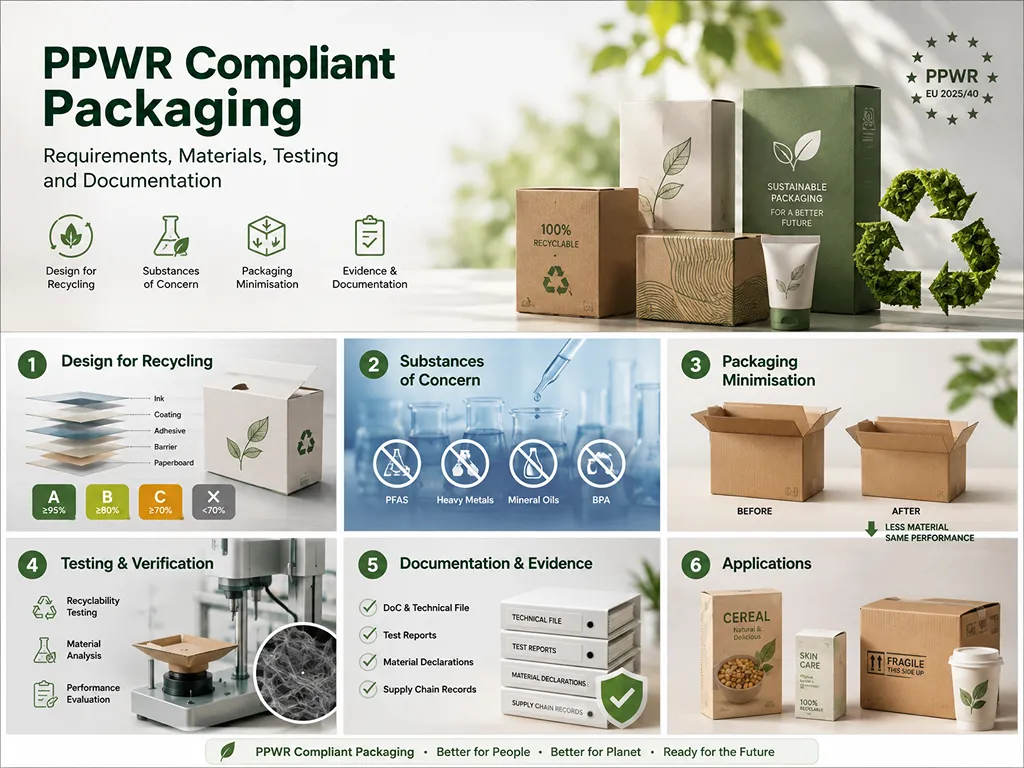
Recyclability is driven by simplicity. European and North American regulations are pressuring brands to ditch mixed materials, especially plastic windows laminated onto paperboard. The smart move is to design a mono-material package where the box and its inserts are all paper-based. This also means using minimal adhesives and opting for water-based coatings over plastic laminates. A clean, minimalist aesthetic with debossing or a small foil hit is often more recyclable than a box covered in heavy inks and films.
Protection doesn’t have to mean plastic. Foam inserts are being replaced by engineered paper-based solutions. Molded pulp and die-cut cardstock inserts can secure a heavy glass candle just as effectively, but without the environmental cost. For e-commerce, biodegradable packing peanuts and paper-based void fills are now the standard for protecting products in transit. You also have a responsibility to educate your customer. Use QR codes or small printed cards inside the box to explain exactly how to reuse the vessel and recycle the packaging components.
Choosing a Packaging Supplier
Choosing a supplier is more than a price check. It’s about vetting capabilities with real samples, auditing their process, and finding a partner who can scale with your brand.
Establishing Key Selection Criteria
Before you even start looking for a supplier, you need to know exactly what you’re asking for. Your brand’s position—whether minimalist, eco-focused, or heritage—dictates the packaging specs. A heavy glass vessel requires a completely different structural approach than a lightweight tin. You need to define the physical profile of your candle, including its weight, wax type, and fragrance load, as these details directly impact material and structural choices.
Get your non-negotiables straight. This isn’t a wish list; it’s the barrier to entry for any potential partner. If a supplier can’t meet these, they’re out.
- Minimum Order Quantity (MOQ): Can you realistically commit to their 500 or 1,000-unit minimum? For custom rigid boxes, this is a common starting point.
- समय सीमा: Does their typical 4–8 week turnaround fit your launch schedule? You need clarity on timelines for both standard and rush orders.
- अनुपालन & वहनीयता: Do you require FSC or SFI-certified paper? What about specific safety labeling for regulations like Prop 65 or CLP? Get this on the table immediately.
With your own requirements defined, you can effectively evaluate suppliers based on what actually matters:
- Material and Structural Capability: Can they produce a rigid box from 2.0–2.5 mm greyboard that feels substantial and protects heavy glass? Do they have proven experience with candle-specific inserts like molded pulp, die-cut board, or foam? Ask to see examples.
- Finishing and Branding Options: Review their portfolio. Look for clean foil stamping, crisp debossing, and consistent color. For luxury brands, slight variations are unacceptable, so their ability to maintain quality across repeat orders is critical.
- Certifications and Quality Management: An ISO 9001 certification isn’t just a logo; it signals a structured manufacturing process. The same goes for environmental certifications like ISO 14001 or chain-of-custody documents for sustainable materials. A serious supplier will have this ready.
- Operational Reliability: Look for a documented track record of low defect rates and on-time delivery. A few cents saved per unit means nothing if a shipment arrives late or damaged. Ask for references from other luxury brands.
Vetting and Managing the Supplier Relationship
Finding a long-term partner is a structured process, not a single phone call. Once you have a shortlist of suppliers who meet your criteria, it’s time to put them to the test. This is where you separate the talkers from the doers.
Sampling is non-negotiable. Request physical samples of your *exact* configuration—your chosen vessel, wax, लेबल, डिब्बा, and insert. Do not settle for generic samples of their previous work. Once you have the sample, stress-test it. Replicate real-world shipping conditions by placing the packaged candle in a hot environment (around 90°F / 32°C) and then a cold one (40°F / 4°C). Check for warped board, adhesive failures, or smudged ink. A luxury box must arrive in pristine condition.
While you test the product, audit their process. Are they transparent about their factory location and manufacturing setup? A willingness to provide a virtual tour is a good sign. When you’re ready to negotiate, clarify the ownership of tooling dies and embossing plates to avoid being locked in if you need to switch suppliers down the road.
Before committing to a large order, run a pilot production of around 500 इकाइयां. Get this batch into the hands of key wholesale accounts and loyal customers. Gather structured feedback on the unboxing experience, shelf appeal, and any functional issues. This real-world data is invaluable before scaling to a 10,000-unit run.
The relationship doesn’t end when the invoice is paid. Ongoing management is what ensures consistency.
- Implement Incoming Quality Control (IQC): Create a checklist for every delivery. Inspect for print registration, color accuracy, scuffs, and glue failures. Document defect rates and provide feedback.
- Track Performance: Maintain a supplier scorecard. Monitor their on-time delivery rate, quality metrics, and responsiveness. This data drives accountability.
- Maintain a Backup: Always have a vetted backup supplier for your most critical packaging formats. A single point of failure in your supply chain is a massive risk.
अक्सर पूछे जाने वाले प्रश्नों
What is the best packaging for luxury candles?
The best packaging for a luxury candle is a tailored system that combines robust protection, strong brand storytelling, and premium, टिकाऊ सामग्री. This typically includes a rigid outer box, a custom-fit insert to prevent movement, and about 2.5 cm of cushioning for shipping. The design must reflect the brand’s identity and is adapted for the specific candle type and how it’s sold, whether online or in a physical store.
Should candles use rigid boxes?
Rigid boxes are strongly recommended for most luxury candles, particularly for high-priced items, उपहार सेट, and products sold online. They provide superior protection for fragile glass and create a premium unboxing experience that justifies a higher price point. For brands focused on minimalism or lower-priced entry-luxury items, a high-quality folding carton can be a more cost-effective and sustainable alternative.
Which insert is best for protecting glass candle jars?
The best insert depends on the candle’s fragility and how it’s shipped. For maximum protection against drops and impacts, विशेषकर ई-कॉमर्स में, a precision-cut foam insert is the top choice. For a balance of luxury and sustainability, a well-designed rigid cardboard insert works well. For brands with a strong eco-friendly focus, custom molded pulp inserts are an excellent plastic-free and recyclable option.
How do I package candles for shipping?
Wrap each candle individually in a protective material like bubble wrap or kraft paper, ensuring at least 1.5-2 inches of cushioning. Place the wrapped candle in the center of a sturdy corrugated box. Fill all empty space with void fill, like crumpled paper, so nothing can move. For a luxury touch, add branded elements like tissue paper. Seal the box securely with strong tape and mark it as ‘Fragile’.
What finishes make candle packaging look luxurious?
Luxury candle packaging often relies on tactile and restrained finishes. A soft-touch or matte lamination gives the box a premium, velvety feel. This is commonly paired with a single, refined detail like a hot foil stamp in gold or copper for the logo. Blind debossing, which presses a design into the paper without ink, adds a subtle, textural element that signals high quality.
Can candle boxes be recycled?
हाँ, most paper-based candle boxes are recyclable, but only if they are made from paper or cardboard and are clean and free from wax or oil residue. Boxes with plastic laminations, heavy foils, मैग्नेट, or foam inserts are much harder to recycle. To ensure recyclability, brands should use paper-only materials, including paper inserts, and provide clear disposal instructions to customers.
What are the best materials for luxury candle packaging?
The best materials balance a premium feel with protection and sustainability. For the candle itself, a heavy glass vessel is standard. The outer box should be a rigid paperboard or a high-quality folding carton. अंदर, custom inserts made from die-cut cardboard or molded pulp provide protection while supporting eco-friendly goals. For shipping, a sturdy corrugated box with paper-based cushioning is essential.
How do luxury candle brands package their products?
Luxury brands use a multi-layered system designed to protect the product and create a memorable experience. It starts with a substantial vessel, like a heavy glass jar, housed within a precisely made rigid box with premium finishes. The unboxing is often a sequence, revealing layers of tissue paper and a custom insert that holds the candle securely. The entire package is engineered to be gift-ready and justify a premium price.
What is the MOQ for custom candle packaging?
The Minimum Order Quantity (MOQ) depends on the complexity of the packaging. For simple printed folding cartons, MOQs can start around 250–500 units. For fully custom rigid boxes with specialty finishes like foil stamping or embossing, the MOQ is typically higher, often starting at 500 या 1,000 units per design. The final MOQ is usually determined by the component with the highest production minimum, which is often the box itself.
How much does custom candle packaging cost?
The cost varies significantly based on order volume, box style, सामग्री, और ख़त्म. A standard printed folding carton might cost between $0.60 और $1.50 per unit at scale. A premium rigid gift box can range from $2.20 to over $6.80 per unit. As a general rule for luxury products, packaging often accounts for about 5–7% of the candle’s final retail price.
Can candle packaging be customized?
हाँ, candle packaging is highly customizable. You can customize the box’s structure, आकार, and style. You can also choose specific materials, from recycled kraft paper to thick rigid board. All printing, रंग, and graphics can be tailored to your brand, and you can add premium finishes like foil stamping, उभार, and custom inserts to create a unique and luxurious presentation.
How do I choose a luxury candle packaging supplier?
Start by defining your brand’s needs, including packaging style, budget, and desired quantity. Evaluate potential suppliers based on their experience with luxury brands, the quality of their materials, and their sustainability certifications. Always request physical samples of your exact design to test the structural integrity, color accuracy, and overall feel before placing a large order. Check reviews and ask for references to ensure they are reliable.
अंतिम विचार
Choosing cheaper packaging to save on unit cost is a false economy. It exposes your brand to transit damage, customer returns, and the erosion of perceived value. The standards detailed here—rigid construction, कस्टम आवेषण, and refined finishes—are your only real insurance against these commercial risks.
Don’t leave quality to chance; verify it. The next step is to get physical samples into your hands to feel the material weight and test the structural integrity with your specific vessel. हमारी टीम से संपर्क करें to discuss your project specs and start the prototyping process.