How to choose a jewelry packaging supplier is a core business decision that directly impacts operational stability and total costs. Making the wrong choice leads to costly product damage, missed launch dates, and an eroded profit margin from returns and unexpected fees.
This analysis provides a framework for vetting partners, from deciding between a manufacturer and a trading company to verifying production capacity. We evaluate key benchmarks, including minimum order quantities (MOQs), acceptable defect rates under 1%, and specific lead times, to help you build a reliable supply chain.
Why Supplier Selection Matters

Choosing a supplier isn’t just about unit price. It’s a core decision that directly impacts your operational stability, ब्रांड छवि, and total costs.
Impact on Operational Stability and Financial Health
A good supplier directly reduces your financial risk. They provide durable packaging that prevents costly product damage during shipping. This means fewer returns, refunds, and insurance claims eating into your profit margin. It’s a straightforward way to protect your bottom line.
Reliable production lead times and clear communication ensure you can meet launch dates and seasonal demand without expensive delays. A solid partner means your management team isn’t wasting time firefighting production issues. You get to focus on growing the business, not chasing down late orders.
Picking the right partner helps you control the total cost of ownership, which goes far beyond the price per box. This includes hidden expenses like high defect rates that force you to discard inventory, or inefficient package designs that increase assembly time and labor costs.
Influence on Brand Perception and Customer Loyalty
Your packaging is a primary brand touchpoint, often the first physical thing a customer experiences. A quality supplier ensures your aesthetic vision is perfectly executed through precise color matching, consistent materials, and flawless finishing choices. This consistency builds a professional and trustworthy brand image.
The right partner helps you craft a memorable unboxing experience that elevates the perceived value of your jewelry. This isn’t just about a nice box; it’s an intentional sequence that can encourage customers to share their excitement on social media, generating organic marketing and building brand affinity.
Your supplier choice is a reflection of your brand’s values. Selecting a partner that offers sustainable materials or adheres to ethical production standards sends a clear message to your customers. It’s an opportunity to build loyalty with consumers who care about where their money goes.
Manufacturer vs Trading Company
The choice between a manufacturer and a trading company depends on your priority: direct control and customization versus sourcing convenience and flexibility.
When a Manufacturer Is the Better Choice
Going direct to the source gives you control, which is essential when your brand reputation is tied to the final product’s presentation and protection.
- A manufacturer is the right call for creating custom packaging with specific dimensions, सामग्री, and branded features like foil stamping. You get exactly what you specified.
- For larger or repeat orders, a factory is your best bet. Consistent quality, reliable lead times, and lower unit costs become critical as you scale, and a factory delivers on that.
- Direct communication allows for real technical collaboration. You can work with their engineers on precise product fit, protection requirements, and anti-tarnish solutions for delicate jewelry.
When a Trading Company Is a Practical Option
Sometimes, the added layer of a trading company is a practical business decision, especially when your resources are tight or your needs are complex in a different way.
- A trading company simplifies sourcing. This is a big help for small brands, early-stage projects, or first-time importers who don’t have a dedicated sourcing team.
- They are useful for placing mixed orders. If you need to combine different types of packaging—like boxes, pouches, and cards—from one supplier, a trader can coordinate everything.
- Opt for a trader when convenience and faster coordination are your main goals, and you don’t need direct control over every detail of the production process.
Elevate Your Brand with Custom Rigid Boxes
Supplier Qualification Checklist
A qualification checklist verifies everything from product fit and QC systems to contract terms, preventing costly mistakes before you place a bulk order.
| Checklist Area | Key Verification Points |
|---|---|
| Product Fit and Functionality |
|
| Materials and Construction |
|
| Branding and Print Quality |
|
| Sample and Prototype Approval |
|
| गुणवत्ता नियंत्रण (क्यूसी) System |
|
| Certifications and Compliance |
|
| Supplier Legitimacy |
|
| Production Capacity and Scalability |
|
| Lead Times and Delivery |
|
| Pricing and Cost Structure |
|
| Supply Chain Transparency |
|
| References and Reputation |
|
| Logistics and Shipping |
|
| Contracts and Commercial Terms |
|
Sample Evaluation Standards
Evaluating samples is about verifying physical quality, chemical safety, and the supplier’s ability to consistently produce good batches. It’s not just about looks.
Key Quality and Safety Criteria
Don’t just glance at a sample; put it through its paces. The real evaluation is in the details that protect your jewelry and represent your brand. Focus on these non-negotiables.
- Inspect structural integrity. Check for consistent wall thickness (within ±0.15 mm), strong corners that aren’t soft or dented, and a lid that fits precisely without being too tight or too loose.
- Verify materials are chemically safe for jewelry. The packaging should have a neutral pH (between 4.5 और 7.5) and low chloride content (under 10 पीपीएम) to prevent tarnishing and corrosion, especially for silver.
- Assess print and branding quality. Make sure colors are accurate, logos are sharp, and any special finishes are durable. The final product has to match the approved proofs, with no exceptions.
Systematic Testing and Verification Process
A single “golden sample” is useless. It tells you what they *can* do, not what they *will* do. You need to see if they can maintain quality over time, and that requires a systematic process.
- Request a statistically relevant number of samples. Get at least 10 units from 3 different production runs. This helps you measure consistency and spot any recurring defect patterns.
- Perform practical tests. Place a silver chain in a sample for 72 hours to check for any tarnishing. Conduct a few drop tests to see how it might hold up during shipping. These simple checks reveal a lot about material quality.
- Require documentation for traceability. Each sample must come with a detailed specification sheet, a batch ID, and copies of any relevant certifications like FSC or ISO 9001. No documents, no deal.
उत्पादन क्षमता & गुणवत्ता नियंत्रण
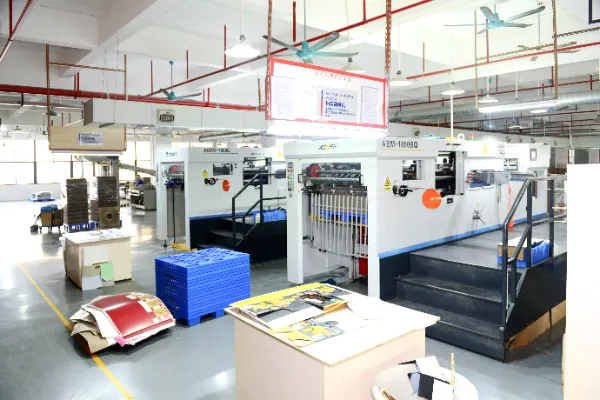
Verifying a supplier’s production numbers and QC systems is non-negotiable. These factors directly impact delivery reliability, ब्रांड स्थिरता, and your ability to scale operations without costly surprises.
Assessing Production Output and Scalability
Before you commit, you need to know if a supplier can actually handle your volume, especially during peak seasons. Look for hard numbers, not just vague promises. A factory’s physical size and workforce are good starting points. Factories with at least 2,000 m² of floor space and 50+ employees are generally stable enough for recurring orders.
The real test is their output capacity. For a brand that needs to scale, a supplier should be able to produce over 500,000 units of jewelry packaging per year. For rigid boxes, a good automated factory can push out 8,000 को 12,000 units a day. This is the kind of volume that supports retail chains and seasonal marketing pushes without bottlenecks.
Minimum Order Quantities (MOQs) also tell a story about scalability. They need to match your business reality. Expect different MOQs for different packaging types.
- Rigid Jewelry Boxes: MOQs typically range from 500 को 3,000 टुकड़े. Simpler designs might start at 500, but highly custom work can require 2,000+ इकाइयां.
- Jewelry Pouches: MOQs are usually lower, around 300 को 500 टुकड़े, because fabric processing is more flexible.
- Sample Lead Times: A professional supplier should produce structural samples in 3-7 दिन. More complex, fully branded prototypes can take 7 को 20 दिन. Factor this into your launch calendar.
Verifying Quality Systems and Defect Rates
A supplier’s production numbers are useless if half the batch is defective. You need to verify their quality control systems. Start by asking for certifications. An ISO 9001 certificate is a strong signal of standardized processes. If sustainability is part of your brand, look for ISO 14001 for environmental management and proof of recycled material use—a good benchmark is a supplier using at least 30% recycled materials.
Don’t be afraid to talk about defect rates. For jewelry packaging, an acceptable defect rate should be under 1% per batch. For luxury brands, that target should be even tighter, at 0.5% या कम. You should define what counts as a defect—misaligned logos, box scratches, weak magnets—and write these thresholds directly into your contract. If a batch exceeds the rate, the supplier should be responsible for the rework or credit.
A solid QC process isn’t just a final check. It should happen at every stage. A reliable supplier will have documented inspection points for:
- आने वाली सामग्री: Checking board thickness, fabric color consistency, and adhesive quality before anything is made.
- In-Process Production: Verifying box structural integrity, logo placement against Pantone references, and insert fit for your specific jewelry pieces.
- अंतिम निरीक्षण: A final visual check for cosmetic flaws like dirt or glue marks, plus functional tests like drop tests before the goods are packed for shipment.
MOQ, समय सीमा & Pricing
These three variables are a constant trade-off in sourcing. You can’t optimize for all three at once. Improving one usually compromises another, so you have to know your priority.
Defining Each Core Metric
When sourcing jewelry packaging, Minimum Order Quantity (MOQ), समय सीमा, and Pricing are the three core metrics that shape every decision. They are interconnected and dictate your cash flow, inventory risk, and ability to meet launch dates.
Minimum Order Quantity (MOQ) is the smallest number of units a supplier is willing to produce in a single run. This number is driven by the economics of machine setup, materials purchasing, and printing. For jewelry packaging, MOQs vary widely.
- Stock or Simple Items: You might find MOQs as low as 20–100 units for basic pouches or unbranded boxes.
- Standard Custom Boxes: A common MOQ is 300–500 units for customized rigid boxes using existing structures.
- Complex Bespoke Designs: For new molds, special materials, or intricate finishes, MOQs often start at 1,000–2,000+ units.
समय सीमा is the total time from order confirmation (when specs and deposit are finalized) to when your packaging is ready to ship. This isn’t just manufacturing time. It includes artwork approval, नमूना उत्पादन, the actual production run, quality checks, and packing. International shipping can add another 2-6 weeks on top of this.
- Stock Items: 3–7 days.
- Simple Customization: 10–15 days.
- Full Custom Designs: 25–45+ days, not including transit.
Pricing is more than just the cost per box. The total cost includes the unit price, one-time setup fees, और शिपिंग. Setup fees cover things like printing plates or custom cutting dies. Always ask for an itemized quote to see the full picture. The unit price almost always drops as your order quantity increases.
Balancing Trade-offs in Your Sourcing Strategy
You can’t have the lowest price, the lowest MOQ, and the fastest lead time all at once. Your job is to decide which metric is most important for a specific project and accept the corresponding trade-off.
- If you need a Lower MOQ: You gain flexibility and reduce inventory risk. But you will pay a higher price per unit. This is ideal for testing new jewelry lines or limited collections.
- If you need a Shorter Lead Time: You can launch faster and react to market trends. But you’ll likely face rush charges and may be limited to simpler, stock designs.
- If you need the Lowest Price: You improve your margins. But this almost always requires a higher MOQ and a longer lead time, as your order fits into the factory’s most efficient schedule.
For most small-to-medium B2B jewelry buyers, the sweet spot is an MOQ of 100–300 units with a lead time of 15–35 days. This configuration offers a good balance between managing cash flow, limiting inventory risk, and getting a reasonable unit cost for moderately customized packaging.
अनुपालन & Sustainability Requirements
Compliance is no longer optional. Suppliers must provide hard proof of regulatory adherence and verifiable eco-materials just to be considered a viable partner.
Navigating Regulatory Mandates and Packaging Laws
The landscape of packaging regulations is getting more complex, and ignorance isn’t an excuse. Brands selling into the US and EU are on the hook for what their packaging contains and how it’s designed. This means suppliers are now expected to be partners in compliance, not just vendors.
- Suppliers must provide proof that they meet key safety and chemical regulations like ASTM F2999 for jewelry, plus REACH and RoHS for both US and EU markets.
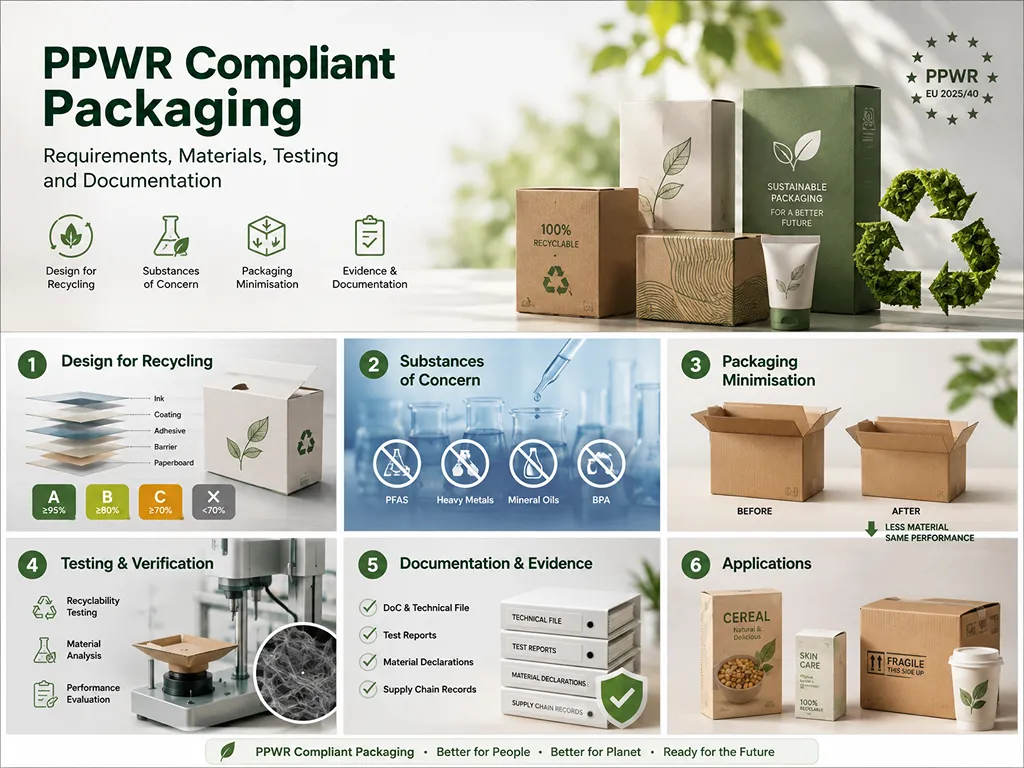
- The EU’s Packaging & Packaging Waste Regulation (पीपीडब्ल्यूआर) is a big one. It mandates that all packaging be recyclable by 2030, and any plastic packaging must contain at least 35% recycled content by that same deadline.
- For e-commerce, the era of tiny products in giant boxes is over. Aggregated shipments must keep the empty space ratio below 50%.
- Brands need detailed data from their suppliers on packaging weight and material composition to handle their Extended Producer Responsibility (EPR) reporting obligations.
Meeting Material and Certification Standards
Vague claims of being “eco-friendly” are worthless. The market now demands verifiable proof. Suppliers who can’t provide documentation for their materials are being left behind.
- Recyclability is the bare minimum. Around 60% of jewelry brands now treat it as a mandatory criterion for evaluating any new supplier.
- Verifiable third-party certifications are standard operating procedure. This means FSC for paper products and GRS (Global Recycled Standard) for any materials claimed as recycled.
- Good suppliers are expected to bring eco-material innovations to the table. Think molded pulp inserts, plant-based leathers, and solvent-free inks.
- All environmental claims must be backed by robust documentation, including up-to-date test reports and valid certificates. This is the only way to avoid the legal and reputational damage of greenwashing.
Questions to Ask Before Ordering
Before any order, ask specific questions about materials, fit, लागत, और गुणवत्ता नियंत्रण. Vague answers are a clear sign of an unreliable partner.
Verifying Product Quality and Customization
Your packaging’s job is to protect the jewelry and represent your brand. Don’t settle for generic answers; you need to verify their ability to deliver on both fronts.
- Ask specifically about their library of jewelry-grade materials. This isn’t just about paperboard. You need to know they work with velvet, suede, and different foam densities for inserts to ensure proper protection and presentation.
- Confirm they will match the packaging’s internal dimensions to your physical jewelry. Send them samples. ए “close enough” fit leads to damaged products and tangled chains. A perfect fit is non-negotiable.
- Verify their real customization capabilities. Don’t just ask if they can put a logo on a box. Ask about the specifics: पन्नी मुद्रांकन, उभार, डीबॉसिंग, and where exactly the logo can be placed—inside lid, outside, on a sleeve.
- Demand a physical pre-production prototype with your complete branding for final approval. A digital mockup isn’t enough. You need to hold the final product in your hands before committing to a full production run.
Assessing Supplier Costs and Reliability
A low unit price means nothing if the supplier is unreliable or hits you with hidden fees. Your goal is to find a partner who delivers on time and on budget, consistently.
- Get a crystal-clear breakdown of all costs. This includes the Minimum Order Quantity (MOQ), unit pricing at different volumes, and any hidden tooling or setup fees for dies and printing plates. If it’s not on the quote, assume you’ll be charged for it later.
- Get production and shipping lead times in writing. Ask how these times are affected during peak seasons like holidays. A supplier who can’t give you a straight answer about their capacity under pressure is a risk.
- Question their quality control protocol. Ask how they handle defects and whether they permit third-party inspectors at their facility before shipment. A confident supplier will have a clear process for both.
- Ask if they specialize in the jewelry industry. A generalist packaging company won’t understand the nuances. Then, ask for references from brands that are similar in size and market to yours. A good supplier will have happy clients.
अक्सर पूछे जाने वाले प्रश्नों
How do I find a jewelry packaging supplier?
Start by defining your specific needs, including size, शैली, सामग्री, and quantity. Search on B2B marketplaces like Alibaba, use targeted Google searches for manufacturers, and visit industry trade shows. Ask for referrals from other brand owners. From there, create a shortlist of 3–5 potential suppliers. Request detailed quotes and physical samples to evaluate. Compare them based on overall value, which includes quality, संचार, and lead time, not just the price. Before placing a large order, start with a smaller pilot run to confirm their consistency and reliability.
Should I buy directly from a factory or use a wholesaler?
Buying directly from a factory often lowers your cost per unit and gives you more customization options. This path makes sense if you have consistent, predictable orders and spend over a few thousand dollars on packaging monthly. The downside is that you take on more work managing communication, गुणवत्ता नियंत्रण, और रसद. Factories also have higher minimum order quantities (MOQs). Using a wholesaler is simpler, requires a smaller upfront investment, and is better for brands with lower or less predictable volume.
What is a reasonable minimum order quantity (MOQ)?
A reasonable MOQ depends on the product and supplier. For simple items like custom fabric pouches, MOQs can be as low as 50–100 units. For custom rigid jewelry boxes, an MOQ of 300–500 units is a common starting point for a good price. Fully bespoke designs that require new tooling might require 1,000 units or more. The right MOQ for you is one that aligns with your sales projections and budget, so you aren’t left with too much cash tied up in inventory.
How do I evaluate the quality of a packaging sample?
Always test samples with your actual jewelry inside. Check if the piece is held securely and protected from movement. Open and close the packaging multiple times to test the durability of hinges, मैग्नेट, or clasps. Feel the materials and inspect the construction for clean corners and strong seams. Look closely at any branding to ensure the logo is sharp, correctly colored, and perfectly aligned. The sample should feel right for your brand’s price point and create a great unboxing experience.
What are the most important questions to ask before ordering?
Before committing, get clear answers on four key areas. पहला, ask about their capabilities and experience with jewelry-specific packaging. दूसरा, get a complete cost breakdown, including the unit price, any setup fees for tooling or plates, and shipping costs. तीसरा, understand their quality control process, what happens if there are defects, and their lead times for both samples and production. अंत में, confirm their minimum order quantity (MOQ) and what shipping terms they offer.
How can I avoid unreliable suppliers?
To avoid unreliable suppliers, do your homework upfront. Research their reputation online and seek out independent reviews. Always get physical samples to test before placing a bulk order. Verify their business credentials and ask for client references you can speak with. Pay close attention to their communication; slow, vague, or evasive answers are major red flags. Protect yourself with a clear contract, and start with a small pilot order to see how they perform in a real-world scenario.
अंतिम विचार
Choosing a supplier based on unit price alone is a significant financial risk. The real costs of tarnished jewelry, shipping damage, and production delays far outweigh any initial savings. Following a strict qualification process is the only way to protect your brand reputation and secure your supply chain.
Don’t guess on quality—verify it. The next step is to evaluate physical samples that meet your exact specifications for material, fit, and branding. हमारी टीम से संपर्क करें to discuss your requirements and arrange for a pre-production prototype.