Have you ever received a small product inside an oversized shipping box, surrounded by layers of unnecessary filler? It is a common experience in online shopping, and it highlights a problem that many e-commerce brands are still trying to solve.
Packaging waste is not just an environmental concern. It can also increase shipping costs, complicate warehouse operations, and leave customers with a negative impression of a brand.
For businesses looking to adopt sustainable packaging for ecommerce, the challenge is finding the right balance between using fewer materials and keeping products safe throughout delivery. Simply making a box smaller or removing protective materials is not always the answer. If products arrive damaged, the cost of replacements, retours, and additional shipping can quickly outweigh any initial savings.
The better approach is to rethink packaging as a complete system. From box dimensions and material selection to structural design and transportation testing, every detail can contribute to a more efficient solution.
Here are five practical ways to reduce packaging waste without compromising product protection.
Why Packaging Waste Is a Business Problem, Not Just an Environmental One
Packaging decisions affect more than the amount of material used for each shipment. They influence operating costs, customer satisfaction, and how efficiently an e-commerce business runs.
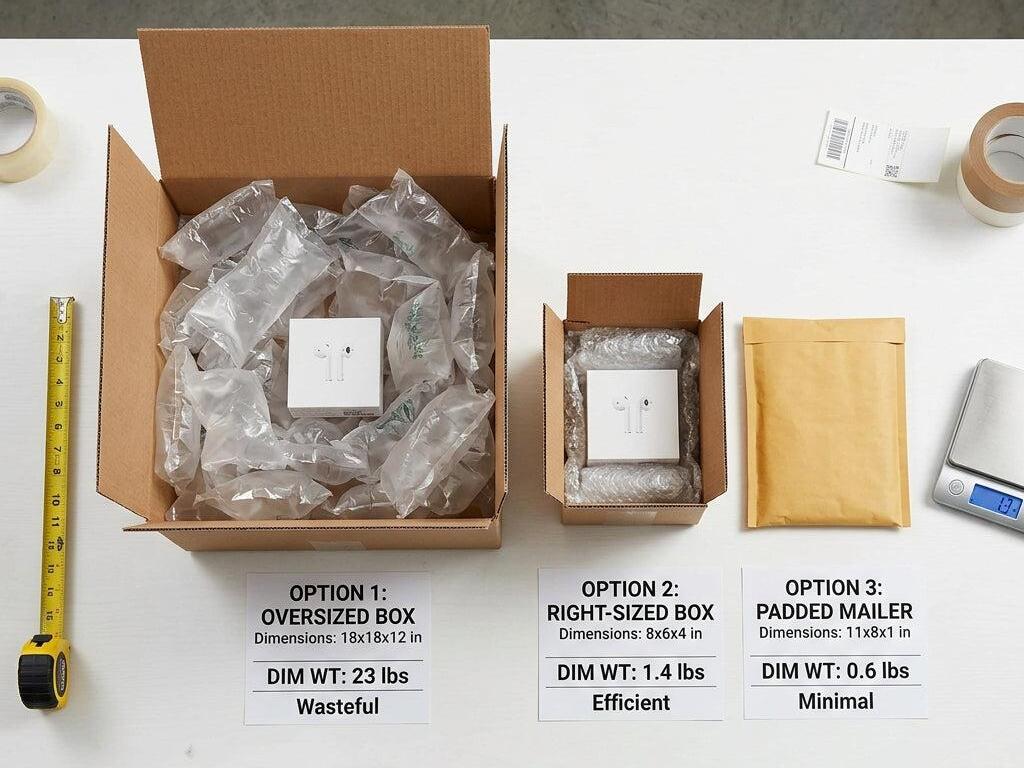
Shipping and material costs. Oversized boxes require more cardboard and often need additional void fill to keep products from moving. They may also increase dimensional weight charges, depending on the carrier’s pricing rules. Over thousands of shipments, these unnecessary costs add up.
Customer expectations. Customers increasingly pay attention to how products are packaged. Receiving a small item in a large box filled with plastic materials can create the impression that a brand is wasteful, even when the product itself is environmentally responsible.
Regulatory considerations. Packaging rules are becoming more important for businesses selling internationally. In the European Union, le Packaging and Packaging Waste Regulation (PPWR) started applying on August 12, 2026. Its requirements make packaging reduction, recyclability, and material efficiency increasingly relevant to brands operating in that market.
Brand reputation. Packaging is often the first physical interaction customers have with an online brand. A well-designed package can communicate care, qualité, and attention to detail without relying on excessive materials.
Ultimately, reducing packaging waste is not simply about using less. It is about using materials more intelligently while maintaining the experience customers expect.
Where Does E-commerce Packaging Waste Actually Come From?
Before making changes, it helps to understand where unnecessary packaging materials are being used. Several common issues contribute to waste across e-commerce fulfillment operations.
- Oversized shipping boxes: Boxes that are much larger than the products inside create empty space and require more protective filler.
- Excessive void fill: Too much kraft paper, bubble wrap, or foam is often added because the box structure does not provide enough support.
- Unnecessary packaging layers: Some products are wrapped, boxed, bagged, and then placed inside another box, even when certain layers serve no clear purpose.
- Difficult-to-recycle combinations: Plastic laminations, inserts en mousse, and mixed-material components make packaging harder to separate and recycle.
- Product damage during shipping: Weak packaging leads to damaged goods, replacement shipments, and additional packaging consumption.
A useful starting point is to review several recent shipments and ask a few questions:
- Is the shipping box larger than necessary?
- Can some protective materials be replaced with paper-based alternatives?
- Are all packaging layers serving a clear purpose?
- Does the current structure prevent products from moving during transportation?
- Are the materials easy for customers to separate and recycle?
Identifying these problems makes it easier to decide where packaging improvements will have the greatest impact.
Étape 1: Right-Size Your Packaging
One of the most effective ways to reduce packaging waste is to start with the dimensions of the shipping box. An oversized box uses more material than necessary and creates empty space that must be filled with additional protective materials. It can also increase shipping expenses when carriers calculate dimensional weight.
Right-sizing means selecting packaging dimensions that fit the product while leaving enough room for appropriate protection.
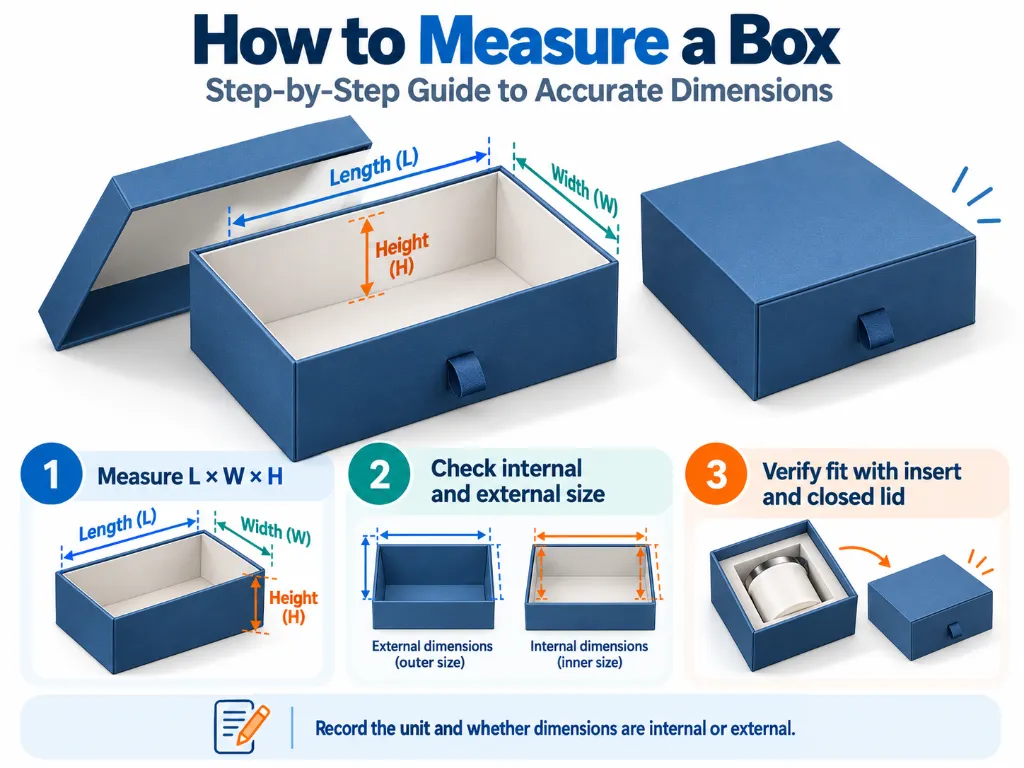
Start with accurate product measurements. Measure the product’s length, largeur, et la hauteur, including any fragile or protruding components. Then consider the space needed for protective inserts, amorti, or internal supports. The goal is not to make the box as small as possible. It is to create enough clearance for protection without leaving unnecessary empty space.
Consider your entire product range. Brands selling multiple products often use a limited number of standard box sizes for convenience. Cependant, one-size-fits-all packaging creates waste when products vary significantly in shape and dimensions. A better approach is to group products by size and packaging requirements, then develop a small range of suitable box dimensions.
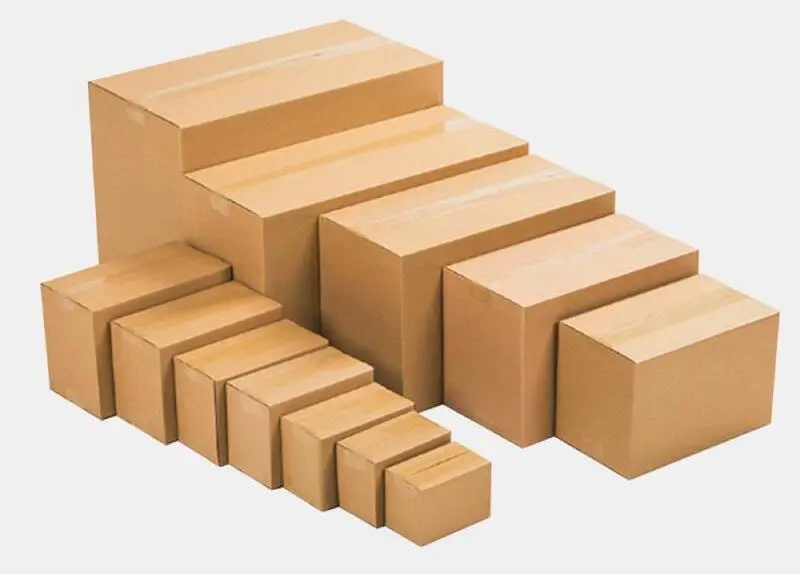
Balance standardization with customization. Standardized packaging can simplify inventory management, while customized dimensions reduce material use for specific products. For items with unusual shapes or specific protection needs, custom packaging solutions built to exact dimensions may fit better than standard shipping boxes. The right combination depends on order volume, product variety, warehouse space, et les exigences d'expédition.
For e-commerce brands handling large numbers of shipments, even small improvements in box dimensions can make a noticeable difference over time.
Étape 2: Choose Sustainable Packaging Materials That Protect and Recycle
Choosing the right material is just as important as choosing the right box size. Different products require different levels of protection. A lightweight clothing item does not need the same packaging structure as a fragile glass bottle or an electronic device. For many e-commerce applications, paper shipping packaging offers a practical alternative to conventional plastic packaging.
Corrugated cardboard
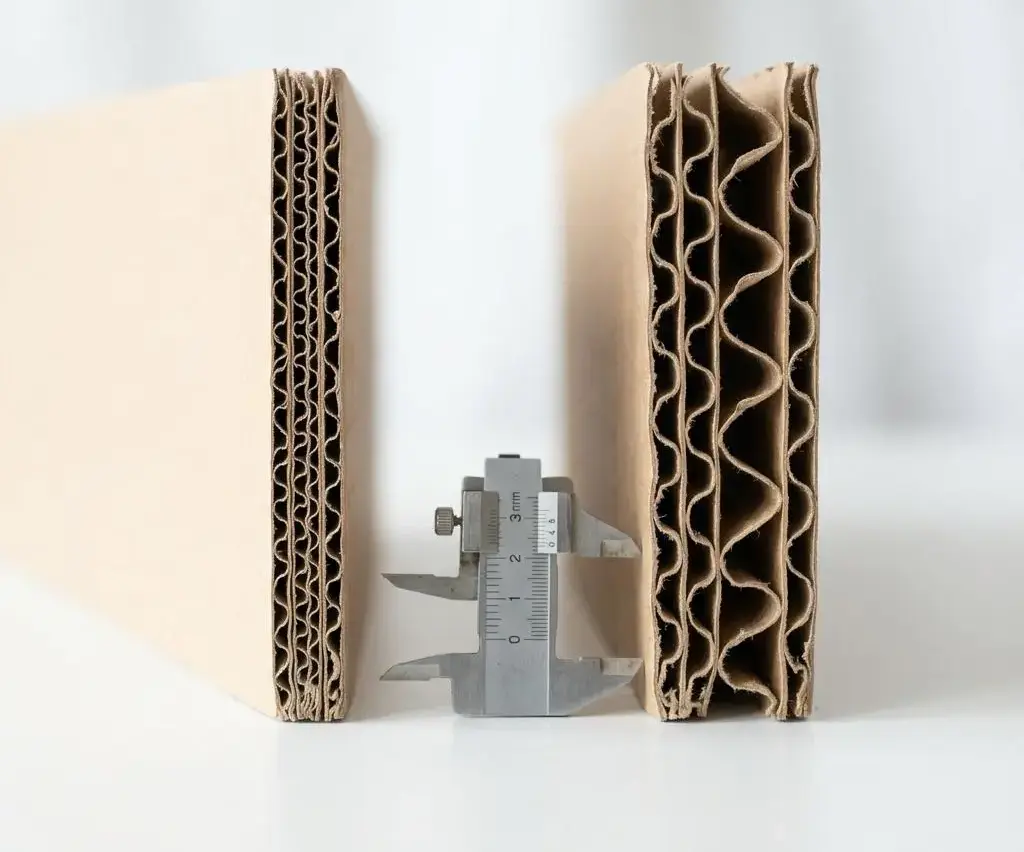
Corrugated cardboard is widely used for shipping because its fluted structure provides cushioning and compression resistance. Different flute profiles offer different performance:
- E-flute: A relatively thin profile suited to lightweight shipping boxes, emballage de vente au détail, and applications where a smooth printing surface matters.
- Flûte si: Provides greater cushioning and stacking strength for many general shipping applications.
- Panneau à double paroi: Combines two fluted layers for heavier products or more demanding transportation conditions.
The best choice depends on product weight, shipping distance, stacking conditions, and expected handling.
Kraft paper and recycled paperboard
Kraft paper is commonly used for paper bags, emballage, and protective cushioning. It is also a popular choice for brands seeking a natural appearance. Recycled paperboard can help reduce demand for virgin fiber, although the actual environmental benefit depends on recycled content, the manufacturing process, and end-of-life conditions.
Molded pulp packaging
Molded pulp is particularly useful for products with irregular shapes or fragile components. It can be formed into custom inserts that hold products securely in place, reducing the need for separate plastic foam components in suitable applications. It is not automatically right for every product, so its strength and moisture resistance should be evaluated for the specific use.
Comparing common paper-based packaging materials
| Matériel | Protection | Recyclabilité | Common applications |
|---|---|---|---|
| E-flute corrugated board | Light to medium | Generally recyclable where accepted | Small products, boîtes aux lettres |
| B-flute corrugated board | Medium to high | Generally recyclable where accepted | Shipping cartons |
| Panneau à double paroi | Haut | Generally recyclable where accepted | Heavy or fragile products |
| Papier kraft | Light cushioning | Generally recyclable where accepted | Wrapping, void fill |
| Molded pulp | Shape-specific protection | Generally recyclable where accepted | Électronique, produits de beauté, fragile items |
Actual performance and recyclability depend on material specifications, revêtements, adhesives, contamination, and local recycling infrastructure.
When evaluating materials, consider more than the label. Check recycled fiber content, available certifications, material composition, and local recycling requirements. Par exemple, FSC certification can help verify responsible sourcing of forest-based materials, while recycled-content documentation provides additional information about the material itself.
The goal is to select materials that meet protection requirements without introducing unnecessary components.
Étape 3: Use Structural Design Instead of Extra Filler
Adding more cushioning is not always the best way to protect a product. Sometimes the real solution is to improve the packaging structure. A well-designed box holds products securely, prevents unnecessary movement, and reduces the need for additional protective materials.
Use inserts to keep products in place. Custom paperboard inserts and molded pulp trays can be designed around the shape of individual products. They prevent movement inside the box and separate multiple items. Par exemple, a cosmetics brand shipping glass bottles may benefit from individually fitted compartments instead of filling the entire box with loose cushioning. Custom paper inserts make this kind of fitted protection possible.
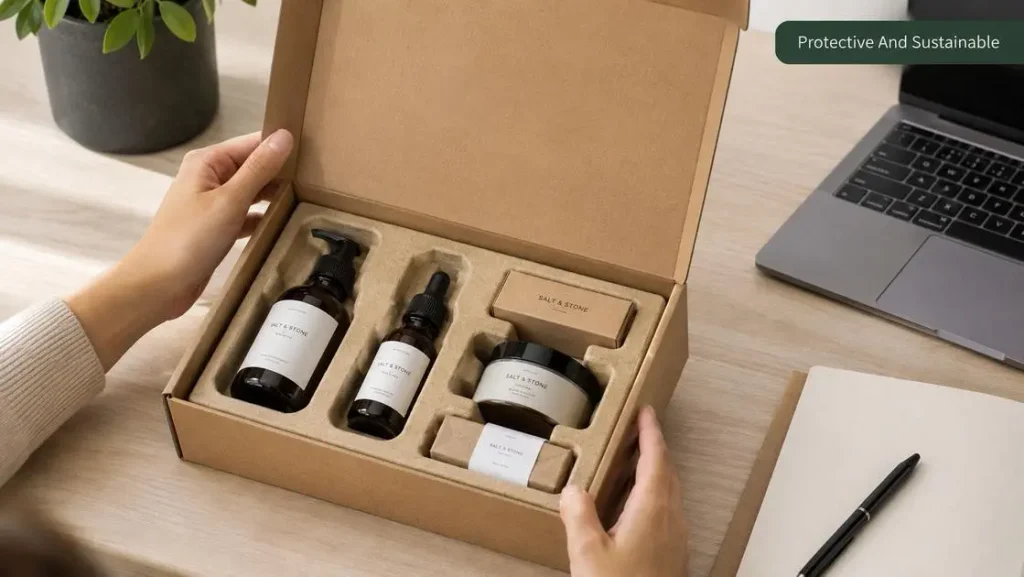
Take advantage of mailer box structures. Boîtes postales personnalisées are particularly useful for e-commerce because their folding structure and integrated flaps create a secure enclosure without a separate outer carton in suitable applications. Made from paper fiber, recyclable mailer boxes also keep the whole package in one material stream. Their self-locking construction makes assembly straightforward, which helps simplify fulfillment.
Reduce unnecessary packaging components. Instead of using several separate materials, consider whether one integrated structure can perform multiple functions. A custom insert, Par exemple, can provide product positioning, separation, and basic cushioning in a single component. This reduces material complexity while improving the overall packaging experience.
Structural efficiency should always be tested. A box that looks compact and attractive may still need reinforcement depending on product weight and transportation conditions.
Étape 4: Test Your Packaging Before Scaling Up
Reducing packaging materials without testing the new design can create problems that only become visible after products reach customers. A smaller box, thinner board, or lighter insert may look suitable during inspection but perform differently under real transportation conditions. Before introducing a new design across all shipments, evaluate how it performs during handling, empilage, et livraison.
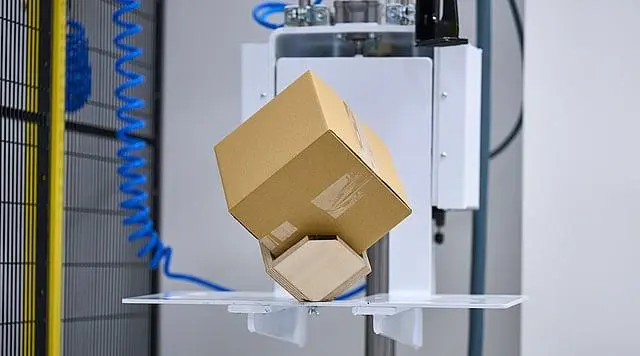
Common testing methods include:
- Drop testing: Evaluates how well packaging protects products when dropped from specified heights and orientations.
- Compression testing: Measures a box’s ability to withstand stacking pressure during storage and transportation.
- Vibration testing: Simulates movement during transportation to identify damage caused by repeated vibration.
- Transit testing: Evaluates the complete packaging system under a defined distribution environment.
Standards published by ISTA provide useful guidance when developing transportation testing procedures.
It is also important to monitor real business performance after implementation. Track these metrics:
- Packaging material consumption per order
- Average shipping cost per package
- Product damage and return rates
- Customer complaints related to packaging
- Time required for packaging and fulfillment
A successful improvement reduces unnecessary materials while maintaining acceptable damage rates and customer satisfaction.
For brands working with a packaging manufacturer, sampling and prototype development can reveal structural problems before mass production begins. Planning a packaging change? PACKCCP can help you develop samples and review test results before you commit to a full production run. Contact our team to request a quote or sample.
Étape 5: Keep the Unboxing Experience Brand-Worthy
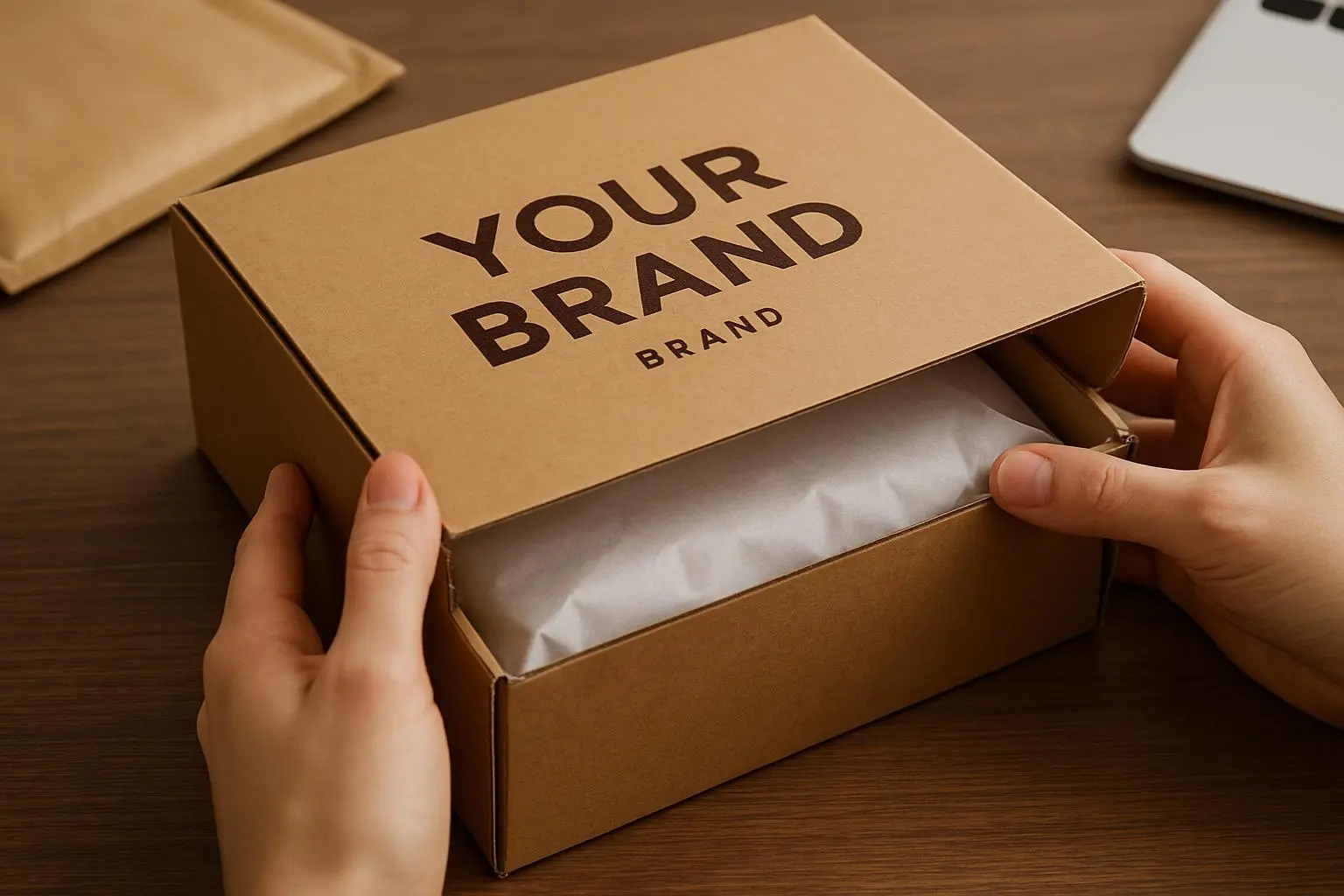
Reducing packaging waste does not mean sacrificing brand identity. For many online businesses, packaging is an important part of the customer experience. A carefully designed package can look premium and professional without excessive materials or complicated finishes. The key is to choose design elements that create visual impact while keeping material use under control.
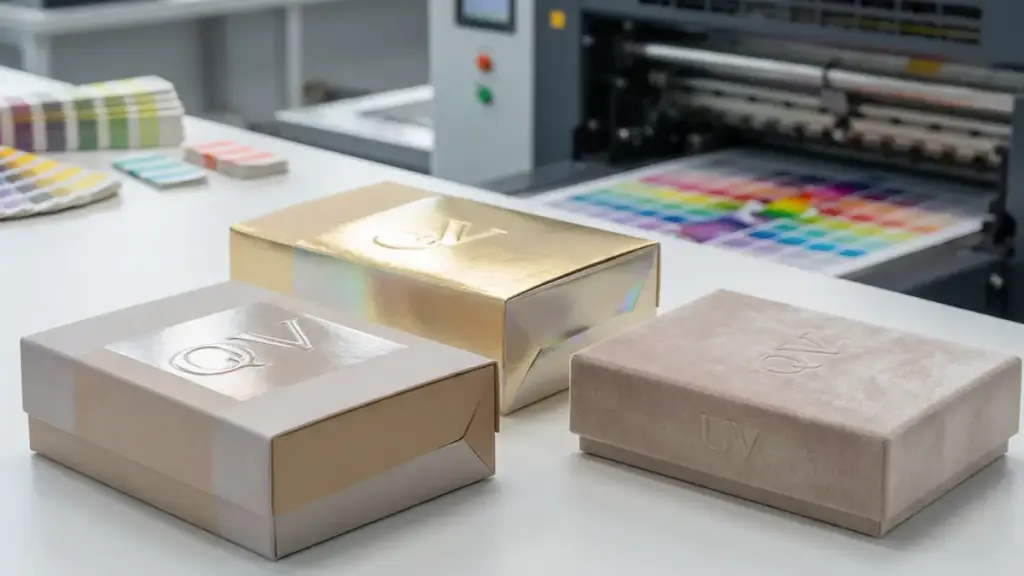
Use simple but effective printing. A clean logo, carefully selected colors, and well-organized typography can make ordinary paper packaging feel distinctive. Single-color printing may be enough for brands that prefer a minimalist look.
Choose finishes carefully. Relâchement, gaufrage, and selected printing effects add visual interest without extra packaging layers. For brands seeking more sustainable options, it is worth evaluating whether plastic lamination or other difficult-to-separate finishes are necessary.
Move toward plastic-free packaging where it makes sense. Paper-based tape, water-based inks, and paper inserts can replace plastic sealing and cushioning components in many applications. Fewer mixed materials also make packaging easier for customers to recycle.
Make the inside of the package part of the experience. The inside surface of a mailer box can carry brand messages, product instructions, or a short thank-you note. This creates a memorable unboxing without multiple inserts or decorative components.
Provide clear recycling guidance. A small message explaining how to separate and dispose of packaging helps customers know what to do after opening their orders. Avoid broad claims such as “100% écologique” unless you can support them with evidence. Specific statements about recycled content, material composition, or verified certifications are more useful and credible.
Before and After: What Does Better Packaging Optimization Look Like?
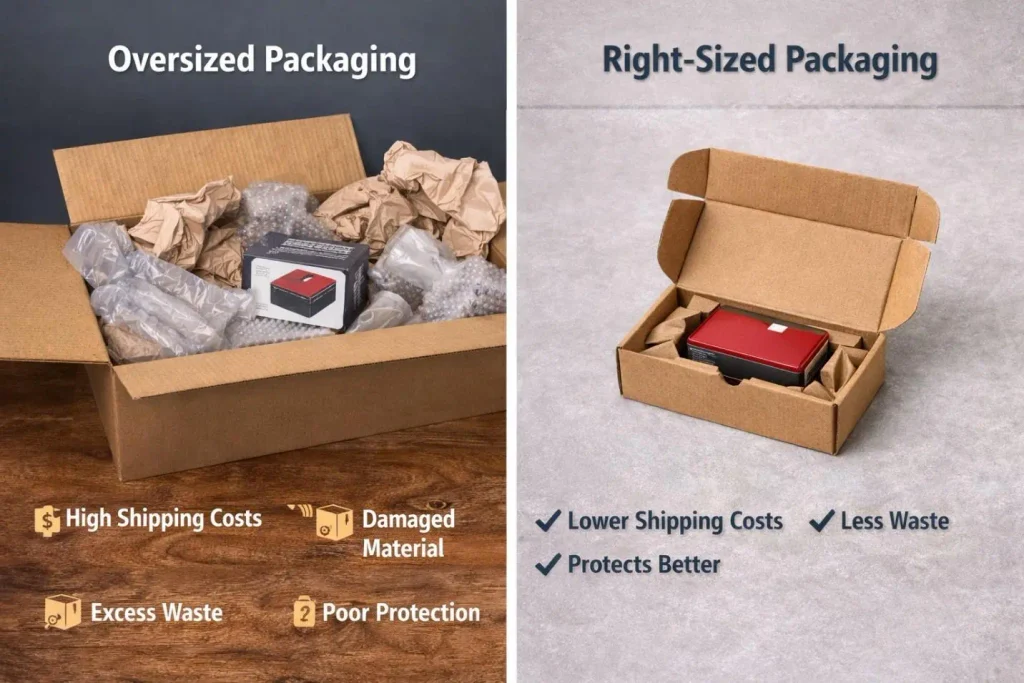
The following is an illustrative example, not a measured case study. Imagine an online retailer shipping a small household product in an oversized corrugated box with several layers of bubble wrap and additional plastic cushioning. After reviewing the product dimensions and transportation requirements, the business develops a smaller box with an integrated paperboard insert.
| Evaluation | Original packaging | Optimized packaging |
|---|---|---|
| Box dimensions | Oversized | Right-sized |
| Protective materials | Multiple layers | Integrated paper insert |
| Material combination | Paper and plastic | Primarily paper-based |
| Empty space | Excessive | Reduced |
| Product movement | Controlled by loose filler | Controlled by fitted insert |
| Brand presentation | Basic shipping box | Custom branded mailer |
Actual savings depend on the product, material specifications, order volume, et les exigences d'expédition. This is why packaging optimization should be measured with real production and transportation data rather than assumptions.
A successful redesign is not necessarily the package that uses the least material. It is the one that delivers the required protection with the least unnecessary material and operational complexity.
How to Get Started: A Practical Five-Step Action Plan
There is no need to redesign every product at once. A gradual approach is easier to manage.
- Audit your current packaging. Review box sizes, matériels, protective components, shipping costs, and product damage records.
- Identify the protection requirements. Group products by weight, fragilité, dimensions, and transportation conditions.
- Improve dimensions and structure. Explore right-sized shipping boxes, boîtes aux lettres personnalisées, integrated paper inserts, and other suitable structural designs.
- Develop samples and test them. Evaluate the proposed materials and structures before approving mass production.
- Monitor results and adjust. Compare material consumption, shipping expenses, damage rates, and customer feedback after implementation.
Working with an experienced packaging manufacturer can help brands evaluate material options, refine box structures, and develop solutions that match their actual operational needs.
Conclusion: Better Packaging Starts with Better Design
Reducing e-commerce packaging waste is not about removing every protective component or choosing the cheapest material. It is about making smarter decisions throughout the packaging process. Right-sized dimensions, suitable paper-based materials, integrated structural protection, and proper transportation testing let businesses reduce unnecessary packaging while keeping products safe.
That is what sustainable packaging for ecommerce comes down to: packaging that works efficiently across the supply chain and still delivers a positive customer experience.
À packccp, we are a custom paper packaging manufacturer specializing in boîtes aux lettres ondulées, cartons pliants, kraft paper bags, boîtes rigides, and molded pulp packaging. Whether you are reviewing an existing design or developing a new one, our team can help you explore suitable materials and structures for your products.
Looking to optimize your e-commerce packaging? Get a packaging quote and tell us about your products, and we will recommend a customized solution for your business.
Questions fréquemment posées
No single material is the most sustainable for every application. Right-sized corrugated boxes, recycled paperboard, papier kraft, and molded pulp can all be suitable. The best choice depends on product protection requirements, approvisionnement en matériaux, transportation conditions, and local recycling infrastructure.
Oui. Packaging waste can often be reduced through better box sizing, inserts personnalisés, and improved structural design. Any material reduction should be checked with drop, compression, or transportation testing to confirm that protection stays effective.
Most standard corrugated mailer boxes made from paper fibers are recyclable where suitable collection and recycling facilities exist. Plastic coatings, stratifications, excessive adhesives, and other mixed materials may affect recyclability, so always check local recycling guidelines.
Start by measuring your product’s length, largeur, et la hauteur. Then account for any protective inserts or cushioning required. The final dimensions should give enough clearance to protect the product without creating unnecessary empty space.
Not necessarily. Some sustainable materials or custom structures have higher initial costs, but optimized dimensions and reduced filler can lower overall packaging and shipping expenses. Count materials, production, fulfillment, transportation, and potential product damage in the total.
Articles connexes
Explore more insights on sustainable packaging, sélection des matériaux, and custom paper packaging solutions.
Comment mesurer une boîte: Guide étape par étape pour des dimensions précises
Comment concevoir des boîtes postales pour une meilleure expérience de déballage