Paper inserts and EVA inserts serve different purposes in cosmetic packaging, from organizing products and reducing movement to providing stronger impact protection for fragile glass containers. The right insert solution helps brands balance transit safety, packaging costs, and the overall unboxing experience.
This guide compares folding paperboard inserts and EVA foam inserts based on protection performance, устойчивость, cost considerations, and production requirements to help brands choose a suitable packaging solution.
Why Cream Packaging Inserts Are Essential for Product Protection
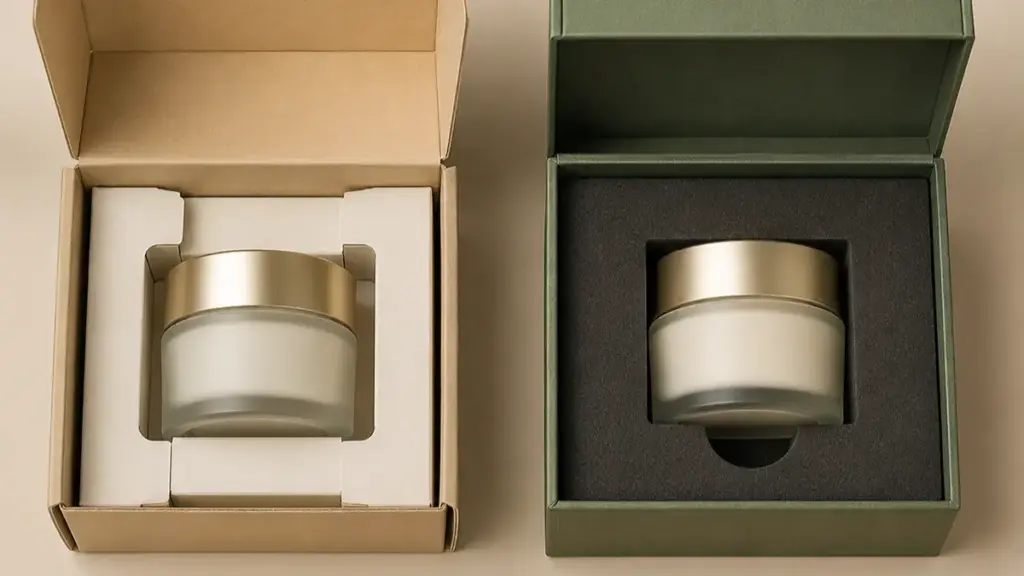
Inserts stabilize heavy glass jars and dispensers to prevent transit damage, while aligning the product perfectly for a high-end retail presentation.
Preventing damage and container movement in transit
Heavy glass jars and delicate pump dispensers easily crack or scuff when subjected to sudden drops during transit. Shifting products can break dispenser heads or crack glass bodies, leading to messy leaks and expensive return rates.
Custom inserts eliminate empty space inside the outer carton. This tight fit stops surface friction and prevents scratches on labeled jars, keeping your product pristine and retail-ready when it arrives at its destination.
Improving retail presentation and unboxing organization
First impressions dictate perceived brand value on retail shelves. Inserts align the jar or bottle perfectly, keeping the brand label centered and preventing the product from looking disorganized or loose when a customer opens the box. These details are also an important part of custom cosmetic packaging, where structure, защита, and presentation work together to improve the customer experience.
For multi-item skincare kits, structure is even more critical. Well-designed inserts separate components like bottles, насосы, and tools, creating a clean, professional customer experience that highlights every product in the set.
What Is a Paper Insert?
A paper insert is an internal packaging component designed to secure products, organize box layouts, and communicate brand details using recyclable paperboard materials.
Internal packaging requires the right balance between structure and product protection. Paper inserts help organize products, reduce internal movement, and create a cleaner presentation inside shipping cartons or retail boxes.
Core Functions and Packaging Materials
These inserts perform specific structural and communicative roles inside your packaging system, using materials chosen for strength and printability.
- Product Security: The insert holds items in a fixed position, blocking movement and preventing surface rubbing during transit.
- Information Delivery: It displays key brand messaging, user instructions, and technical product details directly on the internal packaging components.
- Материальная универсальность: Manufacturers utilize recyclable paperboard, крафт-бумага, ДСП, and solid bleached sulfate (SBS) to meet specific design and rigidity goals.
Common Formats in Packaging and Print Media
Depending on your product requirements, paper inserts take several physical forms. They range from heavy structural dividers to flat printed sheets.
- Die-Cut Custom Pieces: Rigid paperboard pieces structured to match the exact dimensions of your product.
- Folded Media: Folded sheets, cards, and loose marketing inserts that brands place directly inside retail boxes, конверты, or printed publications.
- Card Stock Dividers: Thicker partitions that organize multi-item sets and establish a neat, structured visual layout.
Selecting the right format depends on product weight and your unboxing goals. For lightweight retail sets, simple card stock dividers protect the contents without adding unnecessary shipping weight.
What Is an EVA Insert?
An EVA insert is a custom-cut, closed-cell foam tray that stabilizes fragile products and absorbs transit shock to ensure a clean, high-end unboxing experience.
Material Properties of Ethylene-Vinyl Acetate Foam
Ethylene-vinyl acetate (Ева) foam serves as a high-performance material because of its unique chemical makeup. Manufacturers choose this copolymer to balance structural durability with soft, rubber-like elasticity.
- Lightweight polymer structure: The material compresses under load and recovers its original shape quickly after impacts.
- Closed-cell composition: This tight cellular barrier blocks water, oils, and chemical fluids during harsh transit cycles.
- Vibration dampening: High shock absorption capacity reduces physical stress on delicate components by absorbing vertical drop energy.
These physical characteristics make EVA far more resilient than standard packaging foams like polyurethane, especially when shipping heavy or sharp-edged products.
Role and Function in Custom Packaging
In B2B shipping and retail presentation, an insert must do more than just fill empty space. It locks items into a fixed layout, preserving both the product and the brand’s reputation.
- Precise product retention: CNC-routed or die-cut cavities match the exact dimensions of products to eliminate internal movement.
- Structured presentation: The dense foam organizes tools, электроника, or luxury cosmetics, creating a polished, professional unboxing layer inside rigid boxes for luxury packaging.
- Multi-part isolation: Dedicated slots keep accessories, зарядные устройства, or glass containers separated, preventing parts from scratching each other.
Using custom cavities ensures that assembly lines can pack kits rapidly and consistently, while end-users receive organized, intact setups every time.
Paper Insert vs EVA Insert: Protection Performance Comparison
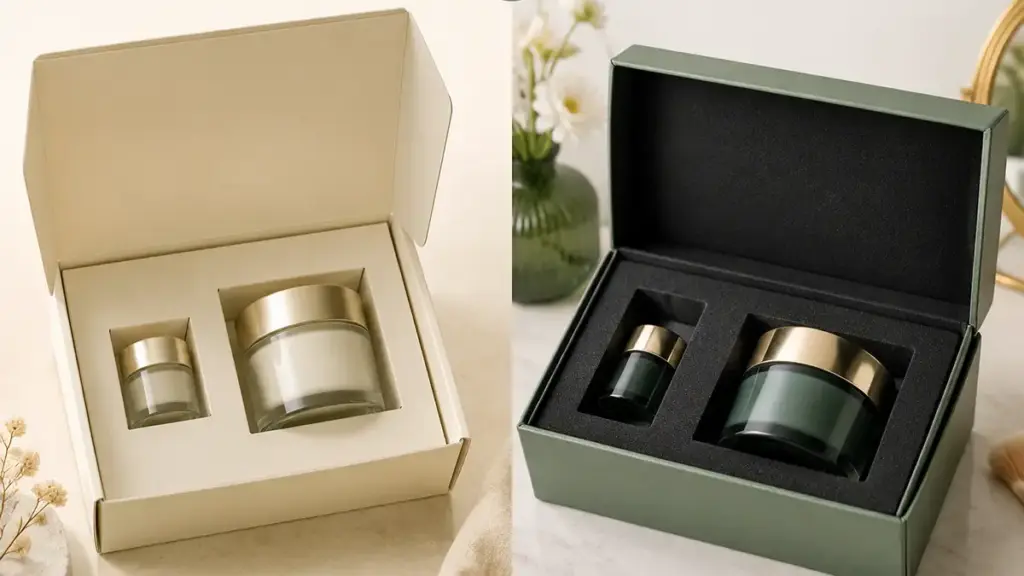
EVA foam delivers superior drop-energy absorption and moisture resistance, while paperboard and molded pulp serve as highly sustainable, low-cost options for lightweight products.
Impact protection and structural durability
Rough handling and high-velocity sorting put immense physical stress on internal packaging. The choice between fiber and polymer structures directly dictates transit damage rates.
- Vertical-drop absorption: EVA foam provides excellent shock absorption because its closed-cell structure helps cushion impacts during transportation. Its performance depends on foam density, thickness, вес продукта, and packaging design.
- Deformation recovery: EVA foam offers strong vibration resistance and compression recovery, helping maintain product stability during transportation. Actual performance depends on foam density, thickness, and packaging design.
- Point-impact limits: Molded pulp delivers reliable cushioning for edge and base protection, but it falls short of high-density EVA when resisting concentrated point impacts.
- Humidity resistance: Closed-cell EVA provides good moisture resistance and maintains cushioning performance in humid conditions, while paperboard requires suitable coatings or treatments for improved moisture protection.
Material selection based on product weight and sensitivity
Over-engineering a basic shipping carton wastes valuable margin, while under-protecting high-value items leads to costly returns. Match the structural support to the weight and fragility profile of your product.
- Lightweight goods: Paperboard and molded pulp offer sufficient protection and excellent sustainability for lightweight items like cosmetics and retail goods.
- Fragile and heavy assets: EVA foam serves as the design standard for securing fragile, heavy, or high-value items like electronics, стекло, and medical kits.
- Hidden internal dividers: Paper inserts provide a highly recyclable, cost-effective solution for hidden packaging compartments with moderate load requirements.
- Geometric retention: Die-cut EVA offers precise geometric retention to lock complex components in place and eliminate shifting during transport.
Paper Insert vs EVA Insert: Sustainability and Environmental Impact
Paper inserts offer superior end-of-life circularity and lower regulatory risk, while EVA foam provides unmatched drop protection at the expense of plastic-free brand alignment.
Environmental impact and disposal pathways
The raw material lifecycle reveals a stark contrast between organic and synthetic packaging materials. While paper-based options utilize renewable resources, foam alternatives rely heavily on petrochemical processing.
- Raw material sourcing: Renewable, recycled paper fibers stand in direct opposition to petroleum-based synthetic ethylene vinyl acetate (Ева) foam.
- Disposal outcomes: Paper-based inserts generally offer better recycling compatibility, especially when produced with recyclable paperboard and minimal coatings. EVA foam provides excellent protection but may have more limited recycling options in many markets.
- Recycling infrastructure: Municipal sorting systems widely accept and process paperboard, but local facilities face massive technical barriers when handling EVA foam.
- Circularity risks: Adding plastic laminations, metallic foils, or specialized adhesives to paper inserts can destroy their natural recyclability.
Brand alignment and procurement decision factors
Sourcing teams must weigh physical performance against corporate environmental mandates. Choosing the right insert material requires analyzing transit risks alongside upcoming regulatory pressures and understanding the role of sustainable materials in cosmetic packaging.
- Unboxing experience: Brands must balance the physical protection of fragile glass or electronics with the consumer demand for a plastic-free presentation.
- Plastic reduction: Switching to molded pulp or engineered corrugated board allows companies to make clear, verifiable plastic reduction claims.
- Transportation emissions: Heavy or overly bulky insert materials increase shipping volume and weight, raising the carbon footprint of transport logistics.
- Regulatory compliance: Sourcing managers must verify all insert materials against strict target-market waste laws and retailer compliance guidelines set for 2026.
Paper Insert vs EVA Insert: Расходы, Производство, and Production Factors
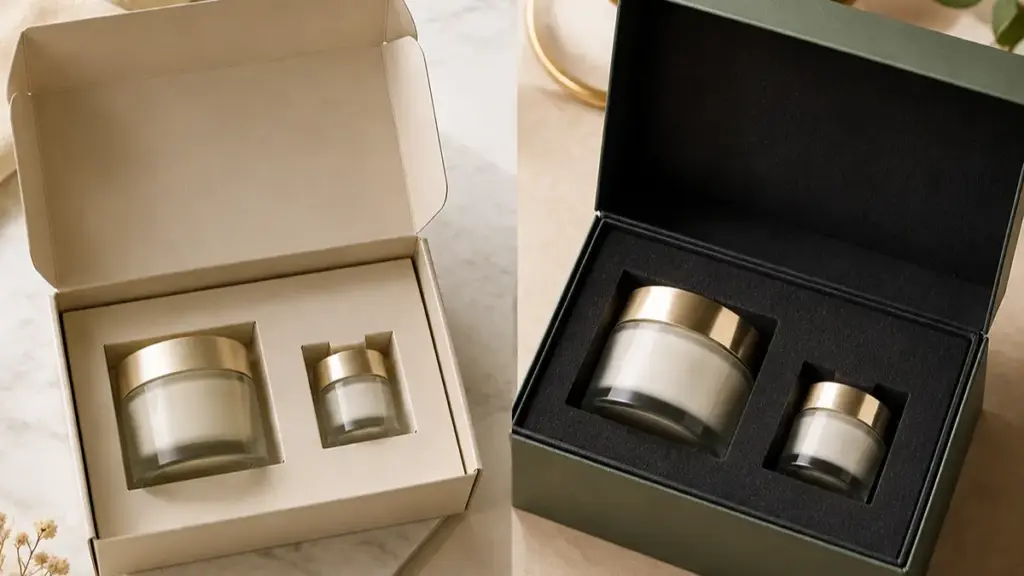
Paperboard inserts offer the lowest unit cost and fastest high-volume assembly, while EVA foam provides superior custom-cut protection at a 20% к 50% pricing premium.
Interior packaging directly dictates your profit margins on high-volume runs. Selecting the right insert requires balancing upfront tooling investments against long-term unit economics.
Unit economics and pricing comparison
- Cardboard and paperboard platforms: Represent the lowest-cost option, typically ranging from $0.05 к $0.30 за единицу.
- Die-cut EVA foam: Demands a larger budget, averaging $0.25 к $1.50 за единицу, which climbs to $0.50 к $2.00 for luxury velvet-wrapped options.
- EVA vs. EPE cost gap: EVA foam costs roughly 20% к 50% more than expanded polyethylene (ЭПЕ) for the same volume due to its denser, engineered composition.
- Total packaging cost share: Inserts account for 15% к 30% of total unit costs in premium packaging programs, making material selection a primary cost driver.
If you run a highly price-sensitive campaign, standard paper structures keep your unit economics healthy. Save the premium EVA budget for fragile, high-retail items like glass skincare jars or delicate electronics.
Production processes and manufacturing tradeoffs
- Paperboard tooling and setup: Relies on high-speed die-cutting, folding, scoring, and gluing, which minimizes initial setup and tooling expenses.
- EVA foam tooling: Uses simple die-cutting tools that typically cost under $150, avoiding the steep $800 к $3,000 tooling costs of molded pulp.
- Assembly and labor speed: Simple paperboard structures assemble quickly and scale efficiently for high-volume programs, whereas custom EVA cavities require extra manual handling for decorative laminations.
- Application rules: Brands select paper structures for concealed protective shipping trays, while reserving EVA inserts for visible retail presentations that demand precise, durable product retention.
Your manufacturing choice depends on how the customer interacts with the box. Hidden dividers do their job perfectly in simple paperboard, but a visible showcase demands the clean, premium lines of custom-cut EVA.
Create Custom Packaging Inserts For Your Products
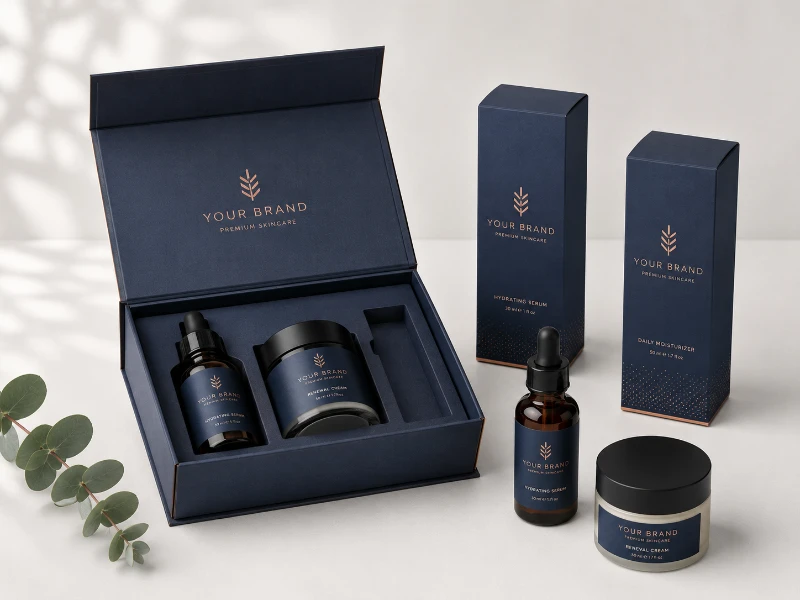
Which Insert Fits Different Brand Types?
Paper inserts lower upfront investment and match circular packaging values, while dense EVA foam provides necessary shock-absorption and high-end unboxing presentation for fragile, premium goods.
Paper Inserts for Eco-Conscious and Budget-Friendly Brands
Budget constraints and circular packaging goals require materials that perform without driving up shipping weight or manufacturing overhead. Paper-based platforms offer a highly customizable, lightweight solution that fits directly into existing paper recovery streams.
- Minimal Tooling Capital: Mass-market and budget brands lower their upfront investment through minimal material and tooling costs.
- Circular Material Options: Eco-focused businesses match their sustainability positioning by using recyclable kraft paperboard or molded-fiber inserts.
- Reduced Storage Footprint: Flat-pack shipping configurations minimize warehouse storage footprints and reduce inbound freight costs.
- Lightweight Retention: Item categories like cosmetics palettes, jewelry cards, and sample sets gain structured organization without adding bulk.
EVA Foam Inserts for Premium and Fragile Products
Fragile, high-value SKUs demand heavy-duty shock absorption and exact positioning to survive parcel transit intact. Dense, closed-cell EVA foam serves as a structural shield while framing the product as a premium asset.
- Vibration and Drop Control: Delicate items like glass skincare bottles, баночки для крема, serum containers, and other fragile cosmetic products gain superior drop protection and movement prevention.
- Clean-Edged Aesthetics: High-end gift and luxury brands utilize dense, clean-edged EVA foam to establish a professional presentation inside Жесткие коробки.
- Precision Cavities: Specialized fabrication tools create custom recesses that perfectly hug complex product shapes.
- Margin Alignment: Higher per-unit costs match the economics of premium products where the unboxing experience directly supports the brand value.
Custom Insert Solutions From an Experienced Packaging Manufacturer
Choosing the right insert material is only one part of creating effective cosmetic packaging. Brands also need a manufacturing partner that can translate product requirements into practical packaging structures. Packccp provides customized paper insert and rigid packaging solutions based on product size, масса, protection needs, и цели презентации бренда. With experienced engineering support and in-house production capabilities, PackCCP helps brands develop packaging structures that balance protection, visual appeal, and production efficiency. From recyclable paperboard inserts to customized packaging components, each solution can be adjusted according to specific product requirements. With strict quality control processes and flexible customization support, PackCCP works with global brands to deliver reliable packaging solutions for cosmetics, уход за кожей, and other retail products.
Cream Packaging Insert Selection Checklist
We compare paperboard and EVA foam inserts to help brands balance fragile jar protection, unboxing aesthetics, shipping weight, and unit costs across distribution channels.
| Фактор | Картонная вставка | Вставка из пены EVA |
|---|---|---|
| Уровень защиты | Light-to-moderate cushioning; prevents basic scuffing | High impact protection; strong drop resistance |
| Typical Unit Cost | $0.05 к $0.30 за единицу | $0.25 к $1.50 за единицу (20% к 50% above EPE foam) |
| Возможность вторичной переработки | Отличный; recyclable and compostable in standard streams | Низкий; typically ends up as landfill or mixed waste |
| Shipping Format | Ships flat to optimize storage and transit volume | Denser volume material; does not flat-pack |
Material Performance and Cost Evaluation Matrix
Brands must balance protection performance against raw unit economics. While EVA foam provides high impact protection and a dense, premium appearance, it increases material costs by 20% к 50% over alternative materials like EPE foam. For standard retail runs, folding paperboard (typically 300 к 400 g/m² white card or kraft paper) offers a highly economical alternative that easily fits lightweight products, аксессуары, or sample sets.
Environmental priorities also dictate material choice. Paperboard delivers excellent recyclability and compostability, whereas brands should restrict EVA to high-performance protection requirements due to its lower eco-profile. We recommend using a clear SKU-level selection framework:
- Eco-first retail lines: Match these products with paperboard or molded pulp to support clean recycling narratives.
- Heavy glass jars: Apply EVA to heavy glass cream jars or high-return DTC distribution routes to prevent breakage during transit.
Dimensional Fit and Supply Chain Validation Checklist
Engineering the perfect insert requires precise fit tolerances and accurate structural planning, including how brands prepare dielines for packaging design before production. For presentation-grade EVA foam inserts, maintain tight cavity dimensions targeting about ±0.5 mm per side. Before fabricating the tooling, we run comprehensive container measurement audits to verify jar diameter, height, lid profile, pump neck geometry, and label clearance.
Logistical stress guides the structural design of the insert. We select dense EVA inserts for multi-leg logistics and long-distance vibration mitigation, and we use paperboard primarily for organization on shorter transit routes. To optimize downstream warehousing and transport, confirm flat-pack capability to minimize storage and transit volumes before production. Окончательно, we test all finished prototypes for drop resistance and cosmetic scuffing to ensure the packaging survives real-world transit.
Часто задаваемые вопросы
Is EVA better than paper inserts?
EVA delivers far better drop protection and a tighter fit, which you need for heavy or fragile items like glass cosmetics and electronics. Paper inserts win when you want to minimize unit costs, ship flat to save warehouse space, or hit strict plastic-free sustainability targets. Base your decision on whether your product actually needs heavy-duty cushioning or simple, eco-friendly organization.
Which insert protects cream jars better?
EVA protects glass or heavy cream jars much better than paper. It absorbs shocks and locks the jars in place to prevent shifting. Paper inserts handle lightweight plastic jars perfectly well, but they lack the impact resistance required to safeguard fragile glass containers during rough shipping.
Are paper inserts recyclable?
Да, plain paper and cardboard inserts recycle easily in standard curbside programs. But adding plastic lamination, heavy varnishes, or non-soluble adhesives stops clean fiber recovery. Stick to uncoated paperboards and water-based inks to ensure your inserts remain fully recyclable.
Does EVA increase packaging cost?
Да. Custom die-cut EVA foam inserts generally cost between $0.25 и $1.50 за единицу, and can go higher if you add finishes like velvet wrapping. By comparison, simple folded paperboard or cardboard inserts only cost about $0.05 к $0.30 за единицу. You must budget for a significant cost increase if you choose EVA.
Which insert looks more luxurious?
EVA foam is often preferred for luxury packaging because its dense, smooth surface supports precise custom-cut cavities and creates a refined product presentation. It can also be combined with velvet or flocked liners to enhance the premium unboxing experience. Однако, well-designed paperboard inserts can also achieve an elegant appearance through structural design, high-quality materials, and advanced finishing techniques.
Are molded pulp inserts a suitable alternative?
Molded pulp is an excellent middle ground. It provides solid protection and a high-performing sustainable profile made from recycled fibers. While it lacks the ultra-soft, high-end texture of EVA foam, these inserts nest together to slash warehouse and shipping volume, making them a smart choice for eco-focused skincare, электроника, and bottles.
Заключительные мысли
Selecting the wrong internal packaging risks shattered glass, leaked product, and damaged retail relationships. While paper inserts protect lightweight items at a low unit cost, heavy glass cream jars require the high-density impact resistance of custom EVA foam to survive transit. Matching your packaging structure to your product weight is the only reliable way to eliminate return costs and secure your brand presentation.
We recommend ordering a custom sample kit to test the dimensional tolerances and drop resistance of both materials with your specific jars. Our engineering team can develop custom-cut prototypes based on your precise container dimensions. Reach out to our packaging specialists today to request your samples and secure your production timeline.