Learning how to design packaging starts with the product, not the artwork. A box has to fit, survive storage and shipping, carry the right market information, and remain practical to manufacture at scale.
For paper packaging, use this order:
Product brief → structure and material → size → dieline → artwork → prototype and test → production specification.
This guide covers folding cartons, 강성 상자, 골판지 우편물 상자, and other paper-based packaging for brands selling in the 미국, 캐나다, 그리고 호주.
1. Define the Product and Distribution Route
Before choosing paper stock or opening Illustrator, 확인하다:
- Product dimensions and weight
- Units per package
- Fragility and pressure-sensitive areas
- 소매, 전자상거래, subscription, or wholesale use
- Storage and shipping conditions
- Target cost and order quantity
- Insert or cushioning needs
- Barcode, warning, legal, and product-information requirements
- Food-contact requirements where relevant
- Target market
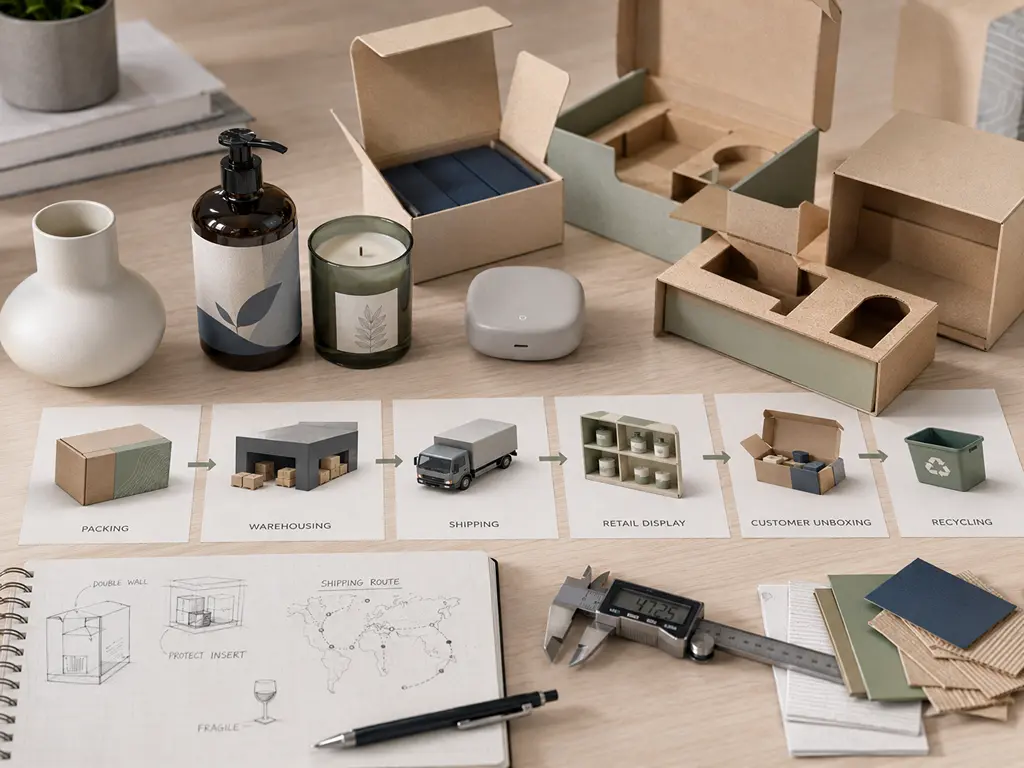
A skincare bottle, glass candle, electronic device, and ceramic product should not begin with the same box.
Follow the full journey:
Packing → Warehousing → Shipping → Retail Display → Customer Opening → Disposal or Recycling
This catches problems a rendering cannot: slow assembly, wasted space, weak closures, poor product removal, or a box that looks good but ships badly.
For common paper formats, see PackCCP custom paper packaging options.
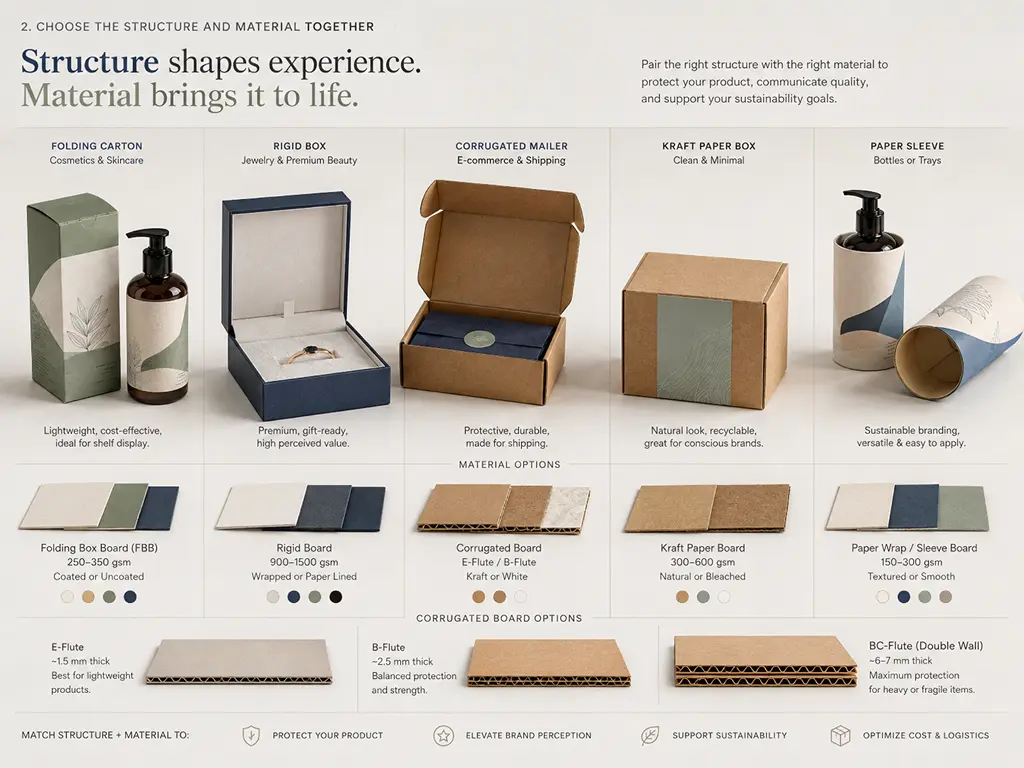
2. Choose the Structure and Material Together
A heavier board cannot rescue the wrong structure. Select both as one system.
| 포장 유형 | Best For | Main Advantage | Watch For |
|---|---|---|---|
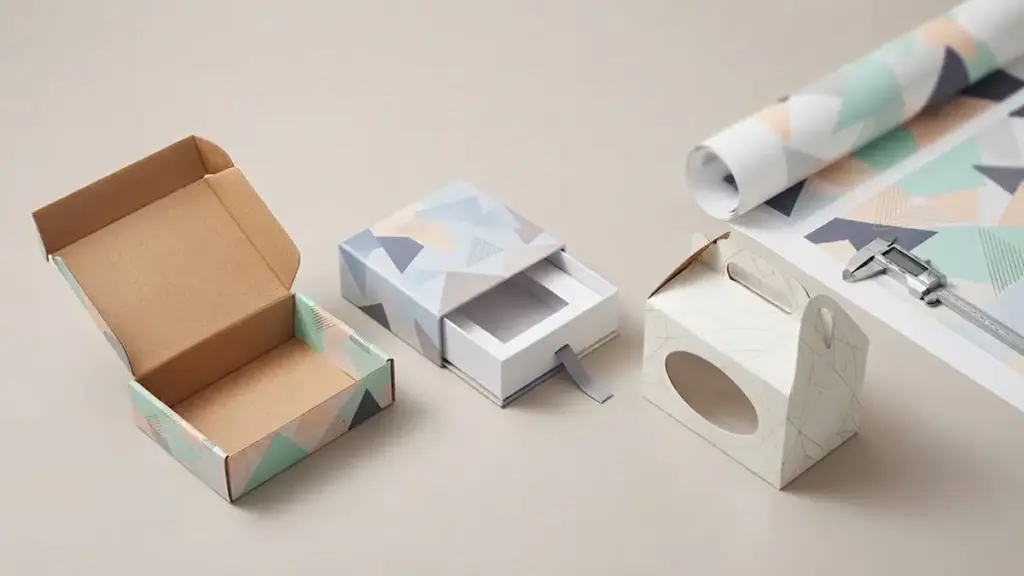
| 접는 상자 | 화장품, 보충제, 음식, lightweight retail products | Low material use and flat shipping | Limited protection for heavy or fragile items |
| 강성 상자 | 보석류, 아름다움, 전자 장치, premium gifts | Strong presentation and structure | Higher material, 집회, and freight cost |
| 골판지 우편함 | E-commerce and subscription products | Better transit protection | Bulky if oversized |
| Kraft Paper Box | 소매, 음식, natural-positioned products | Distinct paper appearance | Kraft is not automatically the lowest-impact option |
| Paper Sleeve | Bottles, 쟁반, secondary branding | Low material use | Limited standalone protection |
PackCCP offers separate options for 접는 상자, 강성 상자, 그리고 골판지 우편물 상자.
Do not specify paper by GSM alone
Two boards at the same grammage can differ in stiffness, bulk, print surface, cracking resistance, and folding performance. Check:
- Grade, GSM, and caliper
- Stiffness and bulk
- Virgin or recycled fibre content
- Coating and print compatibility
- Required certification
- Food-contact suitability where applicable
PackCCP’s materials and finishing options cover paperboard, 골판지, 크래프트 종이, 인쇄, 완료, 그리고 삽입.
For U.S. food packaging, check applicable FDA food-contact requirements for the intended use, including relevant coatings and adhesives. See the FDA food packaging guidance.
호주에서는, FSANZ requires food packaging to be fit for its intended use and not likely to contaminate food. 보다 FSANZ food packaging guidance.
Use the minimum material that safely delivers the required strength, print quality, handling performance, and customer experience.
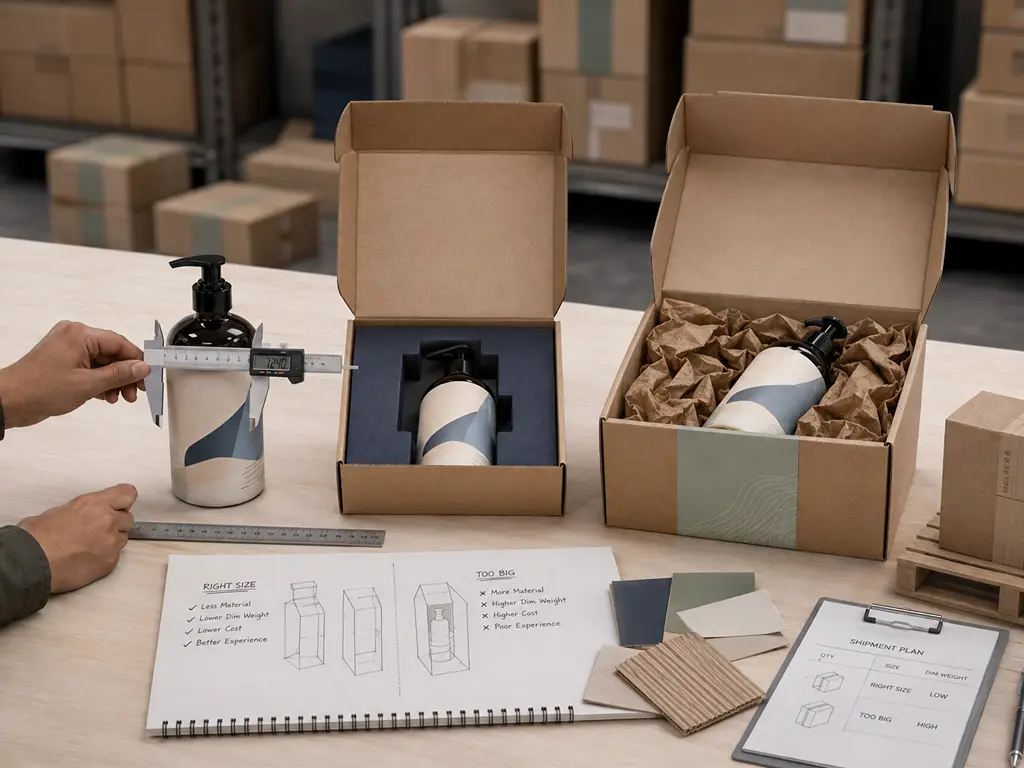
3. Size the Package Around the Product
Measure the real product rather than working from estimates.
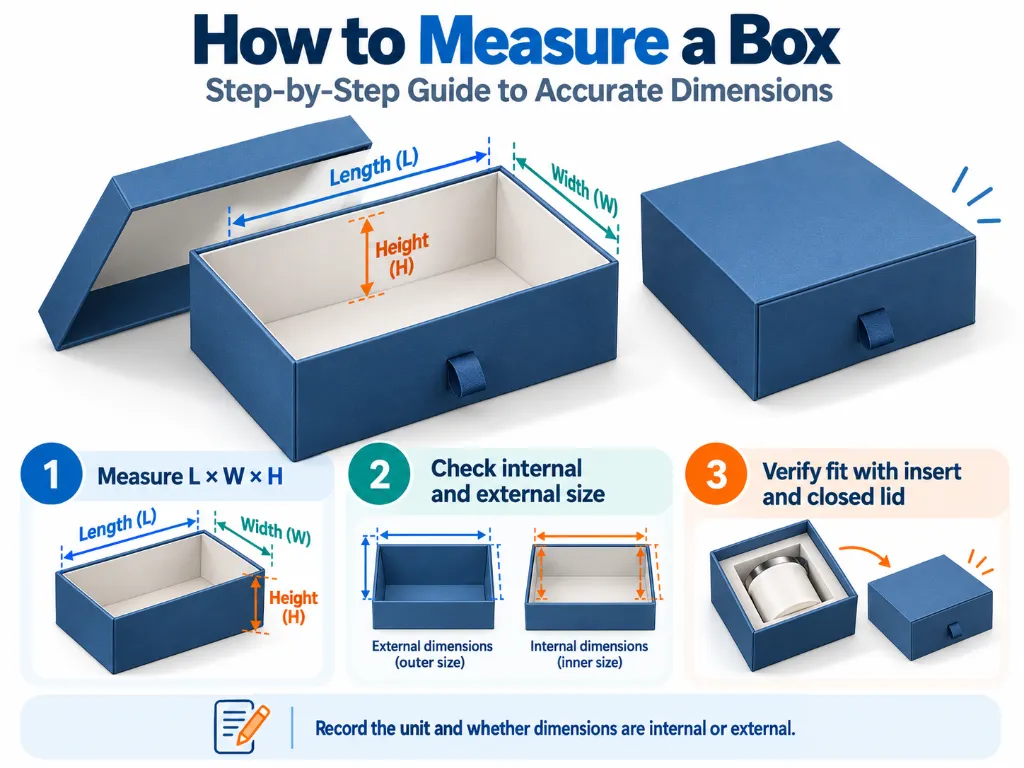
Internal box size = product size + required clearance + insert or protective space
Too much clearance means more paper, more internal movement, more warehouse volume, and potentially higher shipping cost.
A practical dimensional-weight check
FedEx publishes this dimensional-weight formula for packages measured in inches and pounds:
DIM weight = Length × Width × Height ÷ 139
에이 12 × 10 × 8 in carton is about 6.9 lb DIM weight before carrier rounding and other shipment rules are applied. That makes right-sizing a cost decision, not just a sustainability claim. See the current FedEx dimensional-weight guidance.
A U.S. EPA shipping case makes the same point at scale: changing package geometry reduced packaging weight and transport demand for a major retailer’s private-label product. The material was not paperboard, but the lesson applies to cartons—shape affects logistics. See the 우리를. EPA packaging-reduction case.
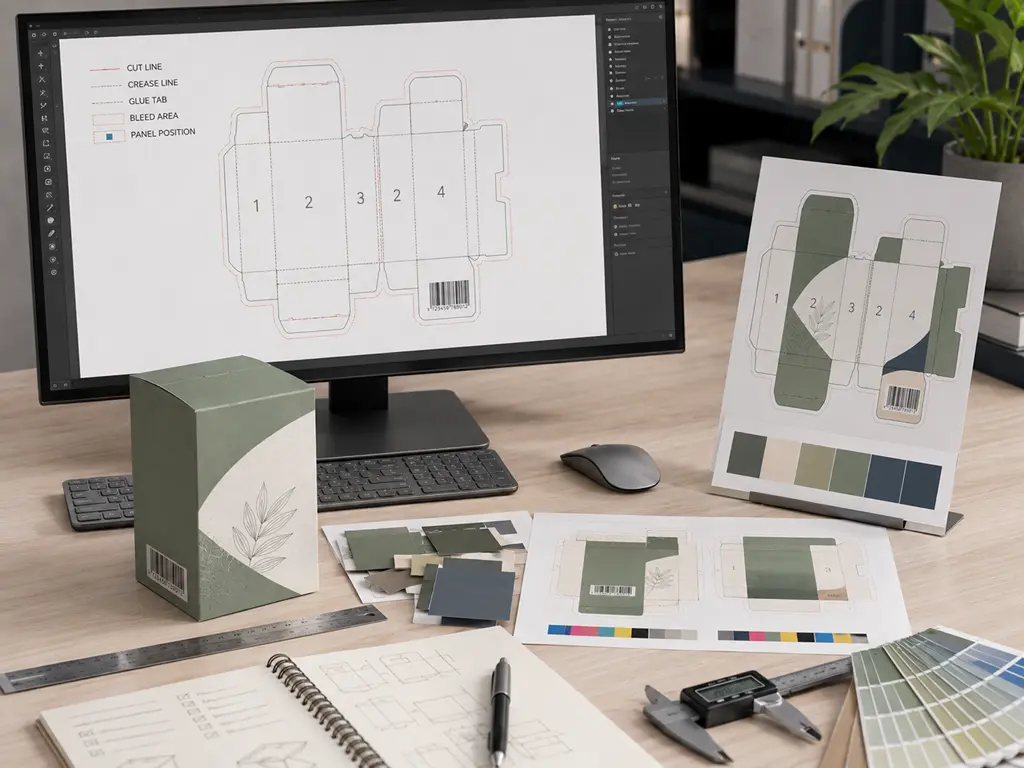
4. Approve the Dieline Before Final Artwork
The dieline is the production map of the package. It normally identifies:
- Cut and crease lines
- 접착 부위
- Bleed and safety margins
- Panel positions
- Insert positions where required
A bleed around 3 mm / 0.125 ~에 is common for printed paper packaging, but the exact requirement should come from the printer or manufacturer.
Use PackCCP’s packaging dieline guide for the technical basics, or start from the free dieline template library.
Before release, check CMYK/Pantone setup, image resolution, fonts, 출혈, safe margins, fold positions, product claims, recycling information, and barcode execution.
For UPC barcodes, GS1 US advises keeping the correct proportions and clear quiet zones around the symbol. 보다 GS1 US barcode placement guidance.
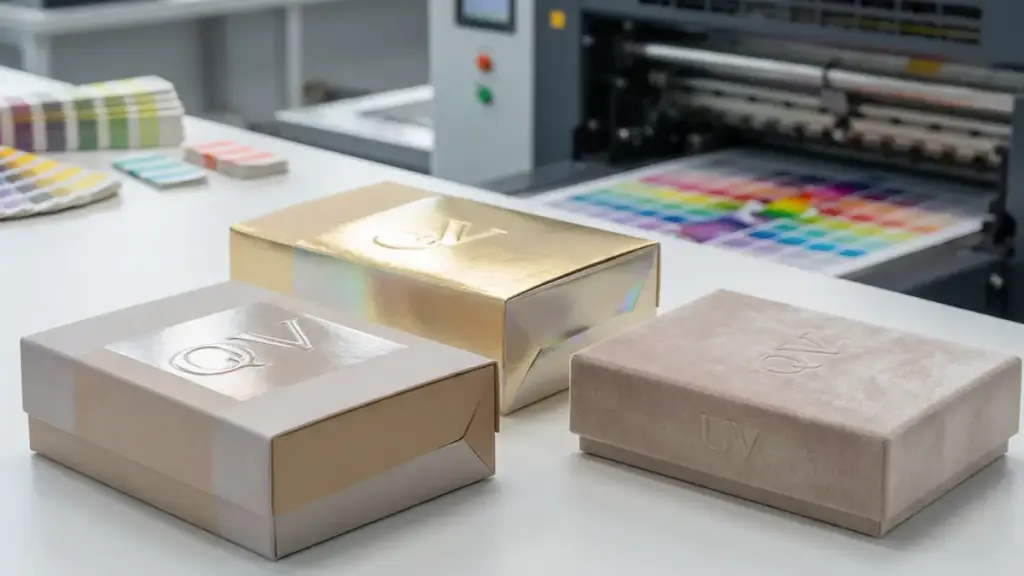
Finishing should support the package rather than compete with it. One controlled foil, emboss, 조직, or coating often works better than stacking several premium effects on the same panel.
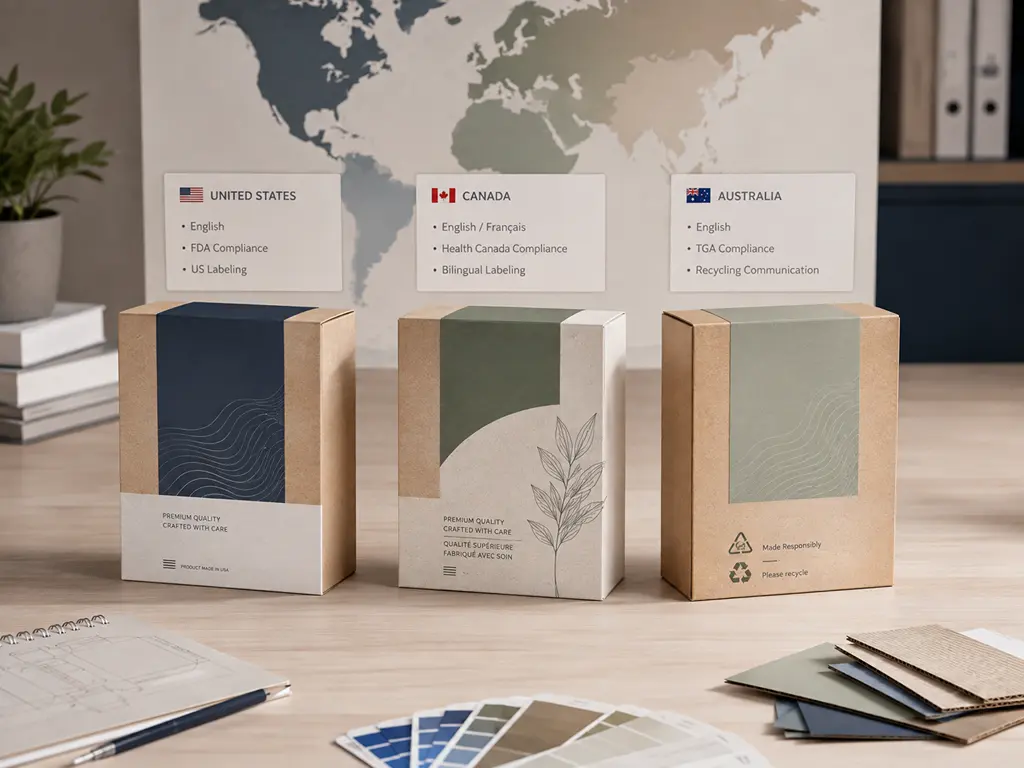
5. Adapt Packaging for the U.S., 캐나다, 그리고 호주
One box structure can often serve several markets, but the artwork may need different versions.
| 시장 | Main Checks | Primary Sources |
|---|---|---|
| 미국 | Food contact, environmental claims, parcel size, 바코드 | FDA, FTC, FedEx, GS1 US |
| 캐나다 | Product identity, net quantity, dealer information, bilingual copy, Québec rules | Competition Bureau Canada, OQLF |
| 호주 | Food safety, environmental claims, recycling communication, regulatory reform | FSANZ, ACCC, APCO, DCCEEW |
미국
Avoid broad environmental claims such as “녹색” 또는 “환경 친화적인” without qualification. The FTC Green Guides recommend specific, supportable claims.
Instead of:
Eco-Friendly Packaging
use a claim that identifies the benefit, 예를 들어:
Carton made with 80% recycled paperboard.
Review the FTC Green Guides summary before finalizing environmental copy.
캐나다
For many prepackaged non-food consumer products, federal rules require core information such as product identity, net quantity, and dealer information. Check the Competition Bureau Canada packaging and labelling requirements.
If Québec is included, plan the French copy early. New trademark-related rules have applied since 6월 1, 2025. OQLF states that information on products and packaging must be available in French, with newer requirements affecting certain generic or descriptive elements in trademarks. See the OQLF product and packaging guidance.
Do not leave bilingual layout until the final artwork stage; it can change panel hierarchy and required space.
호주
For food products, confirm suitability for the actual food, storage temperature, contact time, and use conditions. FSANZ notes that acidic or oily foods, heating, freezing, 습기, and recycled materials can affect packaging suitability.
Environmental claims must also be clear and supportable. See the ACCC environmental claims guide.
For disposal instructions, 그만큼 Australasian Recycling Label provides component-level recycling communication.
Australia is also changing its packaging regulatory framework. In its 3월 6, 2026 update, DCCEEW said reform was underway and the existing co-regulatory arrangement would remain until new regulations begin. Check the Australian Government packaging reform page before a new production run.
For practical Australian examples, APCO maintains a packaging case-study library covering material efficiency, reusable packaging, 재활용 가능성, and recycled content.
6. Prototype and Test Before Mass Production
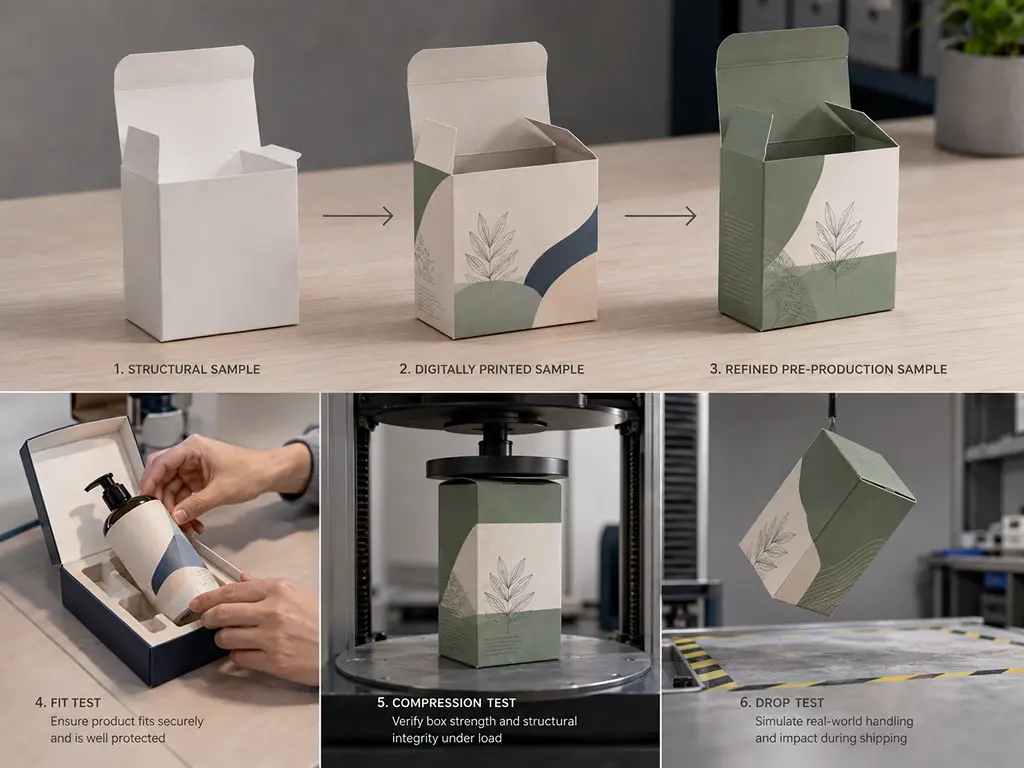
A rendering cannot confirm fit, closing force, board feel, insert removal, real print colour, or shipping performance.
| Sample Type | 주요 목적 | Use It When |
|---|---|---|
| 구조 샘플 | 맞다, 크기, 접는, 폐쇄, 집회 | Before artwork is final |
| Digital Printed Sample | Graphics and approximate visual result | During artwork approval |
| 사전 제작 샘플 | Final material, print, 마치다, and structure | Before a sensitive production run |
packccp custom sample process separates these sample types for different stages of development.
One PackCCP automotive-electronics project used a rigid box, fitted insert, 액세서리 수납공간, and several printed components under a tight deadline. The approval cycle was shortened, but the physical checkpoint was not removed. The box and insert were checked as separate control points before the remaining production moved forward.
That is the useful rule: speed up approval when necessary; do not make mass production the first real test.
Depending on the distribution route, testing may include drop, 압축, 진동, abrasion, adhesive, 습기, or shipping trials. ISTA Procedure 3A is a general-simulation test for individual parcel shipments up to 150 lb / 70 kg; other channels can require different procedures. See the ISTA test procedure overview.
7. Lock the Production Specification
생산 전, record the final decisions in one approved specification.
| 목 | Confirm Before Production |
|---|---|
| Box Dimensions | Internal and external dimensions |
| 재료 | Grade, GSM, caliper, flute where applicable |
| 인쇄 | CMYK, 팬톤, ink and print method |
| 마무리 손질 | 라미네이션, 박, 엠보싱, 코팅 |
| 삽화 | Final file and version |
| 인서트 | 재료, cavity size, removal space, orientation |
| 수량 | Production quantity and tolerance |
| 포장 | Units per master carton and packing method |
| Quality Standard | Colour, 치수, 모습, functional tolerances |
| 견본 | Approved physical production reference |
The approved sample should become the quality reference for the run.
Quick Answers for Packaging Buyers
What is the first step when designing packaging?
Start with product dimensions, 무게, 취약성, distribution channel, target market, and cost. Graphics come after the structural brief.
Should the box fit the product exactly?
아니요. Leave enough clearance for packing, tolerances, 인서트, and product removal, but do not add empty space without a protective or functional reason.
What file is normally used for packaging artwork?
Vector artwork is commonly prepared in Adobe Illustrator, with the approved dieline kept on a separate technical layer. Confirm the final file setup with the printer.
What makes paper packaging more sustainable?
Right-sizing, efficient structure, appropriate material use, realistic recyclability, and accurate claims matter more than a brown kraft appearance or a recycling icon.
Final Check Before Production
Ask five questions:
- Will it protect the product through the real distribution route?
- Can it be manufactured and packed consistently?
- Can the customer understand the product and key information quickly?
- Does the artwork fit the rules of the market where it will be sold?
- Has a physical sample confirmed the structure?
If one answer is uncertain, the packaging is not ready for mass production.
For a new folding carton, 단단한 상자, or corrugated mailer project, request a PackCCP sample or packaging review before finalizing the production artwork.