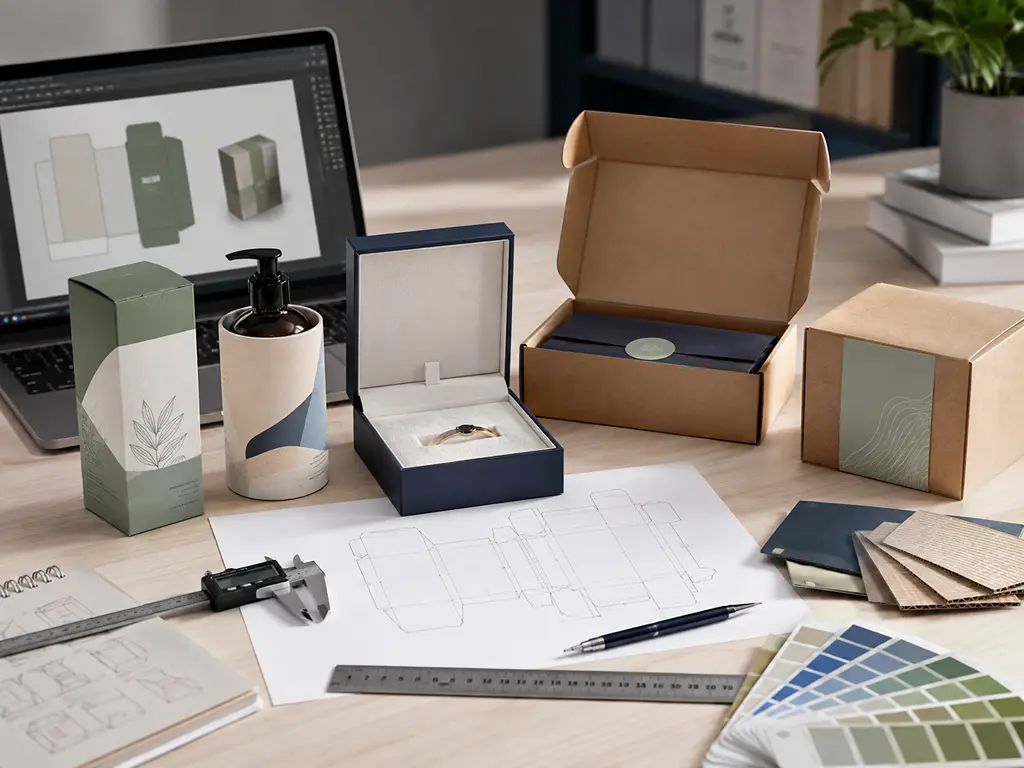
The wrong box or insert erodes perceived value, making a high-quality piece feel cheap before the jewelry unboxed. This undermines brand equity and turns a potential keepsake moment into a forgettable transaction.
This analysis benchmarks packaging decisions against key performance indicators. We evaluate how choices like rigid paperboard, die-cut EVA foam inserts, and foil stamping affect unit cost, production timelines, and minimum order quantities, which often start at 1,000 units. The goal is an operational framework for making scalable packaging choices.
What Is Custom Jewelry Packaging

Custom jewelry packaging isn’t just a box. It’s an engineered system of containers and inserts designed to protect a specific piece while delivering on brand identity.
Packaging Tailored for Jewelry
Let’s get one thing straight: custom jewelry packaging isn’t about picking a standard box and slapping a logo on it. It’s about engineering a solution from the ground up. This means every detail—dimensions, 구조, 재료, and printing—is chosen to fit a specific piece of jewelry and the brand behind it. It’s the difference between a generic container and a purpose-built system.
Think of it in layers. You have the primary packaging, like the ring box or pouch that actually holds the jewelry. Then you have the secondary packaging—the outer box, shopping bag, or mailer that protects and presents the whole package. Every component is designed to work together.
보호, 브랜딩, and Customer Experience
At its core, custom packaging has three jobs. 첫 번째, 보호. Jewelry is delicate. It scratches, tarnishes, and can get damaged easily. The packaging uses tailor-made inserts from materials like high-density foam, 벨벳, or suede to hold the piece securely and stop it from moving around during shipping and handling.
두번째, 브랜딩. The box is often the first physical thing a customer touches. It translates your brand’s logo, 그림 물감, and values—whether that’s luxury, minimalism, or sustainability—into a tangible object. It’s a physical billboard for what you stand for.
마지막으로, it’s about the customer experience. Unboxing jewelry is often a ritual, especially for gifts and proposals. Using layered elements like branded tissue paper, 고삐, or a quality magnetic closure turns a simple transaction into a memorable event. It makes the product feel more valuable before the customer even sees the piece itself.
Types of Jewelry Packaging
Jewelry packaging choices hinge on brand strategy—luxury, minimalist, or sustainable—and structural format. The design is tailored to the specific item with boxes, pouches, 및 맞춤형 인서트.
Packaging by Brand Strategy
Your packaging isn’t just a container; it’s a direct signal of your brand’s position in the market. The materials and design you choose tell a story about your price point, 가치, and target customer before the box is even opened. This decision boils down to three main strategies.
- Luxury Packaging: This is all about creating a high perceived value and a memorable gifting experience. It relies on premium materials like heavy rigid board, wood, or acrylic. Finishes like foil stamping and embossing are common, and interiors often feature soft velvet or suede to make the jewelry feel important and well-protected.
- Minimalist Packaging: This approach prioritizes simplicity, clean aesthetics, and often, 비용 효율성. It’s defined by uncluttered designs, compact structures, and natural textures. Kraft paper boxes, simple sleeves, and a discreet logo are the hallmarks of this strategy, appealing to modern brands that want the product to speak for itself.
- 지속 가능한 포장: Driven by consumer demand for environmental responsibility, this strategy uses materials that are recycled, 퇴비로 만들 수 있는, or biodegradable. Think recycled paperboard, bamboo boxes, and inserts made from molded pulp. The goal is to lower the environmental impact, a message that resonates strongly with ethically-minded buyers.
Structural Formats and Item-Specific Designs
Beyond brand strategy, the physical form of the packaging is dictated by the jewelry itself. The structure must protect the item and present it properly. Different pieces require completely different solutions.
- Common Box Formats: Different box styles create different unboxing experiences. Drawer-style boxes create a premium “드러내다” effect. Magnetic closure boxes offer a secure and satisfying snap. The classic lid-and-base box is a straightforward, reliable choice for almost any item.
- Pouches and Soft Options: For delicate items, soft packaging is essential. Velvet, satin, and microfiber pouches provide a non-abrasive layer that prevents scratches. They can be used as the primary packaging for smaller items or as an extra layer of protection inside a rigid box.
- Item-Specific Inserts: The inside of the box is just as critical as the outside. Inserts are engineered to hold a specific piece of jewelry securely. Rings get snug wells or slots to keep them centered. Necklaces need elongated layouts with hooks or tabs to prevent tangling. Heavier items like watches require extra foam padding to absorb shock.
Get Premium Custom Rigid Boxes, Factory-Direct
Choosing Materials for Jewelry Boxes & Pouches
Material choice balances protection, brand image, and cost. Rigid paperboard is the default for quality boxes, while fabrics like microfiber and velvet are go-to options for pouches.
Core Materials for Jewelry Boxes
The foundation of any good jewelry box is its core structural material. This choice dictates the box’s strength, 무게, and overall perceived quality. While wraps and linings add the finishing touch, the core does the heavy lifting for protection.
- Rigid Paperboard (Chipboard): This is the industry standard for custom jewelry boxes. It provides a strong, non-collapsible structure that feels premium and is highly customizable with various wraps and finishes.
- Wood: Used for luxury and heritage-style boxes, materials like walnut or bamboo offer a timeless, high-end presentation. The downside is higher cost and a heavier shipping profile.
- Kraft or FSC-Certified Paperboard: A solid choice for eco-conscious and fashion jewelry brands. It’s lightweight and cost-effective, supporting a sustainable brand story, but generally feels less premium than heavy rigid board.
- PU Leather or Leatherette Wrap: This isn’t a core material itself, but a common exterior wrap applied over rigid paperboard. It delivers a polished, luxury appearance and is flexible for branding purposes.
Common Fabrics for Jewelry Pouches
For pouches, the material is all about the tactile experience and the level of protection against scratches. The right fabric can make a simple pouch feel like a luxury accessory in its own right.
- Microfiber: Ideal for scratch-sensitive jewelry and brands that want a premium, modern feel. Its soft, controlled finish is highly protective, though it often comes at a higher cost.
- Velvet: The classic choice for fine jewelry and gift packaging. It has a rich look and soft feel that immediately signals an upscale brand image.
- Satin: Best for gift presentation where appearance is key. It provides an elegant, cost-effective luxury look but offers less protection against tarnish for sensitive metals compared to other options.
- Cotton, Canvas, and Linen: These natural fabrics are perfect for eco-oriented brands focused on reusability. They are durable, breathable, and support a simple, sustainable brand message.
- PU Leather or Faux Suede: A good fit for more structured pouches or those holding larger, heavier items. These materials offer a durable and more protective feel than softer fabrics.
Custom Logo & Branding Options
Getting your branding right means translating your identity into consistent visual and tactile elements. It’s about how the logo, 그림 물감, and fonts work together on the physical packaging.
Brand Assets & Visual Elements
Before you can apply a logo, you need to have your core brand assets sorted. These are the fundamental visual building blocks that will appear on every box, pouch, and card. Getting them right from the start saves a lot of headaches and redesign costs down the line.
- Get your logo files in order. You need print-ready vector files—think .ai, .eps, or .pdf. Vector logos scale cleanly without getting blurry, so the same file works perfectly on a tiny earring card and a much larger necklace box. This isn’t negotiable.
- Define your color palette. Colors aren’t just for decoration; they signal your market position. Regal blues and deep blacks communicate fine jewelry, while soft pastels might target a more accessible fashion line. Consistency across boxes, 바지, and inserts is key for brand recognition.
- Choose your typography carefully. Your font choice reflects your brand’s personality. A classic serif font can give a sense of heritage and tradition, but a clean sans-serif font feels modern and minimalist. Just make sure it’s legible, even at very small sizes on the back of a box or tag.
Branding Application & Placement
Once you have the assets, the next step is deciding how and where to apply them. This is where your brand comes to life physically, through texture and placement that customers can see and feel.
- Select an application method. For a premium feel, hot foil stamping in gold, 은, or rose gold adds a metallic finish that catches the eye. If you want tactile depth, 엠보싱 (a raised logo) or debossing (a recessed logo) creates a subtle, high-end effect.
- Standardize logo placement. Consistency is everything. A classic top-center location on box lids creates a balanced, formal look. For a more understated or modern feel, placing a small logo in a corner of a pouch or box can be effective. Decide on a rule and stick with it across all packaging types.
- Match the technique to the material. Not all methods work on all surfaces. Foil stamping and embossing are excellent on rigid boxes and velvet-wrapped surfaces. But for a simple cotton or linen pouch, a clean one-color screen print is often more practical and cost-effective.
Inserts and Interior Protection
Inserts are engineered structures that immobilize jewelry for protection and attractive presentation. They are a primary driver of both packaging cost and perceived luxury.
Core Functions for Protection and Presentation
Inserts aren’t just filler; they are engineered components with two critical jobs. 첫 번째, they provide non-negotiable protection. 두번째, they act as a stage to present the jewelry, directly influencing how a customer perceives the brand’s quality. A cheap insert makes the whole product feel cheap.
- Immobilization: Inserts hold the jewelry firmly in place to prevent movement, which is the primary cause of scratches and impact damage during shipping.
- Shock Absorption: Foam and other cushioned materials absorb impacts from drops and rough handling, protecting delicate settings and stones.
- Organization: Dedicated slots, hooks, and partitions keep items separate. This is crucial for preventing chains from tangling and earring pairs from colliding.
- 표면 보호: Soft top layers like velvet or faux suede create a non-abrasive surface, preventing scratches on polished metals and soft gemstones.
- Visual Presentation: The insert frames the jewelry, holding it upright or centered when the box is opened. This controlled reveal significantly enhances the unboxing experience and perceived value.
Common Insert Materials
The material you choose for your insert depends entirely on your product’s value, brand position, 그리고 예산. For paperboard jewelry boxes, the insert can account for 15-30% of the total unit cost, making this a critical decision.
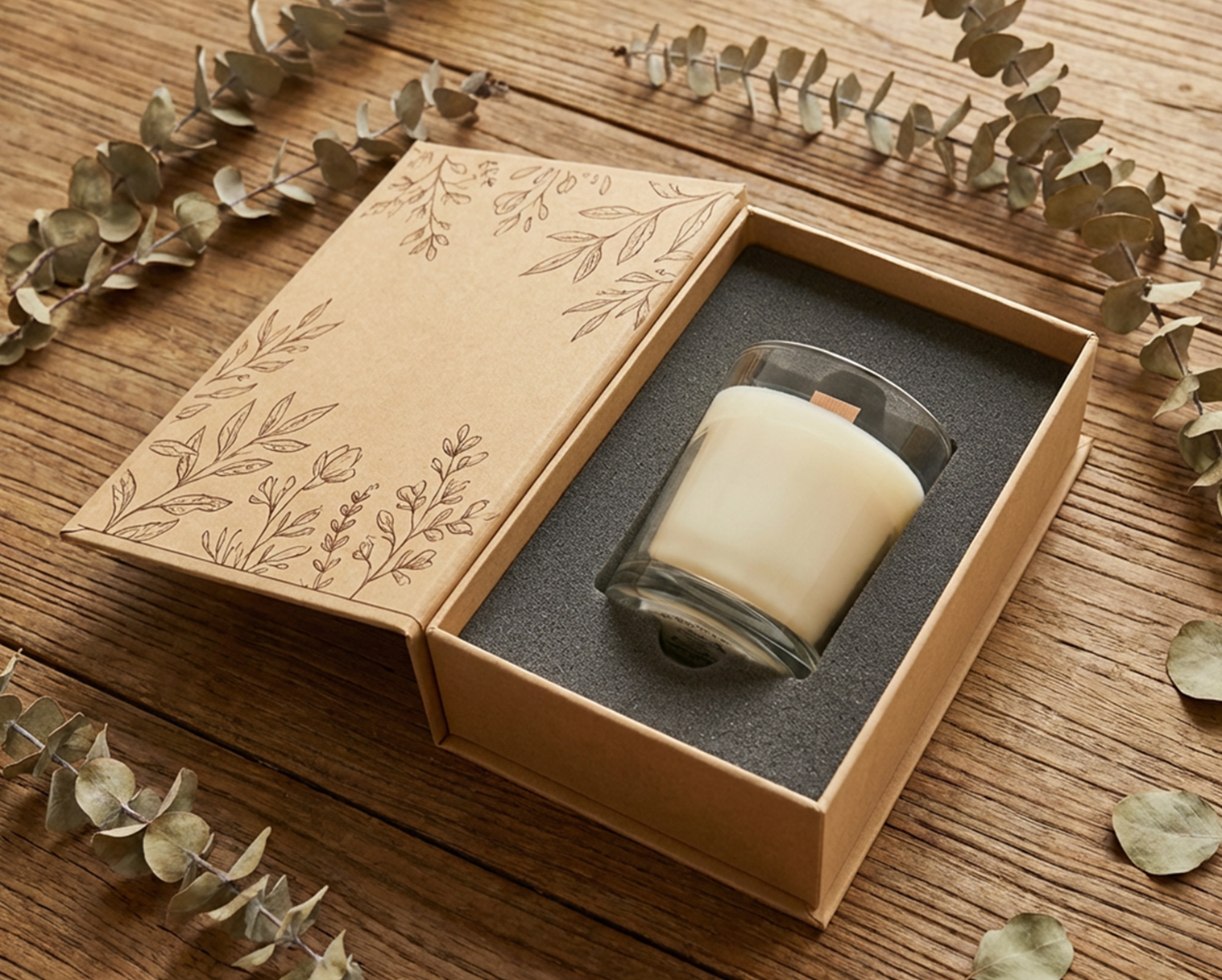
- Die-Cut Foam (EVA/PE): This is the workhorse for mid-to-high-end jewelry. High-density EVA or PE foam provides excellent shock absorption and can be precisely cut to fit any piece. It’s almost always topped with a fabric like velvet for a luxury finish.
- 성형펄프: Made from recycled fiber pulp, this is the go-to for eco-conscious brands. It’s biodegradable and can be molded into custom shapes. The raw texture works for minimalist brands, but it can also be lined with fabric.
- Flocked Plastic: A vacuum-formed plastic tray is coated with velvet-like fibers. This creates a very sharp, defined cavity with a premium feel. It’s a classic luxury choice but is less sustainable than paper or pulp options.
- Paperboard/Cardboard: Die-cut paperboard is a cost-effective and recyclable option. It’s best for lightweight jewelry or brands where sustainability is the top priority. It provides structure but less cushioning than foam.
Everything about Luxury Finishes
Luxury finishes are the visual and tactile cues—from matte coatings to foil stamping—that tell a customer your jewelry is high-quality and worth its price.
Core Finish Types: From Surface to Structure
When we talk about luxury finishes in jewelry packaging, we’re really looking at four distinct categories. These range from treatments applied to the surface of a box to the very way it’s built and opens.
- Surface Coatings and Laminations: These change the fundamental feel of the box. A matte lamination gives a smooth, non-reflective surface that feels understated and modern. A soft-touch coating adds a velvety, almost rubberized texture that encourages touch. And Spot UV is used to add a high-gloss highlight to specific areas, like a logo, making it pop against a matte background.
- Textures and Materials: This is about the material itself. Velvet wraps are a classic signal for heirloom-quality gifts. Papers with a subtle linen or fabric texture suggest artisanal craftsmanship. Faux leather wraps provide a rich, durable exterior that signals a high ticket value.
- Print and Brand Embellishments: This is how your branding is physically applied. Foil stamping is the go-to for adding metallic gold, 은, or rose gold details, instantly signaling luxury. Embossing raises your logo off the surface for a 3D effect, while debossing presses it in for a subtle, engraved look.
- Structural Luxury Features: These are built into the box’s design. Hidden magnetic closures give a smooth, secure “스냅” that feels premium. Hinged lids and drawer-style boxes with ribbon pull-tabs turn the unboxing into a small, deliberate ceremony, building anticipation.
How Finishes Shape Brand Perception
Finishes are not just decoration; they are a direct line of communication with your customer. They set expectations and build brand value before the jewelry is even revealed.
The finish is your brand’s first handshake. A matte lamination paired with a blind deboss tells a story of understated, modern luxury. A glossy, deep-colored box with a bold gold foil logo communicates glamour and confidence. You have to select finishes that consistently reinforce the specific identity you’re building, whether that’s classic, edgy, or artisanal.
무거운, rigid box with a soft-touch finish and a precise closure simply feels expensive. This tactile quality directly translates to a higher perceived value for the jewelry inside. Customers subconsciously use the quality of the packaging to judge the quality of the product, making it a critical tool for justifying a premium price point.
마지막으로, brand consistency is non-negotiable. Your core finishes—like a specific matte texture and foil color—should appear on everything from the primary ring box to the outer shipping sleeve and retail bag. This unity ensures your entire product range is recognized as one coherent, upscale brand, not a random assortment of items.
모크, 견본 추출 & Production Timeline
For custom rigid jewelry boxes, expect MOQs around 1,000 units. Plan on a total timeline of 8–12 weeks from initial design to final delivery.
MOQ and Sampling Requirements
최소 주문 수량 (모크) isn’t a random number; it’s driven by the real costs of setup for printing, tooling, 및 재료. For custom jewelry packaging, the more complex the design, the higher the MOQ. A simple folding carton has different economics than a hand-assembled rigid box with a magnetic closure and a velvet insert.
Typical MOQs vary by packaging type:
- Rigid Jewelry Boxes: The standard MOQ is around 1,000 units. This is due to the costs of cutting dies, 적층, and manual assembly.
- Simple Paper Cartons: Factories might accept 500–1,000 units, especially if the design uses standard board and only a couple of print colors.
- Fabric Pouches: Some specialized suppliers can start as low as 100 조각들, which is a good way for smaller brands to test a new design before scaling.
Before you commit to a full production run, you need samples. There are a few types. Stock samples let you evaluate a factory’s general quality for little to no cost besides shipping. Custom factory samples, costing around $15–$50, are made to your exact specifications to confirm the final design. Most suppliers will credit this sample fee back to you if you place a bulk order. For large or highly complex orders, a final pre-production sample is the last checkpoint before mass manufacturing.
Production Timelines from Approval to Delivery
The total time to get your packaging is a combination of a few phases. First is design and specification, which can take a few days if you have your requirements ready. Next is the sampling phase, which typically takes 7–14 days. If you need revisions, add another week or so for each round.
Once you approve the sample, mass production begins. For simpler cartons, this can be 10–15 business days. For more complex rigid boxes with multiple finishes and custom inserts, expect 18–25 business days. Many factories will quote a general range of 4–6 weeks for production.
A safe, all-in estimate for a new custom jewelry box project is **8 에게 12 weeks** from your first design conversation to the boxes arriving at your warehouse. This accounts for design, 견본 추출, 생산, 및 배송. The final timeline depends on a few key factors:
- Design Complexity: 자석 잠금장치, drawers, and multiple finishes add steps and time.
- Your Responsiveness: Delays in approving artwork or samples will directly push back the entire schedule.
- Shipping Method: Air freight is fast, adding about a week. Sea freight is cheaper but adds 3–5 weeks to the total timeline.
Sustainable Jewelry Packaging Options
Truly 지속 가능한 포장 is a system. It combines low-impact materials, 최소한의 디자인, and a clear plan for reuse or recycling, moving beyond simple material swaps.
Eco-Friendly Material Choices
The focus has shifted to materials that reduce environmental impact while still protecting the product and feeling premium. This means prioritizing recycled, 인증됨, or rapidly renewable resources over virgin plastics. The best approach is to build a system where every component, from the box core to the ink, is chosen for its low impact and clear end-of-life pathway.
The main options fall into a few key families:
- 종이 & Fiber: Recycled Kraft paper, FSC 인증 판지, and corrugated cardboard are the foundation. 재활용이 가능합니다, widely available, and work for everything from mailers to rigid boxes.
- 성형펄프 & Plant-Based Inserts: Inserts made from sugarcane (bagasse) or bamboo pulp are replacing foam. They are biodegradable or compostable and can be molded to fit specific jewelry pieces.
- Wood & Bamboo: FSC-certified wood and fast-growing bamboo are used for premium, reusable keepsake boxes. They signal durability and align with natural aesthetics.
- Textiles: Organic cotton, hemp, and linen pouches serve as reusable travel or storage bags. They provide a soft, protective layer and extend the brand’s life well beyond the initial unboxing.
- Innovative Materials: Mycelium (mushroom-based) and seaweed-based materials are emerging as compostable alternatives for inserts and protective structures, often used by brands with a strong sustainability story.
Even functional needs like tarnish prevention can be addressed sustainably. Small, paper-based anti-tarnish strips or wrapping items in acid-free tissue paper provide protection without adding problematic plastics or chemicals to the mix.
Structural Design for Minimum Impact
How a box is designed is just as important as what it’s made of. A lean, thoughtful structure reduces waste and shipping emissions from the very beginning. The goal is to eliminate unnecessary materials and volume while maintaining both protection and a premium feel.
Effective strategies focus on efficiency and circularity:
- Right-Sizing: This is the most direct way to reduce impact. Matching the packaging dimensions closely to the product minimizes the need for void fill and cuts down on shipping weight and volume. Many brands aim for no more than 50% empty space in their shipping packages.
- Mono-Material Construction: Designing a box, 끼워 넣다, and sleeve from a single material family (like all paperboard) makes recycling incredibly simple for the customer. It avoids the contamination that happens when plastic films are laminated to paper or plastic inserts are glued inside a box.
- Designing for Reuse: The most sustainable package is one that never gets thrown away. By creating sturdy, beautiful keepsake boxes or functional travel pouches, you give the packaging a second life. This not only cuts waste but also keeps your brand in the customer’s home.
선택하는 방법 포장 제조업체
Choosing a packaging partner means matching your specs—volume, 브랜딩, materials—with a supplier who has proven jewelry expertise, solid QC, and transparent total costs.
| Assess Manufacturer Capabilities and Partnership Fit |
|---|
|
자주 묻는 질문
What is custom jewelry packaging?
Custom jewelry packaging is packaging specifically designed and produced for jewelry pieces, tailored in structure, 재료, 치수, and branding to protect, present, and reinforce a jewelry brand’s identity.
Can jewelry packaging be eco-friendly?
Jewelry packaging can be genuinely eco‑friendly when it is designed as a low‑impact, circular system across materials, 구조, 기호 논리학, and end‑of‑life, rather than a single “green” material swap.
Is rigid box packaging worth the cost?
Rigid box packaging is generally worth the higher cost for mid- to high-end custom jewelry brands when it supports brand positioning, perceived value, 보호, and repeat purchases, and when per-unit spend is kept within typical packaging budget ratios (roughly 5–12% of retail price for fine jewelry).
What insert material should I choose?
Choosing insert material for custom jewelry packaging depends on protection needs, 브랜드 포지셔닝 (luxury vs. everyday vs. eco), cost targets, and production method. Inserts must both secure the jewelry and present it in line with the brand.
Which box is best for rings?
The best box for rings in custom jewelry packaging is one that optimally balances protection, presentation, brand fit, material quality, practicality, 지속 가능성, adapted to the ring type (engagement, wedding, 패션, 사치) and the target customer experience.
How long does custom jewelry packaging production take?
Custom jewelry packaging production time depends on design complexity, order volume, and shipping method, but typical total timelines range from 3 days for simple standard box orders to 8–12 weeks for fully customized, export-oriented projects.
What is the MOQ for custom jewelry packaging?
The MOQ (최소 주문 수량) for custom jewelry packaging typically ranges from 50 에게 3,000+ units, depending on packaging type, 재료, print method, and supplier model.
Can I customize jewelry packaging with my logo?
Custom jewelry packaging can be customized with a logo across most packaging types, including boxes, 바지, pouches, 그리고 세트, using various printing and finishing techniques. Logo customization is widely available from wholesale, 사치, and small-batch suppliers, with options that scale from small independent jewelers to larger brands.
What materials are best for jewelry boxes?
Jewelry boxes in custom packaging rely on a combination of structural materials, surface wraps, interior linings, and functional components. The “best” materials depend on brand positioning (luxury vs. mass), 예산, sustainability goals, and the specific jewelry category (rings, 목걸이, 여행 세트, bridal, 등.).
How do I order samples for custom jewelry packaging?
Ordering samples for custom jewelry packaging involves a structured process designed to minimize errors, control cost, and verify quality before bulk production. The steps apply to boxes, pouches, 인서트, and related branded components.
How much does custom jewelry packaging cost?
Custom jewelry packaging costs range from $0.15 이상으로 $25 per unit, with typical mid-market brands investing $2–$10 per box at wholesale quantities and overall project ranges of $0.21–$69.44 per unit depending on materials, 맞춤화, and volume.
What finishes create a luxury look for jewelry packaging?
Luxury finishes in custom jewelry packaging are those that enhance tactile feel, visual refinement, and the unboxing ritual, while maintaining presentation integrity and brand consistency.
최종 생각
일반적인 반면, off-the-shelf boxes offer a lower upfront cost, they expose your brand to significant risk. An engineered packaging system—with custom inserts and brand-aligned finishes—is the only way to protect your product from damage and safeguard your reputation against a cheap unboxing experience that erodes perceived value.
You wouldn’t sell jewelry without inspecting it, so don’t choose your packaging based on a picture. The next step is to verify quality firsthand. 우리 팀에 문의하세요 to get a sample kit or to start building the technical specifications for your brand.