Answering how much does custom lipstick packaging cost is the first step to protecting your retail margins. Sourcing components without analyzing upfront tooling setups and material constraints risks delaying your launch and overextending your brand’s development budget.
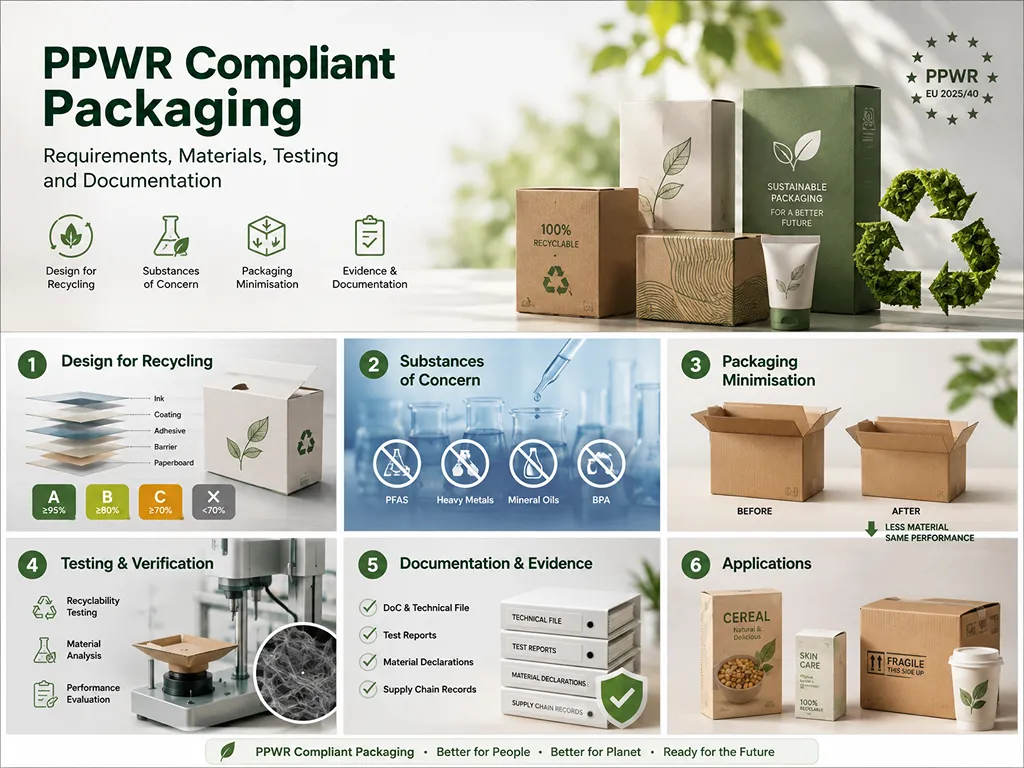
This analysis benchmarks budget, mid-market, and luxury packaging tiers against standard industry metrics. We evaluate primary tube materials, secondary carton configurations, and landed logistics costs to help you secure a scalable sourcing strategy.
Average Cost of Custom Lipstick Packaging
Custom lipstick packaging costs range from $0.30 a más $13.00 por unidad, heavily determined by material choices, tooling, decoration complexity, and production volumes.
| Packaging Tier | Primary Tube Cost | Secondary Carton Cost | Total Unit Cost Range |
|---|---|---|---|
| Budget / Mass-Market | $0.15 – $0.50 | $0.10 – $0.40 | $0.30 – $0.80 |
| Mid-Market | $0.40 – $1.20 | $0.40 – $1.50 | $0.80 – $2.70 |
| Luxury / Prestige | $2.00 – $5.00+ | $2.00 – $8.00 | $4.00 – $13.00+ |
Per-Unit Cost Breakdown of Primary and Secondary Packaging
Landed packaging costs depend on how you split your budget between the primary container and the secondary box. Brands balance these two elements to protect product margins while maintaining strong shelf appeal.
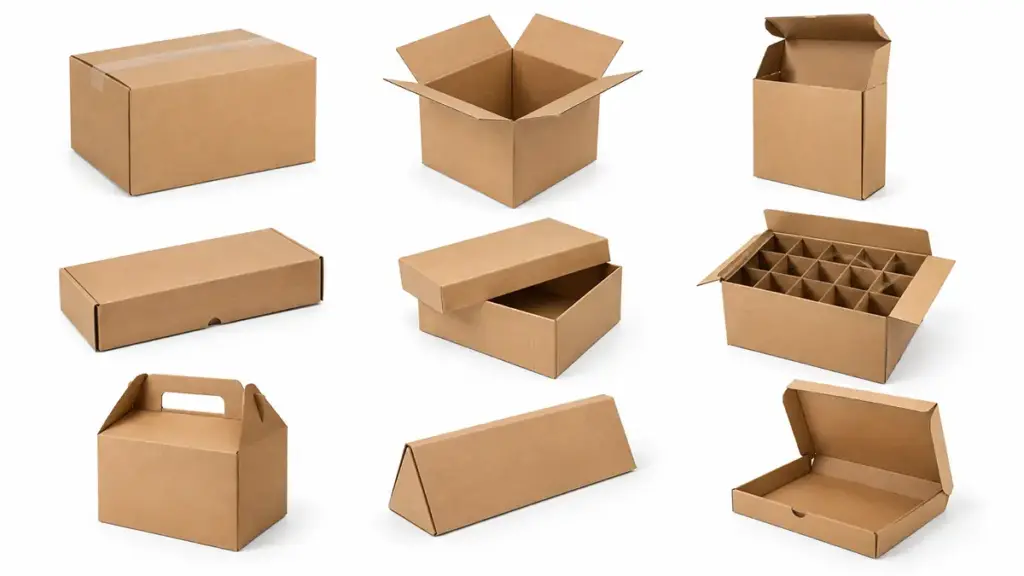
- Cartones plegables (Embalaje secundario): Simple paperboard boxes range from $0.10 a $1.50 por unidad, while premium decorative finishes push specialty cartons up to $3.00.
- Rigid Setup Boxes: Heavy-weight magnetic presentation cases and multi-pack gift boxes cost between $3.00 y $15.00 por unidad, scaling with structural complexity and custom interior inserts.
- Primary Plastic Tubes: Standard plastic twist-up tubes cost $0.15 a $0.80 per unit at typical production scales.
- Primary Metal Casings: Durable aluminum or custom metal alloy tubes run from $0.50 a $5.00+ por unidad, depending on weight and mechanisms.
- Budget Tier Packaging: Combining basic plastic tubes with simple folding cartons keeps total packaging spend between $0.30 y $0.80 por unidad, matching the industry target of 5% a 12% of retail price.
- Mid-Market Packaging: Upgraded plastic or aluminum tubes paired with customized folding boxes average $0.80 a $2.70 por unidad.
- Luxury Tier Packaging: Fully custom metal alloy components housed in high-finish rigid boxes average $4.00 a $13.00+ por unidad.
Tooling Setup and Strategic Cost Drivers
Launches require upfront capital before the first physical unit leaves the assembly line. Tooling, industrial design, and volume-based minimums act as major cost barriers for new beauty lines.
- Custom Injection Molds: Creating a custom-shaped plastic case or proprietary twist mechanism requires multi-part steel molds costing $7,000 a $40,000.
- Printing Plates and Decoration Dies: Basic printing setups, custom foil stamping dies, and cutting tools run between $300 y $2,000 per design run.
- Professional Design Fees: Hiring standard packaging design agencies averages $1,000 a $3,000, while premium cosmetic concepts from specialized firms exceed $5,000.
- Indie Brand First Runs: Startup brands typically spend $1,500 a $3,000 on their initial custom production runs by using stock tube components decorated with custom printing.
- Volume Scaling and MOQs: Minimum order quantities for custom folding cartons start at 500 a 1,000 unidades. Scaling production to 10,000+ units reduces individual packaging costs by 20% a 50% as setup fees amortize.
Factors That Affect Pricing
Lipstick packaging unit economics depend on material selection, tooling amortization, mechanism complexity, and landed supply chain costs rather than simple factory-floor quotes.
Direct Manufacturing and Material Drivers
Before printing a single box, raw material choice and tooling setup establish your baseline price.
- Selección de materiales: Basic plastic runs $0.10 a $0.50 por unidad, aluminum costs $0.80 a $2.50+, and custom luxury shells can exceed $5.00.
- Tooling and Mold Fees: Upfront investments range from $2,000 a $40,000 based on design complexity and cavity requirements.
- Structural Complexity: Refillable mechanisms, cierres magnéticos, and multi-part cases demand tight tolerances and extra manual assembly steps.
- Acabados Decorativos: Custom Pantone color matching, estampado de papel de aluminio, realce, and specialty lacquering add direct, per-run processing costs.
Skipping physical sampling to save on these complex assemblies often leads to alignment failures during final filling.
Volume and Supply Chain Dynamics
Scaled manufacturing alters unit economics, but logistics and storage can quietly destroy margins if you only look at ex-factory quotes.
- Order Volumes and MOQs: High quantities lower unit costs by distributing fixed setup and tooling charges across more pieces.
- Landed Cost Calculations: Final budgets must incorporate ocean or air freight, import duties, and local tariffs.
- Quality Control and Rejects: Inspections, regulatory safety testing, and manufacturing reject rates raise the actual cost per sellable unit.
- Warehousing and Carrying Costs: Storing massive bulk packaging orders before filling ties up working capital and incurs monthly storage fees.
Calculating exact landed costs early keeps the packaging budget within the standard five to twelve percent of retail target.
Elevate Your Brand With Custom Packaging
Folding Carton vs Rigid Box Costs
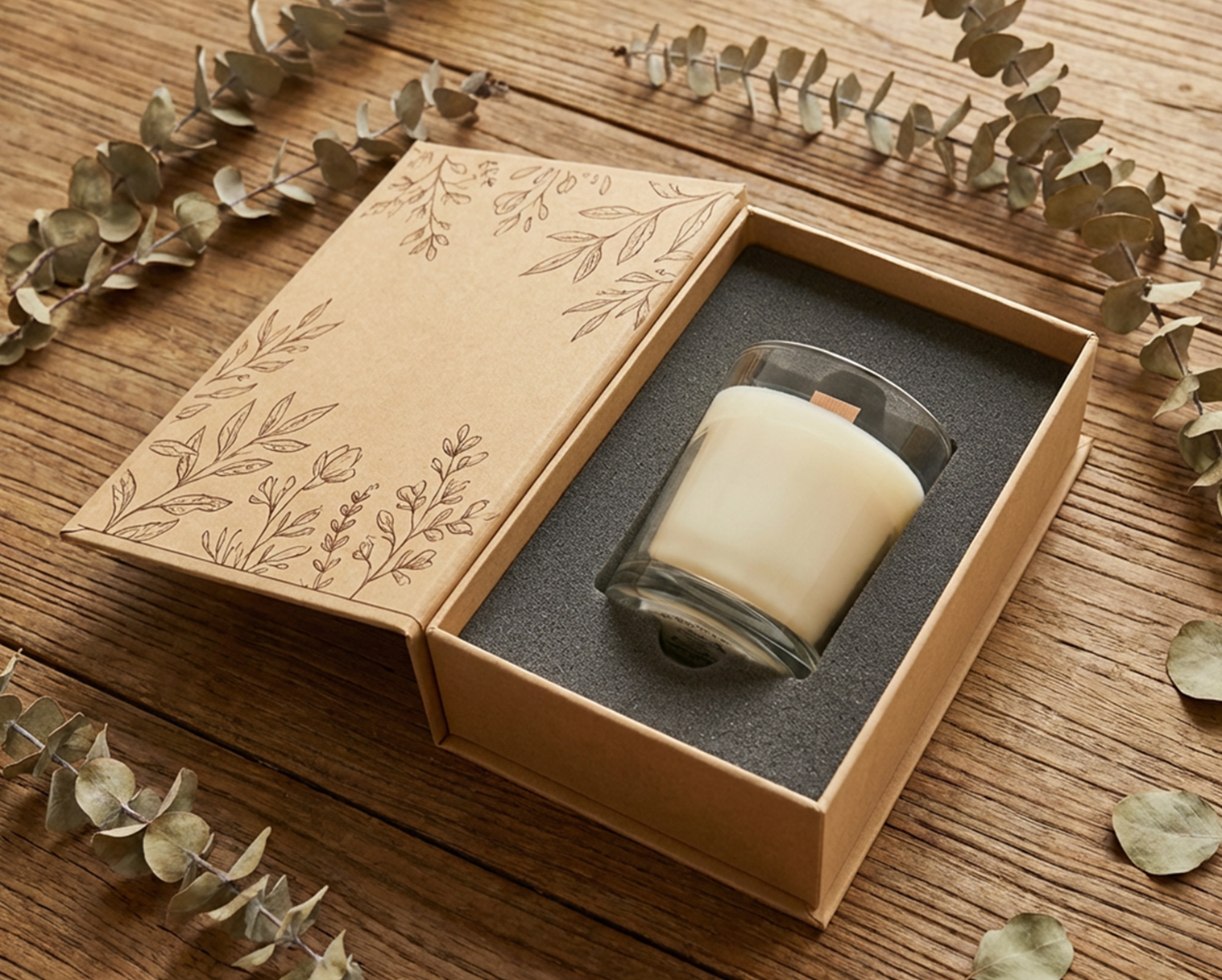
Rigid boxes cost three to six times more than folding cartons, making volume and structural complexity the primary factors in your packaging budget.
Unit Cost Comparisons Across Production Volumes
We analyze unit economics to protect your retail margins. Secondary packaging choices directly dictate your landed cost, especially during initial runs where setup fees hit the hardest.
- Low-Volume Run (250–1,000 units): Folding cartons cost $0.30–$1.50 per unit, while standard rigid boxes run $2.00–$6.00 per unit, scaling up to $12.00 for premium specs.
- Mid-to-High Volume Scale (5,000–10,000+ units): Folding cartons drop to $0.15–$0.50 per unit, while rigid boxes decline to $1.50–$3.50 per unit.
- Standard Price Gap: Rigid boxes maintain a strict three to six times price premium over folding cartons across all volume tiers.
You can use folding cartons to preserve cash flow for high-volume SKUs. Reserve rigid structures for luxury gift sets, kits de influencers, or prestige collections retailing above $35.
Structural Drivers and Logistics Costs
Factory quotes tell only half the story. The physical differences between these two formats create compounding cost layers throughout your entire supply chain.
- Material and Finishes: Folding cartons rely on lightweight 16–18pt paperboard. Rigid boxes require heavy 1,200–1,500 GSM greyboard wrapped in 150 GSM printed paper, escalating raw material costs.
- Labor and Assembly: Folding cartons use high-speed automated gluing lines. Rigid boxes require extensive manual labor to wrap and construct the rigid panels, driving up base production costs.
- Freight and Storage: Manufacturers ship folding cartons flat, maximizing pallet density. Rigid boxes ship pre-assembled, multiplying your freight bills and warehousing storage costs due to dimensional volume.
We recommend evaluating quotes strictly on a landed-cost basis. This ensures freight overhead, warehouse storage fees, and assembly labor do not quietly destroy your retail margins.
Impresión & Finishing Costs
Production-grade lipstick decoration costs between $0.10 y $0.80 por unidad, heavily determined by setup amortization, print methods, and specialty finishes.
Selecting the right print process directly impacts your bottom line. Different substrates require specific printing techniques to ensure ink adhesion and design clarity, which introduces distinct price tiers across components.
Printing Methods and Cost Breakdown by Component
- Screen and pad printing: Applying simple designs or single-color logos directly to plastic or aluminum tubes costs $0.03 a $0.10 por unidad.
- Impresión digital: Producing full-color gradients and short runs on tubes or cartons costs $0.10 a $0.30 por unidad, which bypasses traditional plate setup fees.
- Offset lithography: Standard high-volume runs for folding cartons cost $1.00 a $3.00 por unidad, though dedicated plates run $35 a $60 for each Pantone spot color.
- Custom Pantone color matching: Formulating a signature base container color adds $0.05 a $0.20 per unit compared to using stock black or white plastics.
- Supplemental labeling: Quick-turn shade and ingredient stickers cost $0.03 a $0.05 por unidad, allowing you to bypass full packaging print setups.
Acabados Decorativos, Tooling Fees, and Optimization Strategies
Specialty embellishments elevate shelf presence but add production steps. Amortizing the upfront tooling costs of these finishes requires careful volume planning.
- Protective and tactile coatings: Standard varnishes add under $0.05 por unidad, whereas premium soft-touch laminates add $0.04 a $0.08 por unidad.
- Foil stamping and embossing: Adding metallic foil accents costs $0.10 a $0.50 por unidad, while sculptural embossing adds $0.20 a #0.60 por unidad.
- One-time tooling and setup: Creating physical screen, plate, and die setups costs $200 a $1,000, which drastically increases the unit cost of low-volume production runs.
- Component metalization: Electroplating or anodizing aluminum casings to achieve a mirror finish adds a $0.20 a $0.60 per unit premium over raw plastic.
- Actionable cost-reduction tactics: Group multiple shades under a single generic carton design utilizing shade-specific stickers, select CMYK print setups over multi-spot plates, and limit premium foil coverage to high-impact areas.
Cantidad mínima de pedido & Volume Discounts
Sourcing custom lipstick packaging requires balancing primary component MOQs with secondary carton runs to protect cash flow and minimize upfront tooling liabilities.
MOQ Standards for Components, Embalaje secundario, and Shade Ranges
Sourcing lipstick packaging requires coordinating multiple production lines. Each element—from the outer box to the internal twist mechanism—operates on its own minimum run requirements. Managing these distinct manufacturing baselines prevents supply chain bottlenecks during color-matching phases.
- Standard plastic tubes: Require 100 a 500 units for stock catalog designs, while fully custom molds demand 2,000 a 5,000 pieces per run.
- Secondary cardboard packaging: Averages MOQs between 500 y 3,000 units depending on specialty finishes and die-cut complexity.
- Per-shade requirements: Dictate 500 a 1,000 pieces for standard tubes, scaling up to 5,000 units per shade for custom designs.
- Order consolidation: Allows mixed shades within a single batch run, though adding new colors increases total MOQ by 20% a 35% due to machinery line cleaning.
Strategic Cost Management and Volume Discount Optimization
Controlling unit economics depends on how you scale production. Upfront planning determines whether your gross margins can survive the initial launch phase, especially when balancing raw material costs against transit delays.
- Unit price tiers: Drop significantly across tiers, moving from $1.50 a $3.00 for low volumes down to $0.70 a $1.50 for runs over 1,000 unidades.
- Material choices: Drive minimum limits, where basic plastic runs $0.30 a $1.20 and luxury metal shells cost up to $5.00 with much higher volume demands.
- Component consolidation: Using the same core tube structure across different lines maximizes volume discounts while utilizing unique labels or outer boxes for variety.
- Phased rollouts: Minimize initial financial risks by using stock packaging for trial runs before transitioning to custom tooling at higher volumes.
- Landed cost calculations: Must account for a 12% inventory buffer and 20-week total lead times to balance volume savings with cash flow constraints.
Smart operators avoid committing to proprietary molds on day one. By standardizing the core hardware, you can channel your capital into premium finishes or secondary cartons that define the brand on the shelf without draining your launch budget.
Diseño, Muestreo & Tooling Costs
Custom lipstick launches require balancing front-loaded design, muestreo, and high-complexity tooling costs to prevent margin erosion before mass production starts.
Upfront Design and Physical Sampling Expense Structures
Skipping structural verification steps in cosmetic packaging leads to high defect rates during automated filling. Upfront design phase costs depend heavily on whether you hire solo freelancers or full-service cosmetic agencies.
- Structural Packaging Design: Independent creators charge $71 a $214 for structural industrial designs, while professional packaging design firms command $286 a más $1,143 per custom lipstick shape.
- Graphic and Dieline Setup: Freelancers charge $71 a $300 for basic layout services, while specialized agencies charge up to $2,000 for comprehensive artwork packages.
- Silicone Prototyping Molds: Building a silicone prototype mold costs $214 a $500, with factories charging an additional $7 a $17 per physical sample for early-stage structural evaluation.
- Pre-Production Physical Samples: Sourcing physical samples from the final production mold costs $100 a $500 per SKU to verify critical mechanics, custom colors, and closure acoustics.
Physical sampling remains a non-negotiable step. Brands must test the twist-up mechanism, bullet retention, and cap-click feel in their hands before committing capital to a full production run.
Production Tooling Costs and Mold Customization Economics
Tooling represents the largest non-recurring engineering expense for bespoke lipstick lines. Custom physical geometry requires multi-part steel molds built to withstand hundreds of thousands of injection cycles.
- Steel Injection Molds: Private mold sets for custom outer shells and inner twist mechanisms cost between $10,000 y $28,571 based on cavity count and mechanical complexity.
- Secondary Carton Tooling: Cutting dies cost $300 a $500, alongside flexographic print plates pricing at $150 a $2,000 per color channel.
- Mold Amortization Break-Even: A $714.29 custom mold breaks even at 16,667 units when compared against a stock tube premium of $0.04 por unidad.
Amortizing these fixed costs across your initial order volume is the only way to find your true margin. You must factor in design, tooling, setup, and sampling costs to calculate the actual landed cost per finished lipstick unit.
Envío & Import Costs
Calculate your true landed costs by factoring in freight, duties, and trucking. Planned ocean runs keep shipping under $0.50 por unidad, while emergency air spikes up to $2.00.
Freight Modes and Per-Unit Shipping Cost Breakdowns
Evaluating your packaging budget on factory quotes alone will ruin your margins. You must calculate the actual landed cost to understand your true unit economics before going to market.
- Landed Cost Formula: Sum international ocean or air freight, port handling, customs brokerage, and domestic trucking, then divide by the total ordered units.
- Ocean Freight Budget: Allocate $0.05 a $0.50 por unidad. This remains the most economical shipping method for high-volume production.
- Emergency Air Freight Rates: Budget $0.50 a $2.00 por unidad. Use this option only to protect a fixed launch date against production delays.
Relying on emergency air transport can completely wipe out your profit margins. Secure your profits by building a robust logistics plan early in your timeline.
Lead Times, Customs Clearance, and Sourcing Strategies
Sourcing cosmetic packaging requires balancing unit costs against transit times and supply chain risks. Your choice of origin dictates your entire retail launch calendar.
- Import Lead Time: Plan for a 12-to-18-week window. This timeframe covers up to 12 weeks of factory production and 6 weeks of ocean transit and customs clearance.
- Supplier Turnaround Times: Compare domestic suppliers offering 7-to-10-day turnarounds with built-in freight against overseas vendors with lower base rates but higher transit risks.
- Customs Documentation: Hire licensed customs brokers to submit precise Harmonized System (HS) codes for lipstick components and primary containers.
Incomplete customs paperwork leads to costly port storage fees and launch delays. Partnering with a specialized broker removes transit volatility and keeps your inventory moving.
How to Reduce Packaging Costs Without Sacrificing Quality
Smart beauty brands protect margins by swapping rigid boxes for right-sized folding cartons, standardizing components, and limiting high-cost finishes to high-impact branding zones.
Excessive packaging drains profits at every stage of the cosmetic supply chain. Oversized boxes drive up material bills, increase warehouse storage fees, and trigger punishing dimensional-weight shipping charges. Brands can protect both their margins and their shelf presence by optimizing their structural choices.
Structural Simplification and Material Optimization
- Right-Sized Secondary Cartons: Design boxes to fit the primary lipstick tube tightly, eliminating empty space to lower cardboard volume and cut dimensional-weight shipping fees.
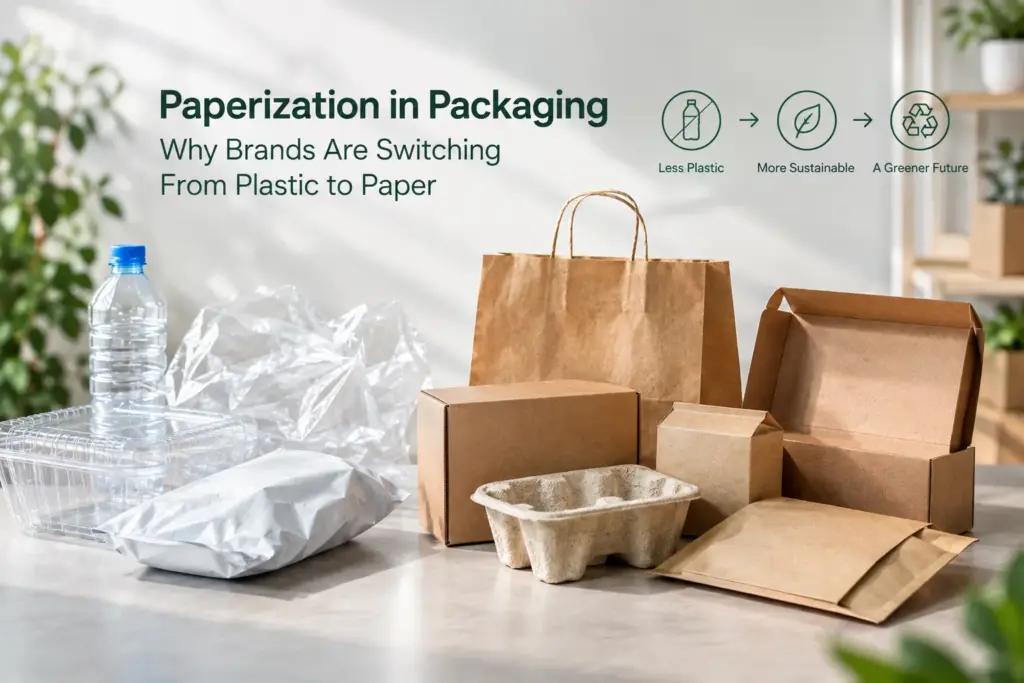
- Folding Paperboard Cartons: Swap rigid setup boxes (which cost $3.00 a $15.00 por unidad) for high-grade folding carton paperboard ($0.15 a $1.50 por unidad) to preserve a premium, velvety hand-feel at a lower price point.
- Single-Piece Structural Layouts: Replace complex multi-piece packaging configurations with pre-glued, single-piece structural designs to minimize manual assembly time on the production line.
- Molded Paperboard Inserts: Utilize engineered paperboard or molded pulp inserts instead of custom plastic or foam dividers to drop component costs and boost your eco-friendly credentials.
Standardized packaging components do not just lower unit prices; they simplify your entire inventory system. Shifting toward modular structures ensures you spend your budget on the product itself rather than complex structural engineering.
Production Standardization and Printing Efficiency
- Master Carton Standardization: Establish a single master box size across all color cosmetics, using low-cost external labels, stamps, or color swatches to differentiate the shades inside.
- Strategic Print Methods: Choose digital printing to avoid plate charges on low-volume seasonal launches, and switch to traditional offset printing to lower unit costs once runs exceed 1,000 unidades.
- Targeted Finishing Accents: Limit high-cost premium effects like hot foil stamping, realce, or spot UV to critical branding logos instead of covering the entire box surface.
- Vendor Order Consolidation: Group your packaging orders with a single specialized packaging manufacturer to unlock tiered volume discounts and secure predictable, long-term pricing agreements.
Preguntas frecuentes
How much does custom lipstick packaging cost on average?
Custom outer boxes typically range from $0.10 a $1.00+ per unit at wholesale. Standard custom retail paperboard cartons average about $0.40 a $0.55 per unit for orders of 500 a 1,000 unidades. For fully custom molded lipstick tubes or casings, upfront tooling fees add $12,000 a $25,000 per mold, with unit prices between $1.00 y $5.00+ depending on the materials and mechanism.
What are the typical minimum order quantities for custom lipstick packaging?
Minimum order quantities vary based on your customization level. Stock lipstick tubes with custom labels or simple direct printing usually require 300 a 500 pieces per shade. Fully custom-molded lipstick casings typically start at 2,000 a 5,000 unidades por diseño. Folding cartons and secondary packaging boxes have lower thresholds, with many suppliers accepting custom orders starting at 100 a 250 cajas.
How much do physical packaging samples cost?
A small run of 50 a 100 custom printed paperboard boxes typically costs between $100 y $250 total, which is roughly $1.50 a $2.50 per box due to setup overhead. Molded plastic or metal component samples require building the industrial mold first, which demands a major upfront investment of $12,000 a $25,000 before you can receive physical prototypes.
How long does custom lipstick packaging production take?
Standard custom box production takes 3 a 4 weeks once we approve the design files. Sourcing decorated stock tubes takes 4 a 8 semanas. If you require fully custom-molded lipstick tubes, the process takes 10 a 16 weeks because the factory must first engineer and test the new mold.
Is rigid setup packaging worth the premium price tag?
Rigid packaging is generally worth the cost only if your lipstick retails for $35 o más, where the premium unboxing experience supports the retail margin. Standard rigid setup boxes cost $3.00 a $15.00 por unidad, while folding paperboard cartons cost only $0.50 a $3.00 por unidad. For mid-range or mass-market lipsticks, folding cartons with premium finishes like soft-touch lamination or spot UV provide a luxury feel at a fraction of the cost.
How much does shipping and freight add to the total cost?
Under standard ocean or ground shipping schedules, freight adds a predictable $0.05 a $0.50 por unidad. But if production delays or fixed launch deadlines force you to use expedited air freight, shipping costs can jump to $0.50 a $2.00 por unidad, which can quickly erase your product profit margins.
Can startups order small quantities of custom lipstick packaging?
Sí, startups can order small quantities by combining stock packaging tubes with custom-printed secondary boxes. While you cannot order custom-molded casings at low volumes, you can easily secure 300 a 500 stock tubes with custom labels, alongside 100 a 250 printed folding cartons to complete your retail presentation.
How can we reduce our overall packaging expenses?
To cut costs, choose standard plastic tubes over metal cases and replace rigid setup boxes with folding cartons. You can also minimize the outer box dimensions to lower shipping volume, standardize your box size across multiple shades, and limit expensive finishes like foil stamping to small, high-impact areas like your brand logo.
Pensamientos finales
mientras barato, unverified components offer lower upfront costs, sourcing precision-engineered lipstick mechanisms is the only way to safeguard your brand against leakage and mechanical failures during automated assembly. Protecting your retail margins requires balancing custom visual appeal with calculated logistics and tooling amortization. A strategic approach to your packaging components ensures your product stands out on retail shelves without draining your launch capital.
Do not guess on structural quality—verify the exact click-closure and material weight in your hands before starting mass production. We recommend ordering a physical sample kit to test our decorative finishes and mechanism tolerances firsthand. Contact our procurement specialists today to discuss your target unit costs and secure a detailed landed-price quote.