As businesses worldwide look for more responsible ways to package their products, eco friendly packaging has become an important consideration for brands, retailers, and manufacturers. Packaging is no longer judged only by its appearance and protective performance. Material sourcing, production efficiency, transportation, and end-of-life disposal all influence its environmental impact.
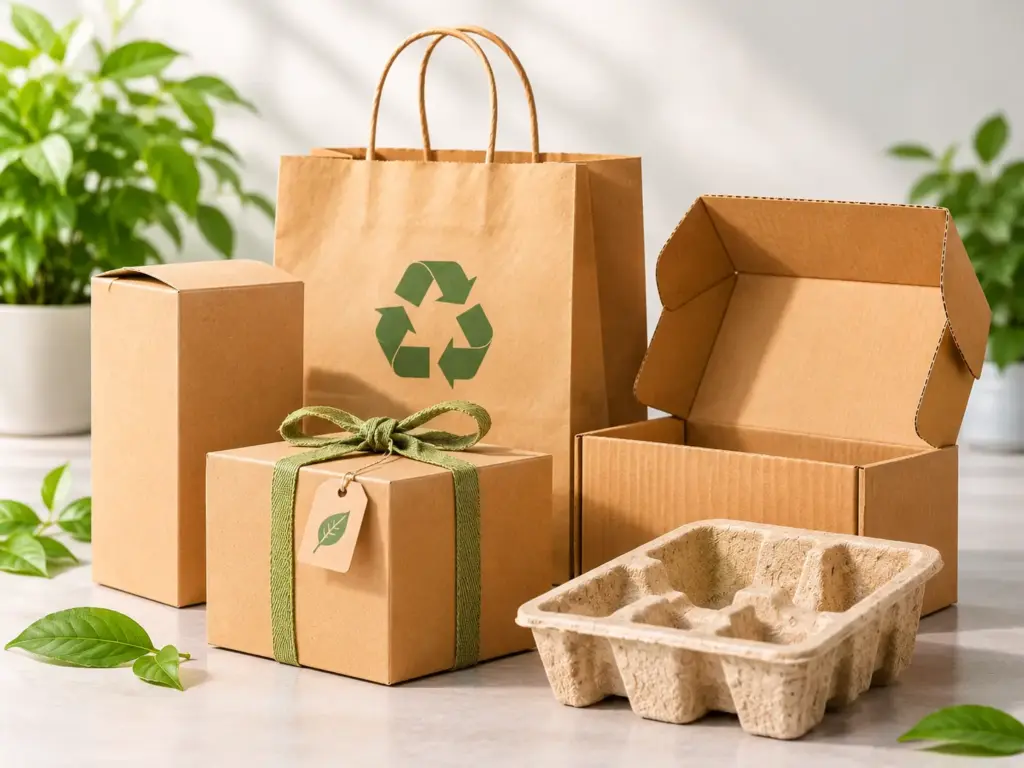
Paper-based packaging offers versatile solutions for businesses seeking to reduce unnecessary plastic use while maintaining product protection and brand presentation. From recyclable folding cartons and corrugated shipping boxes to kraft paper bags and molded pulp inserts, different paper packaging formats can serve different product and logistics requirements.
But choosing sustainable packaging involves more than simply replacing plastic with paper. The right solution depends on material composition, structural design, product protection, manufacturing processes, and local recycling infrastructure.
In this guide, PACKCCP explores the main types of eco-friendly packaging, compares common materials, explains important environmental claims, and shares practical considerations to help businesses select the right paper packaging for their products.
1. What Is Eco-Friendly Packaging?
Eco-friendly packaging refers to packaging designed to reduce environmental impacts throughout its life cycle, from raw material sourcing and manufacturing to transportation, use, and disposal.
Rather than relying on a single environmental feature, responsible packaging considers several factors:
- Responsible Material Sourcing: Using responsibly sourced or recycled raw materials.
- Material Efficiency: Reducing unnecessary packaging components and excess material.
- Recyclability: Designing packaging that can be collected, sorted, and processed through available recycling systems.
- Production Efficiency: Minimizing material waste and improving manufacturing processes.
- Product Protection: Preventing damage during storage and transportation to avoid unnecessary product loss.
Paper packaging is one option within the broader eco-friendly packaging market. Its environmental performance depends on the paper source, manufacturing process, coatings, adhesives, printing, and disposal conditions.
For businesses considering a transition toward more responsible packaging, explore PACKCCP’s sustainable paper packaging solutions.
2. Types of Eco-Friendly Packaging Materials
Choosing the right material is one of the most important decisions when developing sustainable packaging. Different materials offer different levels of strength, flexibility, appearance, and environmental performance.
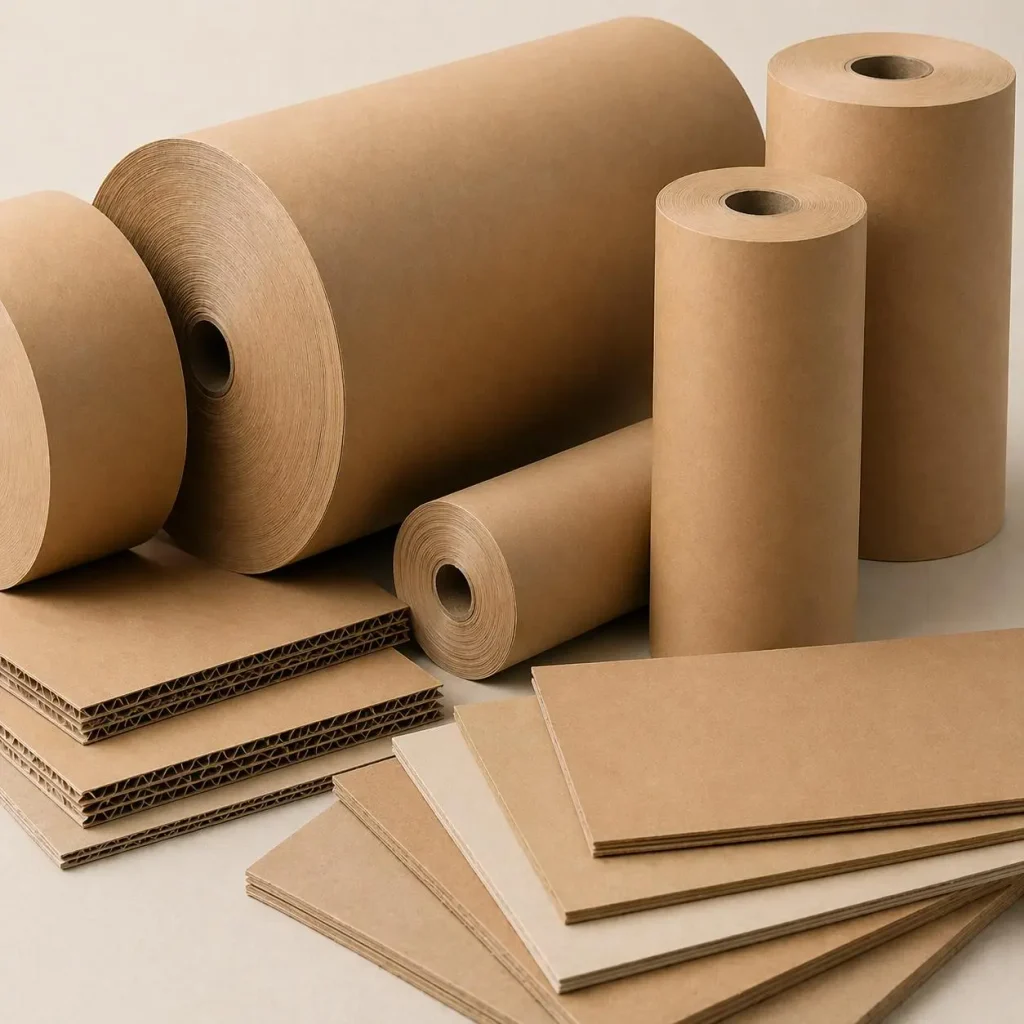
2.1 Kraft Paper
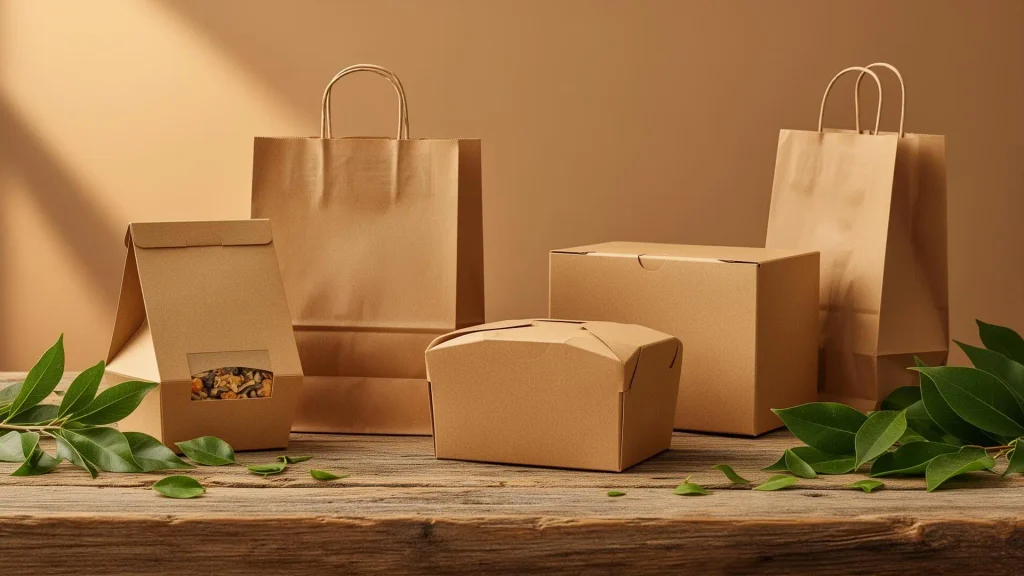
Kraft paper is widely used in retail, food service, and e-commerce packaging. Its natural brown appearance makes it popular among brands looking for a simple, understated packaging style.
Key characteristics:
- Available in natural brown and bleached options.
- Suitable for paper shopping bags and mailer packaging.
- Offers a distinctive natural appearance.
- Can be sourced with recycled or responsibly sourced fiber options.
Kraft paper is particularly useful for brands that want to combine practical packaging with a natural visual identity.
2.2 Paperboard
Paperboard is a versatile material used for folding cartons, product boxes, and retail packaging.
It offers a relatively smooth printing surface, making it suitable for detailed graphics, product information, and branded packaging.
Common applications include:
- Cosmetic product boxes.
- Pharmaceutical cartons.
- Food packaging cartons.
- Consumer electronics packaging.
- Retail product packaging.
When selecting paperboard, businesses should consider its thickness, recycled content, structural requirements, and any additional coatings.
2.3 Corrugated Board
Corrugated board consists of fluted paper material between liner sheets. Its structure provides cushioning and stacking strength, making it suitable for shipping and transportation.
Common applications include:
- E-commerce mailer boxes.
- Shipping cartons.
- Protective product inserts.
- Heavy-duty transport packaging.
Different flute profiles and board combinations provide different levels of protection. Choosing the correct structure can help avoid unnecessary material use while maintaining adequate performance.
2.4 Recycled Paper
Recycled paper is produced using recovered paper fibers. It can help reduce reliance on virgin fiber, depending on the source and processing requirements.
It is commonly used in:
- Shipping cartons.
- Paperboard packaging.
- Protective inserts.
- Secondary packaging.
The appropriate recycled content depends on strength requirements, printing quality, color consistency, and product application.
2.5 Molded Pulp
Molded pulp packaging is produced by forming pulp fibers into specific shapes using molds.
It is particularly useful when products need custom protective structures.
Typical applications include:
- Electronics protection.
- Glass bottle packaging.
- Cosmetic product inserts.
- Fragile product transportation.
- Protective trays and dividers.
Molded pulp can be an alternative to certain plastic foam inserts, although the final environmental performance depends on material composition and manufacturing requirements.
3. Popular Types of Sustainable Paper Packaging
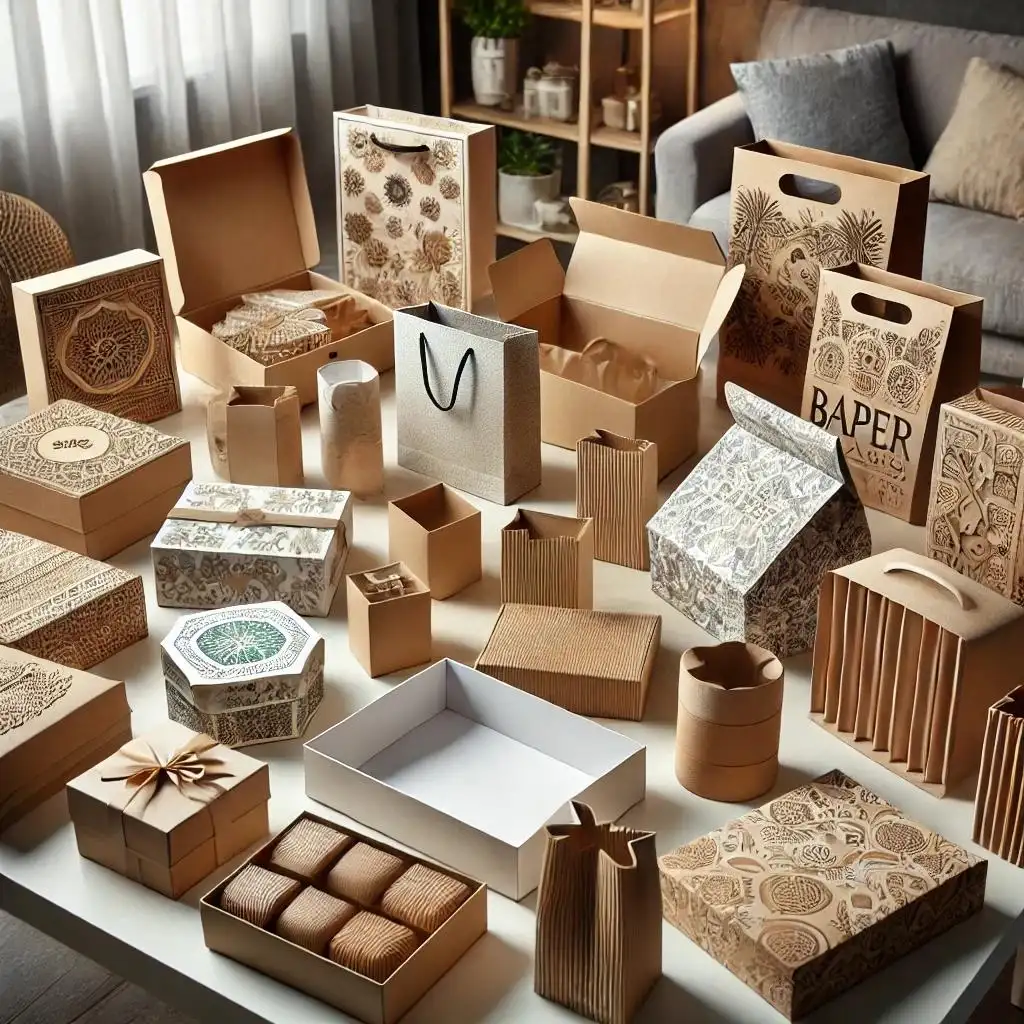
Paper packaging is available in many structures and styles. Each format serves different purposes, from retail presentation to shipping protection.
3.1 Folding Cartons
Folding cartons are lightweight paperboard boxes commonly used for consumer products.
They are particularly suitable for cosmetics, skincare, healthcare, food, and retail applications.
Their advantages include:
- Flexible structural designs.
- High-quality printing capabilities.
- Efficient storage and transportation before assembly.
- Multiple finishing and customization options.
For brands looking for lightweight and customizable packaging, explore PACKCCP’s paper box solutions.
3.2 Corrugated Packaging
Corrugated packaging is designed to protect products during handling, warehousing, and transportation.
Its fluted structure provides cushioning and stacking performance, making it suitable for e-commerce and industrial applications.
Common formats include mailer boxes, shipping cartons, and custom protective inserts.
The right corrugated structure should be selected according to product weight, fragility, shipping conditions, and stacking requirements.
3.3 Kraft Paper Bags
Kraft paper bags are widely used in retail, fashion, food service, and gift packaging.
They provide a practical alternative to many conventional plastic shopping bags and offer a natural surface for brand printing.
Businesses can customize:
- Bag dimensions.
- Paper weight.
- Handle styles.
- Printing colors.
- Surface finishes.
For customized retail and shopping bag projects, view PACKCCP’s custom paper bag solutions.
3.4 Rigid Paper Boxes
Rigid boxes are made from thicker paperboard structures and are commonly used for premium products.
Although they generally require more material than folding cartons, their durability and presentation make them suitable for products where protection and perceived value are important.
Popular styles include:
- Magnetic closure boxes.
- Drawer boxes.
- Lid-and-base boxes.
- Book-style gift boxes.
- Folding rigid boxes.
Brands can also explore paper-based inserts and simplified finishing options to improve material efficiency.
Explore PACKCCP’s custom rigid box solutions.
3.5 Molded Pulp Packaging
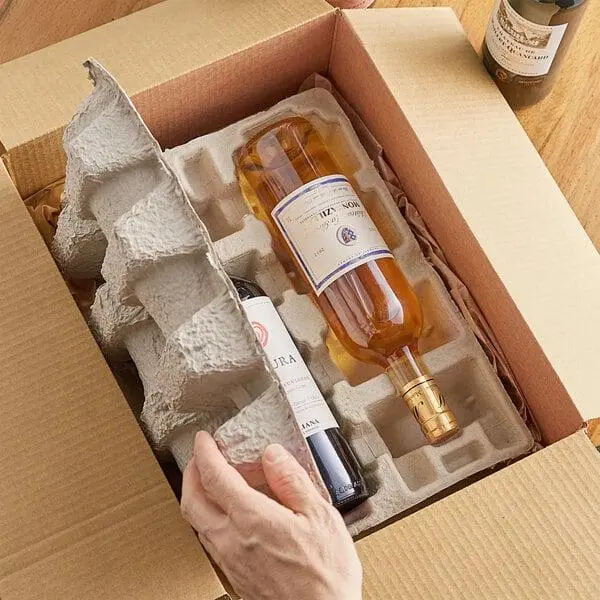
Molded pulp inserts provide a custom-shaped protective solution for products that need additional cushioning.
They can be designed around specific product dimensions to reduce movement inside the outer package.
For suitable applications, molded pulp can help replace conventional foam or plastic inserts with a fiber-based alternative.
4. Key Benefits of Eco-Friendly Paper Packaging
Switching to paper-based packaging can provide several practical and branding benefits when the materials and structures are selected appropriately.
4.1 Supports Plastic Reduction
Paper-based packaging can replace certain single-use plastic components in retail, shipping, and product presentation.
Examples include:
- Replacing plastic shopping bags with paper bags.
- Using corrugated inserts instead of selected plastic cushioning components.
- Replacing plastic product cartons with folding cartons.
- Using molded pulp trays for suitable protective applications.
However, not every plastic component has an appropriate paper substitute. Moisture resistance, product safety, and transportation requirements must be considered.
4.2 Offers Renewable Material Options
Paper can be manufactured using wood fibers from responsibly managed forests as well as recovered paper fibers.
Businesses can evaluate FSC-certified paper options and recycled paper materials according to their sourcing and sustainability objectives.
4.3 Supports Brand Identity
Packaging is often one of the first physical interactions customers have with a product.
Paper materials offer a wide range of textures, printing effects, structures, and finishing options.
Brands can use kraft textures, minimalist graphics, embossed details, and custom structures to communicate their identity without relying on excessive decorative elements.
4.4 Provides Versatile Packaging Applications
Paper packaging can serve many industries, including:
- Beauty and personal care.
- Apparel and fashion.
- Food and beverage.
- Jewelry and accessories.
- Electronics.
- Healthcare.
A carefully selected paper structure can provide the right balance of appearance, protection, and functionality.
5. Biodegradable vs. Compostable vs. Recyclable Packaging
These three terms are frequently used in sustainable packaging discussions, but they do not mean the same thing.
Understanding the differences helps businesses avoid misleading environmental claims.
5.1 Biodegradable Packaging
Biodegradable packaging refers to materials that can be broken down by microorganisms under suitable environmental conditions.
However, the decomposition process depends on factors such as temperature, moisture, oxygen, and material composition.
A biodegradable claim should specify the conditions and supporting evidence rather than suggesting that packaging will automatically disappear in any disposal environment.
5.2 Compostable Packaging
Compostable packaging is designed to break down into usable compost under specified composting conditions.
Some materials require industrial composting facilities and may not be suitable for home composting.
Businesses should verify:
- Whether the complete package is compostable.
- Whether coatings, adhesives, and printing materials affect performance.
- Whether suitable composting facilities are available.
- Whether relevant testing or certification supports the claim.
5.3 Recyclable Packaging
Recyclable packaging can be collected and processed into materials for reuse through appropriate recycling systems.
Paper-based packaging is commonly recyclable, but coatings, laminations, windows, adhesives, and mixed-material components can affect recyclability.
Simple structures and fewer mixed materials can make recycling easier.
For further guidance, businesses can consult the European paper-based packaging recyclability guidelines.
The US Federal Trade Commission also provides guidance on environmental marketing claims, including recyclable, biodegradable, and compostable claims.
6. Paper Packaging vs. Plastic Packaging: Which Is Better?
Paper and plastic packaging both have advantages and limitations. The right choice depends on the product, supply chain, packaging performance, and disposal infrastructure.
| Comparison | Paper Packaging | Plastic Packaging |
|---|---|---|
| Material sources | Virgin or recycled fiber | Often fossil-based or recycled polymers |
| Printing | Excellent surface for many print applications | Depends on material and process |
| Moisture resistance | Requires suitable design or treatment | Often naturally strong |
| Product protection | Depends on board structure and inserts | Depends on polymer and format |
| Recyclability | Depends on coatings and local systems | Depends on polymer type and local systems |
| Weight | Varies by structure | Often lightweight |
| Branding | Natural and premium appearance options | Wide range of colors and finishes |
There is no universal answer that paper is always better than plastic.
For example, a lightweight plastic package may use less material or provide better moisture protection in a particular application. On the other hand, a well-designed paper package may offer a suitable alternative where plastic is unnecessary.
The best decision should consider the complete packaging system rather than one material characteristic.
7. How to Choose the Right Eco-Friendly Packaging for Your Business
Selecting the right packaging requires balancing environmental objectives with product requirements and commercial considerations.
Here are six factors to evaluate before starting a packaging project.
7.1 Understand Your Product Requirements
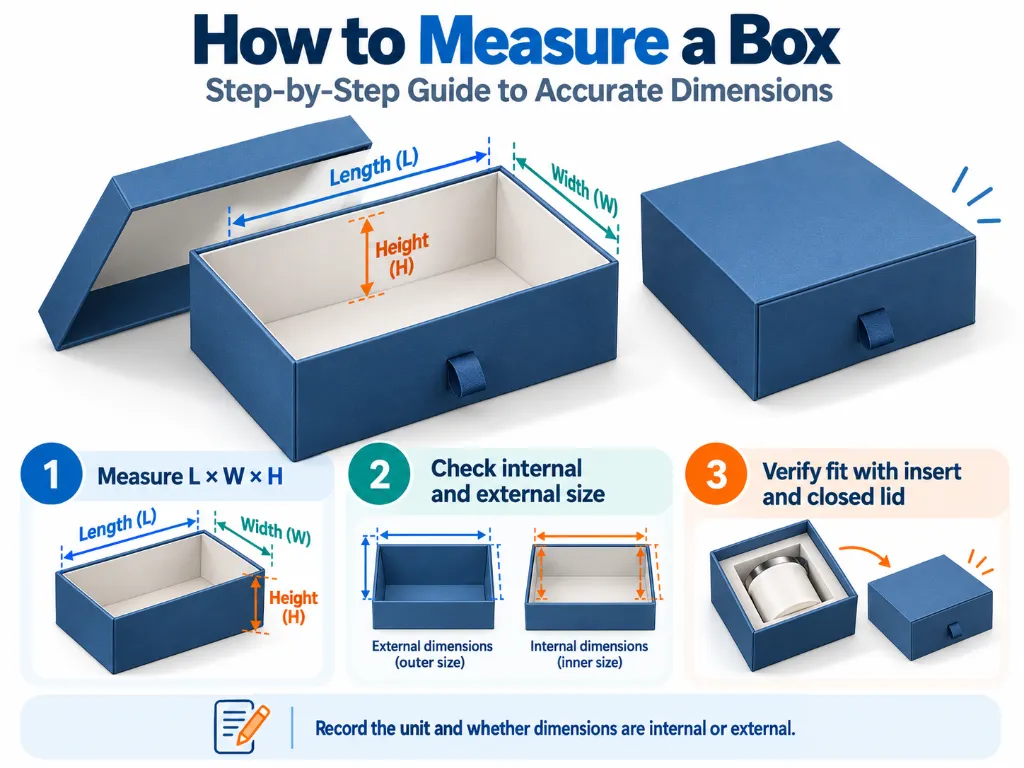
Consider the product’s dimensions, weight, fragility, moisture sensitivity, and storage conditions.
A cosmetic product may need a printed folding carton, while fragile electronics may require a corrugated box with a custom protective insert.
7.2 Select Suitable Materials
Evaluate virgin paper, recycled paper, kraft paper, paperboard, and corrugated board.
The selected material should meet your structural and visual requirements without unnecessary material use.
7.3 Optimize Packaging Structure
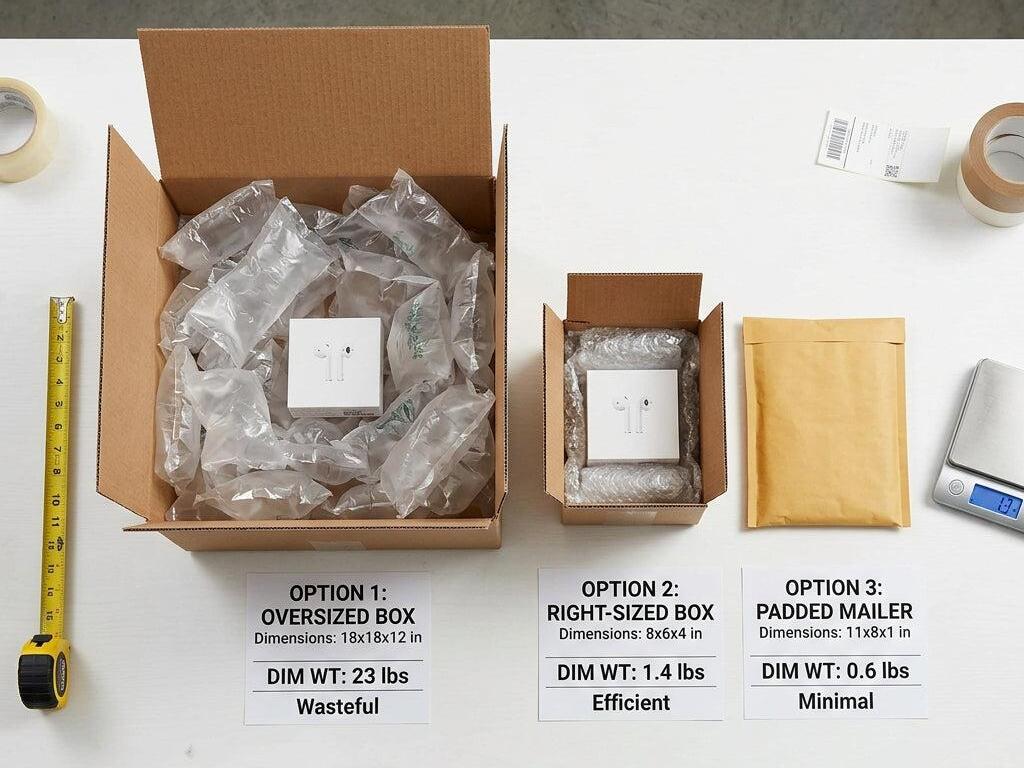
A well-designed package should fit the product properly.
Excessive packaging increases material consumption and transportation volume. Insufficient protection can result in damaged products and additional waste.
Structural optimization helps balance material efficiency with product protection.
7.4 Consider Printing and Finishing
Printing and finishing influence both packaging appearance and material compatibility.
Consider:
- Water-based coatings.
- Soy-based inks.
- Minimal printing coverage.
- Appropriate surface treatments.
- Reduced use of mixed-material components.
Not every finish is suitable for every recycling system, so material compatibility should be evaluated before production.
7.5 Evaluate Supplier Capabilities
A reliable packaging supplier should be able to support material selection, structural design, sampling, production, and quality inspection.
Ask potential suppliers about:
- FSC-certified material availability.
- Recycled paper options.
- Material testing documentation.
- Production waste management.
- Quality control procedures.
- Export and compliance support.
7.6 Balance Cost and Performance
Sustainable packaging does not necessarily mean choosing the most expensive material.
Consider the total project cost, including material consumption, production efficiency, transportation, storage, and potential product damage.
A properly optimized structure can help control costs while meeting packaging requirements.
8. How PACKCCP Supports Sustainable Paper Packaging
At PACKCCP, we believe that responsible packaging starts with the right combination of materials, structural design, and manufacturing processes.
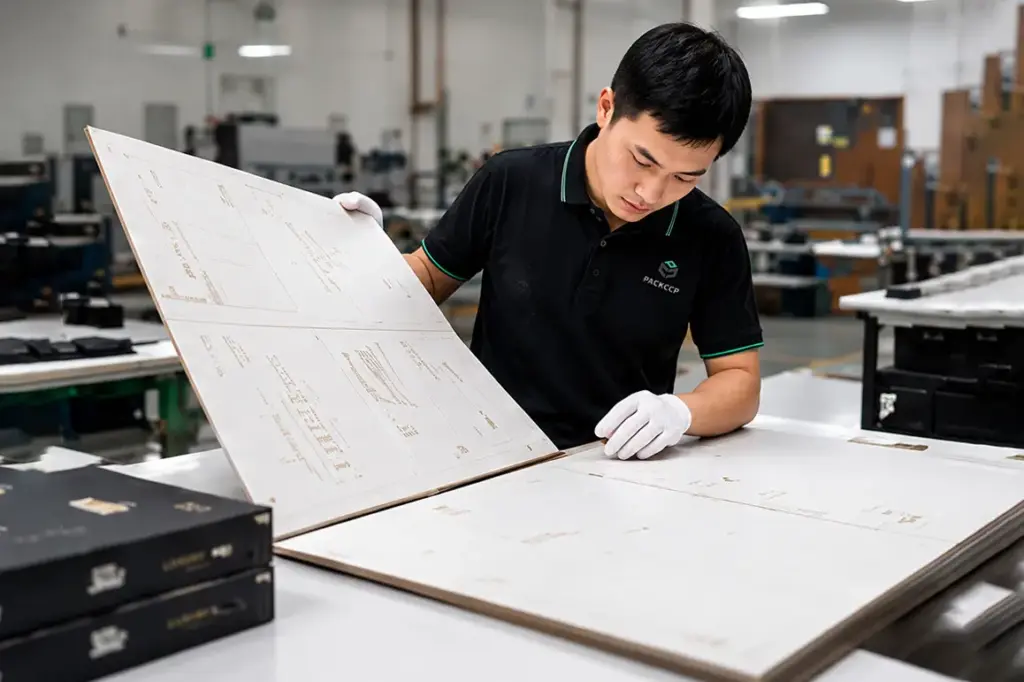
Established in 1996, PACKCCP specializes in custom paper packaging solutions for global brands across multiple industries.
Our packaging capabilities include:
- Custom folding cartons.
- Corrugated packaging and mailer boxes.
- Rigid gift boxes.
- Kraft paper shopping bags.
- Paper-based protective inserts.
- Molded pulp packaging solutions.
We support different sustainability-focused packaging requirements through FSC-certified paper options, recycled materials, suitable printing solutions, and recyclable structure development.
Our approach focuses on four key areas.
Responsible Material Selection
We help businesses evaluate paper materials according to product requirements, appearance, strength, and sourcing preferences.
Structural Optimization
Our packaging design process considers product dimensions, protective performance, material usage, and transportation efficiency.
Efficient Manufacturing
Production planning and quality control help improve consistency and reduce unnecessary rework and material waste.
Documentation and Compliance Support
Depending on project requirements, we can support material information, FSC-related documentation, and relevant testing reports.
Learn more about our sustainability initiatives and certifications and compliance support.
9. Frequently Asked Questions About Eco-Friendly Packaging
Paper packaging can be an environmentally responsible option when it uses responsibly sourced or recycled materials, efficient structures, and appropriate end-of-life solutions. Its actual environmental impact depends on the complete life cycle.
No. Many paper-based packages can be recycled, but coatings, laminations, adhesives, plastic windows, and mixed materials may affect recyclability. Local recycling facilities also determine what can actually be processed.
Biodegradable materials break down through biological processes under suitable conditions. Compostable materials must meet additional requirements for breaking down into usable compost safely and within an appropriate timeframe.
Kraft paper can be a practical option for paper bags, boxes, and other packaging applications. Its sustainability depends on fiber sourcing, recycled content, manufacturing, and disposal conditions.
Yes. Luxury packaging can incorporate responsibly sourced paper, recycled materials, optimized structures, paper-based inserts, and carefully selected finishes while maintaining premium presentation.
Yes. PACKCCP supports customized paper packaging projects, including folding cartons, corrugated boxes, rigid gift boxes, paper bags, and selected paper-based protective inserts.
Material selection and structural design can be tailored to product requirements and sustainability objectives.
Conclusion: Build Better Packaging with PACKCCP
Eco-friendly packaging is not simply about replacing one material with another. It requires thoughtful decisions about sourcing, structural design, production efficiency, product protection, and disposal.
For brands exploring more responsible packaging solutions, paper-based materials offer a wide range of possibilities, from lightweight folding cartons and kraft bags to protective corrugated boxes and molded pulp inserts.
At PACKCCP, we help global businesses develop customized paper packaging that balances product protection, brand presentation, manufacturing requirements, and sustainability goals.
Looking for the right paper packaging solution for your brand?
Share your product dimensions, packaging requirements, target quantity, and design ideas with our team.
Explore PACKCCP Packaging Solutions or request a custom paper bag quote.
Let’s create packaging that works better for your products and your brand.