صناديق, إدراج & Finishes provides the technical framework for decisions that impact perfume integrity and perceived value. The wrong material choices lead to damaged goods, عوائد مكلفة, and eroded brand equity. It is a technical specification that directly protects your margins.
This analysis benchmarks folding cartons (300-400 جي إس إم) against rigid boxes (1200+ جي إس إم) and evaluates insert materials from high-cushion EVA foam to sustainable molded pulp. We examine the specifications for paperboard, structural engineering, and surface finishes to provide a clear framework for making decisions that protect your product and justify your price point.
Why تغليف العطور Matters
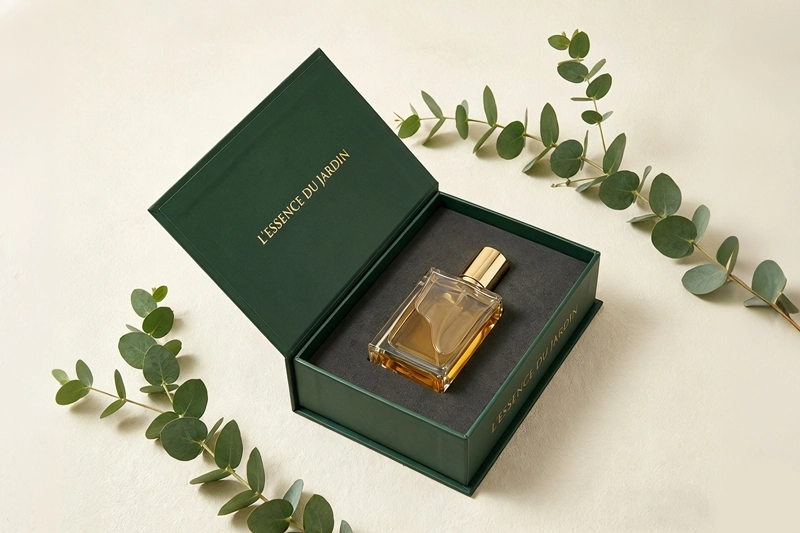
Perfume packaging is more than a box. It’s a technical shield that protects a fragile scent and a strategic tool that makes the first impression, justifying the price.
A Functional Shield for a Delicate Product
A perfume’s formula is chemically fragile. The packaging is a technical barrier designed to preserve the scent’s integrity from the moment it’s filled to when a customer uses it. Without solid packaging, the fragrance you spent months developing can degrade before it’s even opened.
The box and its internal structure work together to control the environment around the bottle. This isn’t just about preventing breakage; it’s about safeguarding the chemical composition of the perfume itself.
- Protection from Light: UV exposure is a killer for fragrances. It oxidizes the formula, which alters the top notes and can cause discoloration and off-odors. Opaque cartons and UV-protective coatings directly block this damage.
- Protection from Air and Shock: A good package minimizes air exposure and physical stress. Air-tight atomizer seals and well-engineered inserts keep the bottle stable, preventing leaks and impacts during shipping. Rigid cartons and die-cut inserts protect the glass from breaking during transport.
- Protection from Temperature: Multi-layer boards and insulating materials help buffer the temperature swings that can destabilize a fragrance.
By controlling these factors, high-quality packaging ensures the perfume performs as intended for years. This builds customer trust and reduces costly returns.
A Strategic Tool for Brand Expression and Sales
Before anyone smells the fragrance, they interact with the box. On a crowded shelf or in a small online thumbnail, the packaging is the primary filter that makes someone stop and look closer. It’s your silent salesperson.
The packaging communicates brand identity and price point in a split second. Shoppers use visual cues—color, الطباعة, مادة, and shape—to decide if a product feels premium, casual, classic, or modern. These choices guide a customer toward the product that feels like it was made “for them.”
This is also where you justify your pricing. Premium materials like rigid board, velvet linings, and high-end finishes like foil stamping or embossing increase the perceived value. A heavy, well-constructed box signals quality and craftsmanship, making a higher price point feel earned. Flimsy packaging does the opposite, cheapening the entire product experience no matter how good the scent is.
Types of Perfume Boxes
Perfume boxes are either cost-effective folding cartons for the mass market or premium rigid boxes for luxury, a choice driven by price point, حماية, وتجربة فتح الصندوق.
Standard كرتونات قابلة للطي
Folding cartons are the workhorse of the fragrance industry. They are essentially what most people picture as a standard box, made from paperboard (عادة 300-400 جي إس إم) that ships flat to the factory and is assembled just before the perfume bottle goes inside. Brands use this style for mass-market, mainstream, and many mid-range fragrances because it’s the most cost-effective option.
The main advantages are efficiency and cost. They are lightweight, easy to print on with high-quality graphics, and take up minimal space in storage and transit. This makes them ideal for high-volume production lines. But they offer less protection against crushing than their premium counterparts. A folding carton almost always relies on a well-engineered internal insert to stop the bottle from breaking.
غالي صندوق جامد Styles
When you move into the luxury and premium fragrance space, you find rigid boxes. These aren’t designed to be folded. They are built from thick, non-bending chipboard or greyboard (often 1200+ جي إس إم) and come pre-assembled. The structure provides serious protection for heavy or fragile glass bottles and gives the packaging a substantial, weighty feel that signals quality and justifies a higher price point.
Within the rigid category, a few key styles are used to create specific unboxing experiences:
- صناديق الإغلاق المغناطيسية: These feature hidden magnets in the lid that create a clean, seamless look and a satisfying “فرقعة” when closed. It’s a common choice for luxury retail because it feels modern and premium.
- صناديق الأدراج: Also called slide boxes, these have an inner tray that slides out of an outer sleeve, often with a ribbon pull. This structure creates a controlled, gradual reveal that adds to the unboxing ritual.
- Shoulder-Neck Boxes: This style uses an internal “shoulder” on the base that the lid fits over. It creates a perfectly flush, clean line between the lid and the base, giving the box a refined, high-end appearance.
- Flip-Top Boxes: Built with a hinged lid, these boxes open like a chest. They are convenient and have a polished look, making them popular for gift sets and special editions.
The choice between these rigid styles depends entirely on the brand story and the kind of tactile experience the brand wants to deliver when the customer first interacts with the product.
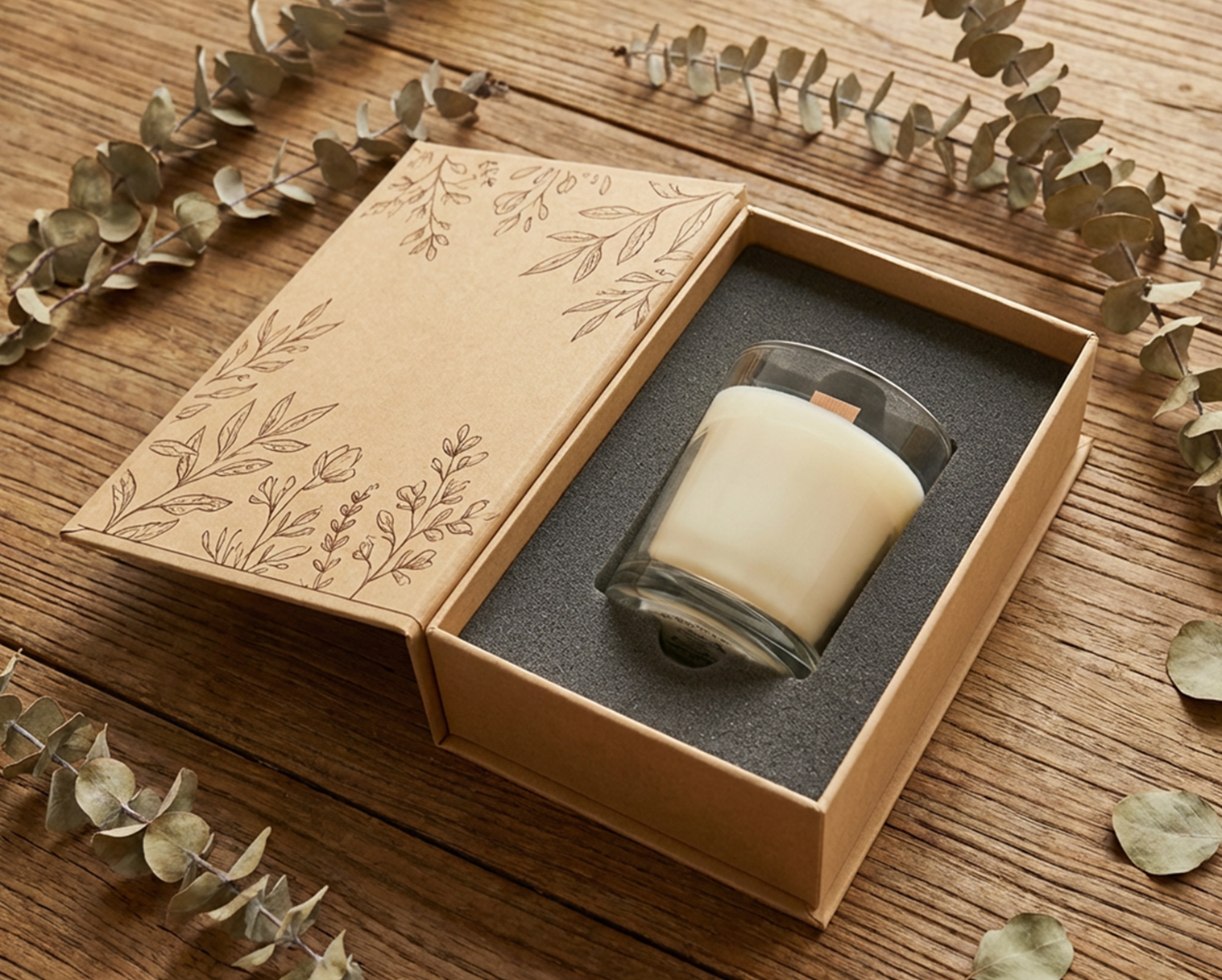
Unbox Excellence: Premium Custom Rigid Boxes
Insert Materials Explained
Choosing an insert is a trade-off. You’re balancing premium protection from EVA foam against the sustainability of molded pulp to fit your brand, bottle, والميزانية.
Common Insert Materials and Their Properties
The insert material is a critical decision that impacts protection, يكلف, and brand perception. Foam options like EVA are the go-to for luxury brands because they provide superior cushioning and a precise, CNC-cut fit for heavy or awkwardly shaped glass bottles. On the other end, paper-based solutions are gaining ground. Molded pulp and die-cut cardboard inserts support sustainability goals by enabling fully recyclable, mono-material packaging. Specialty materials address specific needs. Thermoformed plastic trays offer product visibility for gift sets, but are falling out of favor due to sustainability concerns. Fabric-wrapped inserts, often built on a foam or board base, add a distinct layer of tactile luxury for high-end collector’s editions.
Selecting the Right Material for Your Perfume
The right material depends entirely on your product and strategy. أولاً, analyze the bottle itself—its weight, شكل, center of gravity, and any fragile surface decorations that could scuff. A heavy bottle with a thin neck requires different support than a simple, robust cylinder. التالي, align the material’s feel and appearance with your brand’s market position. The raw, fibrous look of molded pulp works for an eco-focused brand, while a velvet-lined EVA foam insert signals premium luxury. أخيراً, you have to balance the technical needs of shipping performance with your sustainability targets and the overall cost. A material that passes drop tests but alienates your eco-conscious customers is a failure, just as a cheap insert that leads to broken bottles is no bargain.
طباعة متميزة & Surface Finishes
Premium finishes are not just decoration. They are a critical tool for signaling luxury, grabbing attention on a crowded shelf, and creating a memorable experience that defines the brand.
Core Printing and Finishing Options
The visual and tactile quality of a perfume box comes down to a handful of core production choices. These techniques work together to protect the carton and communicate brand value.
- طرق الطباعة: Offset printing is the workhorse for high-volume, full-color cartons, delivering consistent quality. Digital printing is better suited for smaller runs, طبعات محدودة, or adding personalized details.
- Visual Embellishments: Foil stamping applies metallic details like gold or silver for a classic luxury cue. Spot UV adds a high-gloss highlight to specific areas, creating a sharp contrast against a matte surface to make logos or patterns pop.
- التشطيبات اللمسية: A soft-touch lamination gives the box a smooth, almost velvety feel that customers notice immediately. Embossing and debossing create raised or recessed textures, adding a physical dimension to logos and graphic elements.
- Protective Coatings: Matte and gloss laminations or coatings are fundamental. They protect the printed surface from scuffs and moisture, but they also establish the box’s overall look, either by absorbing or reflecting light.
Using Finishes for Brand Impact
The right finish does more than just look good—it tells a story and gives the brand a competitive edge.
Finishes help define the fragrance’s identity before the customer even smells it. Metallic and gloss effects tend to signal glamour and intensity. Matte and soft-touch finishes, على الجانب الآخر, suggest a more understated elegance and sophistication. The choice directly translates brand values into a physical object.
In a crowded retail space, finishes that catch the light, like foil and spot UV, are crucial for shelf presence. They make the packaging stand out and invite a closer look. A subtle reflection can be the difference between being noticed or being overlooked.
Combining textures also elevates the unboxing experience. A carton with a soft-touch lamination and a crisp, embossed logo feels more considered and luxurious. This tactile feedback makes the interaction more memorable and reinforces the product’s premium quality.
A restrained approach is often more effective. Pairing a simple matte lamination with a single, perfectly executed foil-stamped logo can appear more refined and confident than covering every surface with effects. ذكي, selective combinations signal sophistication without trying too hard.
Structural Design Considerations
Structural design has two jobs: protect the fragile glass bottle from breaking and signal the brand’s price point. The structure itself—its weight, مادة, and engineering—is a direct indicator of value.
Outer Box Architecture and Material Choices
The outer box is the first line of defense and a major signal of quality. Your choice comes down to two main options: rigid setup boxes or folding cartons. The decision directly reflects your price tier and brand positioning.
Luxury brands almost always use rigid setup boxes. These are built from thick 1.5–2.5 mm greyboard that gives them high crush resistance and a substantial, شعور ممتاز. They provide robust protection for heavy or awkwardly shaped glass bottles. Common styles include top-and-bottom (telescope) boxes and magnetic closure boxes.
Folding cartons are the workhorse for mass-market and mid-tier fragrances. They use thinner paperboard, typically 250–400 gsm, and rely heavily on the internal insert to provide rigidity and bottle security. While less protective on their own, their main advantage is cost-efficiency and the ability to ship flat, which saves on freight and storage.
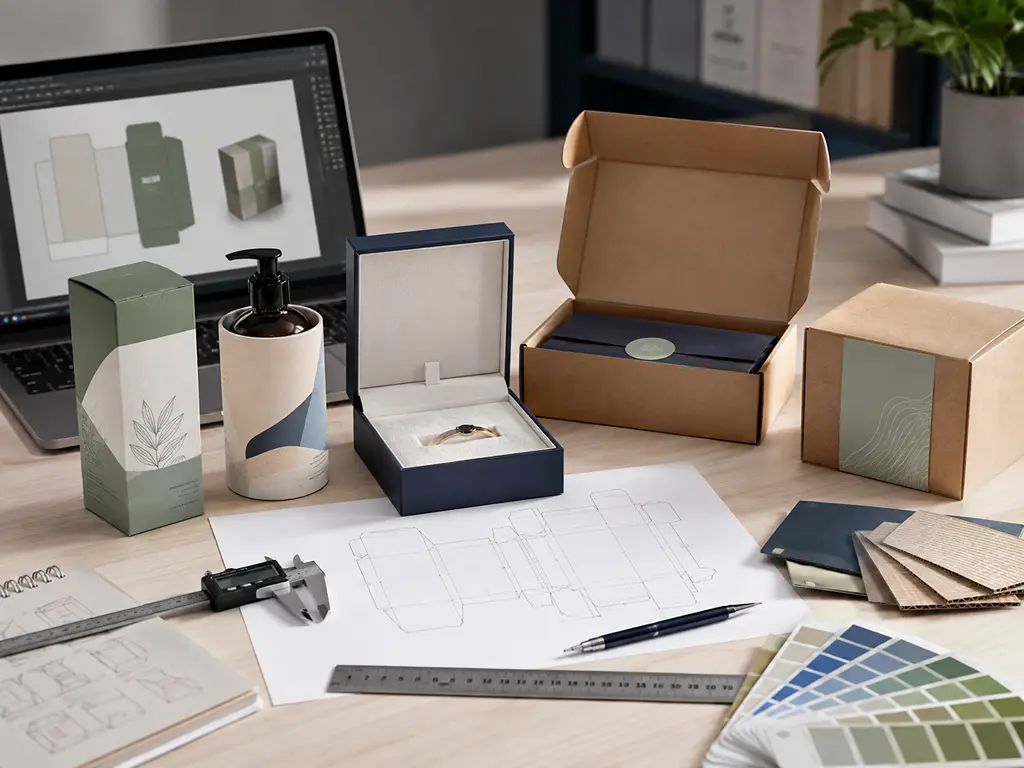
Regardless of the type, dimensional planning starts with the bottle. You need precise measurements of the bottle’s height, عرض, and cap shape to engineer the box and insert. A critical goal is managing the center of gravity, especially for tall, slender bottles that are prone to tipping. This often means designing a wider box base to improve stability.
Internal Inserts for Protection and Presentation
Inserts are the most critical component for product protection. Their job is to absorb shock from drops and vibrations, and to immobilize the bottle so it doesn’t rattle or break. A good insert also presents the bottle in a deliberate, appealing way when the box is opened.
Material choice for inserts is a trade-off between protection, يكلف, والاستدامة.
- Die-Cut Paperboard: This is the standard for mid-tier fragrances. It’s cost-effective and recyclable, but requires very precise engineering. If the tolerance is off, the bottle either rattles or gets scuffed. It works best for simpler bottle shapes.
- EVA Foam: Considered the gold standard for luxury, EVA foam offers maximum impact absorption and can be cut to fit complex bottle contours perfectly. Its primary drawback is that it complicates sustainability claims, so many brands are moving away from it.
- Molded Pulp: This is the eco-friendly alternative to foam and plastic. Made from recycled fibers, it can be molded into complex 3D shapes that offer excellent protection. It is a strong choice for brands that need to balance luxury feel with a sustainable story.
The engineering goal is a “snug fit” that passes drop tests without any bottle movement. This means designing the insert cavity with a clearance of just 0.5–1.0 mm around the bottle, adjusted for the material’s compressibility. The design must also account for slight manufacturing variations in the glass bottles themselves to ensure a consistent fit across the entire production run.
Packaging for Retail vs Gift Sets
Retail packaging is built for efficient, single-bottle protection on the shelf. Gift set packaging uses complex structures and finishes to create a premium unboxing experience and justify a higher price.
Structural and Protective Elements
Retail packs are all about efficiency and protection for a single bottle. You’ll typically see compact folding cartons or simple rigid boxes designed to sit on a shelf and be cost-effective. The inserts inside are purely functional—usually folded board or molded pulp—designed only to hold one bottle securely and stop it from breaking.
Gift sets are a different game. They use larger, more complex rigid boxes, like those with a magnetic closure, to create a premium unboxing experience. It’s not just about protection; it’s about presentation. Inserts are designed to be visually appealing, often using custom-cut foam or thermoformed trays to arrange multiple items in a perfect layout. The goal is to make the contents look valuable and organized.
Finishes and Perceived Value
In a crowded store, retail packaging needs to grab attention fast. Finishes like foil stamping and embossing are used for quick shelf impact. The perceived value of a standard retail box is directly tied to its feel. The weight of the board and the quality of the finish have to match a customer’s expectation for that price point.
Gift set finishes are more elaborate because the goal is to feel special and gift-ready right off the shelf. This means using textured papers, full-panel foils, or even printing on the inside of the box. The entire package communicates its value through substantial weight and keepsake-quality construction. The visual coherence of the bundled items, presented in a high-quality box, is what justifies the premium price.
أخذ العينات & Manufacturing Process
Sampling is your main risk-control step before committing to a full production run. Manufacturing then follows a strict process, using an approved ‘golden sample’ to ensure quality and consistency.
The Sampling Process for Perfume Packaging
Sampling isn’t just about getting a mockup; it’s a critical validation stage. It’s where you confirm that the packaging can be built correctly, protect the bottle, and meet your brand standards before you invest in thousands of units. Get this part wrong, and you’re setting yourself up for expensive surprises later.
- Start with a technical brief. هذا غير قابل للتفاوض. Define the bottle’s exact dimensions, your chosen materials, the final artwork, and the target quantity. Ambiguity here just creates delays and errors.
- Send a physical reference. The best way to get an accurate structural sample is to give your supplier a physical bottle. If you can’t, provide precise technical drawings. Photos and rough estimates won’t cut it.
- Review samples in stages. أولاً, check the unprinted “white sample” to validate the structure and fit. Once that’s approved, move on to the printed sample to validate colors and finishes like foil or embossing. Don’t try to approve everything at once.
- Test the final sample yourself. Put the actual bottle inside. Does it fit snugly? Is the insert stable? Does the lid have the right amount of tension? Feel the weight and quality in your hands. This physical check catches issues that drawings miss.
- Treat sampling as risk control. This is your last chance to catch problems before you’re on the hook for a full production run. A properly approved sample confirms the package is ready for mass production with a much lower chance of failure.
The Manufacturing Process for Perfume Packaging
Once you sign off on the final sample, the project moves into mass production. This phase is all about executing against the approved standard, with tight controls to prevent any deviation from what you approved.
- Approval locks the specs. The bulk run should only start after the final pre-production sample and all technical specifications are formally signed off. No exceptions.
- Use a “golden sample” as the standard. The factory must use a signed-off physical sample as its quality benchmark. This is your insurance against unapproved changes to materials, الطباعة, or assembly during the run.
- Follow the production sequence. The process flows from die-cutting the flat box shapes, to printing the artwork, applying any finishes like foil or embossing, and finally gluing and assembling the box.
- Enforce strict quality checks. Before anything ships, QC teams must verify that color matches the standard, finishes are aligned correctly, inserts are secure, and assembly is clean. This isn’t the time to be lenient.
- Define final packing requirements early. How the finished boxes are packed into master cartons for shipping is crucial. Specify this upfront to ensure your packaging arrives at its destination clean and undamaged.
اختيار أ Perfume Packaging Supplier
Vetting a perfume packaging supplier isn’t just about price. It’s about auditing their technical skill, ضبط الجودة, and reliability to avoid costly production failures and launch delays.
| Evaluating Technical Capabilities and Quality | Assessing Commercial Terms and Partnership Reliability |
|---|---|
|
|
الأسئلة المتداولة
What is the best packaging for perfume?
The best packaging uses a rigid, well-engineered box with a precision insert made of foam or cardboard. It also features premium surface finishes. This combination protects the glass bottle, expresses the brand’s identity, is easy for customers to use, and considers environmental impact.
Why are perfume boxes so important?
Perfume boxes are critical because they do several jobs at once. They protect the fragile glass bottle from breaking and shield the fragrance from light and heat, which preserves the scent. The box is also the first thing a customer sees, shaping their perception of the brand’s quality and influencing their decision to buy. عن 72% of consumers say packaging look is a primary factor in their purchase decision.
Should I use a rigid box or a folding carton?
A rigid board box is recommended for premium, fragile, or high-value perfumes. It provides superior protection and a luxurious feel that can justify a higher price. A folding carton is a better choice for mass-market perfumes where cost efficiency, lower weight, and faster production are priorities.
What is the best insert for protecting the bottle?
The best insert depends on your goals. EVA foam offers the highest level of cushioning and a tight fit, making it ideal for heavy or fragile bottles and premium presentation. Molded pulp or paperboard inserts are the best all-around choice for brands that prioritize sustainability, as they are recyclable and still provide good structural support.
What are the most popular finishes for a luxury look?
Popular finishes that create a luxury feel include soft-touch matte lamination, which gives a velvety texture. Foil stamping in gold or silver is used for logos and details to add a metallic shine. Embossing or debossing creates a raised or recessed texture that adds a tactile, high-end quality. Spot UV can be used to add a gloss highlight to specific areas against a matte background.
Can perfume boxes be recycled?
نعم, perfume boxes can be recycled if they are made from plain cardboard or paperboard. The box becomes difficult or impossible to recycle if it includes plastic windows, is laminated with a plastic film, or has heavy foil layers. To be recycled, the box should be clean, dry, and flattened, with any non-paper parts like foam inserts or plastic windows removed.
What is a typical minimum order quantity (موك) for custom boxes?
The MOQ depends on the box type. For simpler folding cartons, MOQs can start around 1,000 وحدات, but some suppliers offer lower quantities. For more complex rigid boxes, which are common for luxury perfumes, the MOQ is often around 500 units because their assembly is more labor-intensive.
How long does it take to produce custom perfume boxes?
Production time varies. Standard folding cartons usually take 3 ل 5 weeks after the design is approved. Luxury rigid boxes take a bit longer, عادة 4 ل 6 weeks, because they involve more manual assembly. If you need a full project including a custom bottle, the entire process can take 6 months or more.
الأفكار النهائية
Generic packaging might seem to save money upfront, but it exposes your brand to product damage and a poor customer experience. The technical standards outlined here are not just suggestions; they are requirements for protecting your investment. Cutting corners on your box is a commercial risk that almost never pays off.
The next step is to move from theory to physical validation. We recommend starting with a structural sample to test the engineering and material choices against your actual bottle. اتصل بفريقنا to review your specifications and begin the sampling process.