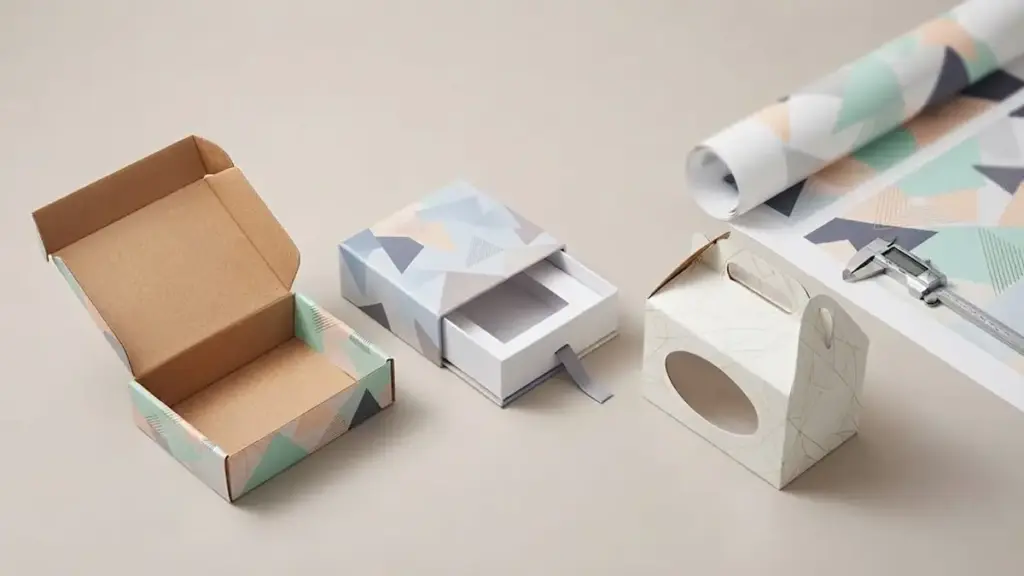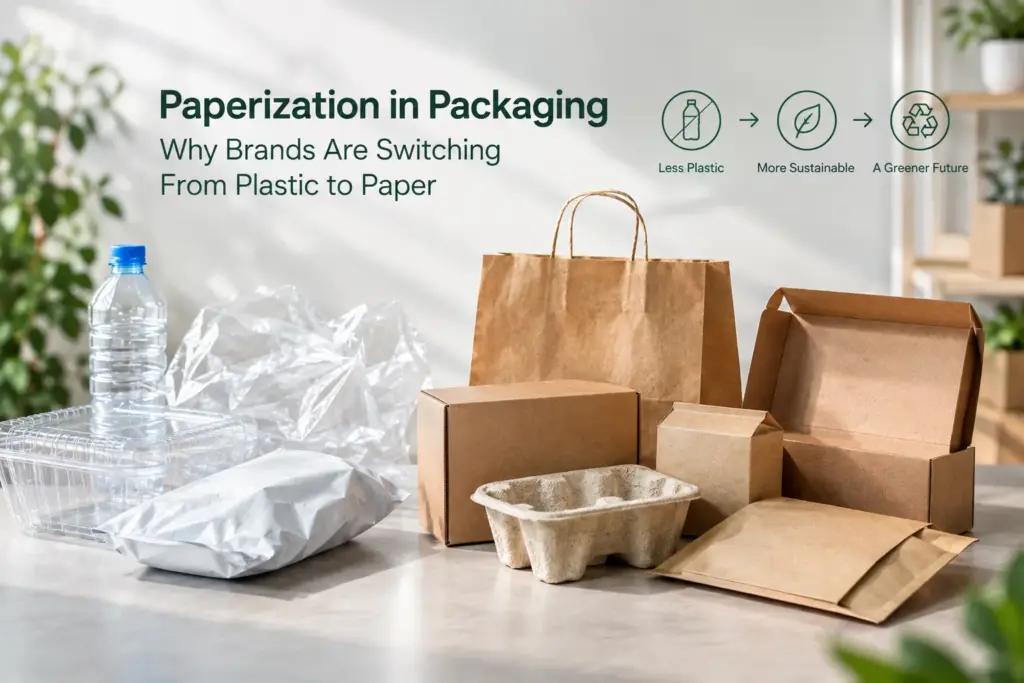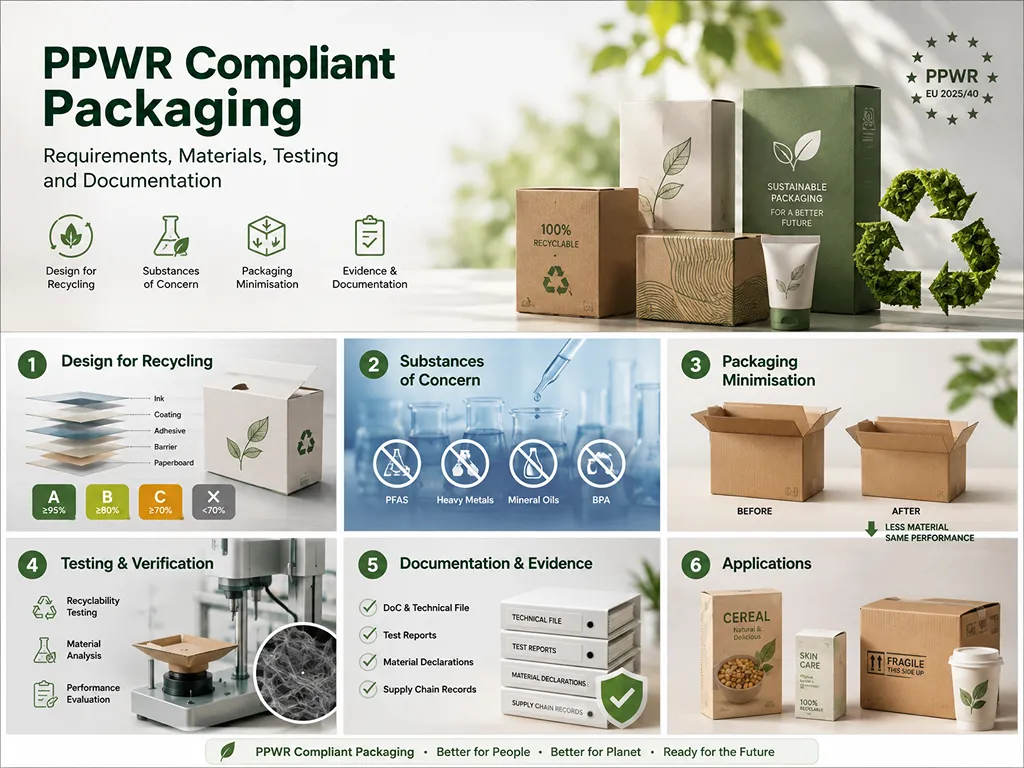
Choosing between luxury apparel boxes and folding cartons directly affects packaging costs, كفاءة الشحن, and how customers perceive your brand. The right format helps balance premium presentation with operational expenses.
This analysis benchmarks these packaging formats against industry retail standards. We evaluate unit costs ranging from $0.15 لأكثر من $10.00 and physical crush resistance up to 35 kg/cm² to help you secure an operationally scalable distribution strategy.
What Is a Luxury Apparel Box?
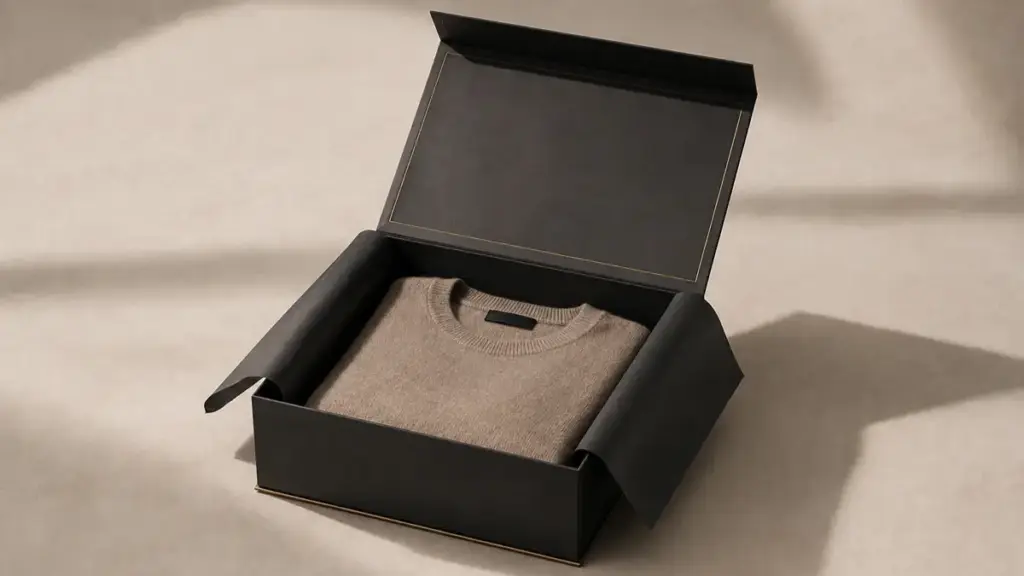
A luxury apparel box is a premium rigid packaging solution designed for high-end clothing, مُكَمِّلات, and fashion gift sets.
Structural Elements and Core Characteristics
In the luxury fashion sector, packaging is not only used for protection but also plays an important role in shaping the customer’s first impression of the brand.
- Rigid board construction: Brands select thick chipboard or greyboard instead of thin folding paperboard to ensure structural integrity and signal immediate value.
- Tactile finishes: Premium packages incorporate finishes like foil stamping, deep embossing, and soft-touch coatings to engage the consumer’s sense of touch.
- Specialized opening styles: أغطية مغناطيسية, drawer-style pullouts, and book-style designs slow down the unboxing process, intentionally building anticipation.
- Protective inserts and linings: Custom inserts and premium textile linings, such as velvet or silk, keep delicate garments stable while heightening the internal presentation.
A heavier structure, smooth surface finish, and premium opening mechanism can create a stronger perception of quality during the unboxing experience.
Key Differences Between Rigid Luxury Boxes and Folding Cartons
While both formats serve the apparel industry, they solve fundamentally different business challenges. Choosing the wrong one can either bleed your margins or cheapen your brand identity.
- Weight and permanence: Rigid boxes convey physical weight and exclusivity, whereas standard folding cartons focus on space-saving flat shipment and temporary containment.
- Logistical goals: Folding cartons maximize volume and cost efficiency for mass-market logistics, while rigid packaging prioritizes unboxing aesthetics and brand positioning.
- Product matching: Fashion houses choose rigid boxes for premium items like silk scarves, fine knitwear, and boutique gift sets, leaving folding cartons for high-volume basics.
If your business model relies on high-volume fulfillment, folding cartons protect your bottom line. But if you are selling heritage ready-to-wear or high-margin accessories, the unboxing ritual is part of the product itself, making rigid construction the standard.
What Is a Folding Carton?
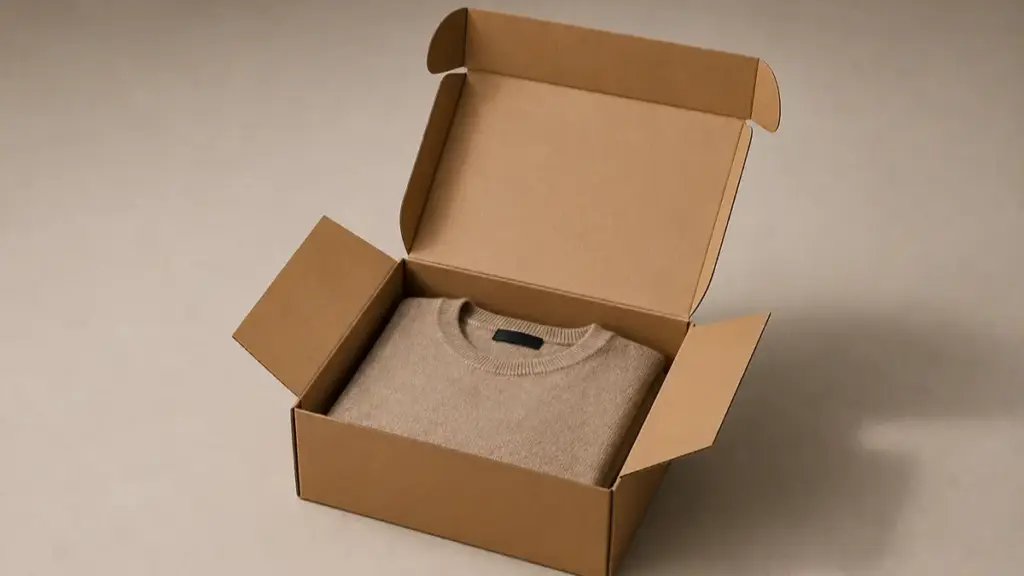
أ folding carton is a lightweight, flat-shipped paperboard packaging solution that optimizes logistics costs while maintaining high-end print and finishing capabilities for retail brands.
Structural Properties and Materials
A folding carton begins as a flat, die-cut paperboard blank. This flat design optimizes storage space before assembly, reducing inbound shipping volume. Brands assemble these structures directly at the packing station without using specialized tooling.
- Material Grades: Premium options include Solid Bleached Sulfate (اس بي اس) and Folding Box Board (FBB), selected for their surface smoothness and printability.
- Assembly Configurations: Pre-scored lines allow the carton to lock into shape using simple tucks, physical tabs, or adhesive joints.
- Caliper Range: Single-layer paperboard typically runs between 0.3 mm and 0.8 مم, balancing lightweight performance with structural strength.
Rigid Box Comparison and Strategic Value in Apparel
Comparing folding cartons to rigid setups highlights a direct trade-off between freight efficiency and structural weight. While صناديق جامدة arrive pre-assembled and take up massive warehouse volume, folding cartons remain flat until filled.
- Logistical Efficiency: Shipping flat folding cartons can significantly reduce storage and transportation volume compared with pre-assembled rigid boxes.
- تشطيبات متميزة: Thin paperboard readily accepts high-end treatments, including embossing, النقش, ختم احباط, and tactile varnishes.
- Target Applications: Ideal for folded garments, lightweight fashion accessories, and luxury gift sleeves.
For brands scaling their retail footprint, the operational savings of flat-pack formats outweigh the heavy feel of setup boxes without compromising visual branding.
Custom Apparel Packaging Built for Global Brands
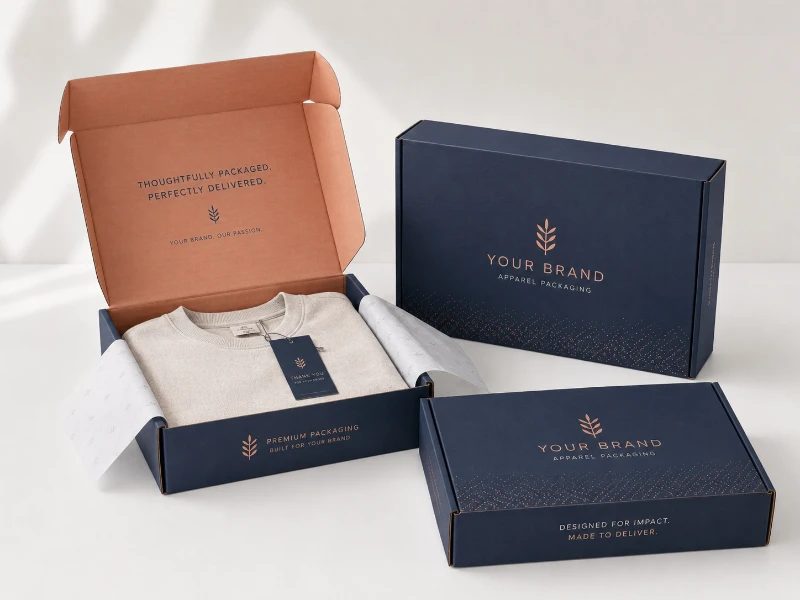
Luxury Apparel Boxes vs Folding Cartons: الهيكلية & Material Differences
Rigid boxes offer unmatched structural strength using thick chipboard, while folding cartons prioritize space-saving logistics using thin, flat-shipped paperboard.
Selecting the right board thickness directly dictates the weight, يشعر باللمس, and protective capabilities of your packaging. The core difference lies in how each structure achieves its final shape.
Material Composition and Thickness Standards
The raw materials used in these two formats determine their final weight and thickness. Rigid and folding structures use entirely different paperboard classes:
- Rigid Setup Boxes: Rigid setup boxes typically use thick greyboard or chipboard cores, commonly around 1.5 mm to 3 مم سميكة, which are wrapped with printed paper or specialty materials to create the final appearance
- كرتونات قابلة للطي: Single-layer paperboard, such as solid bleached sulfate (اس بي اس) or kraft, ranging from 0.3 mm to 0.8 مم (250 ل 400 جي إس إم). These materials accept high-quality printing directly on the board.
Because rigid boxes use a multi-layered design with a separate outer wrap, they maintain a dense, premium feel that folding cartons cannot replicate with a single sheet.
Structural Integrity and Logistics Performance
Structural design also changes how these boxes handle physical pressure during transit and how they occupy space in your warehouse.
- مقاومة السحق: Rigid setup structures deliver up to 35 kg/cm² of crush resistance. This heavy-duty support protects premium garments while easily carrying integrated hardware like magnetic closures and ribbon pulls.
- Logistics Footprint: Folding cartons ship and store flat, reducing your warehousing footprint by up to 80% compared to pre-assembled boxes. They rely on pre-scored folds and tuck flaps for quick on-site assembly.
While folding cartons optimize freight costs and warehouse space, traditional rigid boxes provide the physical defense needed for heavy or highly structured garments that must not bend during shipping.
Cost Comparison of Luxury Apparel Boxes and Folding Cartons
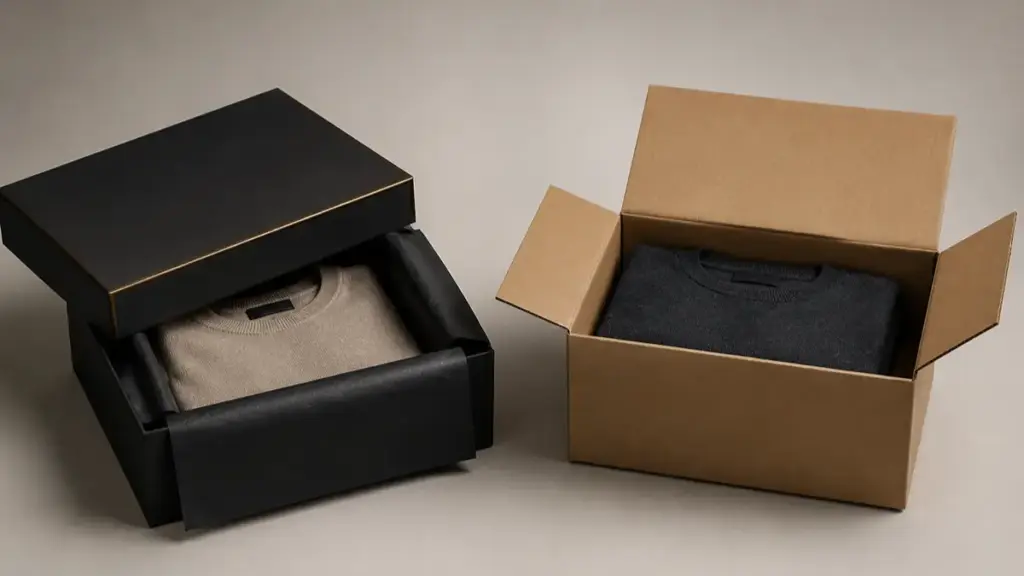
Rigid boxes command a 3x to 8x price premium over folding cartons due to heavier material weight, manual assembly, and high-volume shipping inefficiencies.
Unit Pricing Benchmarks by Production Volume
Production volume dictates unit economics, but the pricing gap between these two formats remains wide at every tier. Rigid boxes require a substantial investment whether you order small runs or scale to thousands of units.
- Base range at scale: Folding cartons run from $0.15 ل $1.50 لكل وحدة, while rigid boxes range from $2.00 لأكثر من $10.00.
- Small run (100 وحدات): Apparel brands pay roughly $1.25 per unit for a folding carton compared to $4.50 for a rigid box.
- Mid-to-large run (5,000 وحدات): Folding carton costs drop to $0.55 لكل وحدة, whereas rigid boxes stay around $2.00.
- Cost multiplier: Rigid packaging maintains a consistent 3x to 8x price premium across all production volumes.
While scaling a folding carton run dramatically dilutes the setup cost, rigid box manufacturing relies on structural realities that keep unit prices higher even at high volumes.
Structural and Logistical Cost Drivers
The price difference comes from several practical factors, including material thickness, manufacturing processes, labor requirements, and shipping volume.
- Material and assembly: Rigid boxes use thick board construction of 1,200+ GSM and require manual assembly, raising production costs.
- Logistical footprint: Folding cartons feature flat-pack designs that ship flat, minimizing freight, warehousing, and handling expenses.
- Production speed: High-speed automated manufacturing lines process folding cartons quickly, causing unit costs to drop rapidly during scaling.
- Premium embellishments: Finishing options like soft-touch lamination, ختم احباط, and magnetic closures increase rigid box pricing more sharply than folding cartons.
Opting for rigid packaging means accepting ongoing warehouse and shipping overhead. Flat-pack folding cartons allow brands to redirect those logistical dollars back into the product line.
Brand Perception & تجربة فتح العلبة
Rigid structural design and deliberate opening sequences drive premium brand value, directly justifying luxury pricing while prompting organic social sharing.
Structural Impact on Consumer Brand Perception
Packaging structure acts as a physical proxy for product quality. When a customer lifts a heavy, rigid box made from dense chipboard (عادة 1.0 mm to 3.0 مم), the physical weight immediately signals exclusivity and helps justify higher price points before they even see the garment.
Tactile details refine this impression. Matte finishes, custom embossed textures, and other luxury rigid box finishing techniques convey a sense of calm sophistication and help premium brands create a stronger unboxing experience. Forcing a noisy, over-branded design onto premium boxes usually backfires; instead, restraint highlights craftsmanship.
Folding cartons offer significant storage and logistics advantages because they can be shipped and stored flat. But if you deploy them in premium tiers, they require careful structural enhancements. Thin paperboard needs custom inserts, high-brightness SBS board, or soft-touch coatings to avoid looking cheap on arrival.
Unboxing Psychology and Strategic Implementation
The speed of the opening sequence dictates the emotional response. A slow, staged reveal—such as a drawer pulling out or a lid lifting away against air resistance—builds anticipation, shifting the interaction from a basic retail transaction to a ritual.
Studies have shown that premium packaging can influence how customers perceive brand value and can encourage social sharing when the design creates a memorable unboxing experience. Distinctive structures act as organic marketing channels.
To execute this successfully, rely on custom inserts. Tailored compartments keep garments flat, centered, and safe from sliding or crushing during shipping. This ensures the curated presentation remains exactly as intended when the customer finally opens the lid.
شحن & كفاءة التخزين
Folding cartons and collapsible rigid boxes slash shipping and warehousing costs by reducing transit volume, directly offsetting higher upfront packaging investments.
Shipping empty air drains distribution budgets. Choosing the right structural format determines how much warehouse space you buy and how many pallets you ship.
Logistics Comparison Across Packaging Formats
- كرتونات قابلة للطي: These ship flat to maximize warehouse space, minimize pallet consumption, and lower inbound freight volume.
- Traditional Rigid Boxes: Arriving pre-assembled, these structures require massive storage volume and inflate baseline transit costs.
- Collapsible Rigid Boxes: This hybrid format preserves premium brand presentation while reducing transit and storage volume by 75% ل 90%.
- Logistics Impact: Adopting collapsible formats cuts overall logistics costs by 30% ل 70% and fits four to five times more units into each shipment.
Practical Packaging Practices to Lower Dimensional Weight and Warehousing Costs
Carrier pricing models penalize bulk over actual weight. Smart engineering protects margins by stripping out dead space before shipments reach the transit network.
- Right-Sizing: Tailoring box dimensions to fit folded garments eliminates empty space and prevents costly dimensional weight surcharges.
- Dimensional Brackets: Shaving small increments off height and footprint moves shipments into cheaper freight brackets.
- Collapsible Engineering: Folding magnetic boxes condense shipping footprints, dropping pallet counts from 20 ل 5 in select programs while cutting air-freight costs.
- Landed-Cost Offsets: The immediate logistics savings from flat-pack luxury boxes regularly pay back the higher upfront unit cost of these engineered designs.
Sustainability Comparison of Luxury Apparel Boxes and Folding Cartons
Folding cartons drastically outperform rigid boxes in immediate raw material and transport efficiency, but durable rigid packaging offsets its footprint through multi-year reuse.
Material Weight and Transport Footprint Analysis
Shipping garments efficiently requires a critical look at the structural mass of your container. Lightweight formats dramatically lower raw resource demand from the outset.
- Raw Material Reduction: Folding cartons reduce raw material consumption by 60% ل 70% by weight compared to rigid boxes.
- Basis Weight Disparity: Folding cartons utilize paperboard with basis weights of 200 ل 400 جي إس إم, while rigid boxes require thick chipboard cores ranging from 1,200 ل 3,000 جي إس إم.
- Transit Footprint: Flat-shipped folding cartons require 80% ل 90% less space during transit and storage, which significantly lowers transport emissions.
This massive difference in physical volume means folding cartons optimize pallet density and curb carbon output across the entire supply chain.
Recyclability Challenges and Long-Term Reuse Potential
End-of-life recovery is where the material differences create distinct operational and environmental pathways for fashion brands.
- Municipal Recycling Ease: Standard municipal streams easily recycle folding cartons made from pure, FSC-certified paperboard or recycled fibers.
- Rigid Box Limitations: التصفيحات, metallic foils, PU coatings, and fabric finishes on rigid boxes complicate material separation and limit recycling viability.
- The Reuse Offset: Rigid boxes achieve a lower per-use footprint only when consumers retain and reuse them for storage or gifting over a multi-year period, such as five years.
Brands should select folding cartons for high-volume, single-use shipping and reserve low-impact, mono-material rigid boxes for durable, high-value presentation.
Custom Apparel Packaging Solutions for Global Brands
For apparel brands that need consistent quality and flexible customization, working with an experienced packaging manufacturer can simplify the production process. PackCCP provides fully customized paper packaging solutions, including rigid boxes, كرتونة قابلة للطي, and other specialty packaging formats for fashion, مستحضرات التجميل, and retail brands.
مع أكثر 20 years of engineering and production experience, PackCCP supports customers from structure development and material selection to printing, التشطيب, and quality inspection. The factory uses FSC-certified paper materials and maintains strict quality control standards, with product inspection conducted before shipment to ensure reliable delivery.
Whether brands need premium rigid boxes for luxury collections or cost-efficient folding cartons for larger-volume orders, PackCCP helps optimize packaging design, production efficiency, and brand presentation through factory-direct support.
Which Brands Should Choose Luxury Apparel Boxes or Folding Cartons?
Rigid boxes suit high-margin luxury items requiring premium unboxing experiences, while folding cartons optimize operational budgets for high-volume, flat-shipped apparel retail.
| Apparel Segment | الصناديق الصلبة (رفاهية) | كرتونات قابلة للطي (High-Volume) |
|---|---|---|
| Target Brands | Heritage luxury, premium accessories, limited-run capsules | Mass retail, e-commerce basics, subscription services |
| Typical Unit Cost | $3.00 ل $15.00 | $0.30 ل $3.00 |
| Logistics Footprint | تم تجميعها مسبقًا (bulky storage) | Shipped flat (80% space reduction) |
Rigid Box Selection for Luxury and Premium Segments
Heritage luxury labels, premium accessories designers, and limited-edition capsule collections utilize rigid boxes to deliver an experiential unboxing. When a customer purchases a high-end item, the packaging must signal exclusivity before they even touch the garment.
- Best-fit apparel categories: Designer garments, luxury knitwear, seasonal gift sets, and high-end accessories like scarves and small leather goods.
- Financial metrics: Highly suitable for premium-priced items that easily absorb unit packaging costs ranging from $3 ل $15.
- Retention factor: Brands select this format when consumers expect to keep and reuse the packaging, establishing a long-term brand presence in the home.
For these premium tiers, the higher initial spend on structural packaging directly supports brand equity and justifies the premium retail price point.
Folding Carton Selection for High-Volume and Retail Brands
Mass-market retailers, e-commerce basics brands, and subscription apparel programs deploy folding cartons to optimize operational budgets. High-volume businesses require packaging that protects the product without eating into tight margins.
- Primary applications: Folded garments for retail displays, high-SKU basic apparel lines, and secondary transit packaging.
- Cost control: Highly efficient production keeps per-unit pricing typically between $0.30 و $3.
- Logistical advantages: Shipping and storing the packaging flat reduces warehouse storage space requirements by roughly 80%.
Folding cartons deliver the exact balance of print flexibility and logistical efficiency that scalable, high-throughput apparel operations demand.
الأفكار النهائية
While standard folding cartons offer lower upfront costs, custom rigid packaging is the only way to safeguard your brand reputation against looking cheap on arrival. Settling for basic paperboard on high-margin apparel directly risks eroding your premium pricing power. Aligning your structural design with your garment tier secures the customer loyalty and unboxing prestige your brand requires.
Do not guess on material thickness or magnetic closure performance—verify them. We recommend starting with a custom sample box to test our rigid boards, custom liners, and soft-touch finishes firsthand. Contact our engineering team today to review your structural specifications and secure your next production run.