Choosing the right material for lipstick boxes can help reduce transit damage, production waste, and unnecessary packaging costs. The material also affects how well the box holds its shape, how it prints, and how it fits the brand’s price positioning.
This guide compares SBS paperboard, كرافت, and rigid board based on factors such as structural strength, printing performance, product weight, تحديد المواقع العلامة التجارية, ومتطلبات الشحن. We also explain how to select appropriate board thickness and protective structures for different lipstick packaging applications.
Why Lipstick Box Material Selection Matters

The right lipstick box material should provide enough structural strength for the product, run reliably through the packing process, and fit the brand’s target price point.
Physical Protection and Barrier Performance
Your packaging substrate is one of the factors that determines how well the product is protected during storage and transport. Weak materials lead to crushed boxes and ruined cosmetics before they ever reach retail shelves.
- قوة التراص: Corrugated outer cartons should be specified according to the expected load, stacking height, box dimensions, and distribution conditions. ECT can then be used to evaluate the compression performance of the shipping carton.
- Transit Protection: For rigid lipstick boxes, 1.5–2.5 mm greyboard is a common starting range, but the final thickness should be selected according to box size, بناء, product weight, ومتطلبات الشحن.
- Automation Compatibility: Paperboard can expand or contract as humidity changes, so stable materials, accurate converting, and appropriate production tolerances are important for automated packing lines.
- Barrier Shielding: The outer box mainly provides secondary protection, helping protect the lipstick container from handling, abrasion, and physical damage during storage and transport.
These considerations are especially important for automated production, where inconsistent board dimensions or poor folding performance can increase setup issues, packing problems, and production waste.
Brand Alignment and Strategic Cost Optimization
Packaging material and finish can strongly influence how consumers perceive a product’s price and brand positioning. You must balance the upfront material cost against the target retail price to protect your profit margins.
- Substrate Tiering: Align material choices with market positioning by utilizing cost-effective CCNB for budget lines, premium SBS paperboard for mid-range retail, and rigid greyboard for luxury magnetic-closure boxes.
- Finishing Precision: Apply decorative finishes accurately, keeping embossing at an optimal 0.3 mm depth and hot foil stamping with a minimum 3-point font and 0.5 mm stroke width.
- Transit testing: Use drop, ضغط, and vibration testing appropriate to the product weight, packaging structure, and distribution environment before approving the final design.
- Compliance Sourcing: Support environmental claims and regulatory compliance by selecting FSC-certified paperboard and utilizing spot UV or mono-material designs to streamline recycling streams.
Choosing a material that is too light or too heavy can quickly increase packaging costs or product damage. Heavy metal lipstick cases placed in thin, low-GSM cartons cause immediate tearing, while lightweight plastic tubes in heavy rigid boxes create unneeded cost burdens.
SBS vs Kraft: Which Lipstick Box Material Fits Your Brand?
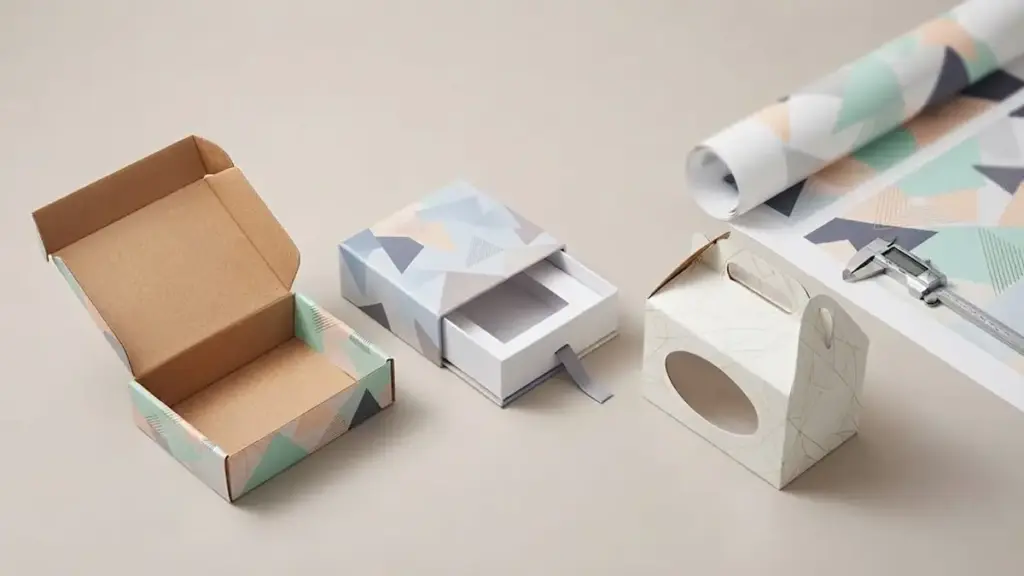
SBS paperboard offers a smooth, bright surface for detailed graphics and premium finishes, while unbleached kraft gives lipstick boxes a natural appearance and a more understated, sustainable look.
Criterion SBS Paperboard ورق مقوى كرافت Surface & جماليات Bright white, smooth, consistent; ideal for detailed graphics and accurate color reproduction. Natural brown or off-white appearance with a more textured, organic look. الطباعة Excellent for CMYK, gradients, fine details, and brand colors. Works well for minimalist artwork and darker ink designs, but the natural surface can affect color appearance. الانتهاء Well suited to foil stamping, النقش, النقش, and spot UV. Suitable for simple foil work, النقش, النقش, and natural-texture designs. Cost Consideration Often selected when print quality and premium finishing are priorities. Can be cost-effective for simpler structures and natural-looking packaging. التطبيقات النموذجية Premium cosmetics, retail cartons, high-color packaging. Eco-focused, artisanal, الحد الأدنى, and natural-positioned brands.
Visual Aesthetics and Finishing Capabilities
Brands select packaging substrates to match target consumer expectations. SBS paperboard provides a bright white, uniform surface that supports accurate Pantone matching, fine gradients, and vibrant full-color CMYK printing. في المقابل, unbleached kraft paperboard features a natural brown, textured appearance that shifts ink colors, making it highly suitable for dark inks and minimalist line art.
Advanced finishing techniques demand specific surface characteristics. Premium foil stamping and spot UV coatings require the smooth surface of SBS. Deep blind debossing utilizes the thick, tactile nature of unbleached kraft paperboard to establish an organic, rustic brand identity.
- ختم احباط: Fine foil details generally require sufficiently large type and adequate stroke width for clean transfer. As a practical starting point, 3-point type and 0.5 mm strokes may be suitable, but the final limits should be confirmed with the packaging manufacturer based on the foil, substrate, and artwork.
- debossing: A moderate debossing depth can help preserve the board structure, with the final depth determined by the paperboard grade and design.
Mechanical Performance and Cost Considerations
Structural performance depends on the paperboard grade, حجم الصندوق, folding structure, and weight of the lipstick container. SBS and unbleached kraft can both be used for folding cartons, with the appropriate board thickness selected according to the product and packaging design rather than a single universal specification.
- Board strength: Choose the paperboard grade and thickness based on the lipstick tube weight, box dimensions, and required stiffness. Heavier products or larger cartons may require a stronger board structure.
- Folding performance: The selected board should score and fold cleanly without cracking, especially around corners, flaps, and other high-stress areas.
- Kraft vs. اس بي اس: Kraft can be a cost-effective choice for simple structures and natural-looking designs, while SBS is often preferred when high-quality color reproduction and premium finishing are important.
- Production cost: Final lipstick packaging cost depends on board grade, حجم الصندوق, order quantity, printing process, التشطيب, and structural complexity, so material price should be evaluated together with the complete packaging specification.
- E-commerce protection: Folding cartons are typically used as primary or retail packaging. For e-commerce shipments, the outer shipping carton should be designed and tested separately based on product weight, box dimensions, stacking conditions, and the expected distribution environment.
Both SBS and kraft folding cartons can provide adequate protection for lipstick products in retail applications. When additional protection is required for shipping, brands can combine the retail carton with a suitable corrugated outer box.
Custom Lipstick Boxes Made Easy
Rigid Board for Premium Lipstick Packaging
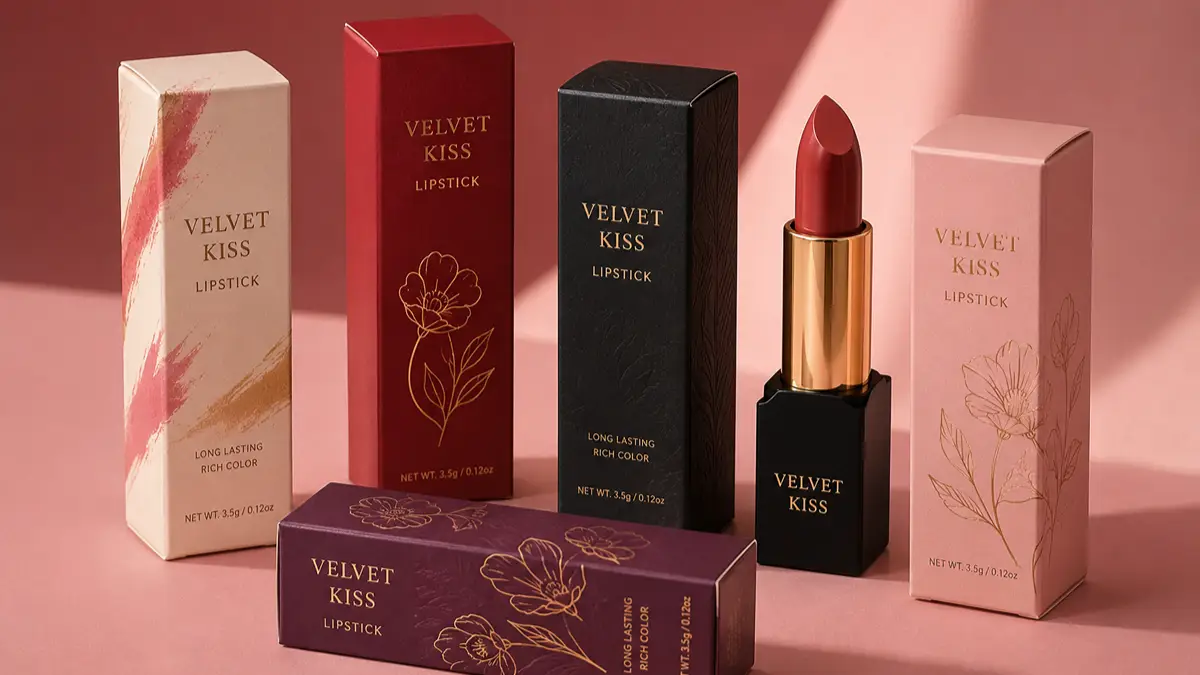
Rigid board packaging provides the structural integrity, heavy hand-feel, and precise dimensional stability required to protect luxury lipstick tubes and elevate unboxing aesthetics.
Material Core Options and Structural Thickness Guidelines
Selecting the right substrate core depends on the balance between your brand’s sustainability goals and the visible aesthetics of the unboxed package. While greyboard offers excellent cost-efficiencies, solid bleached sulfate laminates ensure a uniform, high-end presentation.
- Substrate Core Options: Choose between a recycled greyboard core featuring at least 70% post-consumer recycled fiber for optimal cost-efficiency, or a solid bleached sulfate (اس بي اس) rigid laminate to secure a pristine, clean white interior when the customer opens the box.
- Board Thickness: Rigid boxes commonly use greyboard in the 1.5–2.5 mm range. Thicker board may be appropriate for larger boxes, heavier products, or gift sets, but the final specification should be confirmed through structural sampling and testing.
- Cover Stock Specifications: Choose a suitable wrapping paper and adhesive system based on the board surface, finishing method, and required bonding strength. This ensures clean, reliable hot melt adhesive bonding and prevents surface tearing during deep embossing.
Structural Formats, Tolerances, and Premium Finishing Techniques
The way the lid, base, إدراج, and other components fit together has a direct effect on how the box opens, closes, and feels in the customer’s hands. Achieving a smooth, controlled opening sequence requires precise dimensional math combined with specialized embellishment tolerances.
- Structural Formats: Select from two-piece telescope boxes, sliding drawer slipcases, or shoulder-neck formats. For telescope formats, maintain a precise lid-to-base clearance of 0.3 mm to 0.6 mm per side to ensure a smooth vacuum-release pull without loose rattling.
- Decoration Parameters: Apply decorative finishes including hot foil stamping with a minimum 0.5 mm stroke width to prevent cracking. Limit the tactile embossing depth to 0.3 mm to protect the cover stock fibers from structural failure.
- Performance Metrics: Validate batch color accuracy to a DeltaE ≤ 2.0 limit on final press runs. The rigid box should be compression-tested under the expected stacking and storage conditions to check for crushing, warping, or permanent deformation.
Specialty Papers for Lipstick Box Packaging
Paper selection dictates your retail margin and shelf survival. Aligning surface absorption and board weight prevents shipping damage while defining consumer tactile interaction.
Core Paper Stocks and Structural Performance
Choosing the wrong paperboard ruins your brand before the consumer even opens the box. Smooth C1S (coated one side) and C2S (coated two sides) art boards offer flat, sealed surfaces that optimize offset print resolution. They hold registration perfectly for multi-color cosmetics layouts.
- Board Weight: Folding cartons commonly use medium- to heavyweight paperboard grades, with the appropriate GSM selected according to box size, بناء, product weight, and required stiffness.
- Dimensional stability: Paperboard can expand or contract as humidity changes, so stable board grades and appropriate production tolerances are important for automated folding, الإلتصاق, and packing processes.
- Creasing Performance: Correct basis weight prevents edge cracking during high-speed folding on automated cartoning lines.
Porous, uncoated premium stocks absorb more ink, which limits line sharpness but creates a raw, tactile surface. Low-absorption coated sheets keep ink on the surface, preserving clean edges on micro-typography and spot UV varnishes. You must match the ink absorption profile directly to your artwork complexity.
Surface Textures, Applied Finishes, and Eco-Friendly Substrates
Applied finishes and physical textures shift consumer perception. Packaging designers use woven linen, ribbed structures, or soft-touch velvet coatings directly on the carton to establish tactile brand recognition and improve user grip on retail shelves.
- Embossing Depth: We recommend a 0.3 mm depth to raise logos and patterns without tearing the fibers.
- Debossing Clearance: Pushing graphics below the surface requires thicker stocks to prevent interior panel bulging.
- Eco Substrates: Brands meet green targets through مواد مستدامة such as FSC-certified virgin board and recycled fiber containing organic flecks.
Molded fiber inserts can replace some plastic insert applications while helping secure the lipstick tube during handling and transport. Their recyclability should be assessed based on the final material combination and the recycling infrastructure in the target market. Natural textures can create a premium tactile effect while reducing the need for additional plastic-based decorative elements.
Sustainable Materials for Lipstick Boxes

FSC-certified paperboard, right-sizing, and recyclable material choices can help brands improve responsible sourcing, reduce unnecessary packaging, and support recycling goals. Secondary packaging materials dictate both environmental impact and retail performance. Selecting the right substrate keeps lines moving and products protected.
Sustainable Material Selection for Lipstick Cartons and Inserts
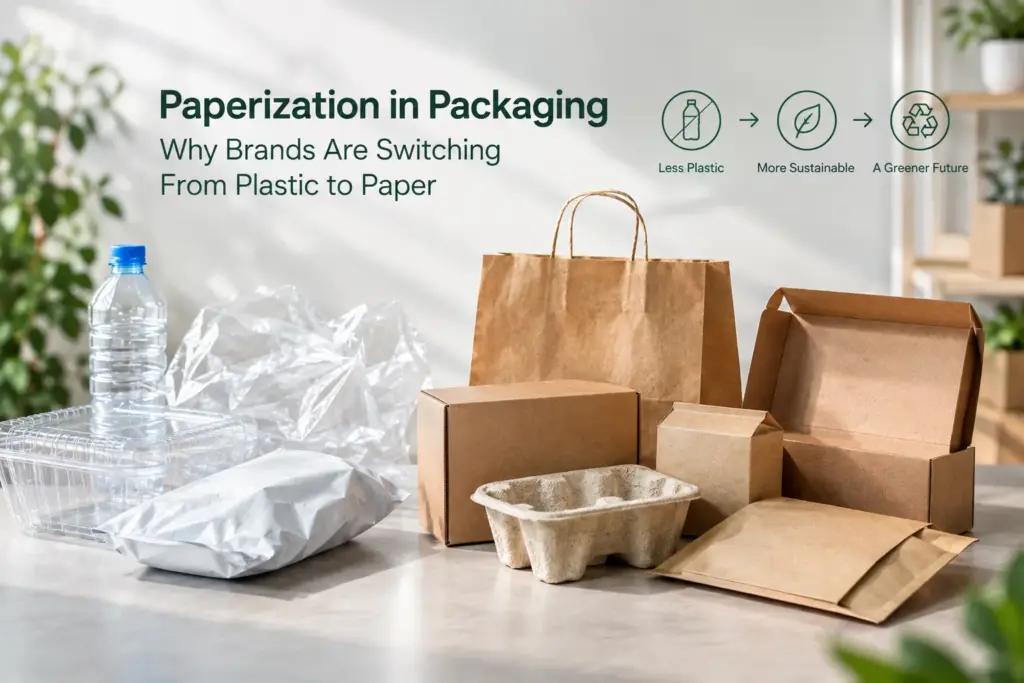
- FSC or PEFC-certified paperboard: Serves as the default eco-friendly choice, utilizing post-consumer recycled fibers to lower resource demand and ensuring high recyclability by avoiding heavy plastic laminations.
- Corrugated shipping and outer box designs: Should be specified and tested according to product weight, stacking conditions, box dimensions, and the expected distribution environment.
- Mono-material structures: When plastic components are necessary, using a single polymer can simplify material identification and may support more straightforward recycling, depending on the local recycling system.
- Alternative materials: Aluminum and bamboo support durable refill systems, while compostable bio-boards require third-party certifications like TÜV Austria OK Compost HOME to avoid misleading marketing claims.
Design Strategies and Performance Metrics for Circular Packaging
Circular design requires balancing structural reduction with high-speed manufacturing requirements. Minor adjustments in sizing and decoration yield massive environmental dividends.
- Right-sizing: Designing the carton to fit the lipstick tube closely can reduce unnecessary material and help minimize the need for protective inserts, while maintaining the dimensional consistency required for automated packing.
- Low-impact decoration: Replacing full-coverage UV varnishes and plastic film laminations with water-based coatings and soy-based inks preserves fiber recovery rates during municipal paper repulping.
- Minimalist refills: متين, refillable primary lipstick cases allow secondary packaging to transition into lightweight, minimalist paper sleeves, dramatically cutting cumulative fiber consumption over the product lifecycle.
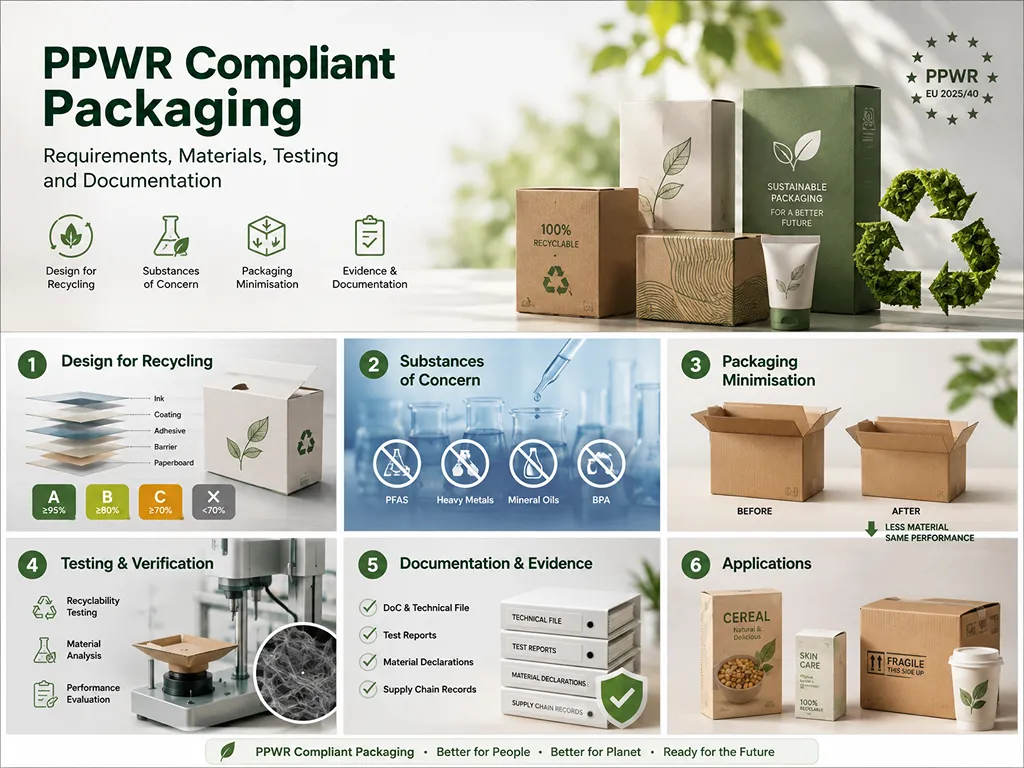
- Compliance documentation: Keep supplier certificates, material specifications, and bills of materials to support packaging sustainability and market-specific compliance claims.
How Printing Changes the Choice of Lipstick Box Material
Matching the correct substrate with tested ink chemistry prevents color shifting, structural cracking, and regulatory non-compliance during high-speed cosmetic packaging runs.
Substrate Printability and Production Methods
Substrate selection dictates your printing process limits. سلس, clay-coated Solid Bleached Sulfate (اس بي اس) and folding boxboard provide the ideal surface for high-resolution graphics, while natural fibers demand a different design approach.
- Coated SBS & Folding Boxboard: Delivers sharp details and high color density for offset lithography and digital printing.
- Uncoated Kraft & Recycled Boards: High ink absorption shifts CMYK values, making high-contrast, minimalist designs necessary.
- Offset Lithography: Provides smooth gradients and highly consistent spot colors for high-volume carton production.
- الطباعة الرقمية: Works well for short runs, أخذ العينات, variable designs, and projects where rapid artwork changes are important.
- Specialty Eco-Substrates: Bamboo-based papers and molded fiber materials can have more variable surfaces, so artwork and printing methods may need to be adjusted for the desired level of detail.
During the prepress phase, artwork should follow the printer’s dieline, ينزف, and safe-zone specifications to prevent trimming and registration issues during production.
Ink Chemistry, Finishing Processes, and Compliance
Decorating cosmetic packaging requires a strict balance between shelf appeal and chemical compliance. Standard inks can migrate or fail heavy metal tests, presenting major regulatory risks for global retail brands.
- Low-migration inks: When packaging is intended for sensitive applications or specific regulated markets, ink and coating systems should be selected according to the applicable local requirements and supplier compliance documentation.
- Ink and coating compliance: For cosmetic packaging sold in regulated markets, suppliers should provide appropriate declarations and test reports for inks, الطلاءات, مواد لاصقة, and other packaging components where required.
- ختم احباط الساخنة: Fine foil elements should use sufficiently large type and stroke widths to achieve clean transfer and reduce the risk of cracking or incomplete coverage. As a practical reference, 3-point type and 0.5 mm strokes may work for some applications, but the final specifications should be confirmed during artwork preparation and sampling.
- إدارة الألوان: For color-critical packaging, brands may set a tight ΔE tolerance against approved physical or digital color references. The acceptable tolerance should be agreed during proofing and production rather than treated as a universal requirement.
- Heavy-metal compliance: Where required by the target market, packaging inks, الطلاءات, and other components should be tested against the applicable chemical and heavy-metal requirements.
Using pigment-based cold foil instead of hot foil stamping offers a highly recyclable decoration option that complies with municipal recycling stream demands without losing metallic shine.
Choosing Lipstick Box Materials by Brand Positioning

Aligning box substrates with price tiers optimizes production costs while protecting brand positioning. Success requires matching material weight directly to primary packaging specifications.
The box should match the product’s price point. Using a heavy rigid structure for a mass-market lipstick can add unnecessary cost, while using a very light carton for a luxury product may make the packaging feel less premium.
Substrate and Structural Alignment Across Market Segments
- Luxury Tiers: Brands use thick rigid paperboard (1.5 mm to 2.5 mm greyboard) wrapped in premium cover stock, featuring magnetic closures and custom molded pulp inserts to maximize unboxing tactile weight.
- Premium-Mass Lines: These rely on 300 ل 400 GSM high-grade coated SBS paperboard with auto-bottom constructions to balance automated packing line speed and structural durability.
- Budget Segments: Companies utilize simple, flat-packed tuck-end folding cartons made from standard cardboard or unbleached kraft paper to minimize assembly labor and shipping weight.
- Eco-Conscious and Artisanal Brands: Developers select FSC-certified materials, soy-based or water-based inks, and intricate raw textures to visually communicate environmental values.
Technical Performance and Production Integration Framework
Secondary packaging must work in lockstep with the primary tube. Mechanical mismatches cause shipping damage, assembly friction, and high scrap rates on automated lines.
- Primary Material Matching: Match the weight of the outer paperboard box with the primary container. Heavier aluminum or zinc-alloy lipstick components may benefit from stronger folding board, reinforced structures, or rigid boxes, while lightweight PP or ABS tubes can often be packaged efficiently in folding cartons.
- Structural Tolerances: Maintain strict tolerances of ±0.5 mm in the box footprint and inner cavity to secure the lipstick tube and prevent scuffing.
- Printing Scalability: Scale the run using offset printing for high-volume, color-critical retail launches, and digital printing to test short-run regional batches.
- Verification Pipeline: Implement a systematic validation process checking raw substrate strength, finish compatibility, and target market recycling compliance.
Run physical prototype testing, including drop and compression tests, before approving bulk production. This prevents line jams when relative humidity shifts during storage and transport.
Custom Lipstick Packaging Support from Material Selection to Production
Choosing the right board is only the first step. Packccp helps beauty brands turn material specifications into production-ready lipstick packaging, supporting custom structures, paper selection, الطباعة, التشطيب, and protective inserts in one workflow. Clients can test structural samples or pre-production samples before committing to a bulk order, helping confirm dimensions, مواد, الألوان, and finishes in advance. PACKCCP also provides custom cosmetic packaging في كرتونة قابلة للطي, صناديق جامدة, صناديق درج, and insert solutions, giving brands more flexibility when matching packaging to product weight and market positioning. With a 98% production yield rate, in-house quality inspection, and custom sampling options, PACKCCP is positioned to support both emerging beauty brands and established cosmetic businesses from prototype development through final production.
Common Lipstick Box Material Selection Mistakes
The wrong material can lead to damaged products, failed transport testing, compliance issues, and a packaging experience that does not match the brand’s positioning.
Structural Integrity and Logistics Under-Specification
Brands frequently try to save cents on packaging only to lose thousands in damaged inventory. Protecting heavy lipstick tubes through complex supply chains requires matching the physical board grade to the weight of the primary tube.
- Board Thickness: Very thin rigid board may provide insufficient stiffness for larger or heavier boxes, increasing the risk of corner deformation or panel flexing. Premium lipstick packaging requires a minimum wall thickness of 1.5 mm to protect heavy cases, و 2.0 mm for multi-product gift sets.
- Transit Testing: Brands often skip transit simulations. For lipstick products shipped individually through parcel delivery systems, an appropriate transport test such as ISTA 3A can help evaluate drop, vibration, and other distribution hazards before mass production.
- Weight Mismatch: Housing heavy zinc alloy or aluminum lipstick tubes in low-density, low-GSM folding cartons causes immediate bowing, tearing, and panel deformation.
- Structural Complexity: Overcomplicating structural folds and locking tabs drives up manual assembly costs at the factory and creates a frustrating opening experience for the consumer.
Keep your structural engineering minimalist. Simple, robust tuck-ends or magnetic rigid boxes survive the logistics network far better than fragile, multi-folded novelties.
Aesthetic, Regulatory, and Material Compatibility Missteps
Surface design cannot mask poor material selection. When you force premium finishes onto cheap substrates or ignore safety certifications, the packaging fails visually, tactility, and legally.
- Finishing Limits: Heavy hot foil stamping and deep embossing require rigid paperboard. Stamping on thin, flexible substrates causes warped panels, cracked foil, and illegible logos. Keep foil text above 3-point font and line strokes at a minimum of 0.5 مم.
- Chemical Safety: Neglecting REACH SVHC declarations or heavy metal testing for inks and laminates invites massive regulatory liability. Standard decorative inks and adhesives must not contact the lipstick formula without verified safety data.
- Greenwashing Exposure: Claiming eco-friendly status without FSC certification, PEFC documentation, or third-party laboratory reports exposes brands to legal penalties and consumer distrust.
- Sensorial Disconnect: Using lightweight, flimsy board with a cheap gloss lamination for a premium formula destroys perceived value. Consumers easily detect a cheap hand-feel, which undercuts your luxury positioning.
Verify every material claim with your supplier before signing off. Demand SGS-certified heavy metal tests, FSC chain-of-custody certificates, and physical prototype samples to confirm both visual and tactile quality.
Lipstick Box Material FAQs
Which material is best for lipstick boxes?
Choosing the best material depends on your brand tier, retail budget, and structural needs. Luxury lines and gift sets benefit most from rigid cardboard because it provides premium weight and structural durability. Standard retail products typically use folding paperboard cartons, like SBS or unbleached kraft, to lower cost, secure high-quality printing, and simplify curbside recycling.
Is kraft paper suitable for cosmetics and lip products?
نعم, kraft paperboard fits natural, organic, and sustainable beauty lines perfectly. It delivers high tensile strength and an earthy aesthetic. Since the primary tube protects the actual lipstick formula, a standard uncoated kraft outer box provides reliable physical protection under normal storage conditions.
What is SBS paperboard and why is it used?
Solid Bleached Sulfate (اس بي اس) is a premium paperboard made from 100% bleached chemical virgin wood pulp. Brands choose SBS for retail folding cartons because its bright white, clay-coated surface ensures sharp graphics, exact Pantone color matching, and highly legible text. It supports finishes like foil stamping, النقش, and spot UV without cracking.
Should luxury lipsticks use rigid boxes?
نعم, rigid boxes work best for premium lipstick lines, طبعات محدودة, ومجموعات الهدايا. They create a heavier, high-end unboxing experience and protect products against crushing during transit. If you prioritize low unit costs, rapid production, and flat-pack shipping, select a high-quality folding paperboard carton instead.
Which packaging material prints best?
Coated SBS paperboard provides the highest print quality in cosmetic packaging. Its bright white surface ensures precise color reproduction, keeping color shifts within a tight Delta E of 2.0 or less, while capturing tiny typography details easily. Rigid boxes wrapped in premium coated art paper achieve similarly excellent visual results.
Which lipstick box material is most sustainable?
FSC-certified and recycled paperboards stand out as the most sustainable options. They use renewable fibers, keep shipping weights low, and enter standard municipal curbside recycling programs easily. To maximize sustainability, select mono-material paper structures and avoid plastic display windows, مغناطيس, and heavy plastic lamination.
How thick should a lipstick box be?
Folding carton thickness varies according to the board grade, box dimensions, بناء, product weight, and required stiffness. Premium rigid boxes commonly use thicker greyboard, often around 1.5 mm or more, depending on the design.
Can consumers recycle lipstick boxes?
نعم, paperboard lipstick boxes are widely recyclable where local recycling systems accept them. Consumers should remove incompatible components such as plastic windows or magnets and follow local recycling guidance. But the boxes must contain no magnets, نوافذ بلاستيكية, or heavy plastic lamination films. Consumers should flatten the boxes and confirm they are free of heavy product residues before tossing them in the bin.
Final Thoughts on Choosing Lipstick Box Materials
While lower-cost materials can reduce upfront packaging costs, the final choice should be based on board strength, هيكل الصندوق, printing requirements, product weight, and target brand positioning. For many applications, SBS folding cartons or rigid board provide a good balance of appearance, متانة, and production performance. A poorly matched material can increase costs through product damage, production waste, or packing-line problems. Protecting your brand positioning requires engineered, load-tested materials that perform flawlessly from the factory to the consumer’s hand.
Do not leave your packaging performance to chance. We recommend starting with a custom sample order to test our structural boards, exact GSM weights, and premium finishes on your actual production line. Contact our packaging specialists today to align your lipstick dimensions with our high-speed manufacturing capabilities.