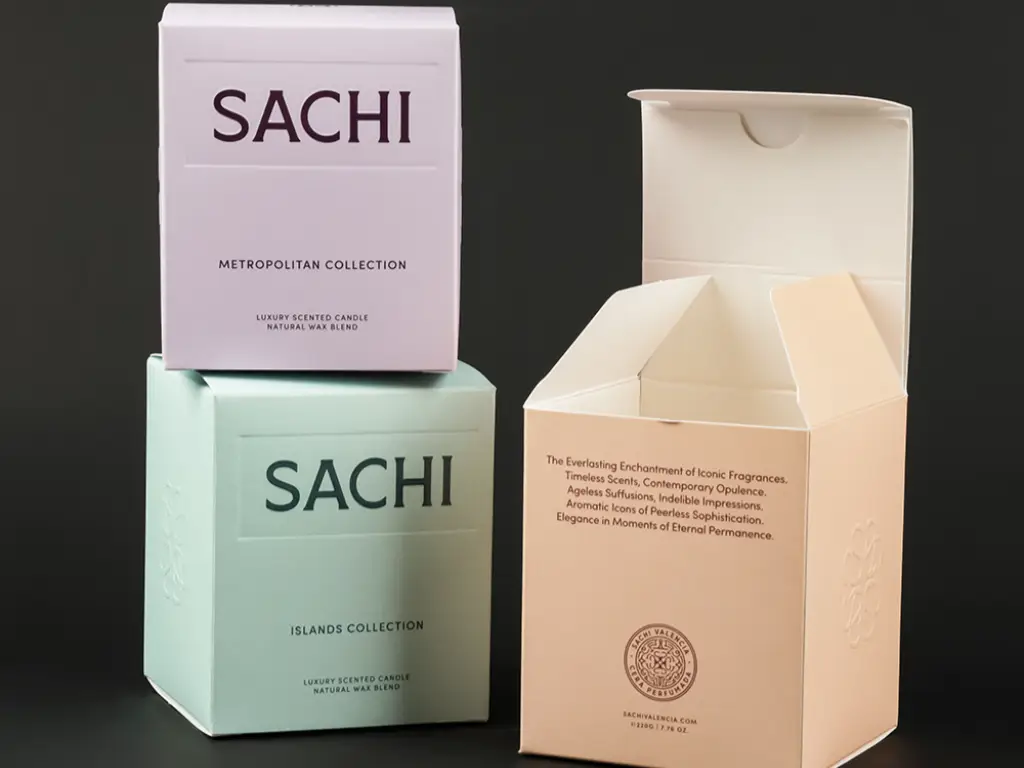
The cosmetic packaging industry has evolved into a highly competitive and dynamic sector, driven by changing consumer demands and trends. With increasing pressure on brands to balance sustainability, functionality, and aesthetics, packaging costs have become a significant consideration for beauty businesses.
This article delves into the factors that impact cosmetic packaging prices when sourcing from China. From material choices and production volumes to logistics and market trends, we explore how each element influences costs and offer strategies for brands to optimize their packaging budgets effectively.
Manufacturing Process: From Raw Materials to Mass Production

For a Chinese paper box manufacturer, the quote is not a flat fee but a calculation of material grade, technical complexity, and machine efficiency. Each choice in the production line directly shifts the cost per unit.
Paper Grade & Substance (GSM)
The base material is the most significant cost driver. Choosing SBS (Solid Bleached Sulfate) provides a premium white finish but costs 20%–35% more than CCNB (Coated Recycled Board).
Higher GSM (grams per square meter) increases durability but raises raw material weight, directly impacting both the material cost and subsequent shipping fees.
Surface Finishing & Rejection Rates
The “look and feel” of a cosmetic box—such as soft-touch lamination or gold foiling—adds layers of cost. Premium finishes require extra “passes” through the press.
Complex processes like Spot UV or Embossing increase the Rejection Rate. If a foil stamp is misaligned by 0.5mm, the box is scrapped. Manufacturers bake this potential “yield loss” into your unit price.
Structural Complexity: Folding vs. Rigid Boxes
How the box is assembled dictates the labor-to-machine ratio. Folding Cartons are high-speed and 100% automatisé. Rigid Boxes (Gift Sets) often require manual “wrapping” and glue application. Because rigid boxes take 5x longer to assemble and cannot be shipped flat, they command a significant premium due to increased man-hours and storage volume.
Labor Dynamics & Automation Efficiency in China
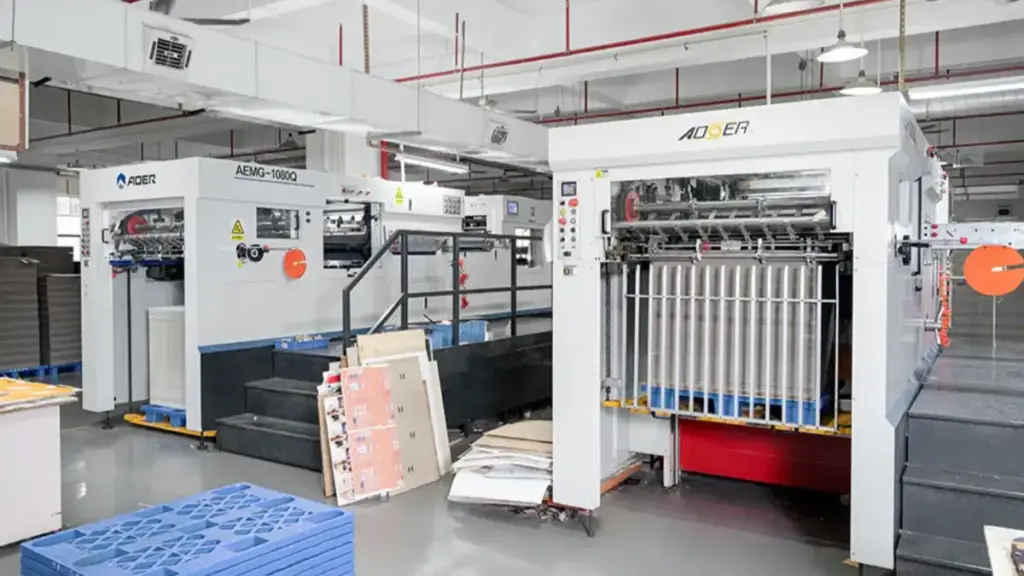
For paper-based packaging, such as folding cartons and rigid gift boxes, the transition from manual assembly to high-speed automation is the primary factor in reducing unit costs. Dans 2026, efficiency is driven by the synergy between advanced machinery and geographical proximity.
Why Volume Dictates the Level of Automation
Production volume determines which “line” your project runs on. For standard folding boxes, High-Speed Die-Cutting and Automatic Gluing machines can process 10,000+ units per hour, drastically lowering the per-unit labor cost.
Inversement, small-batch orders often require manual folding or semi-automated “V-slot” cutting for rigid boxes, where labor hours remain high, leading to a higher price-per-piece to cover machine downtime and manual touchpoints.
Manual Craftsmanship vs. Automated Precision
Fully Automated: Ideal for high-volume Folding Boxes. Machines handle printing, coating, and gluing in a continuous flow, ensuring consistent quality and 20%–30% lower costs.
Semi-Manual: Essential for Luxury Rigid Boxes or custom inserts. Despite automation trends, premium finishes—like hand-wrapped textured paper or complex magnetic closures—still rely on skilled labor. These “boutique” details are where labor costs most visibly influence the final quote.
The Power of Industrial Clusters
Our facility’s location within major manufacturing clusters (like the Pearl River Delta) significantly lowers indirect costs. Proximity to specialized paper mills, foil stamping workshops, and die-cutting plate suppliers means zero-cost logistics for raw materials and faster prototyping. This “Cluster Effect” allows us to maintain competitive pricing even when global pulp prices fluctuate.
Logistics, Tariffs, and Sourcing Strategies
Logistics and international trade policies are often the most volatile components of a packaging quote. For paper-based packaging, the difference between a profitable launch and a budget overrun lies in how you manage global tariffs and shipping volumes.
Global Tariff Impact on Sourcing
As of 2026, geopolitical shifts have made trade compliance a primary cost driver. Sourcing from China now carries significant tariff implications, particularly for the U.S. marché. These taxes apply not just to the finished cosmetic product, but specifically to packaging components, which often represent the largest share of manufacturing costs.
| Origin Country/Region | Estimated U.S. Import Tariff (2026) |
|---|---|
| Chine | 34% |
| European Union | 20% |
| Vietnam | 46% |
| South Korea / India | 25% – 26% |
| Global Baseline | 10% |
Shipping Methods: “Flat” vs. “Assembled” Volume
The structural design of your box dictates your freight bill. Folding boxes are shipped flat, maximizing container space and lowering the “per-unit” landed cost. In contrast, Rigid boxes are shipped pre-assembled; they occupy significantly more “CBM” (Cubic Meters), often tripling the shipping cost per unit and increasing warehousing expenses.
Warehousing & Distribution Buffers
Rising tariffs have complicated distribution networks, leading to stricter customs inspections and longer clearance times. To mitigate these risks, many brands now utilize Warehousing Buffers in China to consolidate shipments, ensuring that freight and inspection fees are amortized over larger, more efficient bulk deliveries.
Compliance Standards and Quality Testing Costs
In the global market, regulatory compliance acts as a “hidden” manufacturing cost. For paper packaging, meeting these legal benchmarks requires specialized raw materials and rigorous third-party testing, both of which increase the final unit price.
Global Certification & Material Restrictions
Selling into international markets requires specific certifications that dictate the chemical and environmental profile of your boxes:
- European Union (REACH & SVHC): Regulations strictly limit harmful substances like phthalates or heavy metals in printing inks and adhesives. Using Soy-based Inks or REACH-compliant glues typically adds a 5%–10% premium to material costs.
- Global Sustainability (FSC): The Forest Stewardship Council (FSC) certification ensures ethical sourcing. FSC-certified paper boards often carry a higher price tag due to chain-of-custody audits and sustainable forestry premiums.
Mandatory Testing for Market Entry
To avoid costly customs rejections or recalls, manufacturers must conduct standardized tests. The fees for these lab reports—often several hundred dollars per SKU—are factored into the production overhead:
| Region | Required Standard / Attestation | Impact on Price |
|---|---|---|
| USA | TPCH (Toxics in Packaging) | Restricts lead/cadmium; requires specialized lab testing. |
| European Union | PPWD (Packaging Waste Directive) | Increases costs for recyclability design & EPR fees. |
| Global Markets | Bursting & Cobb Tests | Higher-grade fibers required to pass moisture & pressure tests. |
Price of Non-Compliance
While high-compliance materials are more expensive, they prevent “soft costs” like port delays or fines. Choosing cheaper, non-certified boards may lower the initial quote but risks the total loss of the shipment if it fails random heavy-metal screening at the border.
Market Trends and Consumer Demand

Market dynamics dictate whether your budget leans toward cost-saving minimalism or high-end differentiation. Understanding how custom cosmetic packaging matters for beauty brands in 2026 allows for smarter financial forecasting.
Price Drivers: Premiumization and Durabilité
Consumer demand for “unboxing experiences” and eco-transparency has pushed production costs upward due to:
- Intricate Paper Gift Box Ideas/Trends: Current trends favor multi-layered rigid gift boxes with magnetic closures and custom inserts. These require more manual assembly time and specialized decorative papers.
- Eco-Premium Materials: The shift toward plastic-free packaging increases prices because high-grade FSC paper and biodegradable coatings cost more than standard plastic laminates.
- Tactile Finishes: Trends like deep embossing and 3D foil stamping require precision-etched brass plates, adding significant setup fees to the final quote.
Cost-Reduction Factors: Minimalism and Efficiency
Inversement, the “Clean Beauty” movement can lower expenses through:
- Material Reduction: Minimalist designs use less “GSM” (paper weight) and fewer structural components, directly lowering the raw material bill.
- Simplified Graphics: Moving from 5-color printing to monochrome or soy-based inks reduces ink costs and speeds up machine calibration.
- Standardized Sizing: Adopting “Public” dimensions for folding cartons allows for high-speed automated production, bypassing the expensive tooling costs of unique shapes.
Expert Strategies for Optimizing Packaging Costs
To maintain healthy margins without compromising brand identity, beauty brands must move beyond basic sourcing and adopt a technical procurement strategy. As a manufacturer, we recommend three high-impact methods to mitigate rising costs:
Design for Manufacturing (DfM)
Work with your manufacturer during the structural design phase to ensure your paper gift box ideas align with machine capabilities. Small adjustments to a box’s “die-line” can reduce paper waste by 15%–20%. By optimizing the “nesting” of layouts on a single sheet of paper board, you effectively lower the material cost per unit.
Consolidation and Material Standardization
Instead of using unique paper stocks for every SKU, standardize your core materials (Par exemple, using the same 350gsm SBS board across multiple product lines). This allows you to aggregate small orders into a single large-scale paper purchase, unlocking Tier-1 raw material pricing and reducing machine setup fees.
Strategic Forecasting & Flat-Shipping
Whenever possible, prioritize Cartons pliants over Rigid Boxes. Shipping flat reduces your “CBM” (Cubic Meter) volume by up to 80%, drastically cutting international freight and warehousing overhead. En outre, placing orders at least 90 days in advance avoids the “rush fee” premiums associated with peak seasons and air-freight emergencies.
Conclusion
The price of cosmetic packaging is shaped by several factors, from material choices to global compliance standards. Managing these elements effectively can help beauty brands maintain quality while staying within budget.
À Pack CCP, we specialize in delivering high-quality, rentable cosmetic packaging solutions tailored to your brand’s needs. Our expertise in design, production, and logistics ensures you get the best value for your investment.
Reach out today to discuss how we can support your next packaging project and elevate your product offering.